Betamax Video: Format History and Digitization Guide
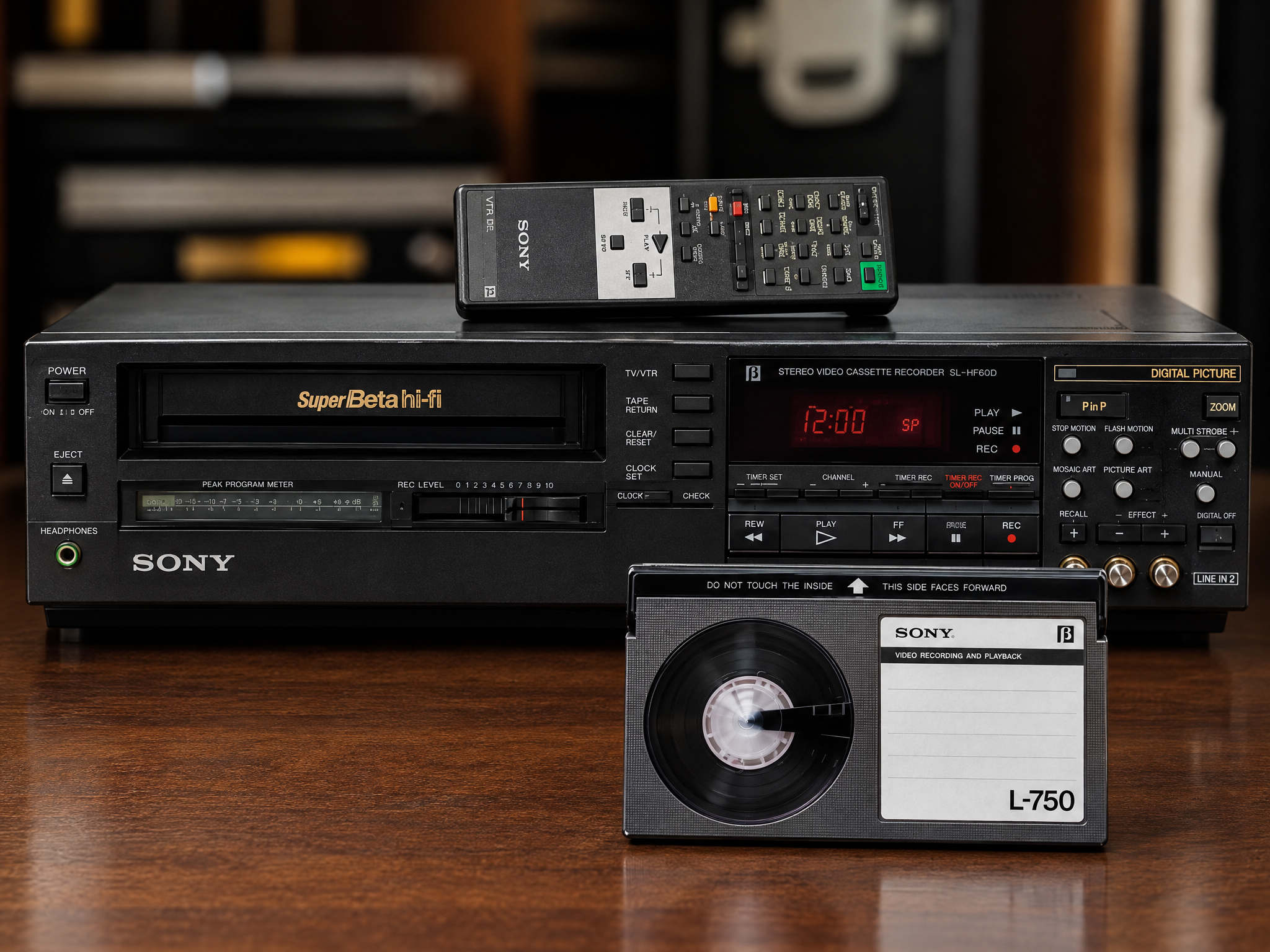
Betamax video represents one of the most fascinating chapters in consumer electronics history, combining superior technical specifications with a cautionary tale about market dynamics and strategic positioning. Introduced by Sony in 1975, the Betamax format pioneered home video recording and established engineering standards that influenced videotape technology for decades. Today, digitization professionals and archivists continue to work with Betamax tapes, preserving historical content and family memories recorded on this once-revolutionary medium. Understanding the technical characteristics, historical context, and preservation requirements of Betamax video remains essential for anyone working in video transfer and restoration services.
Technical Specifications and Engineering Advantages
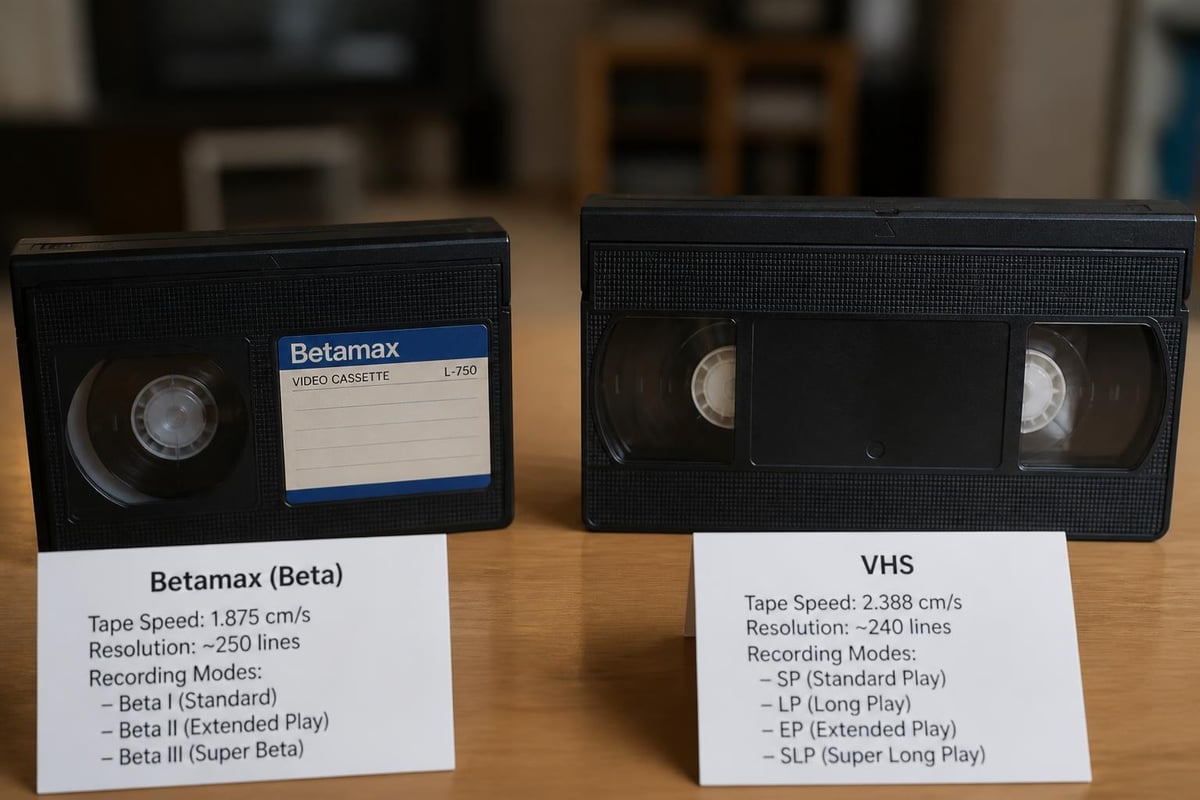
Betamax video technology delivered exceptional picture quality through careful engineering of tape speed, track width, and signal processing. Sony designed the format with a horizontal resolution of approximately 250 lines, compared to VHS's initial 240 lines, creating noticeably sharper images when viewed on period-appropriate television equipment.
The format utilized a tape speed of 1.87 inches per second for Beta I (standard play) recording mode, ensuring superior signal clarity and color reproduction. This engineering choice reflected Sony's broadcast equipment heritage and commitment to professional-grade specifications. Later modes, Beta II and Beta III, reduced tape speed to extend recording time, though with corresponding quality trade-offs.
Cassette Design and Mechanical Innovation
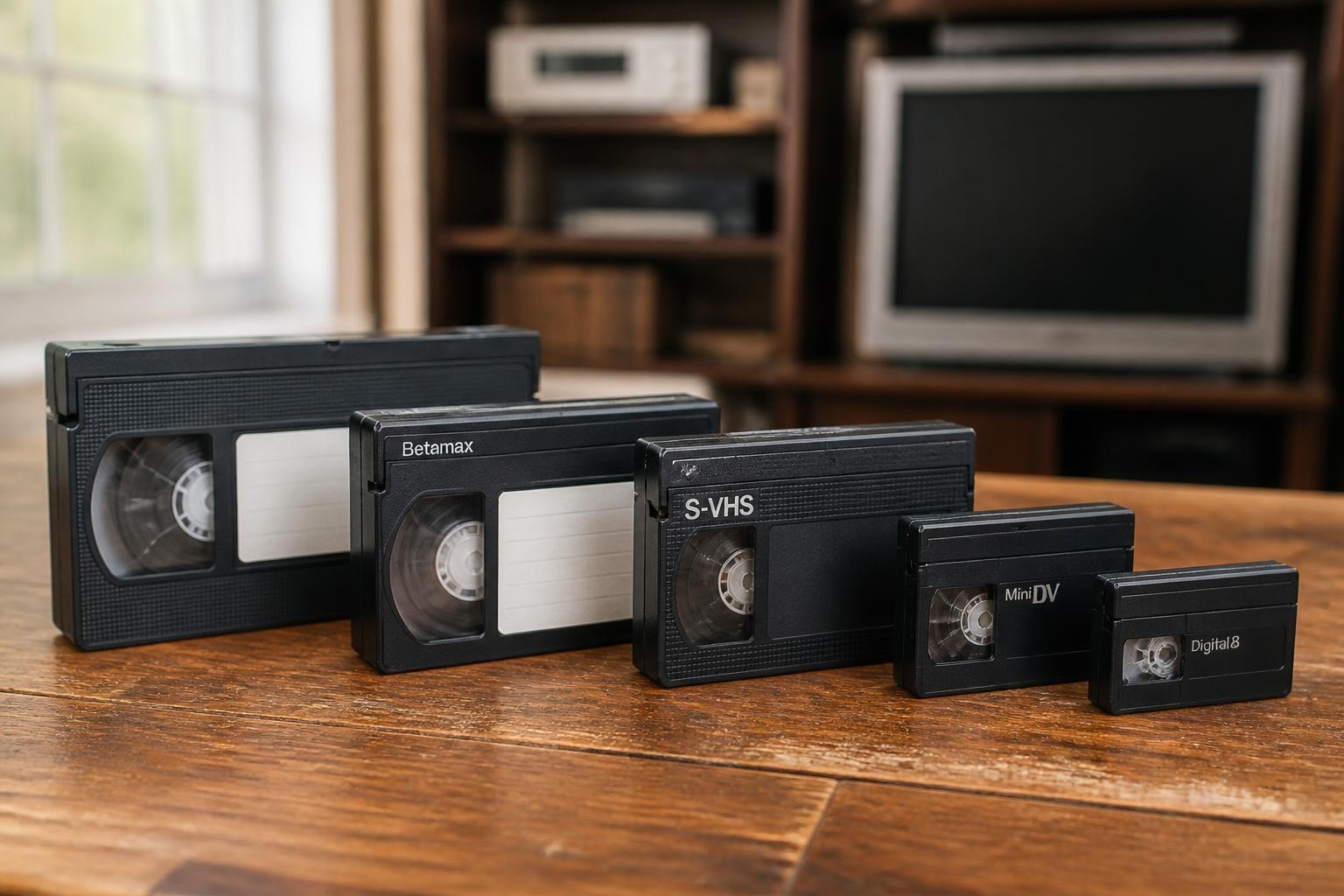
The Betamax cassette measured significantly smaller than its VHS counterpart, approximately 6 inches wide compared to VHS's 7.5 inches. This compact form factor offered several advantages:
- Easier storage in home entertainment centers and shelving units
- More precise tape transport mechanisms with reduced mechanical stress
- Better protection of the tape through a robust shell design
- Lower manufacturing tolerances requiring higher quality control standards
The IEEE's documentation of video recording technology provides detailed technical analysis of how these mechanical choices influenced format performance and reliability across different operating conditions.
Audio Quality and Hi-Fi Innovation
Sony introduced Beta Hi-Fi in 1983, establishing a new benchmark for consumer video audio quality. The system embedded audio signals using frequency modulation directly onto the video tracks, achieving:
| Feature | Beta Hi-Fi Specification | Impact |
|---|---|---|
| Frequency Response | 20 Hz to 20 kHz | Full audio spectrum capture |
| Dynamic Range | 80+ dB | Near-CD quality reproduction |
| Signal-to-Noise Ratio | >70 dB | Minimal background hiss |
| Channel Separation | >70 dB | True stereo imaging |
This audio performance exceeded contemporary VHS Hi-Fi specifications and made Betamax an attractive choice for music video enthusiasts and audio-conscious consumers throughout the 1980s.
Market History and the Format War
The betamax video format entered a competitive marketplace that would become one of business history's most studied examples of standards competition. Sony launched Betamax in Japan in May 1975, followed by U.S. introduction in November 1975 through a partnership with Zenith. Initial market reception proved enthusiastic, with early adopters appreciating the technology's quality and innovation.
JVC introduced VHS (Video Home System) in September 1976, sparking immediate format rivalry. The strategic dynamics between these competing standards reflected complex business decisions around licensing, manufacturing partnerships, and content availability rather than purely technical superiority.
Recording Time and Consumer Preferences
Early Betamax machines offered 60-minute recording capacity, limiting their ability to capture feature-length films on a single cassette. Sony's engineering team prioritized picture quality over extended recording time, a decision that significantly impacted market positioning.
VHS manufacturers offered two-hour recording capacity from launch, later extending to six hours and beyond. This practical advantage resonated with consumers who wanted to record movies, sporting events, and multiple television programs without tape changes. The recording time differential proved decisive in retail purchasing decisions throughout the late 1970s and early 1980s.
Studio Support and Content Distribution
Video rental stores emerged as crucial battlegrounds in the format war. VHS gained significant traction through broader studio support and more extensive prerecorded content libraries. Rental store owners invested in VHS inventory, creating a reinforcing cycle where consumer VHS purchases drove rental demand, which further encouraged store investment in VHS titles.
By the mid-1980s, VHS dominated approximately 70% of the North American market. The Guardian's retrospective coverage documented how Sony maintained Betamax production until 2002 in Japan and 2016 for professional applications, demonstrating the format's longevity in specialized markets despite consumer defeat.
Professional and Broadcast Applications
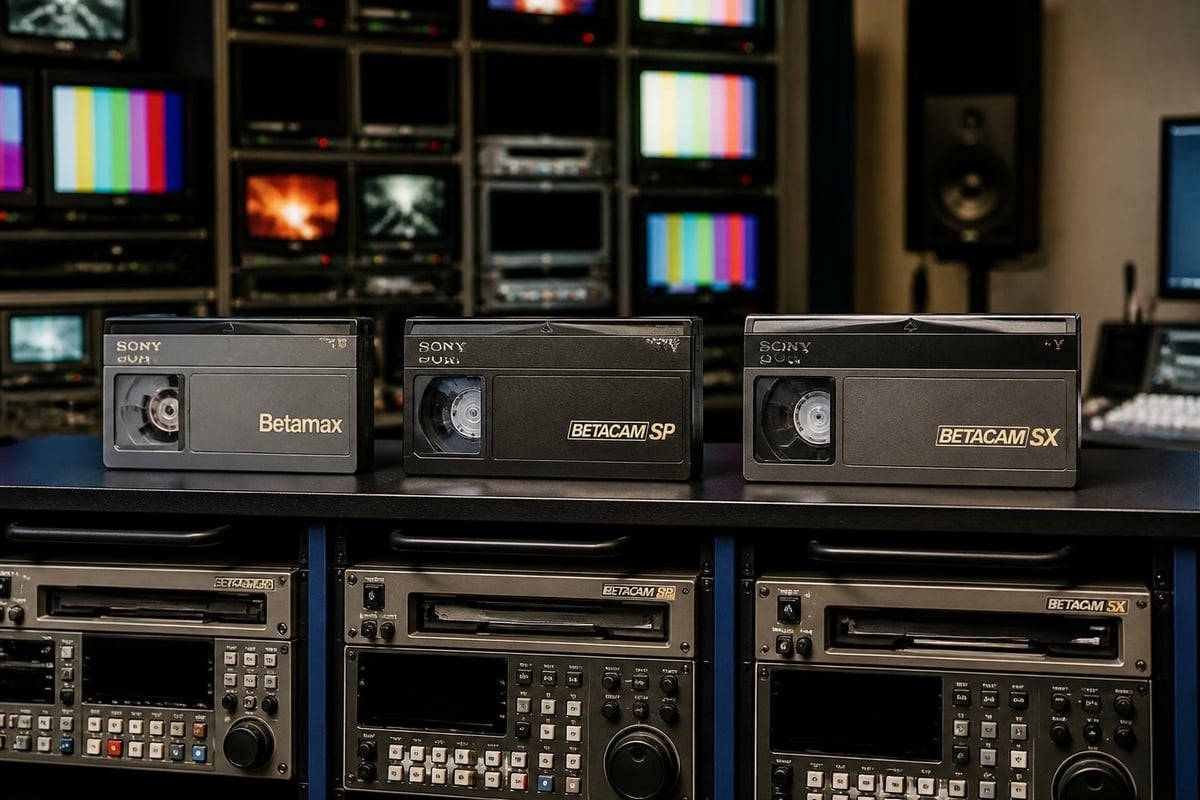
While Betamax lost the consumer format war, professional derivatives thrived in broadcast and production environments. Sony developed Betacam in 1982, using the same cassette form factor but employing component video recording for superior color reproduction and editing capabilities.
Betacam became the broadcast industry standard throughout the 1980s and 1990s, with variants including Betacam SP (Superior Performance), Digital Betacam, and MPEG IMX. These professional formats shared mechanical compatibility with consumer Betamax while delivering the performance specifications required for professional production workflows.
Archival and Preservation Considerations
Cultural institutions and media archives continue to maintain Betamax playback equipment for preservation digitization projects. The British Film Institute's documentation of videotape formats emphasizes the ongoing importance of format-specific knowledge in archival practice.
Betamax tapes from the 1970s and 1980s present specific preservation challenges:
- Magnetic degradation affecting signal strength and picture stability
- Binder deterioration causing sticky shed syndrome in humid storage conditions
- Mechanical wear on cassette components requiring careful handling
- Obsolescence of replacement parts for aging playback equipment
- Format variation across Beta I, II, III, and regional specifications
Professional digitization operations must address these technical challenges while maintaining signal integrity and preserving original content characteristics. Access to reliable playback equipment and knowledgeable technicians becomes critical for successful preservation outcomes.
Modern Digitization Strategies
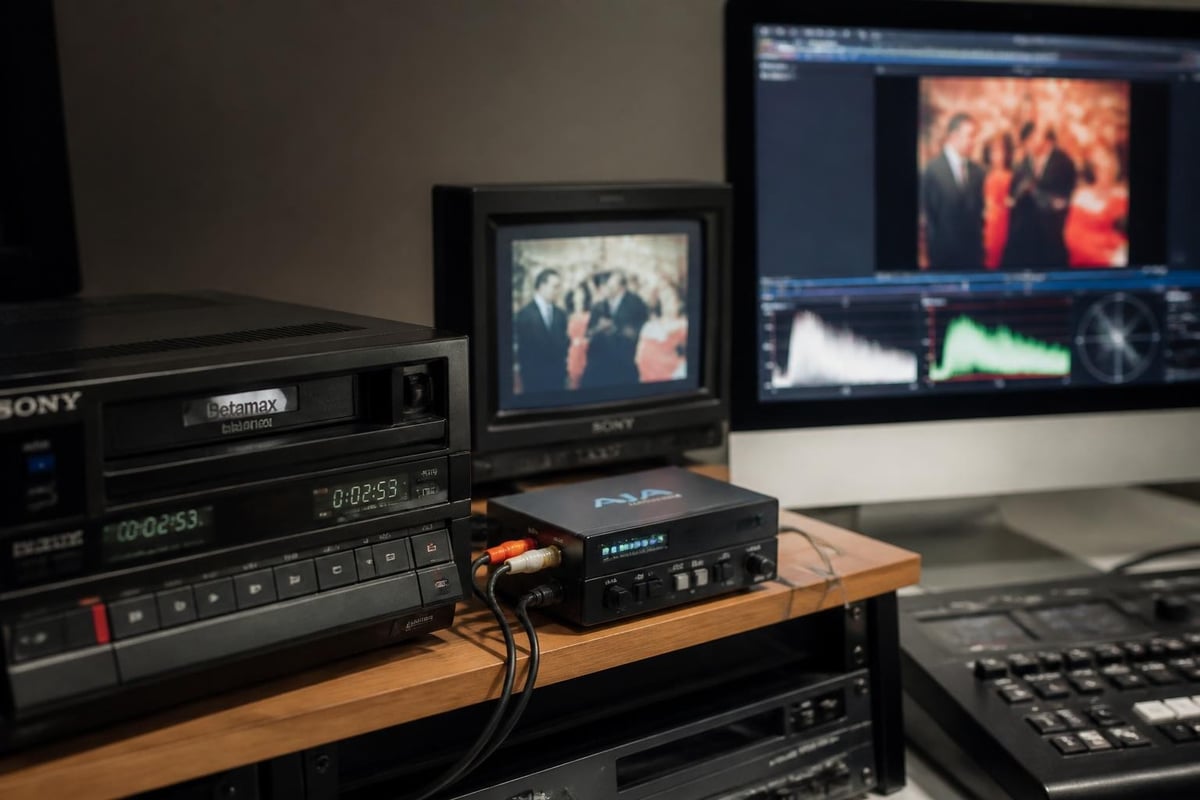
Converting betamax video content to digital formats requires specialized equipment, technical expertise, and careful quality control procedures. Digitization shops serving consumers and institutions face unique challenges when working with aging Betamax tapes and equipment.
Equipment Requirements and Maintenance
Professional Betamax transfer operations depend on well-maintained playback decks capable of handling tapes in various conditions. Key equipment considerations include:
- Multiple deck availability to accommodate different Beta standards and tape conditions
- Regular head cleaning and alignment procedures for optimal playback quality
- Component inventory for common repairs and mechanical adjustments
- Test equipment for signal monitoring and quality verification
- Climate-controlled storage for equipment and tape inventory
Organizations like VCR Supply address equipment accessibility through rental and repair services, enabling digitization shops to maintain operational capacity without excessive capital investment in aging technology.
Signal Processing and Quality Optimization
Achieving optimal digitization results from Betamax tapes requires sophisticated signal processing and capture workflows. Time base correction stabilizes timing errors inherent in analog videotape playback, while dropout compensation minimizes the visual impact of tape damage and oxide loss.
| Processing Stage | Purpose | Technical Considerations |
|---|---|---|
| Time Base Correction | Stabilize sync signals | Essential for computer capture |
| Color Correction | Restore accurate hue/saturation | Compensate for tape aging |
| Dropout Compensation | Hide tape defects | Frame interpolation techniques |
| Noise Reduction | Reduce video grain | Balance detail preservation |
| Deinterlacing | Convert to progressive | Motion-adaptive algorithms |
Capturing at appropriate resolution and bit rates preserves original content quality while creating files suitable for long-term archival storage and access derivative creation.
Commercial Applications and Market Niches
Despite VHS market dominance, betamax video maintained presence in specific commercial applications where quality and reliability mattered more than recording time or content availability. Educational institutions adopted Betamax for instructional video production, appreciating the format's superior picture quality for classroom presentation.
Medical and scientific documentation represented another important niche. Healthcare facilities recorded procedures and patient consultations on Betamax, valuing the format's image clarity for diagnostic review and training purposes. These specialized applications created sustained demand for equipment and support services.
Current Market for Betamax Services
The 2026 market for Betamax-related services focuses primarily on digitization and preservation rather than active recording applications. Consumer demand stems from individuals preserving family recordings, while institutional clients include:
- Museums digitizing historical video documentation
- Broadcasters mining archives for historical footage
- Legal firms converting evidence from older cases
- Educational institutions preserving instructional materials
- Private collectors transferring vintage recordings
This preservation market requires access to functioning playback equipment and technical expertise in handling aging media. The Computer History Museum's documentation of home video technology evolution provides valuable context for understanding Betamax's role in the broader videotape ecosystem.
Equipment Availability and Support Challenges
Maintaining operational Betamax playback equipment presents increasing challenges as original manufacturing ended years ago and expert technicians retire. Digitization operations must develop strategies for equipment acquisition, maintenance, and long-term sustainability.
Sourcing Replacement Parts
Critical wear components include video heads, belt kits, and pinch rollers. Professional operations maintain parts inventory through:
- New old stock (NOS) purchases from remaining dealer inventory
- Used equipment harvesting for components
- Third-party manufacturers producing select replacement parts
- Cross-compatibility with professional Betacam components where applicable
- Machine shops fabricating mechanical parts from specifications
Establishing relationships with specialized repair services ensures access to expertise when complex diagnostic and repair work exceeds in-house capabilities.
Maintenance Contracts and Preventive Service
Professional digitization operations benefit from structured maintenance programs that minimize equipment downtime and extend deck lifespan. Regular service intervals typically include:
- Head cleaning and inspection for wear patterns
- Capstan and pinch roller examination and replacement
- Belt tension verification and adjustment
- Mechanical alignment checks using test tapes
- Electronic calibration for optimal signal output
Preventive maintenance costs significantly less than emergency repairs and helps ensure consistent transfer quality across production batches. Services offering maintenance contracts provide predictable budgeting and priority response for time-sensitive projects.
Content Recovery from Damaged Tapes
Betamax tapes stored improperly or aged beyond normal parameters require specialized handling for successful content recovery. Common damage scenarios include sticky shed syndrome, physical tape breaks, cassette shell damage, and oxide layer deterioration.
Baking and Restoration Techniques
Tapes exhibiting sticky shed syndrome benefit from controlled heating to temporarily restore playability. Professional restoration procedures involve:
- Temperature-controlled baking at 130-140°F for 4-8 hours
- Humidity control during treatment and playback
- Limited playback attempts to minimize further damage
- Immediate digitization following restoration treatment
- Proper storage of original tapes post-transfer
Not all damaged tapes respond to restoration treatment, making realistic client communication essential when accepting projects involving compromised media.
Specialized Transfer Techniques
Severely damaged tapes may require non-standard playback approaches. Technicians might adjust tracking controls, vary playback speed slightly, or use decks with different head configurations to extract maximum content from deteriorated media. These advanced techniques demand extensive format knowledge and hands-on experience with equipment behavior across various tape conditions.
Betamax video technology continues to influence modern video engineering while requiring specialized knowledge for preservation and digitization work. Whether you're operating a commercial transfer facility or managing an institutional archive, access to reliable Betamax playback equipment and expert technical support remains essential for successful content recovery. VCR Supply provides digitization shops with professional videotape deck rentals starting at $99 per month and repair services with transparent diagnostic fees, helping you maintain operational capacity without excessive equipment investment. Contact us today to discuss rental options or schedule maintenance for your existing Betamax decks.