VCR VHS Tape: Complete Guide for Digitization Professionals
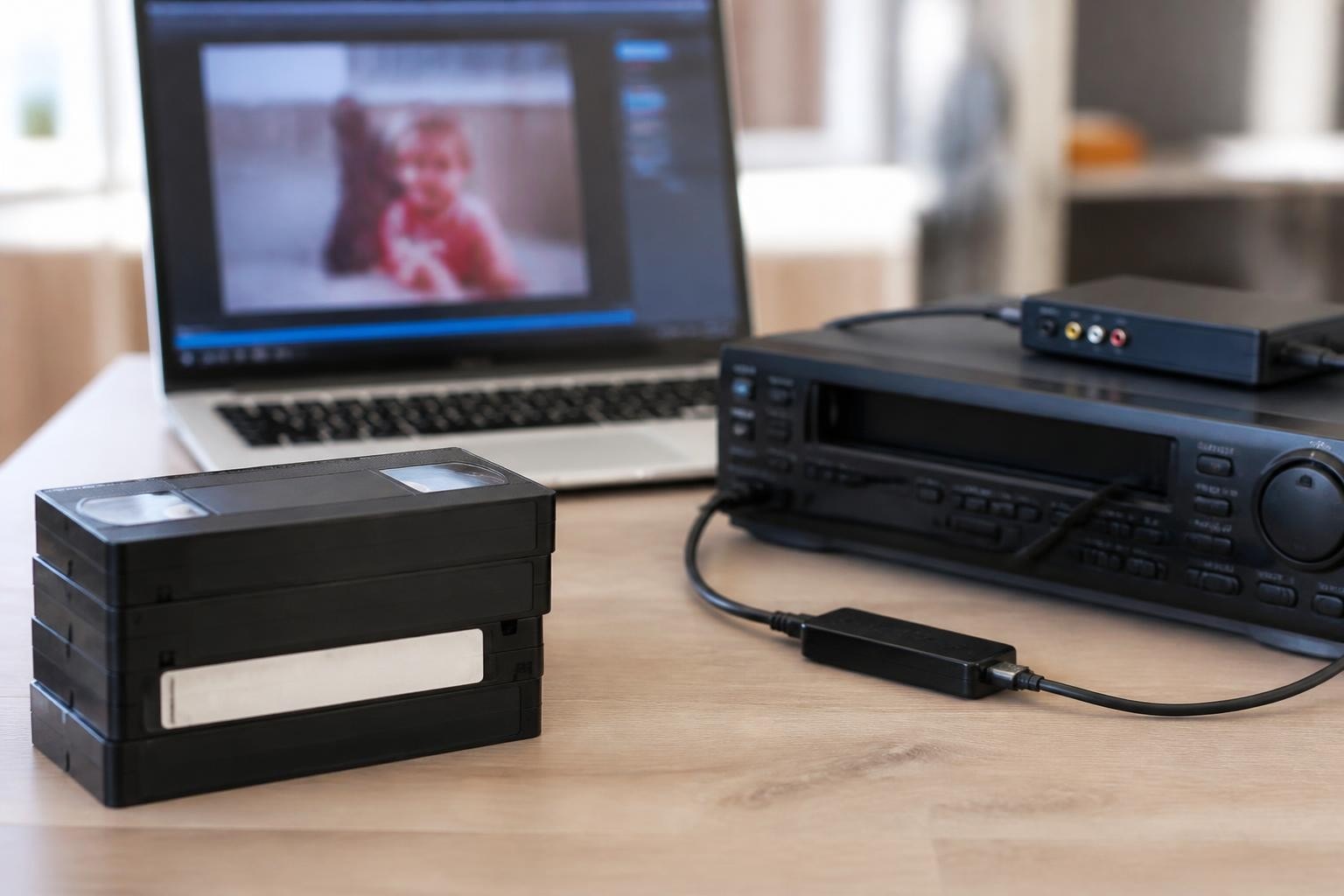
The vcr vhs tape remains a critical component in the digitization industry, despite the format's consumer obsolescence nearly two decades ago. For digitization shops, archivists, and preservation specialists, understanding the technical characteristics, handling requirements, and playback challenges of VHS media has become increasingly important as millions of tapes deteriorate and clients demand professional transfer services. The vcr vhs tape format defined home video for three decades, and its legacy continues to shape the preservation industry today as professionals race against time to rescue irreplaceable content before magnetic degradation makes recovery impossible.
Understanding VCR VHS Tape Technology and Format Specifications
The Video Home System (VHS) revolutionized consumer media when JVC introduced it in 1976, establishing a standard that would dominate until DVD displaced it in the early 2000s. A standard vcr vhs tape uses half-inch magnetic tape wound on two spools inside a plastic cassette measuring 187 × 103 × 25 millimeters. The helical scan recording method employed by VHS creates diagonal tracks across the tape, storing luminance and chrominance information separately in a composite signal.
Technical Recording Parameters
VHS operates at a tape speed of 33.35 millimeters per second for SP (Standard Play) mode, delivering approximately 240 lines of horizontal resolution. The format's technical specifications have been extensively documented by SMPTE Technical Specifications, which provides authoritative standards for videotape systems.
Key technical specifications include:
- Video bandwidth: approximately 3 MHz
- Audio tracks: linear mono or hi-fi stereo (AFM)
- Maximum recording time: 2 hours (SP), 4 hours (LP), 6 hours (EP/SLP)
- Track width: 49 micrometers (video), 1.0 millimeter (audio)
The British Film Institute's comprehensive overview of videotape formats explains why VHS became the dominant consumer format despite inferior technical specifications compared to Betamax. VHS offered longer recording times and broader industry support, factors that proved more commercially significant than raw quality metrics.

Professional Playback Equipment Requirements for VHS Digitization
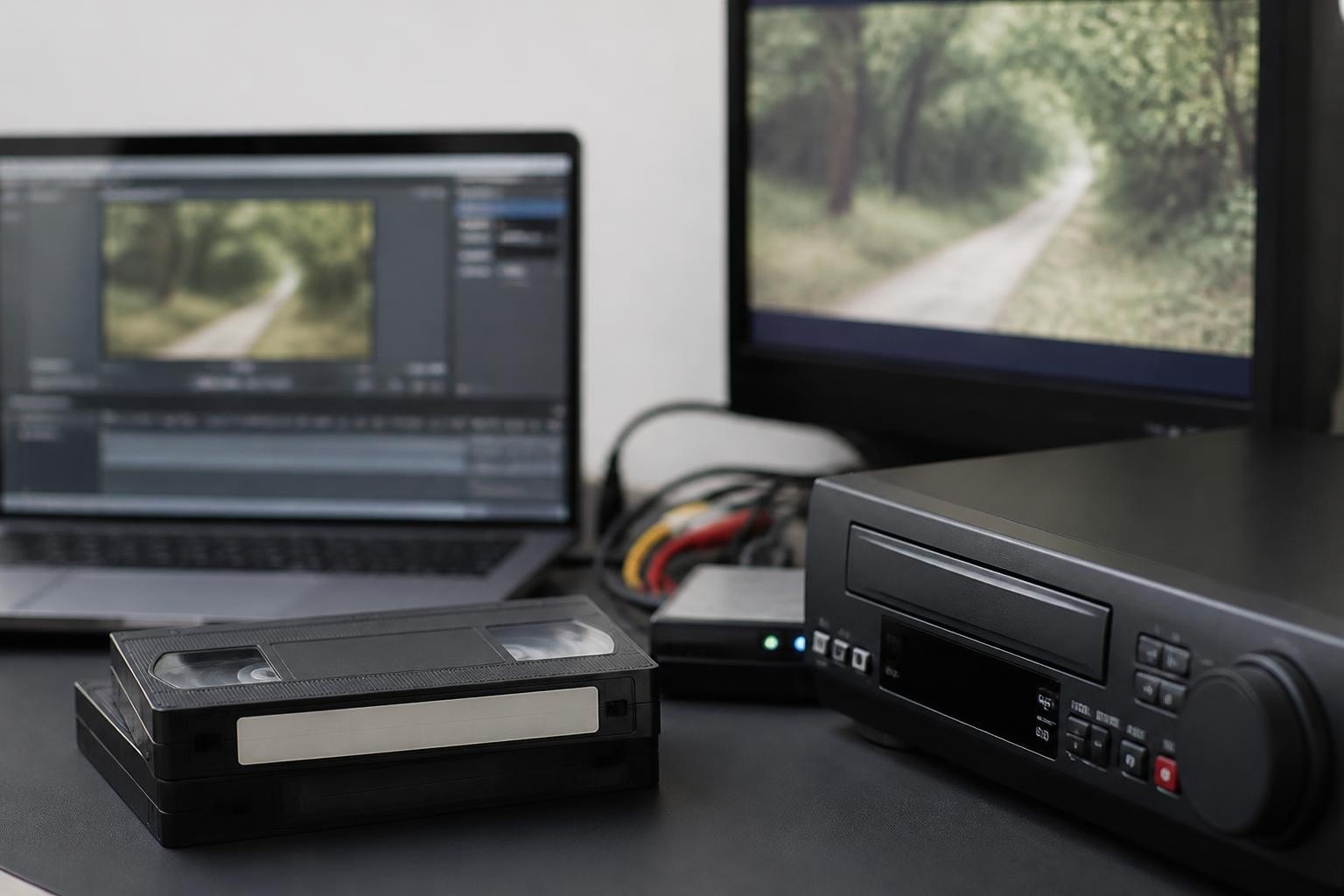
Digitization professionals require reliable, well-maintained playback equipment to extract maximum quality from degraded vcr vhs tape media. Consumer-grade VCRs lack the precision and adjustability needed for archival transfers, making professional or prosumer decks essential for serious preservation work.
Deck Selection Criteria
Professional digitization operations typically maintain multiple deck models to handle various tape conditions and regional standards. S-VHS decks offer superior playback quality through S-Video output and often include manual tracking adjustment, a critical feature when working with damaged or poorly recorded tapes.
| Equipment Class | Typical Application | Key Features | Monthly Rental Range |
|---|---|---|---|
| Consumer VCR | Basic playback | Composite output only | Not recommended |
| Prosumer S-VHS | Standard transfers | S-Video, manual tracking | $99-$149 |
| Professional broadcast | Archival quality | TBC, adjustable heads | $150-$250 |
| Specialty/rare format | Format-specific work | Format compatibility | Custom pricing |
The JVC SR-VS30U S-VHS deck represents the type of professional equipment digitization shops rely on for consistent, high-quality transfers. These decks feature time-base correction, adjustable playback speed, and robust transport mechanisms designed for extended operation.
Equipment Maintenance and Longevity
Professional VCR maintenance extends equipment lifespan and ensures consistent playback quality. Regular cleaning, head replacement, and mechanical adjustment prevent damage to valuable tapes while maintaining signal quality. VCR maintenance contracts help digitization businesses reduce downtime and maintain quality standards across thousands of transfers.
Critical maintenance tasks include:
- Video head cleaning every 20-30 hours of operation
- Capstan and pinch roller cleaning and inspection
- Tape path alignment verification
- Audio head cleaning and azimuth adjustment
- Belt replacement on scheduled intervals
Preservation Challenges and Tape Degradation Factors
Every vcr vhs tape faces inevitable degradation through chemical and mechanical processes. Understanding these failure modes helps digitization professionals assess tape condition, adjust playback parameters, and set realistic client expectations about recoverable quality.
Magnetic Tape Degradation Chemistry
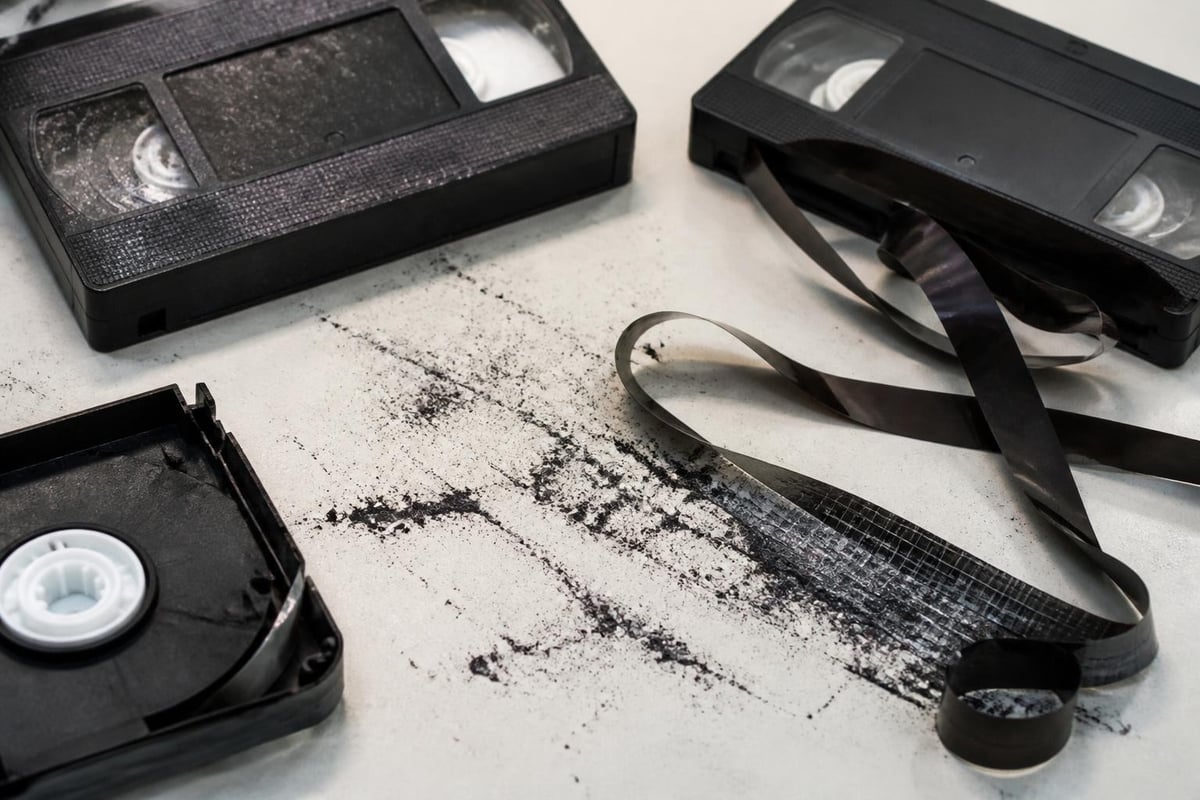
The magnetic coating on VHS tape consists of iron oxide or metal particles bound to polyester backing with polymer binders. Over time, these binders undergo hydrolysis, breaking down in the presence of moisture and creating a sticky residue that causes tapes to bind during playback. This "sticky shed syndrome" can render tapes temporarily unplayable without intervention.
The Canadian Conservation Institute provides detailed guidelines on caring for magnetic tape media, emphasizing environmental control as the primary defense against accelerated degradation. Their research-backed recommendations specify storage conditions that slow chemical breakdown.
Environmental factors affecting vcr vhs tape longevity:
- Temperature fluctuations causing expansion/contraction damage
- Humidity levels above 40% accelerating hydrolysis
- Magnetic field exposure causing signal loss
- UV light degrading plastic components
- Dust and particulates creating dropout errors
Physical Damage and Mechanical Failures
Beyond chemical degradation, physical damage represents the most common reason for playback failure. Tape edge damage, creases, stretching, and backing separation all compromise signal integrity and complicate digitization efforts.
Digitization Best Practices and Workflow Optimization
Professional vcr vhs tape digitization requires systematic workflow management to ensure quality, efficiency, and client satisfaction. Successful digitization shops develop standardized processes that balance quality output with operational efficiency.
Intake and Assessment Procedures
Proper tape assessment before playback prevents equipment damage and sets accurate service expectations. Visual inspection reveals obvious damage, while brief test playback confirms signal presence and identifies quality issues requiring special handling.
The U.S. National Archives provides guidance on handling machine-readable audiovisual media, including inspection protocols that protect both collection materials and playback equipment.
Pre-digitization assessment checklist:
- Visual inspection for physical damage, mold, or sticky residue
- Cassette housing integrity check
- Brief playback test (1-2 minutes) to assess signal quality
- Tracking and stability evaluation
- Audio channel verification
Capture Settings and Quality Parameters
Digitization quality depends on both source material condition and capture settings. While a vcr vhs tape cannot deliver HD resolution, proper capture preserves maximum available information for future format migration and ensures compatibility with modern playback systems.
| Parameter | Recommended Setting | Rationale |
|---|---|---|
| Resolution | 720×480 (NTSC) / 720×576 (PAL) | Native resolution |
| Bitrate | 8-10 Mbps (MPEG-2) / 15-25 Mbps (H.264) | Quality preservation |
| Frame rate | 29.97 fps (NTSC) / 25 fps (PAL) | Source native |
| Audio | 48 kHz, 16-bit stereo | Professional standard |
| Deinterlacing | Preserve interlacing or apply quality deinterlace | Use case dependent |
The digitization workflow guide details step-by-step procedures that ensure consistent results across varied source material conditions.
Market Dynamics and the VHS Collecting Phenomenon
While digitization represents the primary professional application for vcr vhs tape handling in 2026, an unexpected collector market has emerged around specific titles, creating secondary demand for working playback equipment.
Collectible VHS Market Trends
Certain VHS releases command surprising prices in collector markets, particularly horror titles with unique cover art, Disney "Black Diamond" releases, and obscure films never released on digital formats. Kiplinger's analysis of VHS collector value reveals that while most tapes hold little monetary value, rare specimens can fetch hundreds or thousands of dollars from dedicated collectors.
This collector interest sustains demand for working VCRs, though collectors typically use consumer equipment rather than professional decks. Digitization professionals occasionally encounter high-value tapes among client collections, making awareness of the collector market professionally relevant.
Nostalgia and Cultural Memory
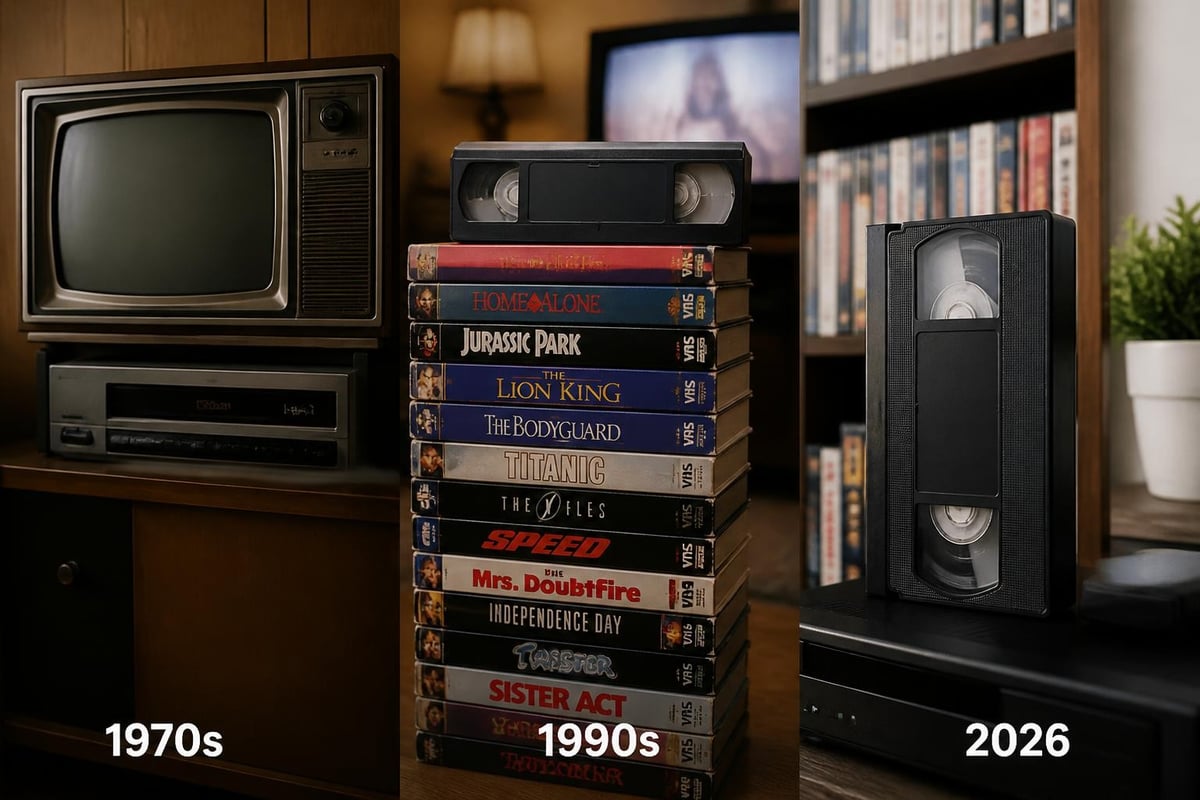
The vcr vhs tape occupies unique cultural space as the format that democratized video ownership and time-shifted television viewing. Popular Mechanics' examination of VHS quality and cultural impact explores how the format's technical limitations have become part of its nostalgic appeal, with younger audiences romanticizing VHS aesthetics in contemporary media.
Equipment Sourcing and Rental Strategies for Digitization Operations
Digitization businesses face strategic decisions about equipment acquisition: purchasing aging decks outright, maintaining repair capabilities in-house, or leveraging rental services to access specialized equipment as needed.
Build vs. Rent Equipment Analysis
New VCR production ceased over a decade ago, making used equipment the only option for digitization operations. This reality creates challenges around reliability, parts availability, and long-term operational planning.
Equipment sourcing considerations:
- Used deck purchase costs vary wildly based on condition and model
- In-house repair requires specialized knowledge and parts inventory
- Equipment rental provides flexibility for variable workload
- Multiple deck models needed for format compatibility and redundancy
Professional deck rental services starting at $99 per month offer digitization shops access to maintained equipment without capital investment or repair burden. This model particularly benefits operations with variable monthly volume or businesses testing market demand before major equipment purchases.
Repair Services and Equipment Lifecycle Management
Even well-maintained VCRs eventually require repair, component replacement, or retirement. Access to qualified VCR repair services becomes critical for operations dependent on aging equipment with no modern replacements.
Professional repair providers typically offer diagnostic services (often around $45) to assess equipment issues before committing to repair costs. This evaluation helps businesses make informed decisions about repair viability versus equipment replacement.
Format Variants and Compatibility Considerations
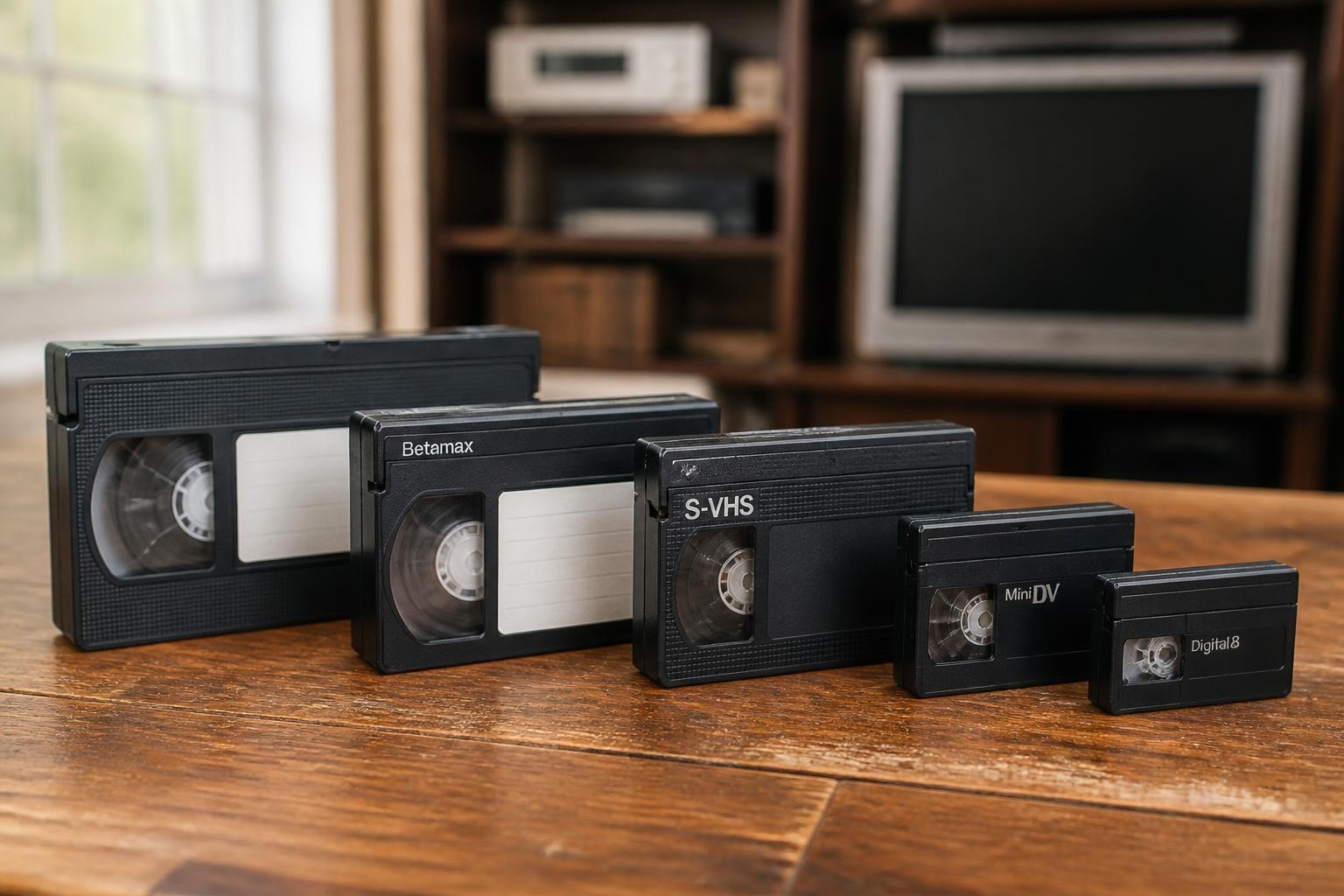
While "VHS" typically refers to standard consumer tapes, digitization professionals encounter numerous vcr vhs tape variants requiring specialized playback equipment or knowledge.
S-VHS and Professional Variants
S-VHS (Super VHS) offers significantly improved luminance resolution through separated Y/C recording, delivering approximately 400 lines of horizontal resolution compared to standard VHS's 240 lines. S-VHS decks provide backward compatibility with standard VHS, but standard VHS decks cannot properly play S-VHS recordings.
Professional variants included:
- S-VHS-C: Compact cassette for camcorders requiring adapter for deck playback
- W-VHS: Wideband VHS for high-definition analog recording (extremely rare)
- D-VHS: Digital VHS using same cassette form factor (incompatible with analog VHS)
Regional Standards and Compatibility
The vcr vhs tape format existed in three incompatible regional standards: NTSC (North America, Japan), PAL (Europe, Australia), and SECAM (France, Eastern Europe). Decks designed for one standard cannot play tapes recorded in another without multi-standard capability.
| Standard | Frame Rate | Lines | Regions |
|---|---|---|---|
| NTSC | 29.97 fps | 525 | Americas, Japan, Korea |
| PAL | 25 fps | 625 | Europe, Australia, parts of Asia |
| SECAM | 25 fps | 625 | France, Russia, Middle East |
Digitization operations serving diverse client bases benefit from maintaining multi-standard playback capability or partnering with specialists who can handle non-native regional formats.
Long-Term Preservation and Format Migration Planning
Converting vcr vhs tape content to digital formats represents only the first step in long-term preservation. Digital file formats also face obsolescence, requiring ongoing format migration and backup strategies.
File Format Selection for Longevity
Archive-quality digitization balances file size, quality preservation, and format longevity. Uncompressed captures consume enormous storage but preserve maximum information. Compressed formats reduce storage requirements while introducing quality tradeoffs.
Preservation format recommendations:
- Primary archive: Uncompressed or lossless compression (FFV1, ProRes)
- Access copies: High-quality compressed (H.264, H.265)
- Distribution copies: Format-specific for delivery platform
- Redundant storage: Minimum 3 copies on different media types
- Migration schedule: Review format viability every 5 years
The Digital Memories Preservation Lab Guide provides practical step-by-step recommendations for community digitization projects that apply equally to commercial operations.
Metadata and Documentation Standards
Proper metadata transforms digital files into searchable, manageable assets. Documentation should capture technical specifications, source material condition, transfer settings, and preservation actions.
Essential metadata fields include:
- Source tape identification and format
- Recording date and content description
- Playback equipment and capture settings
- Operator notes and condition assessment
- Date of digitization and responsible party
Professional Service Models and Client Education
Successful digitization businesses combine technical expertise with effective client communication. Educating clients about vcr vhs tape limitations, realistic quality expectations, and preservation urgency creates informed customers and sustainable service relationships.
Setting Quality Expectations
Many clients possess unrealistic expectations about VHS quality, assuming professional digitization will somehow enhance inherently low-resolution source material to HD standards. Transparent communication about format limitations prevents dissatisfaction and refund requests.
Effective client education covers:
- VHS native resolution and quality constraints
- Age-related degradation effects on playback quality
- Impossibility of recovering detail never recorded
- Value of professional transfer despite source limitations
Pricing Strategies and Service Tiers
Digitization businesses typically offer tiered service levels balancing automation, manual intervention, and quality enhancement. Basic transfers using automated capture provide affordable options for less-critical content, while premium services include manual optimization, scene detection, and quality restoration.
Understanding equipment rental costs and repair expenses helps businesses calculate sustainable pricing that covers equipment depreciation, maintenance, and labor while remaining competitive.
Professional handling of vcr vhs tape media requires specialized equipment, technical knowledge, and systematic workflow management that goes far beyond consumer-level video transfer. As magnetic tape continues its inevitable degradation, the window for successful preservation narrows yearly, making reliable equipment access critical for digitization operations. Whether you need professional videotape deck rental starting at $99 per month, expert repair services with transparent $45 diagnostics, or maintenance contracts to keep your equipment operational, VCR Supply provides the specialized support digitization businesses require to serve clients effectively while managing equipment costs and downtime.