Video VCR: Professional Digitization Equipment Guide
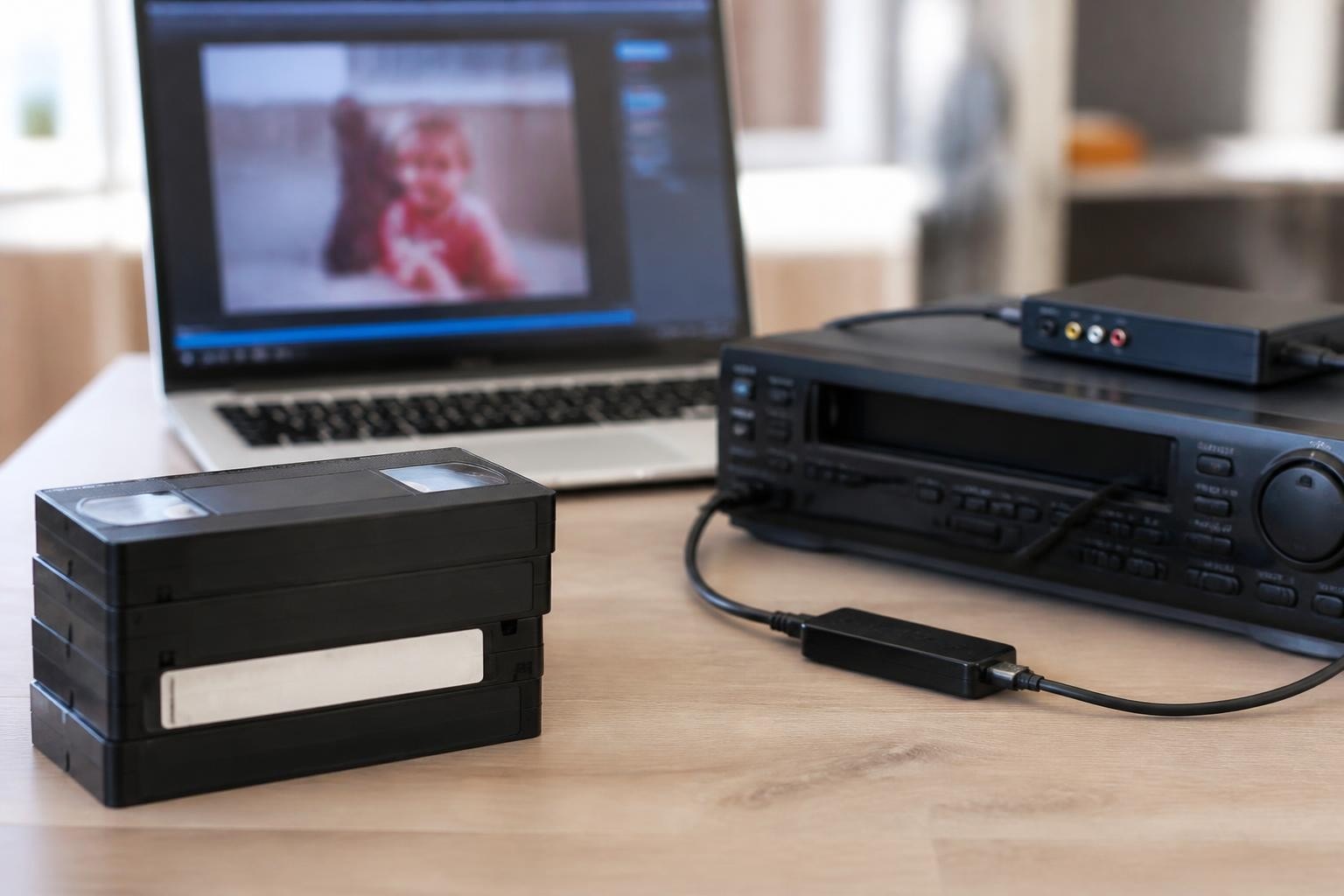
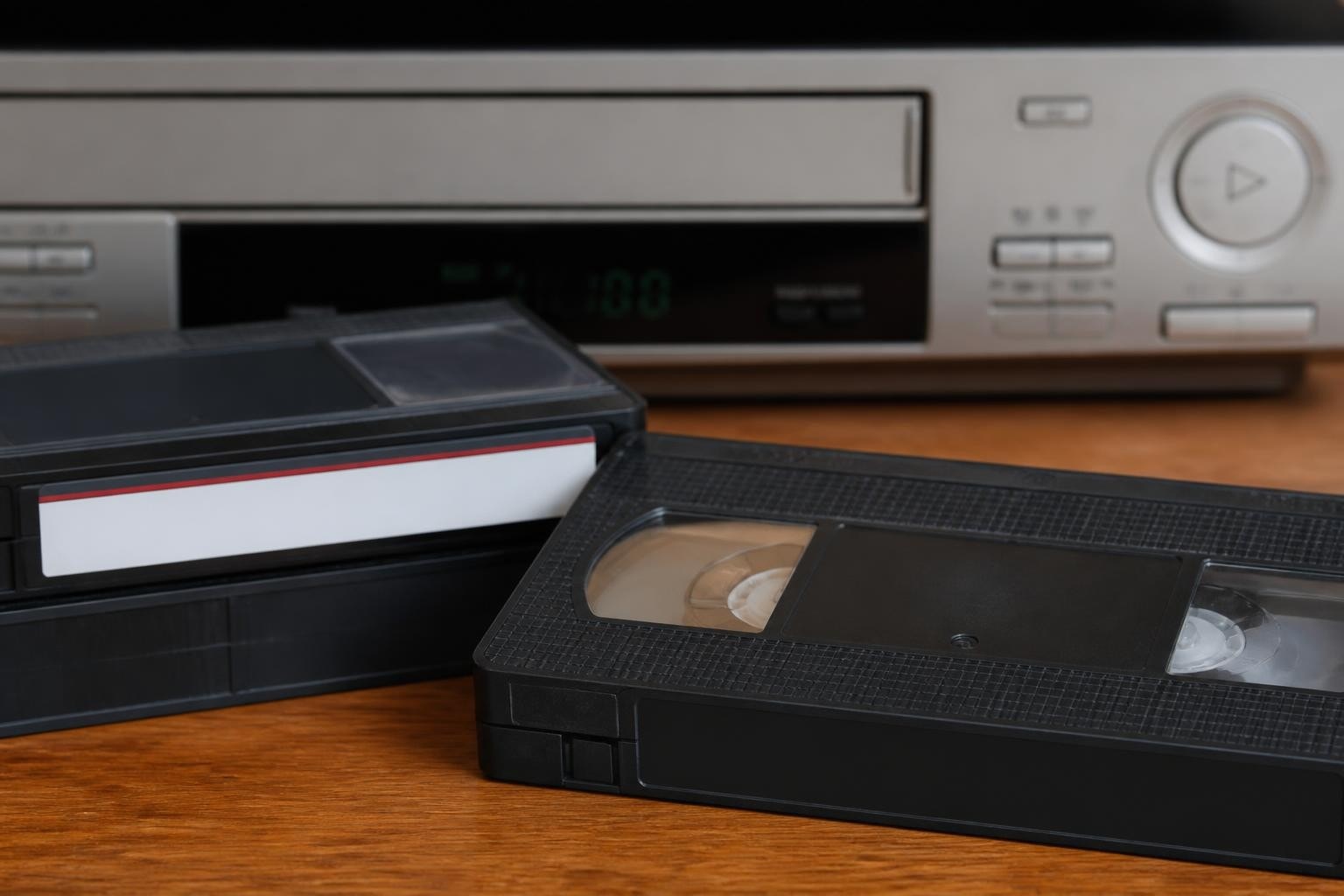
The video VCR remains an essential tool for digitization professionals, archivists, and preservation specialists working with analog tape collections. While consumer-grade VCRs have largely disappeared from retail shelves, professional videotape decks continue to serve critical roles in media transfer facilities, archives, and studios converting decades of recorded content to digital formats. Understanding the capabilities, maintenance requirements, and specialized applications of professional video VCR equipment enables digitization shops to deliver high-quality results while managing the unique challenges of aging analog technology.
Understanding Professional Video VCR Technology
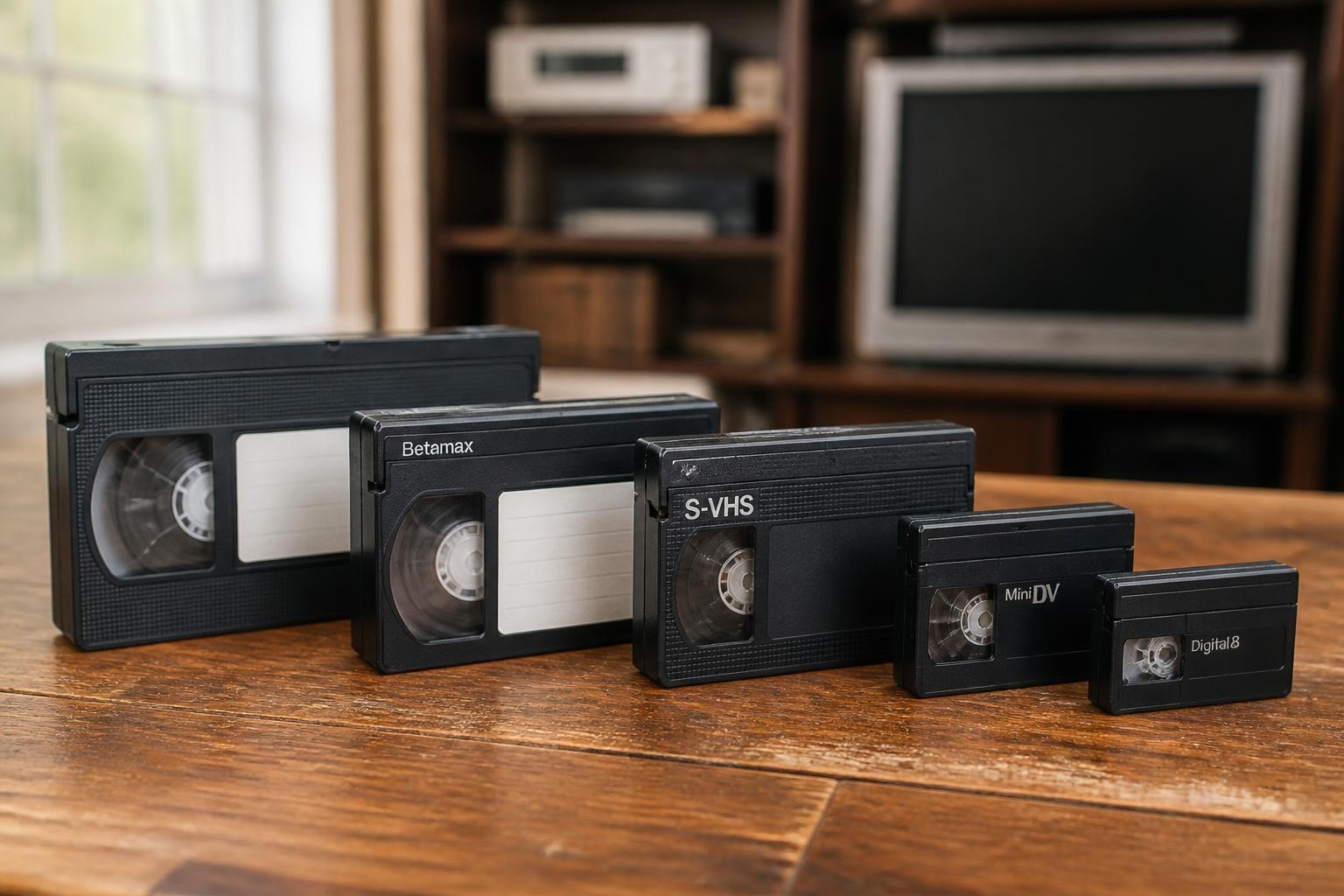
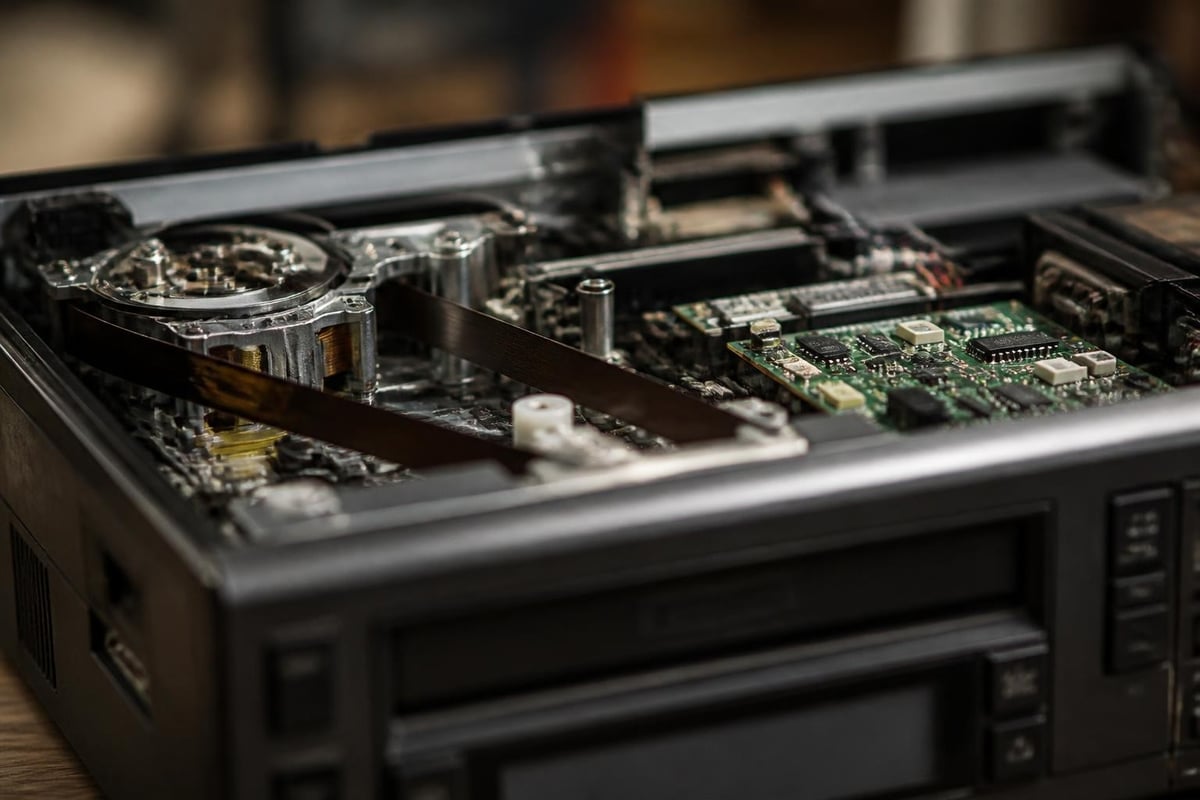
Professional video VCR decks differ substantially from consumer models in build quality, feature sets, and longevity. These machines incorporate broadcast-grade components designed for thousands of hours of operation rather than occasional home use. The engineering standards behind formats like S-VHS, Betamax, and MiniDV created robust recording systems capable of professional-quality playback decades after manufacture.
Key Distinctions in Professional Decks
Professional video VCR equipment features precision transport mechanisms, time base correctors, and superior error correction. These systems maintain stable playback even when working with degraded tapes that would fail in consumer machines.
Critical professional features include:
- Frame-accurate shuttle controls for precise cueing
- Professional audio interfaces (XLR, balanced connections)
- Time code support (SMPTE, VITC)
- Built-in signal processing and enhancement
- Modular construction for component-level repair
The U.S. National Archives provides detailed guidance on playback equipment selection for archival digitization projects, emphasizing the importance of format-matched, well-maintained decks.
Format-Specific Considerations for Digitization
Each video VCR format presents distinct technical characteristics that impact digitization workflows. Understanding these differences ensures appropriate equipment selection and optimal transfer quality.
Analog Formats
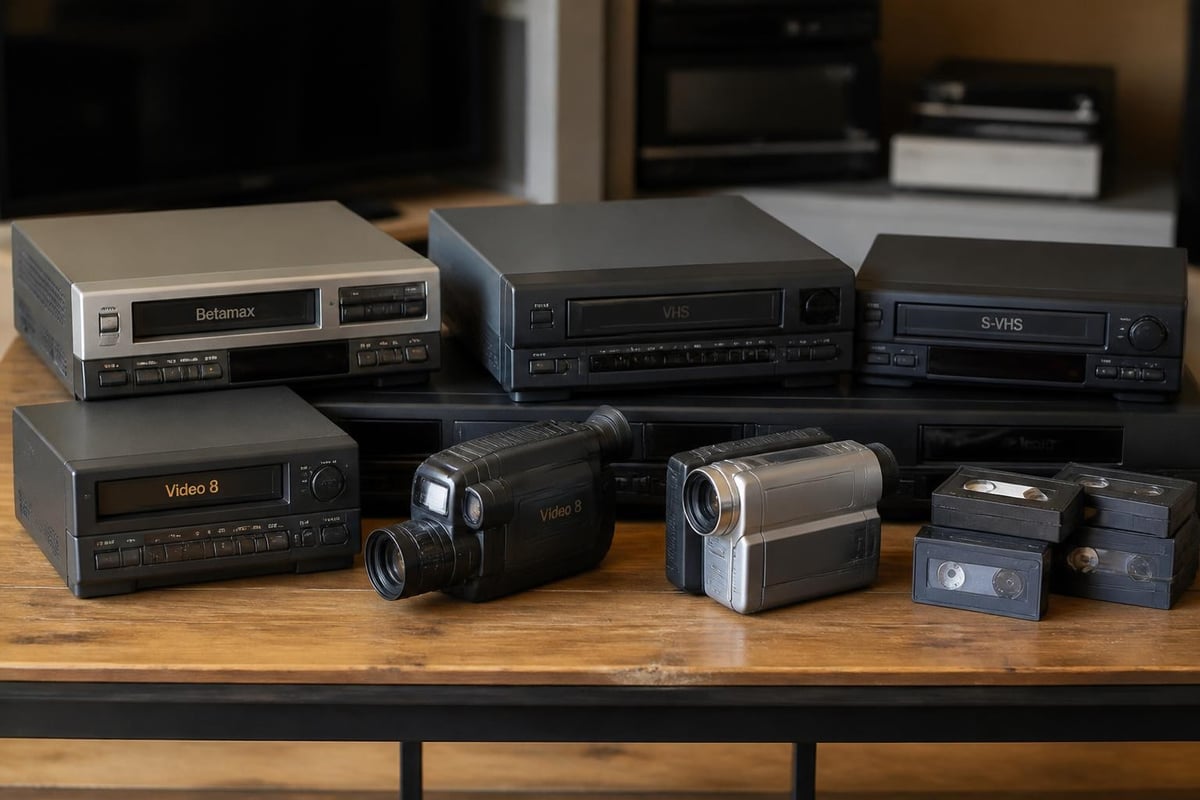
Analog video VCR formats including VHS, S-VHS, Betamax, and Video8 require specialized playback equipment matched to recording standards. The IEC technical specifications for VHS systems define mechanical and electrical parameters that professional decks must maintain for accurate playback.
| Format | Resolution | Audio Channels | Professional Applications |
|---|---|---|---|
| S-VHS | 400 lines | 2 Hi-Fi + 2 Linear | Corporate video, training materials |
| Betamax | 250-290 lines | 2 Hi-Fi | Early professional recording |
| Video8/Hi8 | 240-400 lines | 2 AFM/PCM | Field recording, consumer camcorder |
Digital Tape Formats
Digital8 and MiniDV represent the transition generation between analog and file-based recording. These digital video VCR formats offer significantly improved image quality and stability compared to analog predecessors while maintaining tape-based workflows.
Digital formats provide:
- Generation-loss-free dubbing for creating master copies
- Digital audio quality with 16-bit/48kHz sampling
- Timecode accuracy for frame-precise editing
- Metadata support for cataloging and indexing
Professional MiniDV deck rental services ensure access to properly maintained equipment without the capital expense of ownership for specialized projects.
Maintenance Requirements for Reliable Operation
Professional video VCR equipment demands regular maintenance to sustain performance over extended service lives. Digitization facilities processing high tape volumes must implement comprehensive maintenance protocols to prevent equipment-related quality issues and project delays.
Routine Cleaning and Alignment
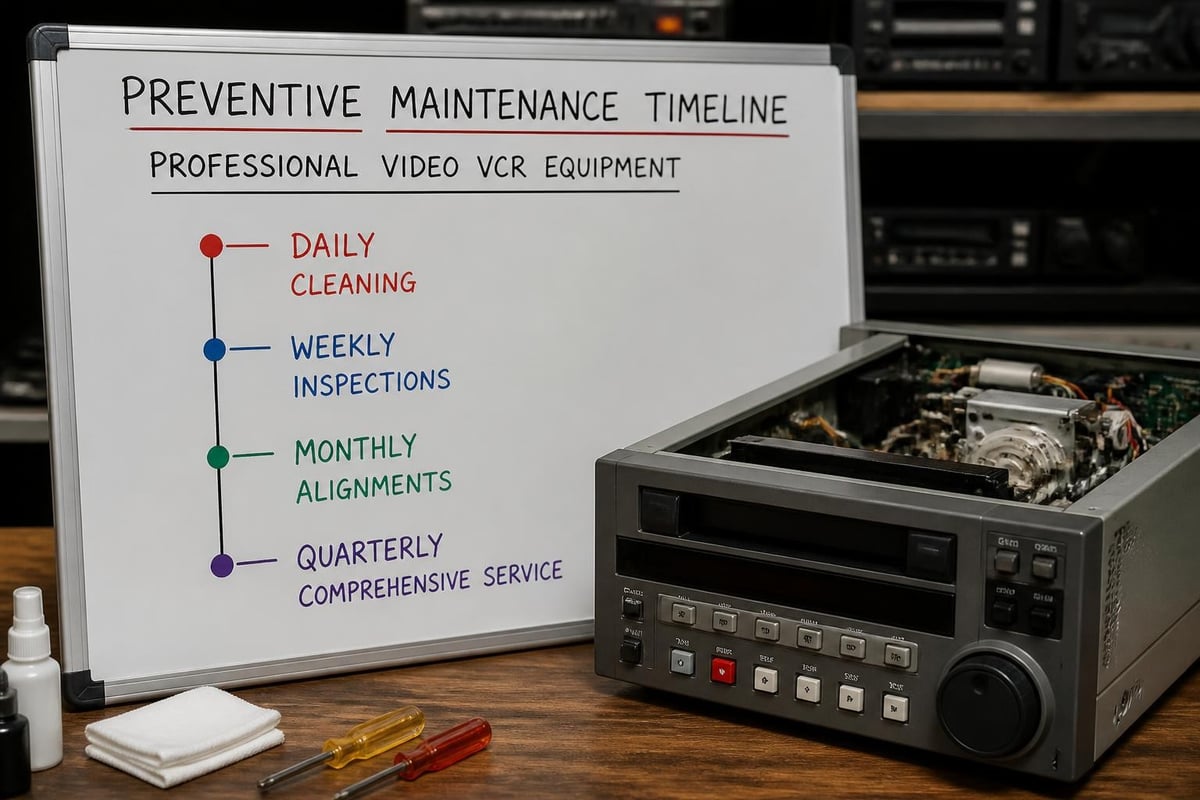
Video head cleaning represents the most critical routine maintenance task. Contamination from tape oxide shedding degrades signal quality and can cause permanent head wear. Professional operations implement cleaning schedules based on operating hours rather than calendar intervals.
Recommended maintenance intervals:
- Video head cleaning: Every 20-30 hours of operation
- Capstan and pinch roller cleaning: Every 50 hours
- Full alignment verification: Every 200 hours or quarterly
- Head replacement evaluation: Every 500-1000 hours
The iFixit VCR repair resources provide practical guidance for common maintenance procedures and component replacement, though professional-grade equipment often requires specialized knowledge beyond consumer repair techniques.
Preventive Maintenance Programs
Structured maintenance contracts reduce equipment downtime by identifying developing issues before complete failure occurs. Regular preventive service extends deck longevity and maintains consistent output quality across digitization projects.
Operational Challenges in Tape Digitization
Working with aging tapes introduces variables that even perfectly maintained video VCR equipment cannot fully overcome. Professional digitization workflows must account for tape condition variability and implement strategies to maximize successful transfers.
Tape Degradation Modes
Magnetic tape deteriorates through multiple mechanisms that impact playback quality. Understanding these degradation patterns helps operators make informed decisions about playback settings and signal processing.
Common degradation issues include:
- Sticky shed syndrome: Binder breakdown causing tape to shed oxide
- Vinegar syndrome: Acetate base deterioration (primarily acetate film)
- Print-through: Magnetic signal transfer between tape layers
- Dimensional instability: Physical shrinkage or expansion
- Edge damage: Physical wear from repeated playback
The IASA Guidelines for the Preservation of Video Recordings provide internationally recognized standards for assessment and handling of deteriorated materials.
Signal Processing and Enhancement
Professional video VCR decks incorporate time base correctors and dropout compensators to mitigate playback instabilities. However, severely degraded tapes may require additional external processing to achieve acceptable transfer quality.
Recent research on algorithmic restoration techniques for digitized videotapes demonstrates emerging computational approaches to recovering information from compromised analog signals. These methods complement hardware-based signal processing in professional digitization workflows.
Equipment Acquisition Strategies for Digitization Facilities
Digitization shops face strategic decisions regarding video VCR equipment acquisition as professional decks become increasingly scarce. The declining availability of working units and replacement parts necessitates careful planning around equipment lifecycle and sourcing.
Rental Versus Ownership Models
Format diversity in typical digitization projects often makes purchasing dedicated decks for every format economically impractical. Rental services starting at $99 per month provide flexible access to specialized equipment without capital investment.
| Consideration | Rental Advantages | Purchase Advantages |
|---|---|---|
| Capital costs | Minimal upfront investment | Long-term lower per-use cost |
| Maintenance burden | Included in rental agreement | Owner responsibility |
| Format flexibility | Easy format switching | Requires multiple purchases |
| Technology access | Always current equipment | Potential obsolescence |
Project-based facilities benefit from rental arrangements that align equipment costs with revenue-generating work. High-volume operations processing consistent format mixes may justify equipment purchases combined with comprehensive service agreements.
Repair and Refurbishment Considerations
As new professional video VCR production ceased years ago, the available equipment pool consists entirely of used and refurbished units. Evaluating deck condition and securing reliable repair resources becomes critical for operational continuity.
Professional VCR repair services with diagnostic capabilities enable informed decisions about equipment viability. The standard $45 diagnostic fee provides assessment of mechanical condition, head life, and alignment status before committing to repair investments.
Cultural and Market Context
Beyond technical digitization applications, the video VCR maintains cultural relevance through collector communities and nostalgia-driven interest. Understanding these market dynamics provides context for preservation priorities and potential secondary equipment sources.
The VHS Revival Phenomenon
Recent years have witnessed unexpected renewed interest in VHS and other analog video formats among enthusiasts and collectors. Media coverage of the VHS comeback documents growing communities appreciating the aesthetic qualities and cultural significance of analog video.
This cultural trend creates both opportunities and challenges for professional digitization work. Increased public awareness of analog media drives preservation project inquiries while simultaneously affecting equipment availability as collectors acquire working decks.
Implications for Preservation Priorities
The Getty Conservation Institute's research on audiovisual preservation emphasizes the urgency of transferring at-risk analog recordings before playback equipment becomes completely unavailable. This "use it or lose it" imperative drives institutional digitization programs while equipment and expertise remain accessible.
Cultural institutions increasingly recognize that video VCR equipment represents not merely playback tools but historical artifacts documenting technological evolution. Maintaining operational equipment serves both immediate digitization needs and long-term preservation of playback capability knowledge.
Specialized Applications and Workflow Integration
Professional video VCR equipment integrates into diverse digitization workflows beyond straightforward tape-to-file transfers. Understanding specialized applications enables facilities to maximize equipment utility and service capabilities.
Archival-Quality Capture Workflows
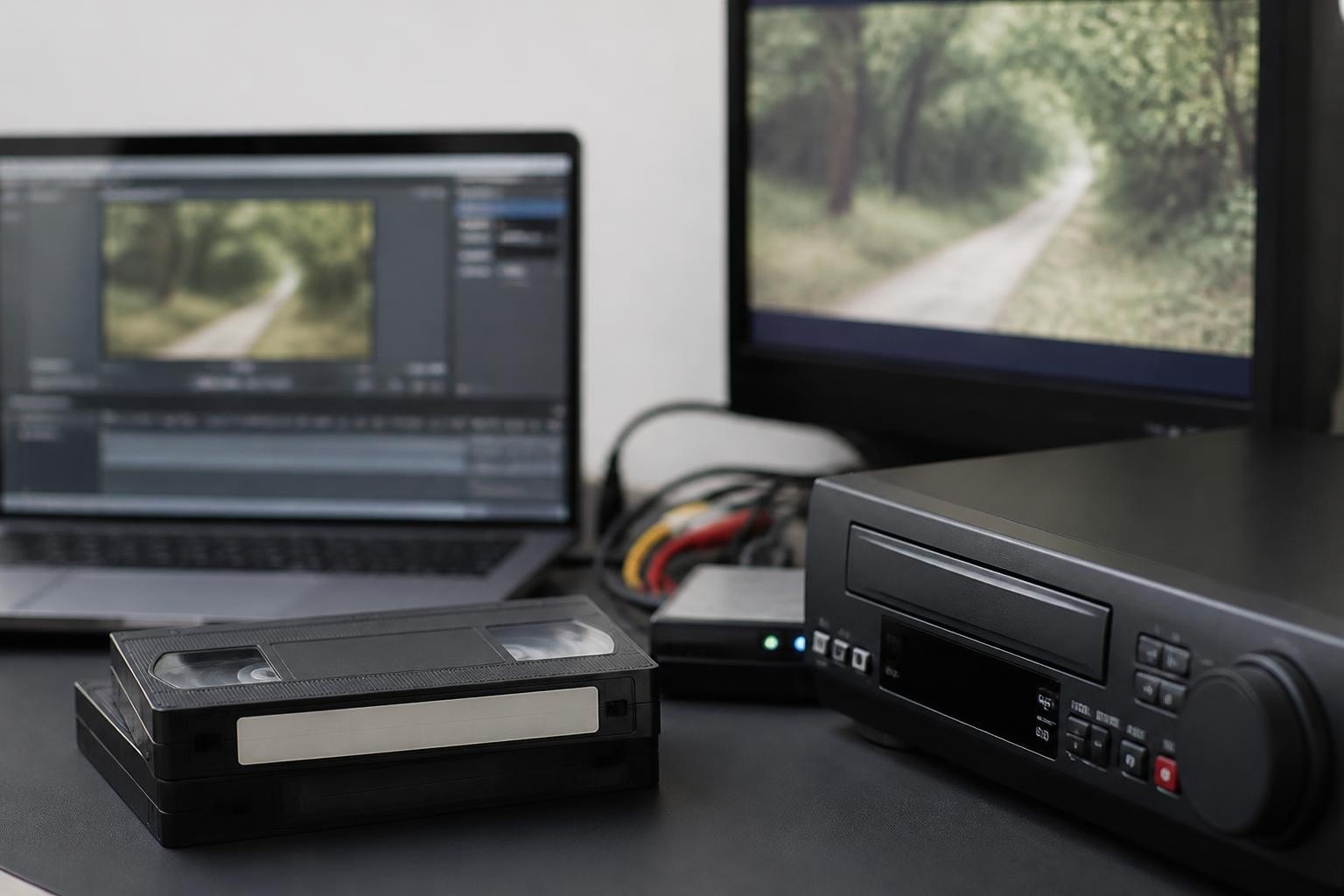
Preservation-standard digitization requires careful attention to signal chain integrity and documentation practices. Professional video VCR decks provide the foundation for archival transfers when properly configured and maintained.
Essential workflow components include:
- Format-matched professional playback deck
- External time base correction for analog formats
- Broadcast-quality capture interface
- Uncompressed or mathematically lossless compression
- Comprehensive technical metadata documentation
Archives implementing these standards ensure maximum information recovery from source tapes while creating master files suitable for long-term preservation and future migration.
Batch Processing Operations
High-volume digitization facilities develop systematic workflows to maximize throughput while maintaining quality standards. Multiple video VCR decks operating simultaneously enable parallel processing of compatible format groups.
Batch operations require:
- Standardized equipment configurations across similar decks
- Automated quality control monitoring to detect playback issues
- Efficient tape handling procedures to minimize setup time
- Comprehensive logging systems tracking equipment usage and maintenance needs
Professional facilities balance speed and quality by implementing graduated service tiers. Preservation-level transfers receive individualized attention while access copies may use streamlined batch workflows.
Equipment Specifications for Common Professional Formats
Understanding the technical specifications of professional video VCR models guides appropriate equipment selection for specific digitization requirements. Different formats and models offer varying capabilities suited to particular applications.
S-VHS Professional Decks
S-VHS format decks provide enhanced resolution and signal quality compared to standard VHS while maintaining backward compatibility. Professional S-VHS deck rental options include broadcast-quality models with comprehensive connectivity and control features.
Top professional S-VHS characteristics:
- 400-line horizontal resolution (compared to 240 for VHS)
- Y/C separated signal paths minimizing chroma artifacts
- Professional audio with separate hi-fi and linear tracks
- Edit control protocols for production applications
MiniDV and Digital8 Systems
Digital tape formats eliminate generation loss and provide superior stability compared to analog predecessors. Professional MiniDV equipment offers IEEE 1394 (FireWire) connectivity for direct digital transfer without analog conversion.
Digital format advantages for digitization:
- Bit-for-bit identical transfers preserve original recording quality
- No signal degradation from cable runs or grounding issues
- Metadata preservation including timecode and camera settings
- Simplified workflow with fewer signal processing variables
Quality Control and Verification Procedures
Comprehensive quality control ensures digitized content accurately represents source material capabilities within the limitations of original recording quality and tape condition. Professional video VCR operation requires systematic verification at multiple workflow stages.
Real-Time Monitoring
Active monitoring during playback enables immediate detection of issues requiring intervention. Professional operators watch for dropout indicators, tracking errors, and synchronization problems that signal tape or equipment issues.
Critical monitoring parameters:
- Video signal levels (luminance and chrominance)
- Audio level consistency across channels
- Dropout frequency and duration
- Tracking stability and head switching visibility
- Time base corrector lock status
Post-Capture Verification
Transferred files require verification against source tapes to confirm complete, accurate capture. This quality control step identifies technical issues, missing content, or transfer artifacts requiring correction through re-capture.
Systematic verification compares:
- Running time accuracy (complete transfer)
- Visual quality spot-checking at intervals
- Audio synchronization throughout duration
- Metadata accuracy and completeness
- File format specification compliance
Organizations processing valuable historical content often implement dual verification with independent reviewers confirming transfer quality before declaring projects complete and returning source materials.
Professional video VCR equipment remains indispensable for digitization facilities working with decades of analog and digital tape content. Proper equipment selection, maintenance, and operational procedures ensure successful transfers that preserve cultural heritage and valuable recordings for future generations. Whether you need specialized playback equipment for a short-term project or comprehensive repair services to keep your existing decks operational, VCR Supply provides professional videotape deck rentals starting at $99 per month, expert repair services with diagnostic capabilities, and maintenance contracts designed to minimize downtime for digitization operations.