Play VCR: Essential Guide for Professional Digitization
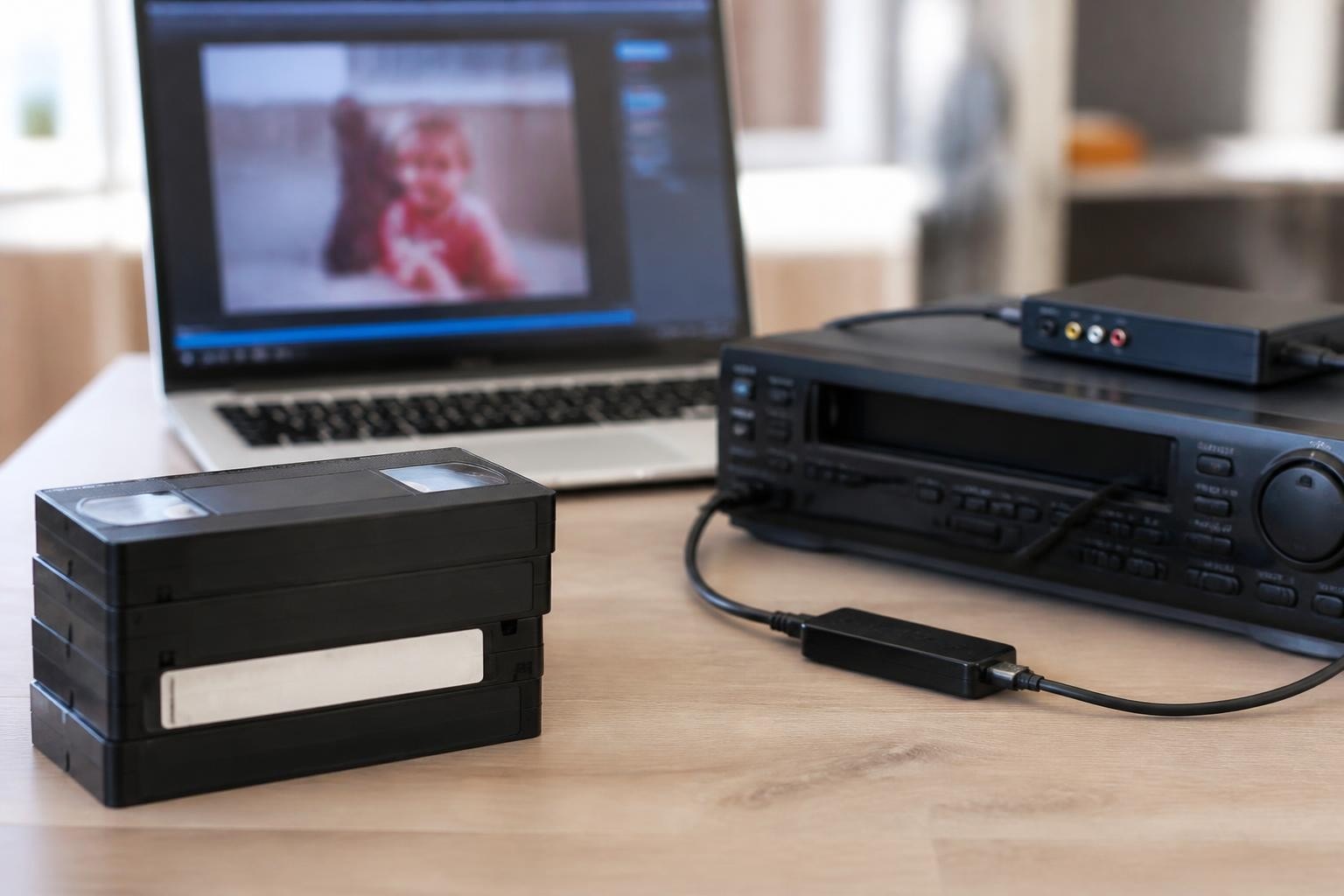
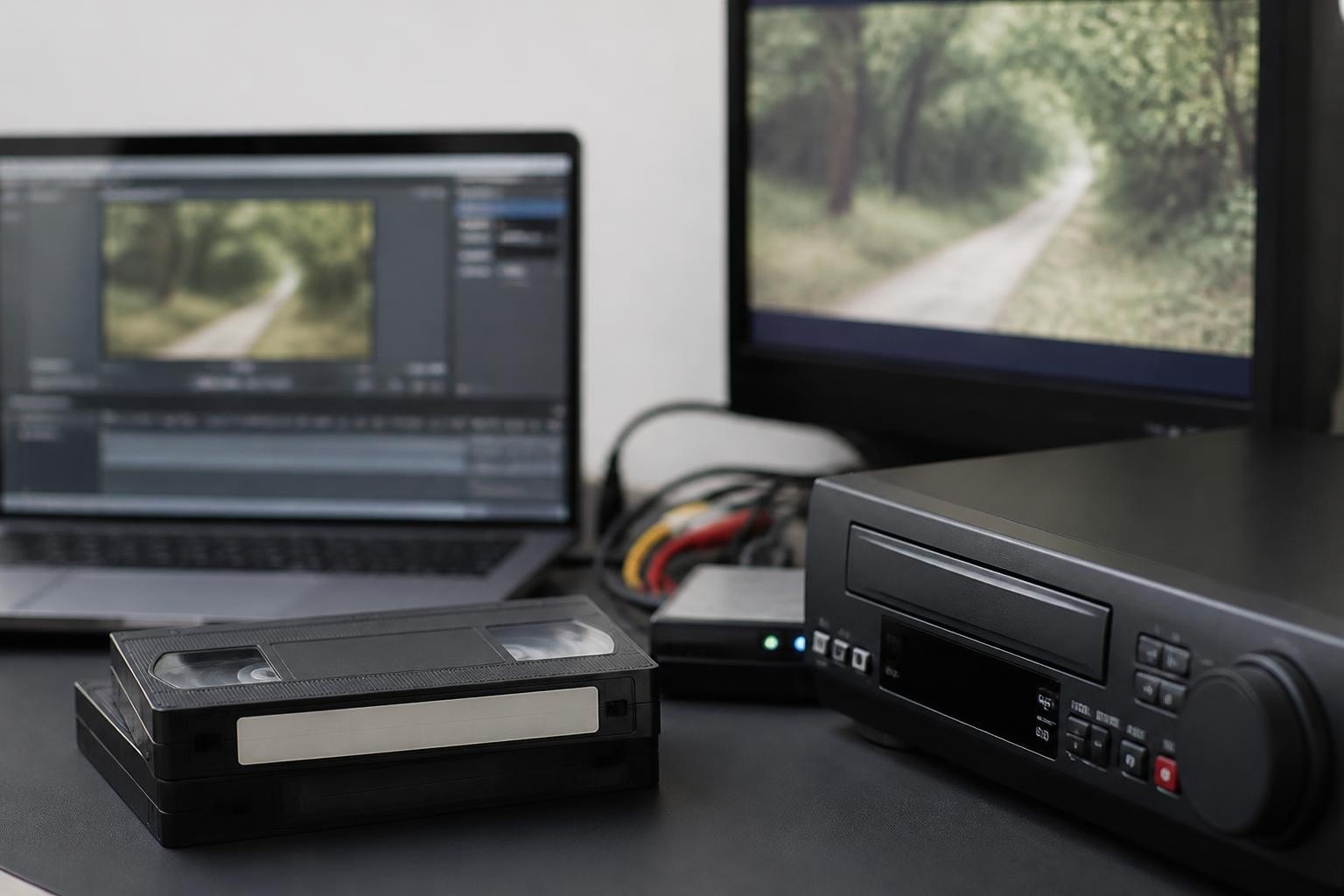
When digitization shops and archival facilities need to play VCR tapes, the process requires far more technical precision than simply pressing a button on consumer equipment. Professional videotape playback demands calibrated decks, proper signal monitoring, and systematic workflows to ensure faithful digital captures from aging analog media. Understanding how to properly play VCR content for preservation purposes means recognizing that every playback degrades magnetic tape slightly, making the first digital capture critically important for long-term preservation.
Understanding Professional VCR Playback Requirements
The foundation of quality digitization begins with recognizing that not all VCR equipment delivers identical playback results. Professional-grade decks from manufacturers like Panasonic, Sony, and JVC offer features that consumer models lack entirely.
Broadcast-Quality Decks versus Consumer Models
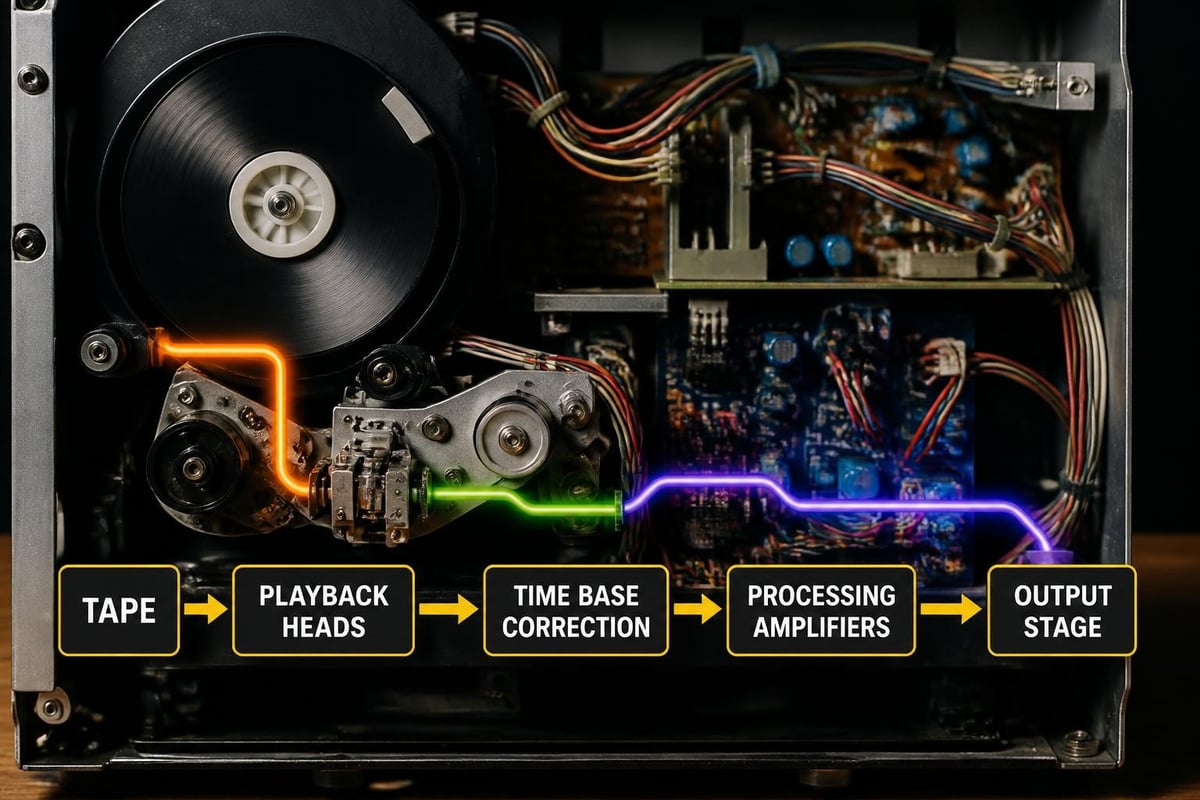
Professional decks incorporate time-base correctors that stabilize timing errors inherent in videotape playback. These circuits correct horizontal sync variations that cause image jitter, delivering stable output that digital capture cards can process reliably.
Key differences include:
- Manual tracking controls for precise tape-to-head alignment
- Component video outputs (Y/C separation) preserving maximum signal bandwidth
- Professional balanced audio outputs (XLR connectors) with adjustable levels
- Service mode access for head drum alignment and RF level adjustment
- Robust tape transport mechanisms engineered for continuous operation
Consumer VCRs typically automated these functions with compromises favoring convenience over precision. When digitization facilities need to play VCR tapes from diverse sources, professional decks provide the manual controls necessary to optimize playback for each individual tape's condition.
Format-Specific Playback Considerations
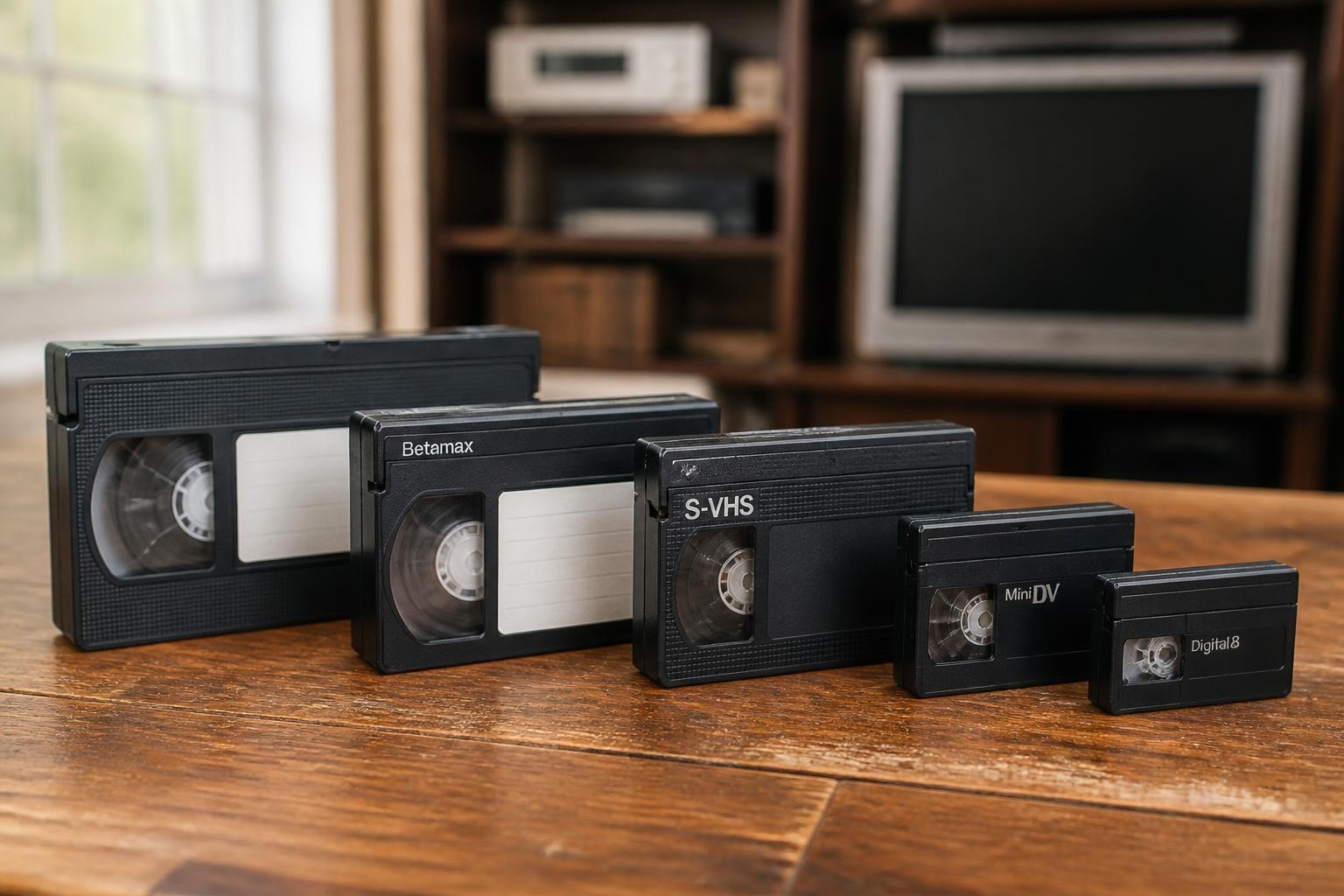
Different videotape formats require specialized knowledge when preparing to play VCR media professionally. VHS, S-VHS, Betamax, and smaller formats like Hi8 and MiniDV each present unique technical challenges.
| Format | Track Width | Tape Speed | Critical Adjustment |
|---|---|---|---|
| VHS | 49 microns | 33.35 mm/s | Tracking phase |
| S-VHS | 58 microns | 33.35 mm/s | Y/C separation |
| Betamax | 32.9 microns | 18.7 mm/s | Skew correction |
| MiniDV | 10 microns | 18.81 mm/s | Tension servo |
The microscopic track widths mean that head-to-tape alignment becomes exponentially critical as tape ages and dimensional stability degrades. Professional operators understand that the settings used to play VCR tapes created on one machine may require adjustment to optimize playback on a different deck, even within the same format family.
Pre-Playback Inspection and Preparation
Before attempting to play VCR tapes for digitization, thorough inspection prevents equipment damage and maximizes capture quality. Tape condition assessment has become increasingly important as the videotape population ages past manufacturer specifications.
Physical Tape Assessment Protocol
Visual inspection reveals potential playback problems before threading tape into the transport mechanism. Hold cassettes up to light, examining the tape pack through the window for these warning signs:
- Uneven winding showing loose or tight pack areas
- White powder residue indicating binder hydrolysis
- Tape edge damage from previous poor handling
- Mold growth appearing as spots or discoloration
Severe binder degradation (sticky-shed syndrome) requires special treatment before attempting playback. The National Archives provides technical guidance on storage and handling that digitization facilities should implement as standard practice. Attempting to play VCR tapes exhibiting advanced binder breakdown risks catastrophic failure, destroying both the tape and potentially contaminating playback heads.
Environmental Acclimation Process
Tapes arriving from different storage environments must acclimate to the playback room's temperature and humidity before loading into equipment. Rapid environmental changes cause dimensional instability in the tape substrate.
Recommended acclimation protocol:
- Place sealed tapes in the playback environment for 24 hours minimum
- Maintain room conditions at 68-72°F and 30-50% relative humidity
- Never attempt to play VCR tapes immediately after shipping in cold weather
- Allow 48 hours for tapes stored in significantly different conditions
This patience prevents moisture condensation on tape surfaces and allows the polyester base layer to reach dimensional equilibrium with the playback environment.
Optimizing Playback Settings for Digitization
The technical process to play VCR content for professional digitization involves systematic adjustment of multiple deck parameters. Unlike consumer playback where "good enough" suffices, preservation work demands optimal settings for each tape.
Tracking and Skew Alignment
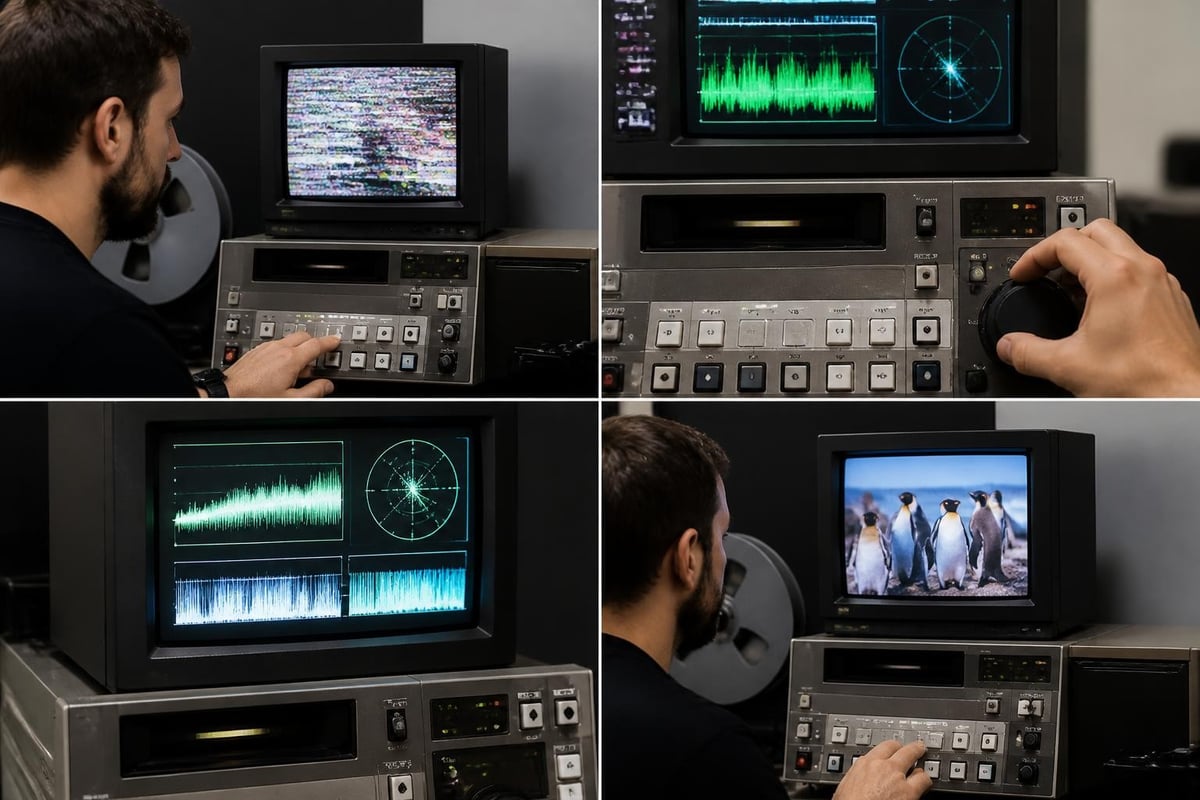
Manual tracking adjustment compensates for variations in the original recording deck's head position and any subsequent tape dimensional changes. Professional decks display tracking status through RF level meters or on-screen indicators.
Tracking optimization procedure:
- Begin playback with tracking centered at factory default
- Observe the picture for noise bars, typically horizontal bands
- Adjust tracking control slowly while monitoring picture quality
- Find the position yielding maximum picture stability and minimum noise
- Note the setting if processing multiple tapes from the same source
When you play VCR tapes recorded on consumer equipment, tracking often requires continuous adjustment throughout the tape as recording quality varies between scenes. Professional archival decks maintain more consistent tracking across entire tapes.
Video Signal Monitoring and Adjustment
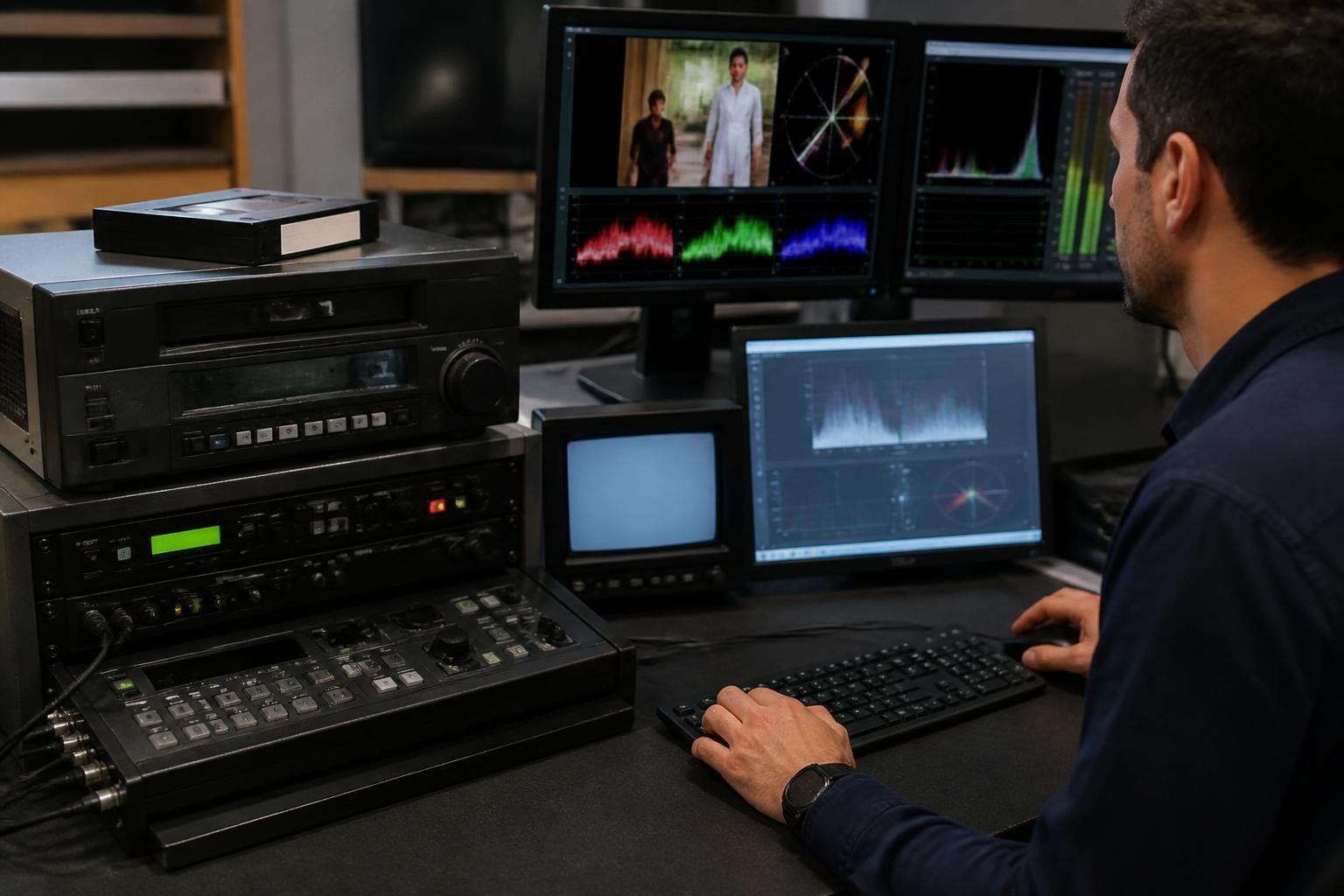
Professional facilities monitor multiple aspects of the video signal when preparing to play VCR media for capture. Waveform monitors and vectorscopes provide objective measurement beyond simple picture observation.
Standard signal parameters to verify include:
- Luminance (brightness) levels matching standard IRE values
- Chrominance (color) phase alignment within ±10 degrees
- Sync pulse amplitude and timing conforming to RS-170A specifications
- Signal-to-noise ratio exceeding minimum thresholds for acceptable capture
The detailed service manual specifications for broadcast decks illustrate the engineering precision built into professional equipment, showing why these decks outperform consumer models for critical playback applications.
Maintenance Requirements for Reliable Playback
Equipment reliability determines whether digitization facilities can play VCR tapes on demand without unexpected downtime. Regular maintenance prevents the gradual degradation that leads to playback failures.
Head Cleaning Protocols
Video head drums accumulate oxide deposits from magnetic tape, progressively degrading playback quality. Professional operators implement systematic cleaning schedules rather than waiting for visible problems.
| Cleaning Method | Frequency | Application |
|---|---|---|
| Chamois stick | Every 10 hours | Light oxide buildup |
| Solvent cleaning | Every 50 hours | Moderate contamination |
| Professional service | Every 200 hours | Deep cleaning, alignment |
When facilities regularly play VCR tapes as their core business, tracking cleaning intervals becomes essential recordkeeping. Many professional decks include hour meters that simplify maintenance scheduling.
Mechanical Component Service
The tape transport mechanism contains rubber components that harden with age, affecting tape handling precision. Pinch rollers, belts, and idler tires require periodic replacement to maintain proper tape tension and speed stability.
Critical replacement intervals:
- Pinch rollers: Replace when hardness exceeds Shore A durometer 70
- Drive belts: Replace every 1,000 operating hours or visible cracking
- Idler tires: Replace when diameter reduces by 10% from specification
- Brake pads: Replace when braking distance increases noticeably
The VCR Supply repair services address these maintenance requirements for digitization shops, offering diagnostic evaluation and preventive maintenance contracts that minimize unexpected equipment failures during critical projects.
Workflow Integration for Digitization Operations
Efficient facilities develop systematic processes to play VCR tapes through complete digitization workflows. Standard operating procedures ensure consistency across different operators and tape batches.
Batch Processing Strategies
High-volume digitization requires organizing tapes into batches sharing similar characteristics. Grouping by format, running time, and source minimizes deck changeovers and setting adjustments.
Effective batch categorization considers:
- Recording format (VHS, S-VHS, Betamax, MiniDV, etc.)
- Tape length and actual content duration
- Physical condition requiring special handling
- Client priority and delivery deadlines
- Expected signal quality based on age and storage history
When operators prepare to play VCR content in systematic batches, productivity increases significantly compared to random processing sequences. The time invested in batch organization pays dividends through reduced equipment switching and optimized workflow continuity.
Complete operational process from tape intake, physical inspection, batch organization, playback optimization, signal capture, quality verification, through final file delivery in professional preservation facilities
Quality Control and Verification
Professional digitization operations implement multi-stage verification when they play VCR tapes for preservation capture. Quality control checkpoints catch problems before finalizing digital masters.
Standard QC checkpoints include:
- Pre-capture signal verification using calibrated test equipment
- Real-time monitoring during capture for dropouts or sync errors
- Post-capture file integrity verification and format validation
- Spot-checking sample frames against original playback quality
- Final client review before archiving or delivery
The CLIR research on magnetic tape degradation emphasizes why quality verification matters: aging tape stocks create unpredictable playback challenges that require active monitoring rather than automated processing assumptions.
Equipment Selection for Professional Applications
Choosing appropriate playback equipment determines long-term operational success for facilities that regularly play VCR tapes professionally. Equipment decisions balance immediate budget constraints against total cost of ownership.
Rental versus Purchase Economics
Digitization shops facing variable workload volumes benefit from flexible equipment access models. Project-based work with fluctuating tape format requirements makes fixed equipment ownership inefficient.
Rental advantages for professional playback:
- Access to maintained, calibrated equipment without capital investment
- Format flexibility matching project requirements
- No storage costs for idle equipment between projects
- Predictable monthly expenses simplifying project bidding
- Technical support included with rental agreements
Facilities can rent professional decks starting at reasonable monthly rates, allowing them to play VCR formats on demand without maintaining extensive equipment inventories. This model proves especially valuable for specialized formats like Betamax that appear occasionally but don't justify permanent ownership.
Format Coverage Requirements
Comprehensive digitization services require playback capability across the complete videotape format landscape. Client collections often mix formats within single projects, demanding multi-format deck availability.
Essential format coverage includes:
- VHS and S-VHS for consumer and prosumer content
- Betamax for 1980s consumer recordings
- Hi8 and Digital8 for camcorder-originated material
- MiniDV for late-1990s through early-2000s video
- Professional formats (U-matic, Digital-S) for broadcast archives
The strategic approach involves maintaining core format capability internally while accessing specialized formats through rental partnerships when project requirements demand them. This hybrid model optimizes both capability and cost efficiency.
Advanced Playback Techniques for Challenging Tapes
Experienced operators develop specialized skills to play VCR tapes that standard procedures cannot handle. Problem tapes require diagnostic thinking and creative technical solutions.
Damaged Tape Remediation
Physical tape damage from previous poor playback attempts, storage problems, or age-related deterioration demands careful intervention before attempting digitization playback.
Common damage patterns and responses include:
| Damage Type | Symptom | Remediation Approach |
|---|---|---|
| Crease | Picture distortion line | Gentle manual cleaning, slow speed |
| Edge damage | Tracking instability | Careful inspection, potential editing |
| Stretched section | Speed variation | Note timecode, manual tension control |
| Splice deterioration | Audio/video dropout | Re-splice with archival tape |
When preparing to play VCR tapes showing these problems, operators must balance preservation priorities against the risk of additional damage. Sometimes the best approach involves documenting the damage and proceeding with carefully monitored playback rather than attempting extensive physical repairs that might worsen the situation.
Signal Enhancement Options
Modern digitization workflows can incorporate signal processing to improve playback quality when operators play VCR content from degraded sources. These tools must be applied judiciously to enhance rather than alter historical content.
Appropriate enhancement techniques include time-base correction to stabilize sync, chroma phase adjustment to correct color timing errors, and dropout compensation to minimize brief signal losses. The AVA-Net digitization guide provides technical specifications for preservation-quality captures that balance signal improvement against authenticity requirements.
Building Institutional Knowledge for VCR Playback
Organizations that successfully play VCR tapes as core business operations invest in systematic knowledge development. Technical expertise doesn't emerge automatically; it requires deliberate cultivation.
Documentation and Training Systems
Experienced operators document unusual tape problems, effective solutions, and equipment-specific quirks that impact playback quality. This institutional memory prevents repeated problem-solving and accelerates new operator training.
Effective documentation captures:
- Equipment-specific settings for optimal playback by format
- Common failure modes and diagnostic procedures
- Client-specific tape characteristics and handling requirements
- Successful remediation techniques for damaged media
- Maintenance procedures and replacement part specifications
When digitization facilities systematically record how they play VCR tapes across diverse conditions, they build competitive advantages through accumulated expertise that newer operations cannot quickly replicate.
Equipment Relationship Management
Professional operations develop partnerships with equipment suppliers who understand the unique demands of preservation playback. Generic consumer electronics retailers cannot provide the specialized support that digitization workflows require.
Valuable supplier relationships provide access to maintained rental inventory, priority repair service, technical consultation for unusual playback problems, and proactive notification of equipment availability. The VCR Supply FAQ addresses common questions that digitization facilities encounter when selecting equipment partners for ongoing operational support.
Future Considerations for VCR Playback Operations
The videotape playback industry faces inevitable equipment scarcity as manufacturers discontinued production years ago. Organizations planning to play VCR tapes professionally must address long-term sustainability.
Equipment Availability Trends
Professional-grade VCR equipment grows scarcer each year as existing decks fail and replacement parts become unavailable. Forward-thinking facilities develop strategies addressing this inevitable constraint.
Sustainability approaches include establishing relationships with equipment suppliers maintaining refurbished inventory, stockpiling critical replacement components for owned equipment, developing repair capabilities internally for routine maintenance, and planning transition timelines for completing videotape digitization projects before equipment becomes completely unavailable.
Alternative Playback Technologies
Emerging technologies offer potential alternatives to conventional VCR playback for certain applications. RF capture and software-based decoding approaches like VHS-Decode project represent experimental directions that may eventually supplement traditional hardware playback.
These technologies remain developmental for production environments but demonstrate that innovation continues even as traditional equipment ages. Facilities committed to long-term videotape digitization capacity monitor these developments while maintaining conventional playback capabilities for current operational requirements.
Successfully managing professional VCR playback requires technical expertise, maintained equipment, and systematic workflows that honor both preservation standards and operational efficiency. Whether your facility handles occasional format-specific projects or operates continuous digitization services, access to reliable, calibrated playback equipment determines your capability to deliver quality results. VCR Supply provides digitization shops with rental and repair services for professional videotape decks, offering flexible monthly rental starting at $99 and comprehensive repair support with diagnostic services and maintenance contracts that keep your playback operations running without unexpected downtime.