Refurbished VCR: Complete Guide for Digitization Pros
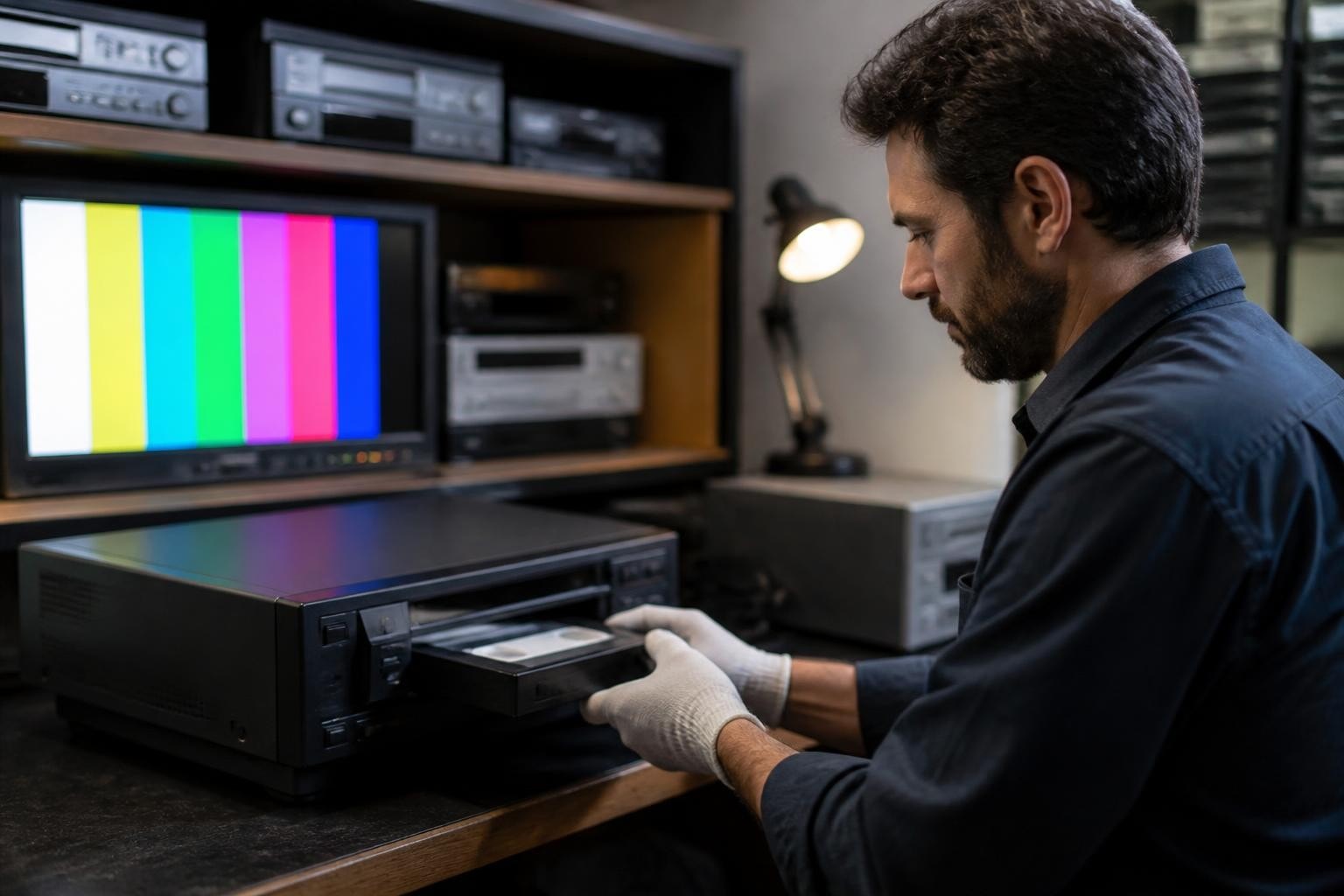
For digitization businesses and archival institutions, acquiring reliable playback equipment presents a constant challenge. Professional videotape decks have become scarce as manufacturers discontinued production, yet demand for tape transfers continues growing. A refurbished VCR offers a practical solution, delivering professional-grade performance at a fraction of new equipment costs while supporting critical preservation workflows. Understanding how to evaluate, acquire, and maintain these units ensures your operation runs smoothly while protecting your investment in legacy format playback capability.
Understanding the Refurbished VCR Market
The market for refurbished professional videotape equipment has matured significantly since 2020. When major manufacturers ceased production of VHS, S-VHS, MiniDV, and other formats, digitization shops faced equipment shortages. Refurbishment programs emerged to address this gap, extending the operational life of existing units through systematic repair and component replacement.
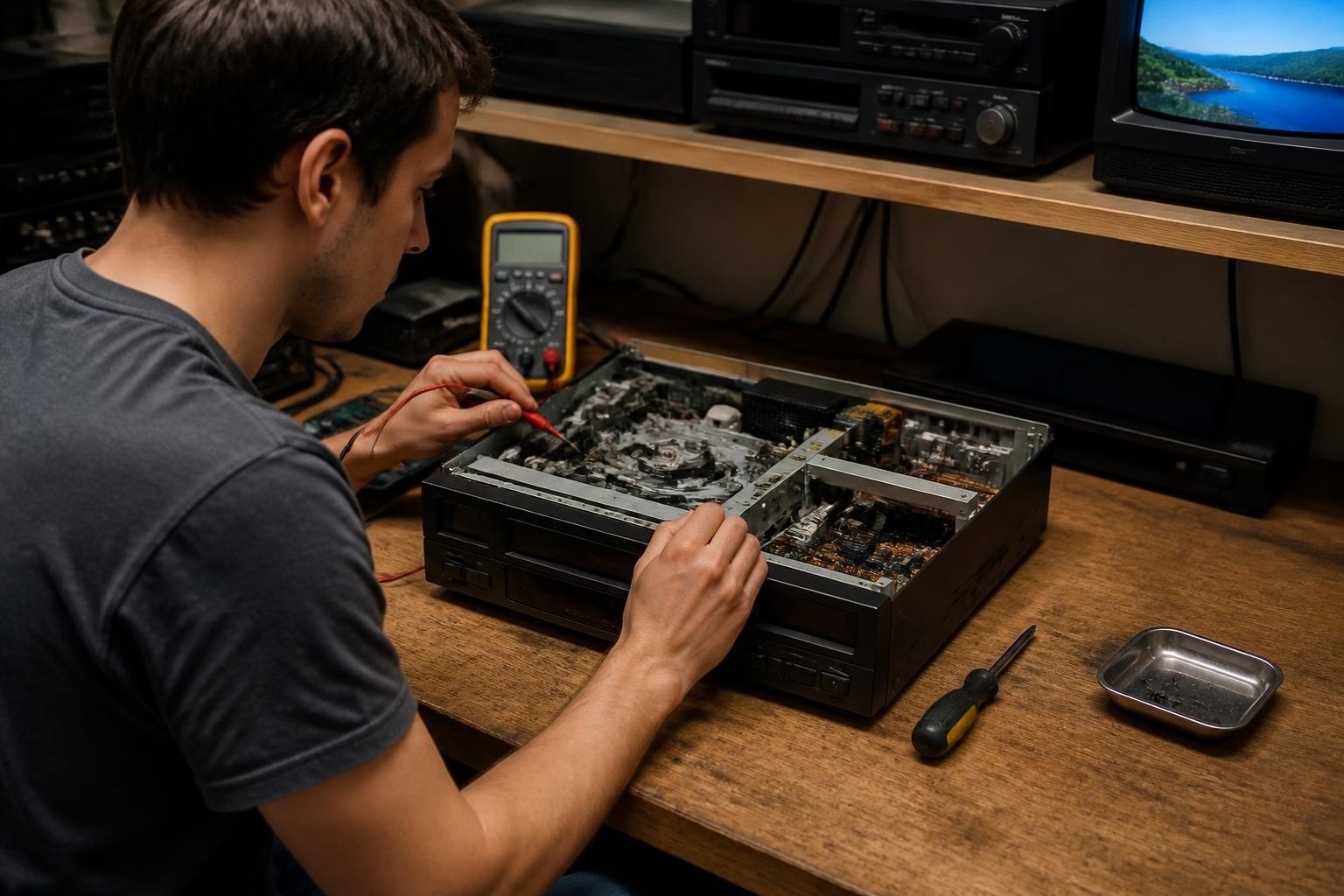
A refurbished VCR differs fundamentally from used equipment. While used decks are sold in as-is condition, refurbished units undergo comprehensive restoration. This process typically includes:
- Complete cleaning of mechanical transport assemblies
- Replacement of worn belts, idlers, and pinch rollers
- Head drum inspection and replacement when necessary
- Calibration of tracking, speed, and servo systems
- Testing across multiple tape formats and conditions
Professional refurbishment follows standards similar to those outlined by the National Archives for machine-readable media maintenance, ensuring equipment meets specifications required for archival-quality transfers.
Quality Tiers in Refurbished Equipment
Not all refurbishment programs deliver equivalent results. Entry-level refurbishment addresses obvious mechanical failures but may skip calibration and preventive component replacement. Professional-grade refurbishment includes full diagnostics, alignment, and replacement of time-sensitive components regardless of current condition.
| Refurbishment Level | Typical Scope | Best For |
|---|---|---|
| Basic | Cleaning, obvious repairs | Personal use, low-volume projects |
| Standard | Mechanical refresh, testing | Small digitization operations |
| Professional | Full restoration, calibration, preventive replacement | High-volume shops, archives |
Understanding these tiers helps buyers match equipment to their operational requirements and quality standards.
Critical Formats and Equipment Selection
Professional digitization shops require equipment supporting multiple formats. A refurbished VCR must handle the specific tape types your clients bring. Format compatibility drives equipment selection more than any other factor.
Format-Specific Considerations
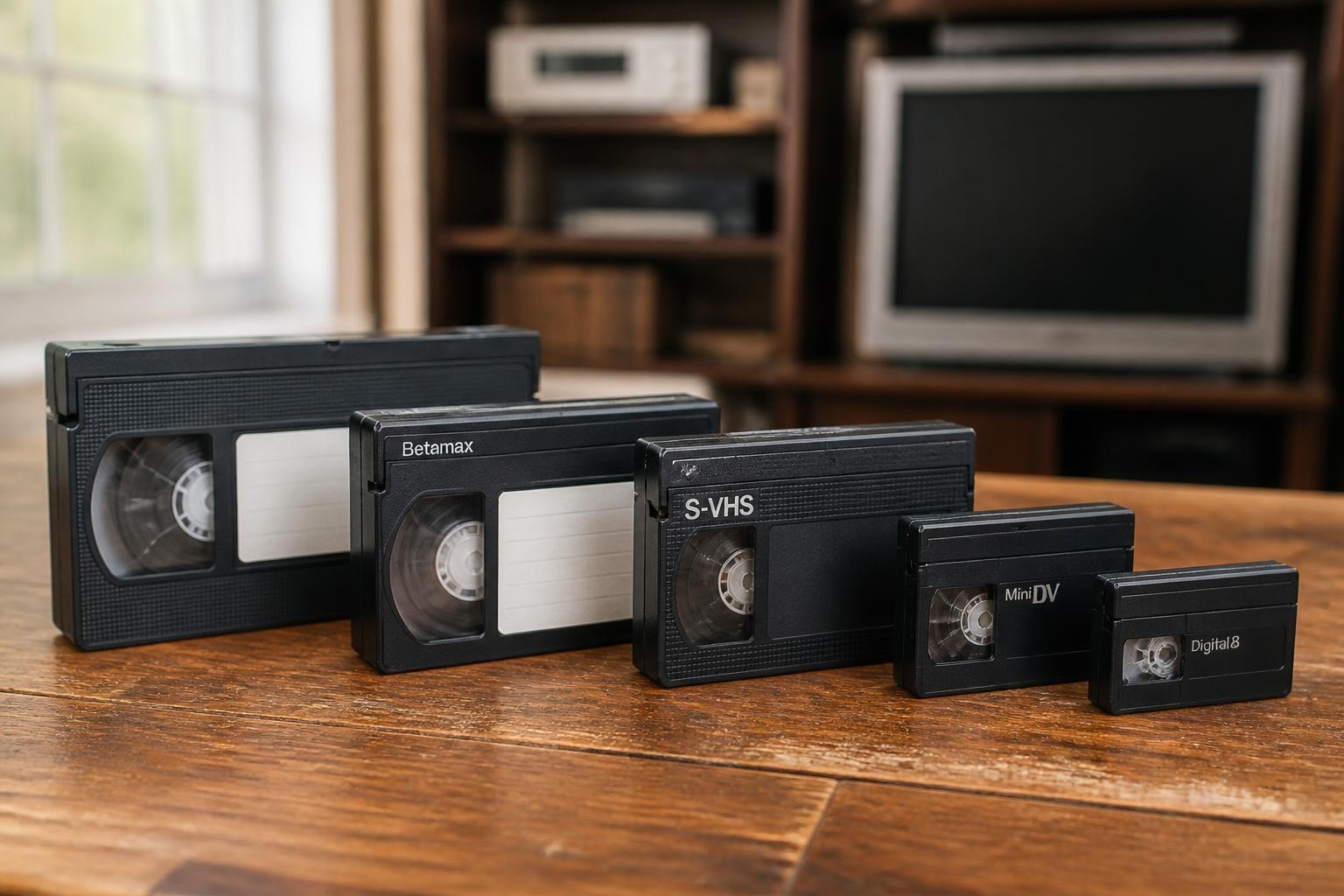
MiniDV decks remain essential for 1990s and early 2000s camcorder footage. These digital format decks experience different failure modes than analog units. FireWire ports, DV head drums, and transport motors require particular attention during refurbishment. When evaluating MiniDV equipment, verify that digital output functions properly and that the deck achieves clean playback without dropouts.
S-VHS units serve both consumer Hi-Fi recordings and professional S-VHS productions. The Y/C separation circuits and higher-resolution heads in S-VHS decks require specialized alignment equipment during refurbishment. Many shops maintain separate S-VHS decks rather than relying on VHS units with S-VHS playback capability.
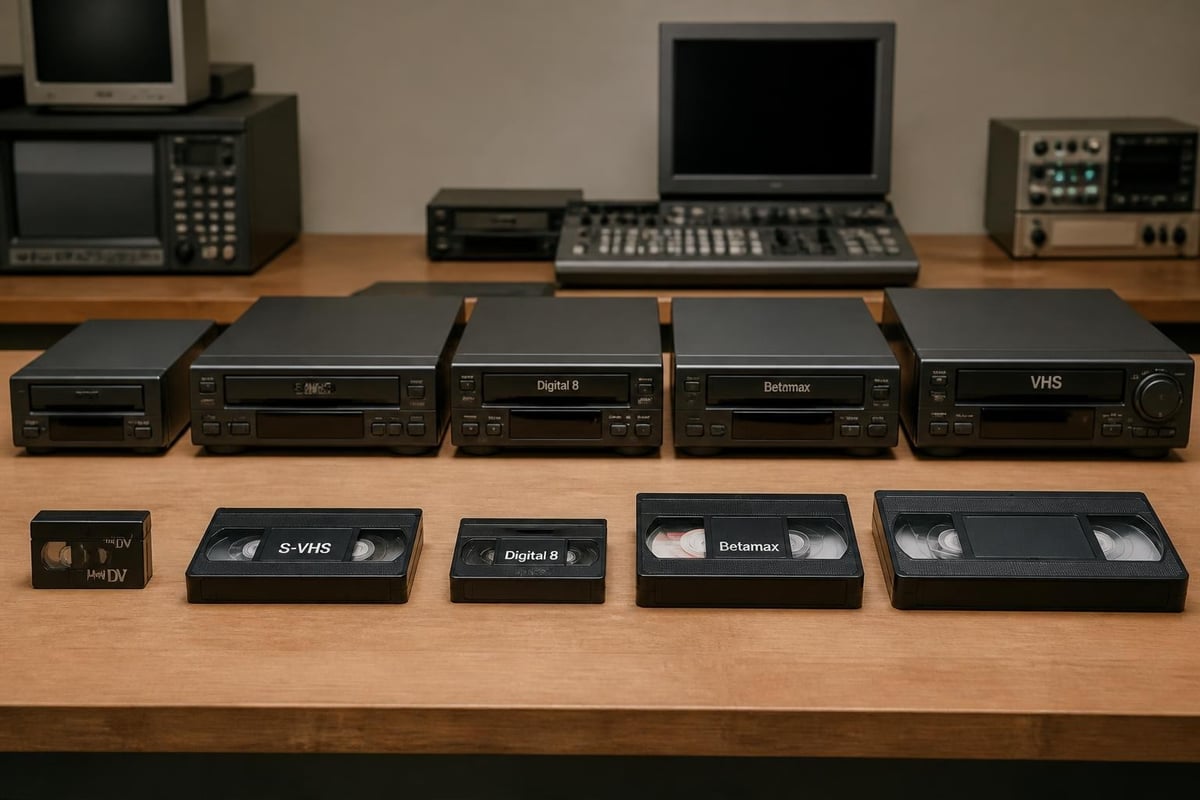
Digital8 and Video8/Hi8 present unique challenges. Digital8 decks can play both Digital8 and analog Hi8/Video8 tapes, making them versatile additions to any digitization suite. However, the dual-format capability means both analog and digital playback systems must function correctly after refurbishment.
Betamax equipment grows increasingly scarce. Betamax decks capable of playing Beta I, II, and III speeds are valuable assets. Refurbished Betamax units require particular scrutiny because replacement parts have become difficult to source.
Evaluating Refurbished Equipment Quality
Purchasing a refurbished VCR requires careful evaluation. Unlike new equipment with manufacturer warranties, refurbished units depend entirely on the quality of restoration work performed. Documentation provides the first quality indicator.
Reputable refurbishers supply detailed reports covering:
- Original condition assessment
- Components replaced with part numbers
- Calibration measurements before and after service
- Testing methodology and results
- Warranty terms and coverage
Request this documentation before committing to any purchase. Refurbishment without documentation offers little advantage over purchasing used equipment.
Physical Inspection Points
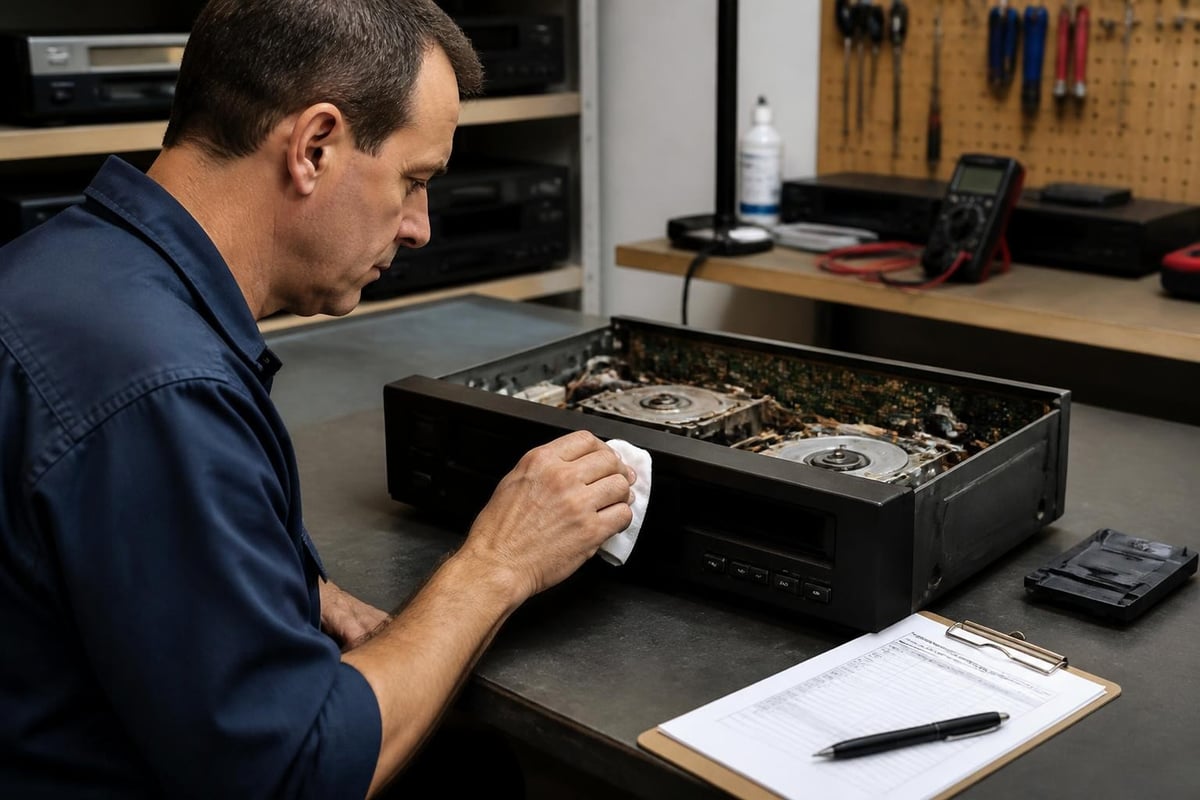
When possible, physically inspect equipment before purchase. Mechanical transport assemblies reveal much about refurbishment quality. Clean, properly lubricated mechanisms with new rubber components indicate thorough work. Residual tape oxide, dirty head drums, or original rubber parts suggest superficial refurbishment.
Electronic systems require functional testing. Play known-good tapes and observe video output quality. Test all input and output connections. Verify that transport controls respond properly and that automatic functions like auto-tracking operate correctly.
The Federal Agencies Digital Guidelines Initiative provides technical benchmarks for evaluating playback equipment used in digitization workflows. These guidelines help establish objective quality standards.
Maintenance and Longevity Strategies
A refurbished VCR represents a significant investment in operational capability. Proactive maintenance maximizes equipment lifespan and ensures consistent output quality. Professional digitization operations cannot afford unexpected downtime.
Preventive Maintenance Schedules
Establish regular maintenance intervals based on usage intensity. High-volume operations running decks daily require monthly inspections. Lower-volume facilities can extend intervals to quarterly reviews.
Monthly maintenance should include:
- Head cleaning with appropriate solutions
- Transport path inspection for tape residue
- Belt tension verification
- Alignment checks on critical tapes
- Output signal quality measurement
Many shops implement maintenance contracts to ensure consistent equipment performance. These programs typically include scheduled inspections, priority repair service, and replacement part inventory.
Component Replacement Intervals
Even properly refurbished equipment requires ongoing component replacement. Rubber parts including belts, pinch rollers, and idler tires deteriorate regardless of usage. Temperature, humidity, and time all contribute to rubber degradation.
| Component | Typical Lifespan | Replacement Indicator |
|---|---|---|
| Drive belts | 18-24 months | Speed inconsistency, slipping |
| Pinch rollers | 24-36 months | Glazing, flat spots, tape damage |
| Idler tires | 12-18 months | Slippage, irregular rotation |
| Capacitors | 5-7 years | Power supply instability, erratic behavior |
Tracking these replacement intervals prevents failures during critical transfer projects. Maintaining replacement part inventory reduces downtime when components reach end-of-life.
Cost Analysis and ROI Considerations
Acquiring a refurbished VCR involves balancing upfront costs against long-term operational expenses. Total cost of ownership includes purchase price, maintenance, repairs, and eventual replacement.
Purchase vs. Rental Economics
Digitization shops face a fundamental decision: purchase or rent equipment. For operations with consistent, predictable volume, purchasing refurbished units makes financial sense. Businesses with variable workloads or project-based operations benefit from rental arrangements that align costs with revenue.
Consider a typical scenario. A refurbished professional S-VHS deck costs approximately $800-1,200 depending on model and condition. Monthly maintenance averages $30-50 for shops performing basic service in-house. Annual maintenance contracts through specialized providers run $300-600 depending on coverage level.
Rental alternatives start at $99 monthly for professional decks. This model eliminates capital expenditure and transfers maintenance responsibility to the rental provider. For shops processing fewer than 50 tapes monthly, rental often delivers better economics than ownership.
Hidden Costs in Equipment Ownership
Owning refurbished equipment involves expenses beyond purchase price and maintenance. Part sourcing becomes increasingly challenging as equipment ages. Specialized components for discontinued models require intensive searching or custom fabrication.
Backup equipment represents another hidden cost. Professional operations cannot afford single-deck dependency. When your primary refurbished VCR fails during a rush project, backup equipment becomes essential. This effectively doubles equipment investment for critical formats.
Warranty coverage varies dramatically among refurbished equipment suppliers. Extended warranties cost 10-20% of purchase price but provide protection against major component failures. Evaluate warranty terms carefully, particularly coverage for head drums and transport motors-the most expensive components to replace.
Integration into Professional Workflows
A refurbished VCR functions as one component within larger digitization systems. Workflow integration determines whether equipment delivers expected productivity gains or creates bottlenecks.
Signal Chain Optimization
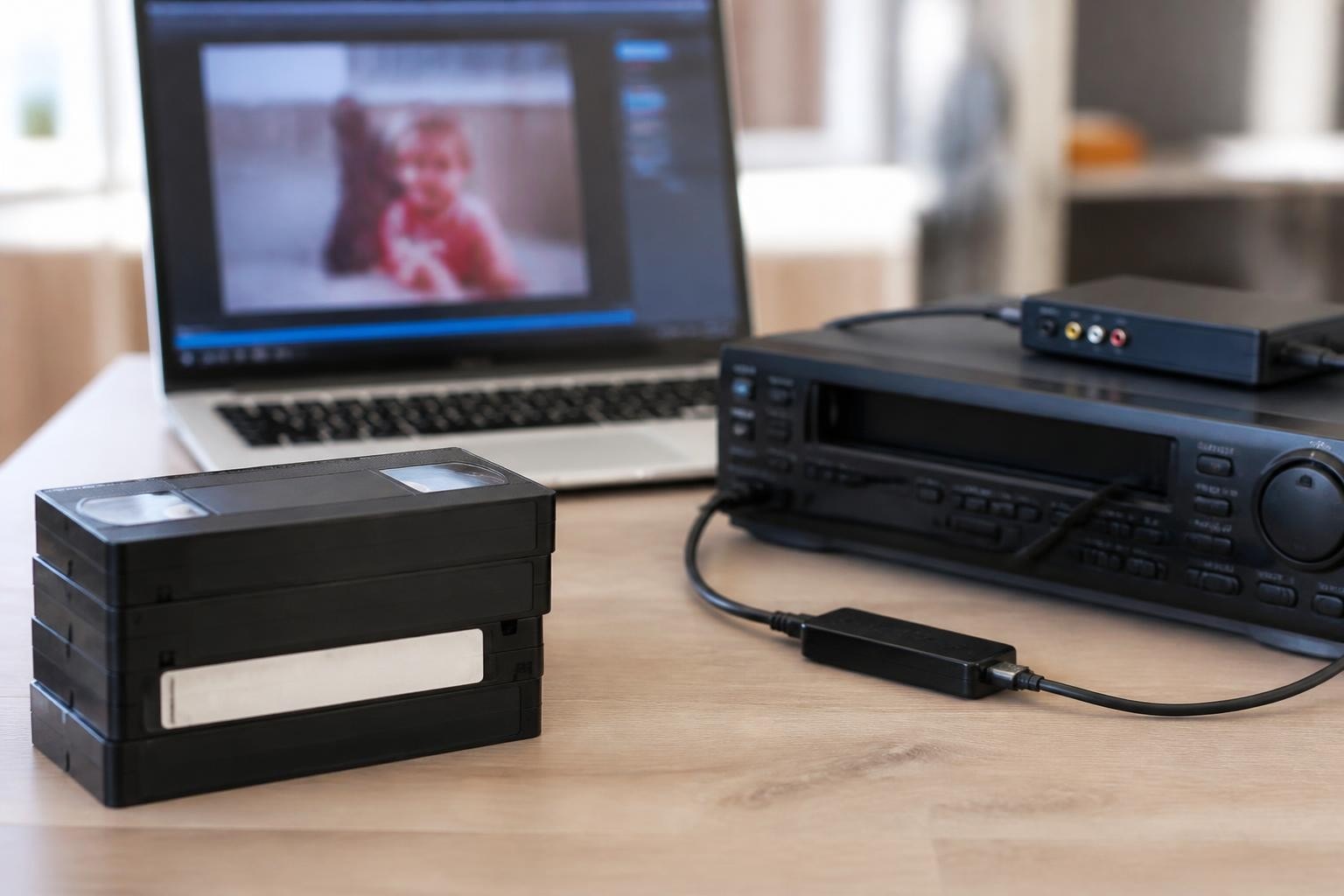
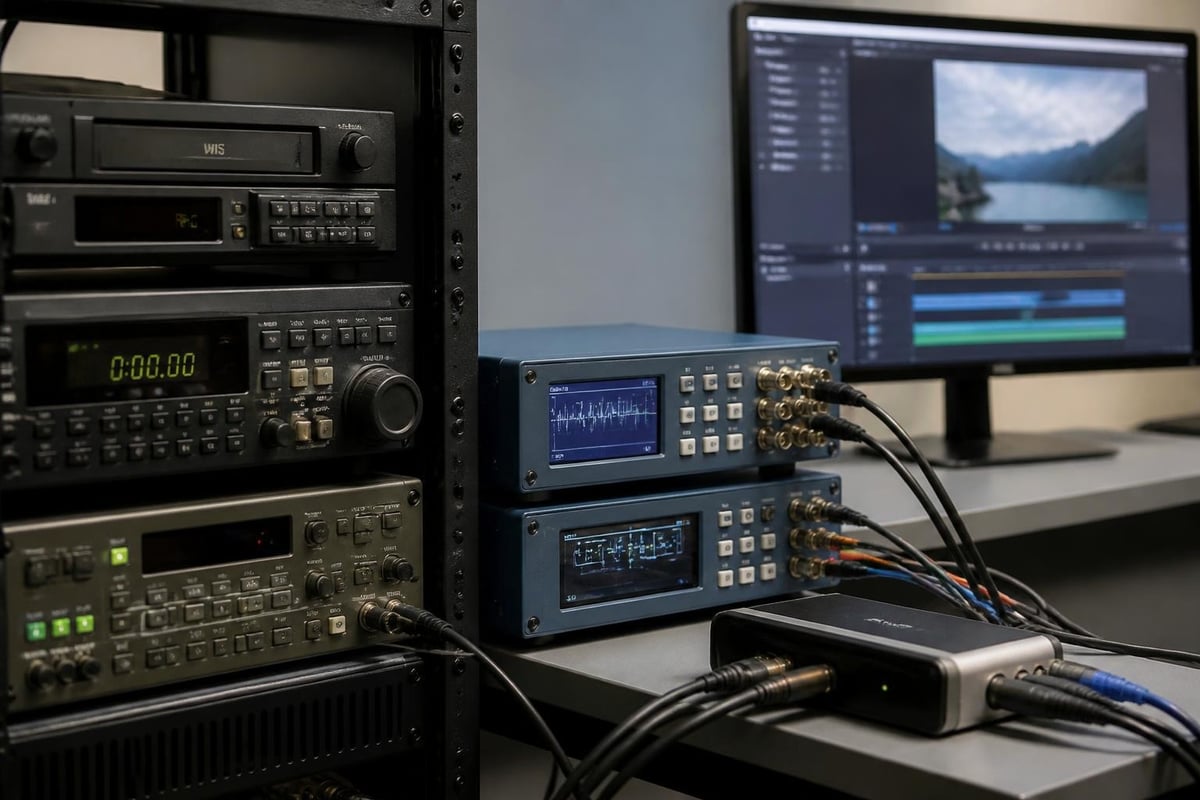
Professional tape transfer requires careful attention to the complete signal path from tape playback through capture and encoding. A refurbished VCR outputs analog component, S-video, or digital FireWire signals depending on format and model. Matching these outputs to capture hardware capabilities optimizes quality.
Time base correctors (TBC) remain essential for professional transfers from analog formats. VHS and other helical-scan formats exhibit timing errors that TBCs correct. When budgeting for a refurbished VCR, include TBC acquisition costs. Some professional decks include built-in TBCs, reducing external equipment requirements.
The Library of Congress digitization preparation guidance emphasizes proper equipment configuration and signal chain design for archival transfers. Following these institutional standards ensures your refurbished equipment delivers maximum quality.
Metadata and Documentation Systems
Professional digitization operations track extensive metadata about source tapes and transfer parameters. Recording which specific refurbished VCR played each tape enables troubleshooting if quality issues emerge later. Equipment logs document deck performance over time, revealing patterns that predict failures before they occur.
Modern digitization management systems integrate equipment metadata automatically. Assign unique identifiers to each refurbished VCR in your facility. Log all maintenance activities, repairs, and configuration changes. This documentation proves invaluable when comparing output quality across different decks or troubleshooting intermittent issues.
Sourcing and Vendor Relationships
Finding reliable refurbished VCR suppliers requires research and relationship building. The specialized nature of professional videotape equipment limits vendor options compared to mainstream electronics.
Evaluating Refurbishment Providers
Technical expertise separates competent refurbishers from parts replacers. Quality providers employ technicians with decades of experience in broadcast and professional video equipment. They maintain calibration equipment specific to each format and model they service.
Request references from current customers operating similar digitization businesses. Contact these references and ask specific questions about equipment reliability, warranty claims, and technical support responsiveness. The Association of Moving Image Archivists legacy equipment resources can help identify reputable providers serving the archival community.
Parts sourcing capability indicates provider sustainability. As equipment ages, component availability determines whether units can be refurbished. Providers maintaining extensive parts inventory or relationships with specialized suppliers can support your equipment longer than those relying on consumer markets.
Building Strategic Vendor Partnerships
Treating refurbished equipment vendors as strategic partners rather than transactional suppliers yields long-term benefits. Preferred customer relationships provide advantages including priority access to newly refurbished units, expedited repair service, and technical consultation.
Many vendors offer repair services with diagnostic fees around $45 and transparent pricing for component replacement. Establishing relationships before equipment failures occur ensures faster turnaround when problems develop. Some providers offer loaner equipment to minimize downtime during repairs.
Quality Assurance and Testing Protocols
Implementing rigorous testing protocols ensures your refurbished VCR maintains performance standards throughout its operational life. Quality assurance begins when equipment arrives and continues through regular verification testing.
Initial Acceptance Testing
Never assume refurbished equipment operates correctly without verification. Develop comprehensive acceptance test protocols covering all critical functions. Baseline testing establishes performance benchmarks against which you measure future performance.
Test procedures should include:
- Playback of reference tapes with known characteristics
- Measurement of output signal levels and quality
- Verification of all transport functions and modes
- Timing stability and dropout rate assessment
- Documentation of all measurements for future comparison
The National Archives video playback and digitization guidance provides excellent frameworks for establishing testing protocols appropriate for preservation-quality transfers.
Ongoing Performance Monitoring
Regular performance verification identifies degradation before it affects client deliverables. Weekly testing using standardized reference tapes reveals trends indicating developing problems. Tracking metrics like dropout rates, tracking errors, and audio signal-to-noise ratios provides early warning of component wear.
Maintain detailed logs of all test results. Graph key performance indicators over time to visualize trends. This data-driven approach to equipment management prevents surprises and supports informed decisions about component replacement timing.
Special Considerations for Archival Work
Organizations performing archival digitization face unique requirements when deploying refurbished VCR equipment. Preservation standards demand higher reliability and performance than commercial transfer services.
Compliance with Institutional Standards
Archives and libraries follow preservation guidelines established by organizations like the International Association of Sound and Audiovisual Archives. These technical recommendations specify equipment capabilities, maintenance intervals, and quality verification procedures.
A refurbished VCR serving archival digitization must deliver stable, repeatable playback across varied tape conditions. Equipment should minimize mechanical stress on fragile original tapes while extracting maximum signal quality. Gentle transport handling becomes critical when playing unique, irreplaceable recordings.
Professional archival operations often maintain format-specific decks rather than multi-format units. This specialization ensures optimal playback for each format's unique characteristics. When building an archival transfer suite around refurbished equipment, prioritize format-specific capabilities over versatility.
Documentation and Provenance
Archival workflows require extensive documentation about transfer processes and equipment. Recording which specific refurbished VCR played each tape creates important technical provenance. This metadata helps future archivists understand signal characteristics and make informed preservation decisions.
The Library of Congress preservation guidance for magnetic media emphasizes documentation as a core preservation activity. Apply these principles to your refurbished equipment deployment, maintaining comprehensive records of equipment specifications, configurations, and performance characteristics.
Technical Training and Skills Development
Operating refurbished VCR equipment effectively requires specialized knowledge. Technical proficiency determines whether your investment in refurbished equipment delivers expected returns.
Staff Training Requirements
Operators must understand format-specific playback characteristics, common failure modes, and troubleshooting techniques. Basic maintenance skills including head cleaning, belt replacement, and alignment verification reduce dependence on external service providers.
Structured training programs covering both equipment operation and basic maintenance develop crucial institutional knowledge. Cross-training multiple staff members ensures operational continuity when key personnel are unavailable.
Resources like the Analog Field Guide provide excellent technical foundations for understanding analog-to-digital transfer workflows and equipment requirements. These resources help staff develop the expertise necessary to maximize refurbished equipment performance.
Building In-House Maintenance Capabilities
Developing internal maintenance capabilities reduces operational costs and downtime. Basic service skills including cleaning, belt replacement, and routine adjustments enable rapid response to minor issues without vendor involvement.
Establishing relationships with experienced technicians who provide periodic training and consultation supports skill development. Some organizations bring technicians on-site annually for intensive training sessions covering advanced maintenance and alignment procedures specific to their refurbished equipment inventory.
Refurbished VCR equipment provides digitization professionals with cost-effective access to increasingly scarce playback capability while maintaining the performance standards clients expect. Strategic acquisition, proactive maintenance, and proper workflow integration ensure these units deliver reliable service for years. Whether your operation processes dozens or thousands of tapes monthly, VCR Supply offers flexible rental and repair solutions starting at $99 per month, helping you maintain operational continuity without the capital expense of equipment ownership.