VCR Cassette: Professional Guide to Care and Transfer
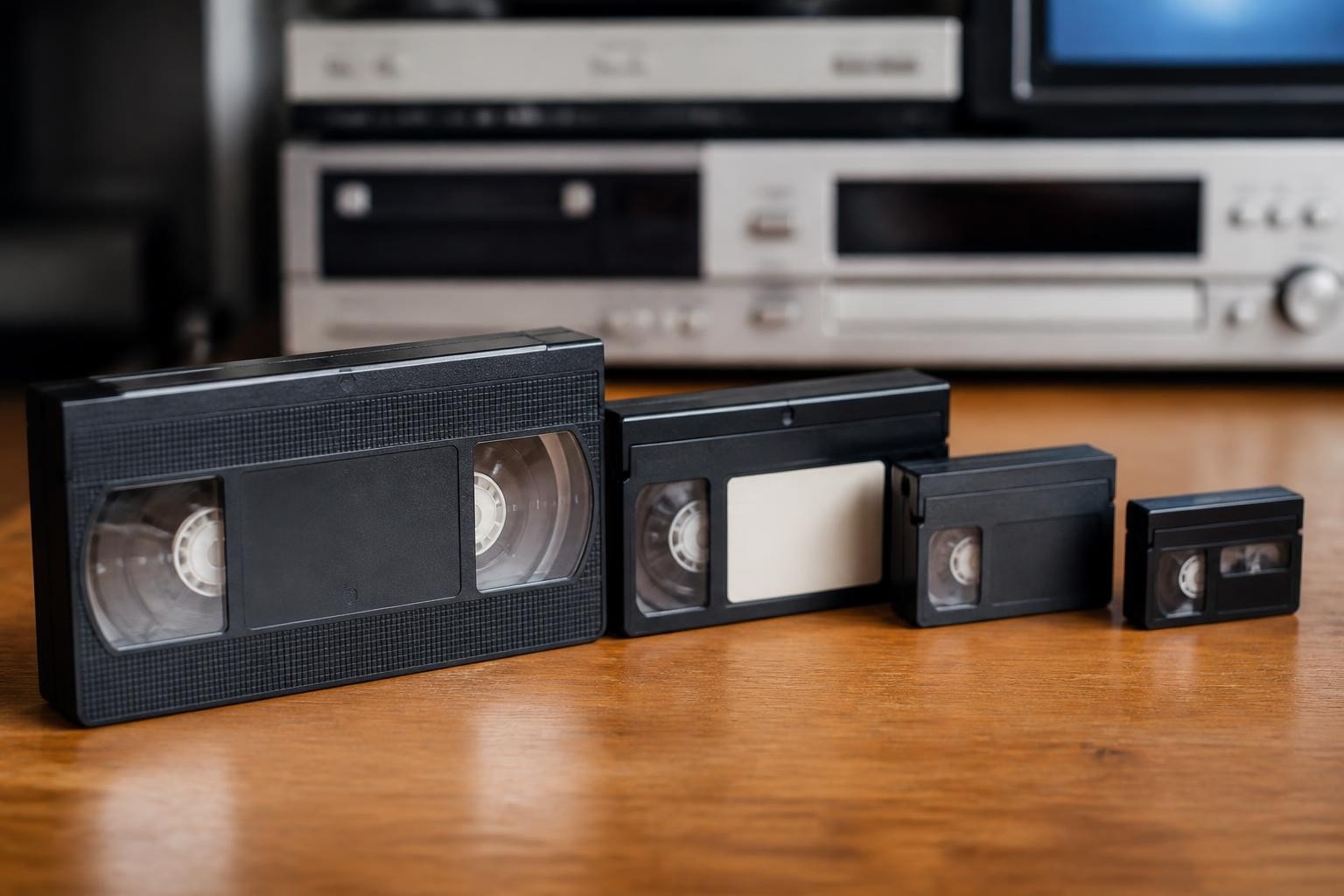
The vcr cassette remains a critical medium for millions of hours of irreplaceable content, from family memories to broadcast archives. Despite the shift to digital formats, professional digitization shops and archives continue to work with vcr cassette formats daily, requiring reliable equipment and expertise to properly handle these aging magnetic media. Understanding the technical aspects, preservation requirements, and digitization best practices for vcr cassette technology is essential for anyone managing video transfer workflows or maintaining archival collections in 2026.
Understanding VCR Cassette Technology and Formats
The vcr cassette evolved through multiple generations, each offering distinct advantages for specific recording applications. The fundamental principle behind every vcr cassette format involves magnetic tape wound between two spools inside a protective plastic shell. When inserted into a compatible deck, the tape passes over helical-scan video heads that read or write diagonal tracks of information across the tape width.
Core VCR Cassette Variants
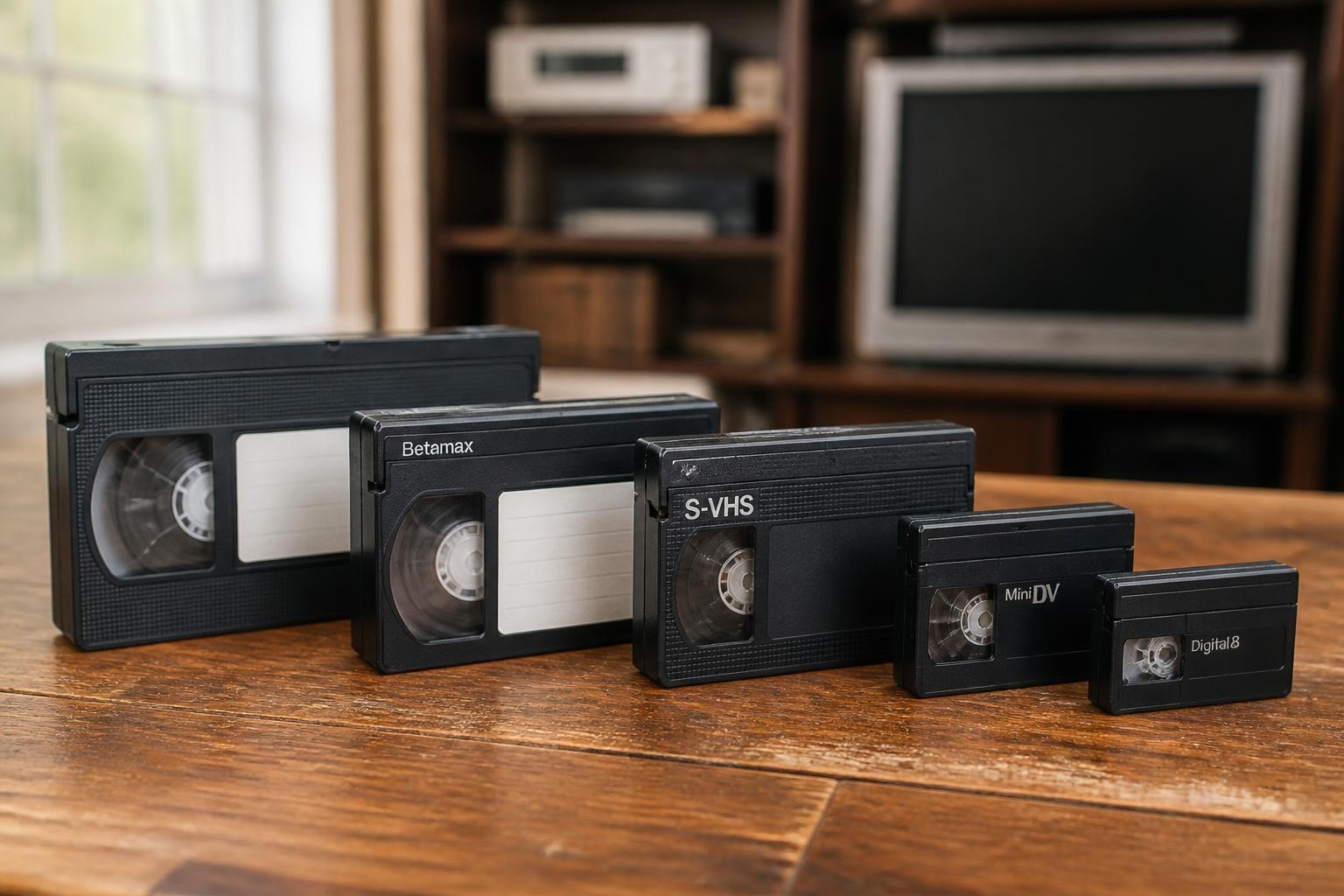
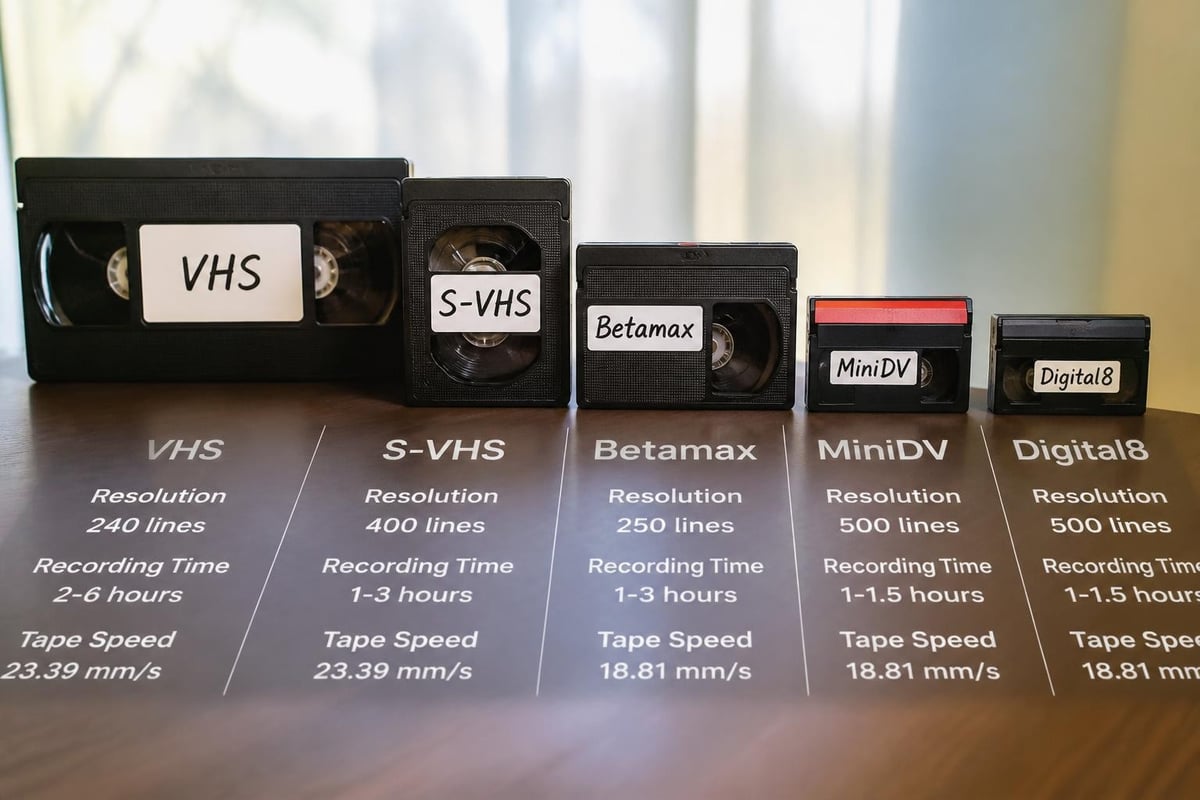
Professional digitization facilities encounter several primary vcr cassette types, each with unique specifications:
- VHS: Consumer standard offering approximately 240-480 lines of horizontal resolution, widely used from the 1980s through early 2000s
- S-VHS: Enhanced format delivering 400+ lines of resolution, preferred for semi-professional recording
- Betamax: Sony's format known for superior image quality despite smaller market share
- MiniDV: Digital tape format providing full 500-line DV quality in compact cassettes
- Digital8: DV-quality recording on Hi8 tape stock, bridging analog and digital workflows
The mechanics behind vcr cassette playback involve precise tape transport systems, capstan drives, and rotating drum assemblies that must maintain exact tolerances to reproduce images correctly. Professional decks designed for digitization work incorporate enhanced servo systems, time-base correctors, and component outputs that deliver superior signal quality compared to consumer models.
Physical Degradation Patterns in VCR Cassettes
Magnetic tape deteriorates through multiple mechanisms, making timely digitization critical. Every vcr cassette faces environmental and mechanical threats that progressively degrade both the magnetic coating and the base film substrate.
Common Deterioration Factors
| Degradation Type | Symptoms | Timeline | Prevention |
|---|---|---|---|
| Binder hydrolysis | Sticky tape, shedding | 15-25 years | Climate control below 50% RH |
| Magnetic decay | Signal dropout, noise | 20-30 years | Cool storage (65-70°F) |
| Base deformation | Tracking errors, warping | 25-35 years | Vertical storage, no pressure |
| Lubrication failure | Squealing, irregular motion | 10-20 years | Periodic rewinding, playback |
The National Archives provides detailed guidance on machine-readable media preservation, emphasizing environmental controls as the primary defense against tape degradation. Temperature stability matters more than achieving extremely cold conditions, with fluctuations causing more harm than steady moderate temperatures.
Sticky-shed syndrome represents one of the most common vcr cassette failures, occurring when polyurethane binders absorb atmospheric moisture and become tacky. This condition prevents smooth tape transport and causes oxide shedding that clogs video heads. Professional transfer operations often maintain baking ovens specifically for treating affected cassettes, carefully dehydrating tapes at controlled temperatures before playback attempts.
Professional Digitization Workflows
Transferring vcr cassette content to digital formats requires methodical workflows that prioritize signal quality and archival standards. The Library of Congress Recommended Formats Statement establishes clear targets for preservation masters, specifying uncompressed or losslessly-compressed video codecs that maintain full fidelity from the source tape.
Equipment Requirements for Quality Transfers
Successful vcr cassette digitization depends on professional-grade playback equipment. Consumer decks lack the signal processing and output options necessary for archival-quality captures. Professional videotape deck rental provides access to broadcast-caliber equipment without capital investment, essential for shops handling diverse format requirements.
Critical deck features for professional work include:
- Component or SDI output connectivity for maximum signal integrity
- Built-in time-base correction to stabilize playback from degraded tapes
- Manual tracking controls for optimizing problematic cassettes
- Flying erase heads for clean edit points (when needed)
- Jog/shuttle controls for precise tape positioning
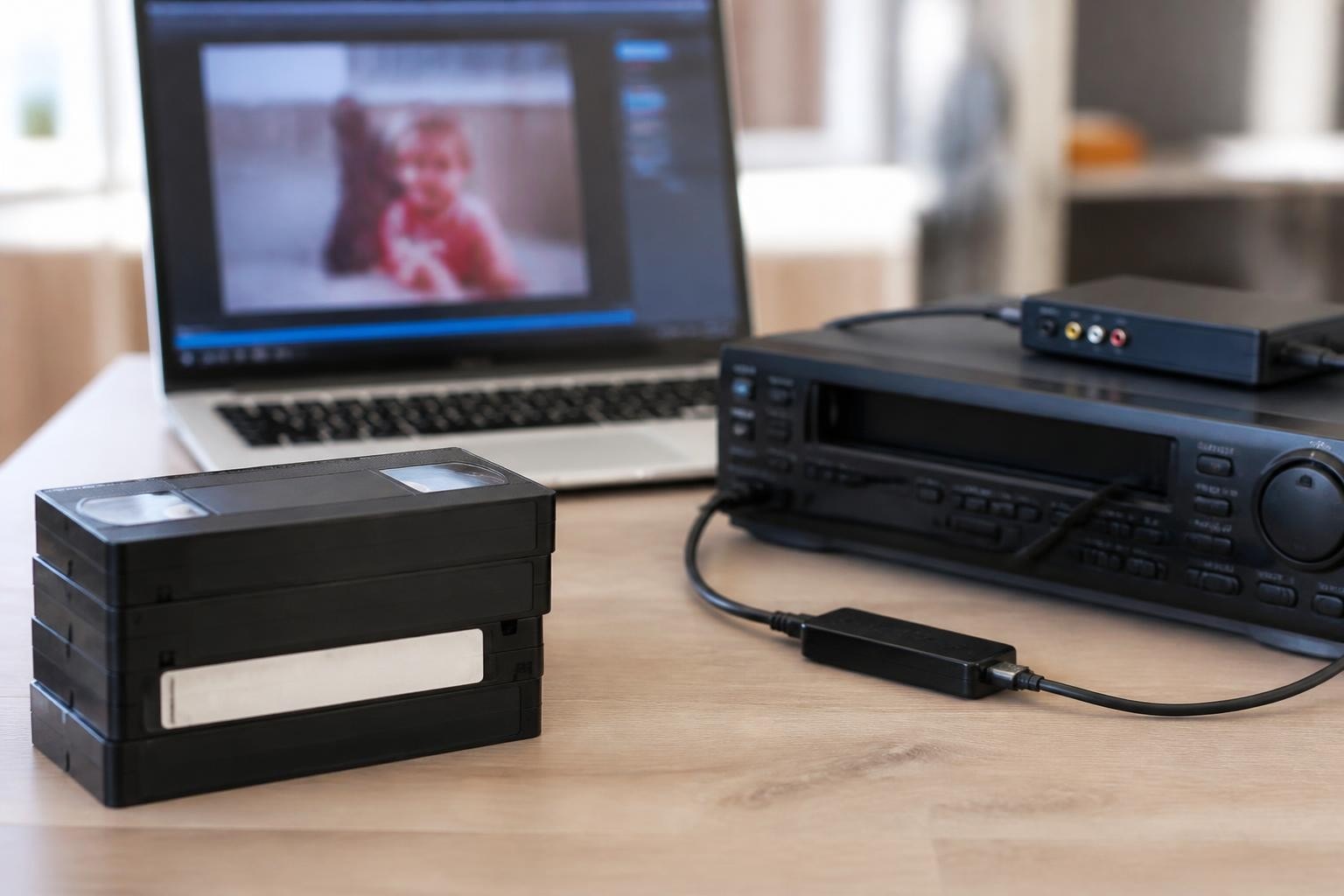
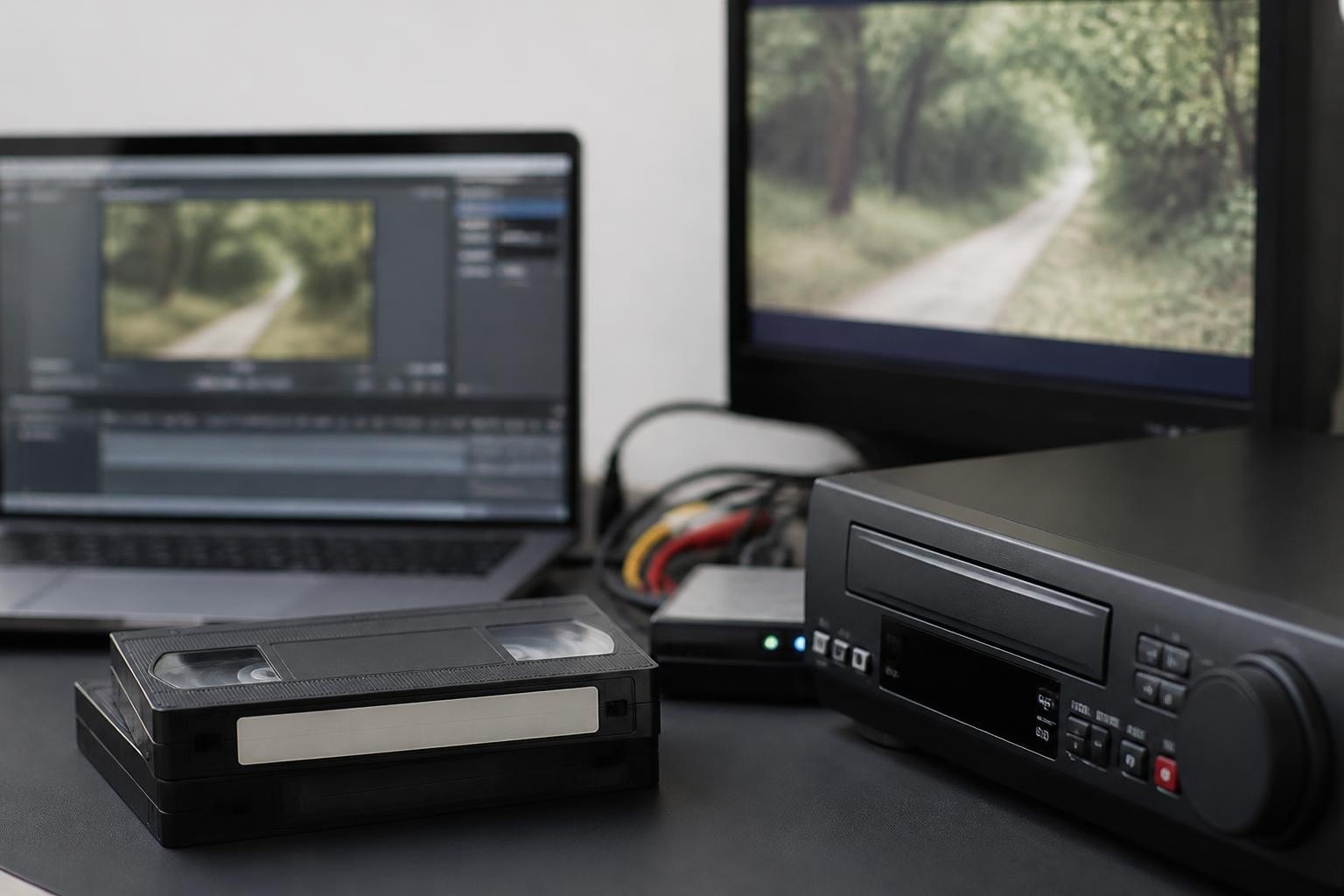
The capture chain extends beyond the playback deck itself. Professional workflows incorporate external time-base correctors, processing amplifiers for signal conditioning, and dedicated capture cards or standalone recorders. These components work together to extract the maximum possible quality from each vcr cassette, compensating for age-related signal degradation and timing instabilities.
Recommended Digitization Specifications
Setting appropriate capture parameters ensures long-term preservation value. While access copies can be compressed for convenient viewing, preservation masters should follow established archival standards:
- Video codec: Uncompressed 8-bit or 10-bit 4:2:2, or lossless compression (FFV1, JPEG2000)
- Container format: Matroska (MKV) or QuickTime (MOV) with open metadata schemas
- Audio capture: Uncompressed PCM at 48kHz/24-bit for all available channels
- Color space: BT.601 for standard definition sources, preserving original colorimetry
- Aspect ratio: Maintain source aspect (4:3 for most vcr cassette formats)
Equipment Maintenance for Reliable VCR Cassette Playback
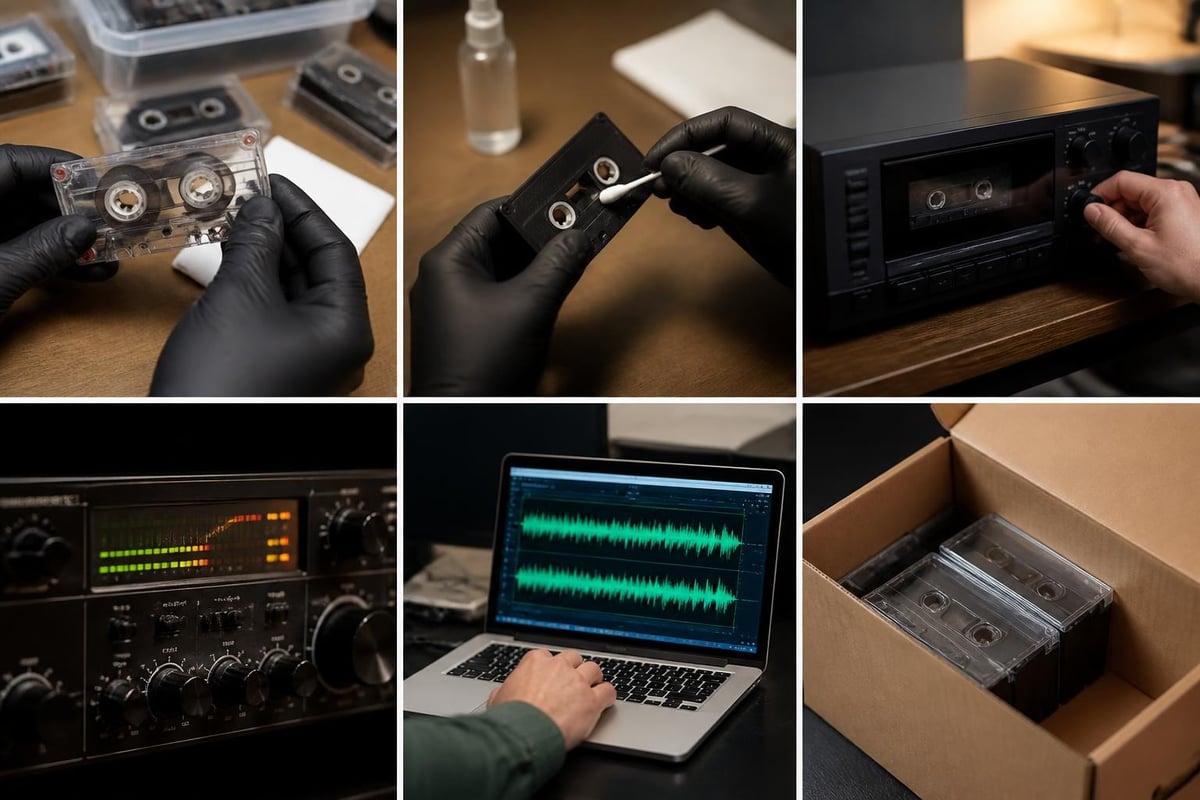
Professional videotape decks require systematic maintenance to deliver consistent results. Neglected equipment produces inferior captures and risks damaging irreplaceable vcr cassette originals through improper tape handling or contaminated tape paths.
Routine Maintenance Intervals
Regular servicing prevents the majority of playback problems. Professional VCR maintenance contracts establish predictable service schedules that keep equipment performing at specification, reducing unexpected downtime during critical transfer projects.
- Daily: Head cleaning, visual inspection of tape path, capstan cleaning
- Weekly: Pinch roller examination, tension arm lubrication check, full deck cleaning cycle
- Monthly: Mechanical alignment verification, audio head azimuth check, servo diagnostics
- Quarterly: Full alignment procedure including tracking, tape speed, head switching timing
- Annually: Complete overhaul including bearing service, belt replacement, electronic calibration
Video heads represent the most critical and fragile component in any vcr cassette deck. These components spin at high speeds (1,800 RPM for NTSC decks) while maintaining contact with moving tape, creating significant wear. Professional operations track head hours carefully, replacing drums before performance degrades noticeably. Worn heads produce increased dropout rates, reduced resolution, and color fringing that no amount of post-processing can fully correct.
Legal and Copyright Considerations
Digitizing vcr cassette content raises important legal questions, particularly when handling commercial recordings or copyrighted material. The U.S. Copyright Office provides comprehensive resources on fair use principles that apply to video transfer work.
Common Transfer Scenarios and Legal Standing
| Scenario | Legal Status | Considerations |
|---|---|---|
| Personal home videos | Clear ownership | No restrictions on transfer or sharing |
| Licensed commercial content | Requires authorization | Personal backup may qualify as fair use |
| Out-of-print media | Complex rights landscape | Preservation exceptions may apply |
| News/documentary footage | Mixed ownership | Requires rights clearance research |
The Federal Register addresses specific preservation exceptions that permit institutions to bypass copy protection for legitimate archival purposes. These provisions recognize that technological obsolescence threatens permanent loss of cultural materials, creating targeted exemptions from anti-circumvention rules. Commercial digitization operations must understand these boundaries, distinguishing legitimate preservation from unauthorized duplication.
When customers request vcr cassette transfers, establishing content ownership protects both parties. Professional shops typically require signed statements affirming legal rights to duplicate requested materials, creating a paper trail that demonstrates good-faith compliance with copyright law.
Storage Best Practices for Undigitized VCR Cassettes
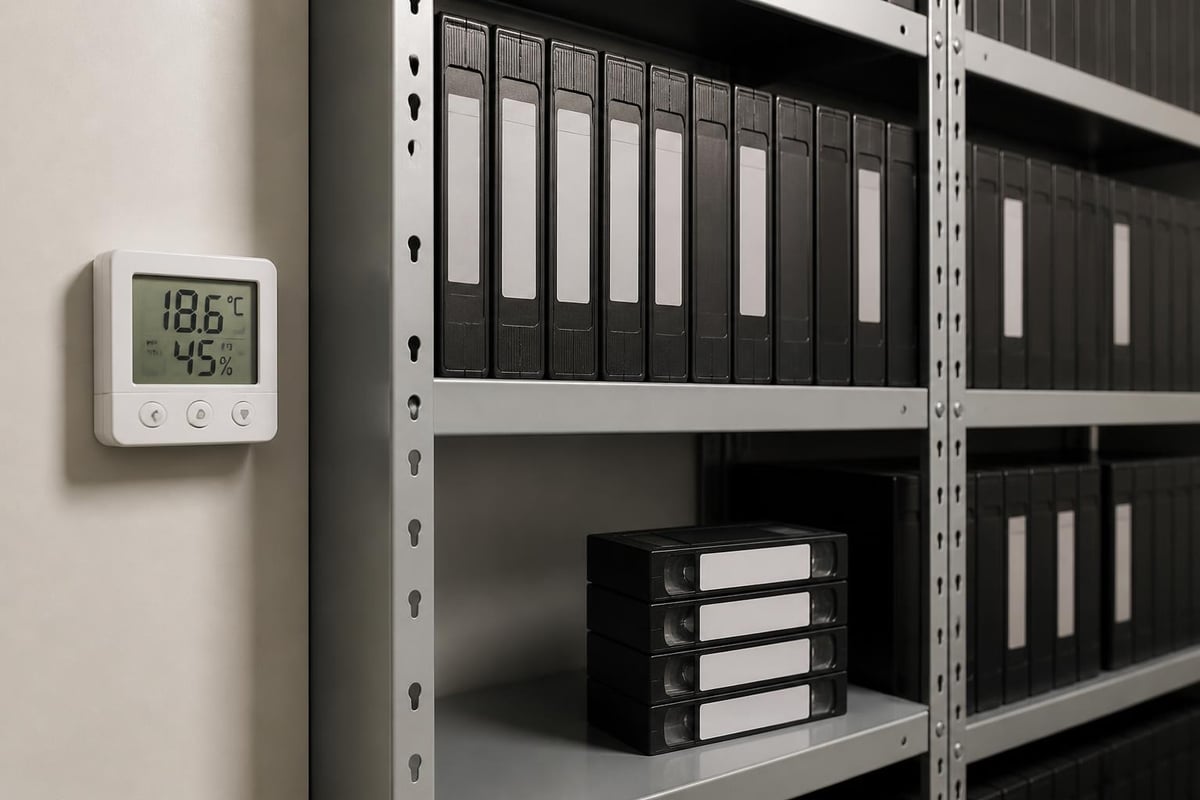
While digitization remains the ultimate preservation strategy, proper physical storage extends vcr cassette longevity until transfer becomes feasible. The Library of Congress collections care guidelines establish environmental targets based on decades of research into magnetic media degradation rates.
Optimal Storage Conditions
Temperature and humidity control provides the greatest impact on vcr cassette preservation:
- Temperature: 65-70°F (18-21°C) with minimal fluctuation
- Relative humidity: 30-50%, stable throughout the year
- Air quality: Filtered to remove particulates and pollutants
- Light exposure: Minimal UV exposure, dark storage preferred
- Orientation: Vertical storage ("books on a shelf") reduces physical stress
Each 10°F reduction in storage temperature approximately doubles the lifespan of magnetic tape. However, cold storage requires careful planning. Cassettes removed from cold environments must acclimate to room temperature before playback to prevent condensation inside the shell, which can cause catastrophic tape adhesion and damage during threading.
Format-Specific Handling Considerations
Different vcr cassette variants present unique challenges that impact digitization strategies and equipment requirements. Professional transfer operations must maintain format-specific knowledge to avoid common pitfalls that compromise quality or damage originals.
VHS and S-VHS Peculiarities
Standard VHS cassettes dominate most digitization queues due to their widespread consumer adoption. These cassettes use a relatively wide track pitch and robust mechanical design, generally tolerating playback on multiple decks without issue. S-VHS format decks provide backward compatibility with standard VHS while offering superior performance on S-VHS recordings through higher-bandwidth electronics and refined signal processing.
Key VHS handling points:
- Full cassette rewind before storage to reduce pack tension
- Avoid repeated freeze-frame or slow-motion that wears specific tape sections
- Replace damaged cassette shells to prevent tape catching during transport
- Clean decks thoroughly between cassettes to prevent cross-contamination
MiniDV and Digital8 Special Requirements
Digital tape formats like MiniDV and Digital8 introduce different preservation challenges. These formats record error-correction data that can compensate for minor degradation, but they fail more suddenly than analog formats when damage exceeds correction thresholds. MiniDV deck rental provides access to equipment featuring IEEE 1394 (FireWire) outputs that enable bit-perfect digital transfers without analog conversion losses.
Digital8 cassettes use physically Hi8-sized shells but record DV-format data, requiring Digital8-compatible decks for playback. Standard Hi8 decks cannot read Digital8 recordings, despite the identical cassette dimensions. This format-specific requirement makes maintaining proper equipment inventory critical for digitization facilities handling diverse vcr cassette collections.
Troubleshooting Common Playback Problems
Professional transfer work inevitably encounters vcr cassette playback challenges. Systematic diagnostic approaches identify root causes and determine whether issues stem from tape condition, deck performance, or environmental factors.
Diagnostic Decision Tree
When playback problems occur, methodical testing isolates the source:
- Test with known-good reference tape: Confirms deck functionality
- Inspect cassette physically: Check for visible damage, foreign objects, broken parts
- Attempt playback on second deck: Distinguishes tape-specific from deck-specific issues
- Clean video heads thoroughly: Eliminates clogging as a variable
- Adjust tracking manually: Compensates for non-standard recording parameters
Tracking errors represent the most common vcr cassette playback complaint. These manifest as noisy horizontal bands through the image, particularly during movement or scene changes. Manual tracking adjustments often resolve these issues, though severe cases may indicate tape stretch or dimensional changes that prevent proper reproduction.
The British Film Institute's videotape preservation program documents large-scale rescue operations that encountered virtually every possible tape failure mode. Their published findings provide valuable troubleshooting guidance, describing successful recovery techniques for cassettes previously considered unplayable.
Professional Service Options for Digitization Facilities
Operating a successful vcr cassette transfer business requires balancing equipment investment against utilization rates. Format diversity complicates this calculation further, as maintaining decks for every possible variant creates significant capital requirements.
Build vs. Rent Equipment Decisions
| Consideration | Purchase | Rental |
|---|---|---|
| High-volume format (VHS, MiniDV) | Usually purchase | Consider for backup units |
| Rare format (U-matic, Betacam SP) | Rental often better | Purchase only if regular demand |
| Equipment age/availability | Declining availability favors purchase | Rental provides maintained units |
| Capital constraints | High upfront cost | Monthly rates starting at $99 |
VCR repair services become essential as the equipment pool ages. Replacement decks grow increasingly scarce, making repair the only viable option for maintaining operational capacity. Professional repair includes diagnostic evaluation, parts replacement, complete realignment, and performance verification to factory specifications.
Repair economics favor professional service over DIY attempts for businesses. A $45 diagnostic fee provides expert assessment that identifies whether repair makes economic sense, preventing wasted time on units with catastrophic failures. Specialized test equipment and format-specific knowledge ensure repairs restore full specification performance rather than merely achieving "works sometimes" functionality.
Building Client Communication Protocols
Successful vcr cassette digitization businesses establish clear expectations with customers regarding timelines, quality levels, and potential complications. Transparent communication prevents disputes and builds long-term client relationships.
Essential Customer Discussions
Initial consultations should address several key topics:
- Tape condition assessment: Visual inspection identifies obvious problems before committing to transfer
- Quality expectations: Explaining that digitization captures existing quality, not enhancing damaged recordings
- Format identification: Confirming actual tape format, as labels sometimes misidentify content
- Delivery format preferences: Establishing target specifications for access and preservation copies
- Timeline estimates: Providing realistic schedules that account for potential complications
The National Archives guidance on playback and digitization offers excellent educational material for clients unfamiliar with technical preservation concepts. Sharing authoritative resources builds credibility and helps customers understand why professional approaches cost more than consumer-grade alternatives.
Documentation practices protect both parties. Creating detailed intake records that note visible tape damage, cassette shell condition, and any playback anomalies discovered during test establishes baseline expectations. Photographic documentation of severely damaged cassettes provides evidence of pre-existing conditions, preventing disagreements about responsibility for unsuccessful transfers.
Scaling Operations Through Strategic Partnerships
Growing digitization businesses often reach capacity limits determined by equipment availability and technical expertise. Strategic relationships with specialized service providers enable scaling without proportional capital investment.
Professional equipment rental programs provide flexible capacity expansion for seasonal demand fluctuations or large project requirements. Month-to-month rental terms align costs directly with revenue, maintaining healthy margins during variable utilization periods. Access to maintained, calibrated equipment eliminates the technical overhead of keeping specialized formats operational.
Repair partnerships ensure minimal downtime when equipment failures occur. Established relationships with qualified technicians provide priority service access, critical when project deadlines depend on specific deck availability. Preventive maintenance contracts further reduce unexpected failures, scheduling service during naturally slower periods rather than crisis response during peak demand.
Understanding vcr cassette technology, preservation requirements, and professional transfer workflows positions digitization businesses for long-term success in serving this essential preservation market. Whether you need reliable professional videotape deck rental for project-based work, expert repair services to keep existing equipment operational, or maintenance contracts to minimize downtime, VCR Supply provides the specialized support digitization facilities require for consistent, high-quality results.