VCR Repair Near Me: Expert Guide for 2026
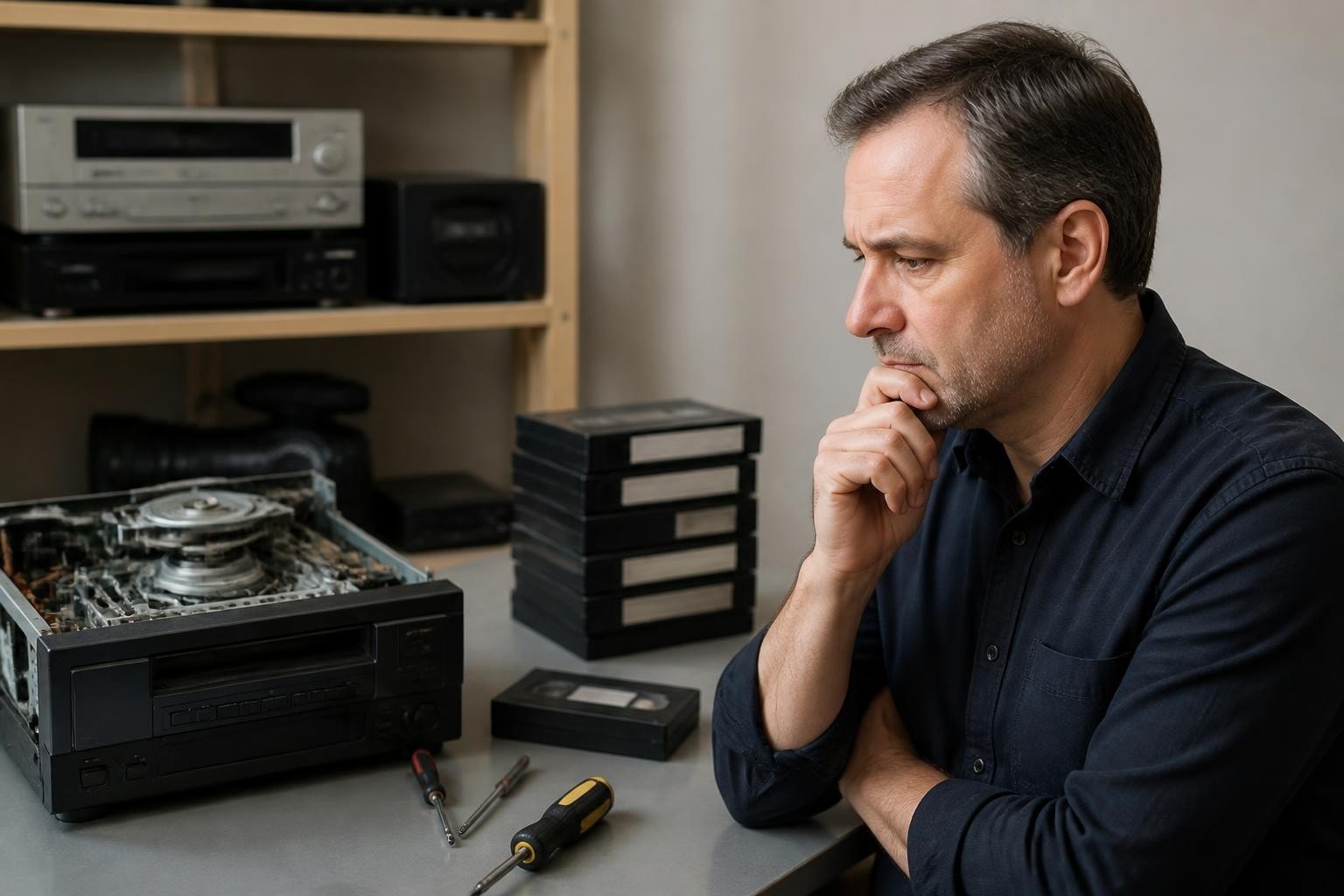
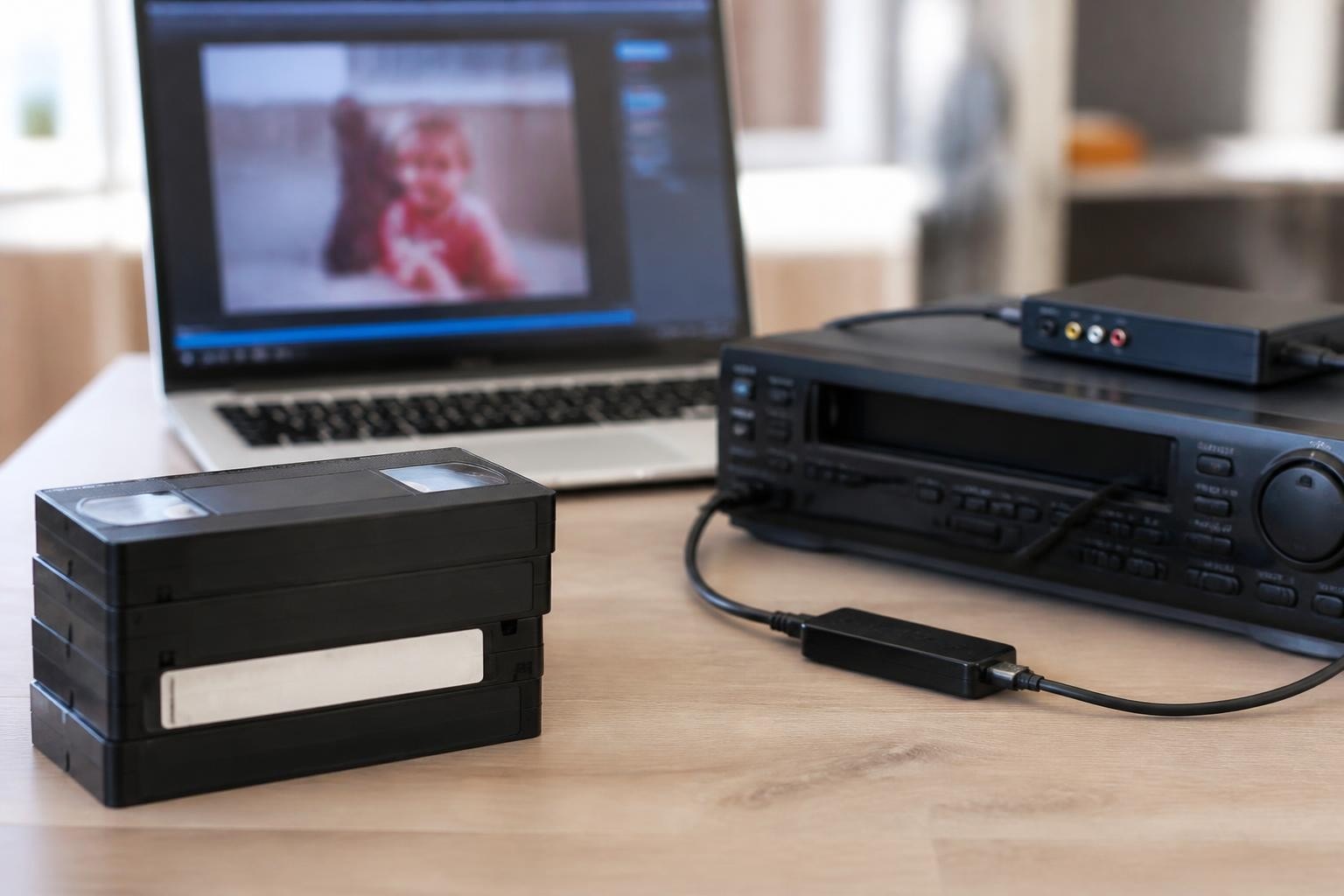
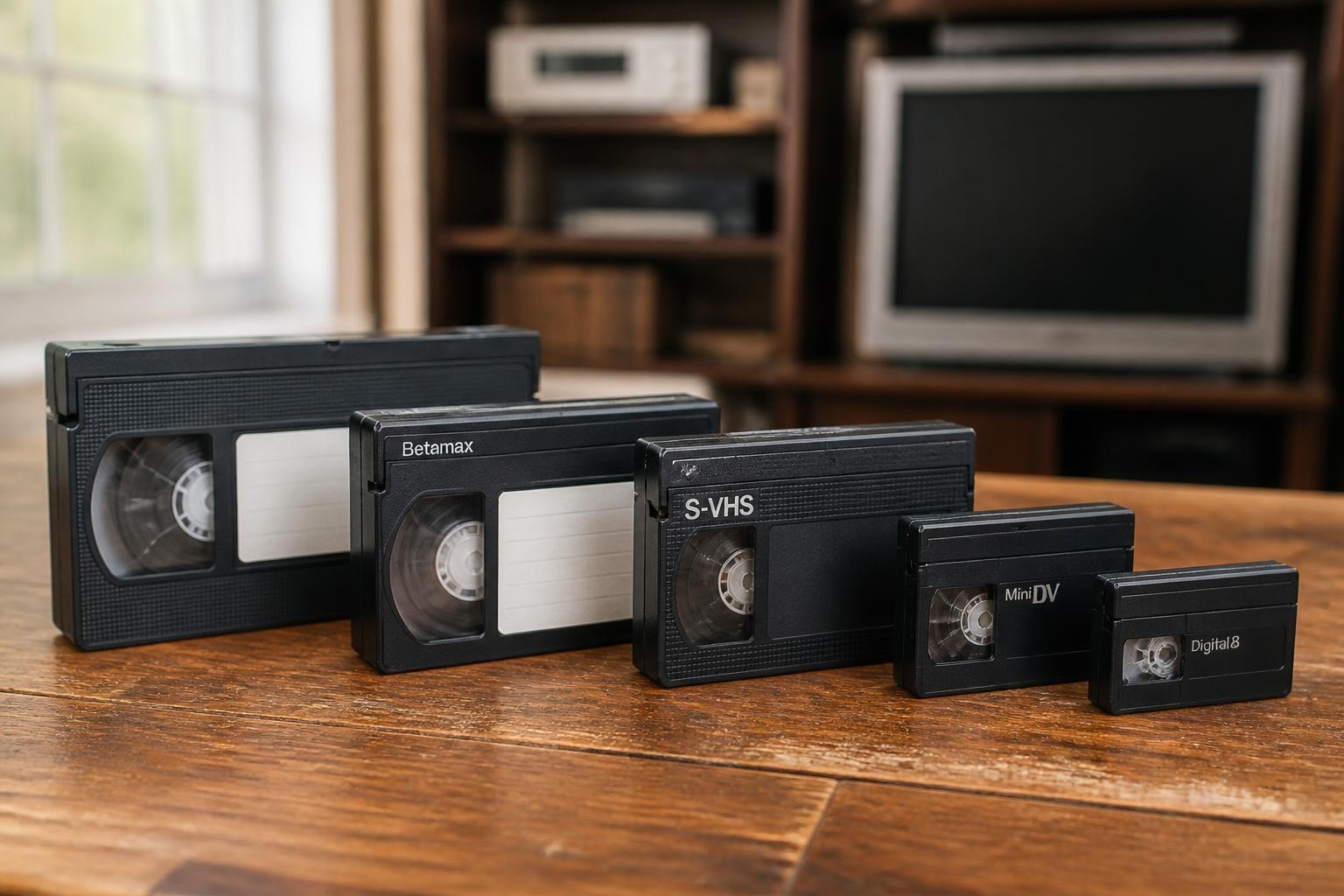
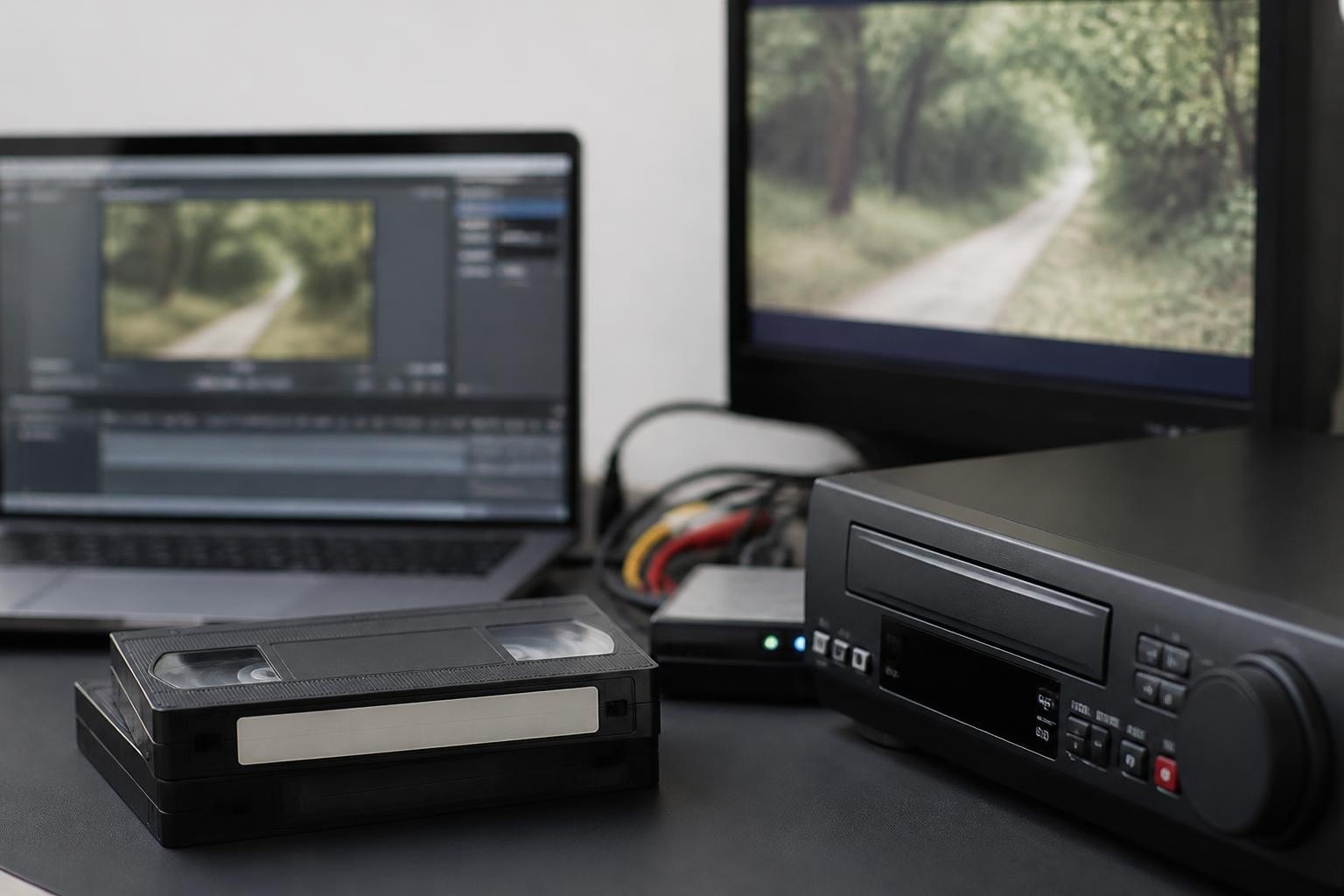
Finding reliable vcr repair near me has become increasingly challenging in 2026 as consumer VCR repair shops continue to close. However, for digitization businesses, archivists, and media professionals working with legacy formats like MiniDV, Betamax, S-VHS, and Digital8, maintaining functional playback equipment remains critical. Professional videotape deck repair requires specialized knowledge, proper tools, and access to increasingly scarce parts. This guide explores how to locate qualified repair services, evaluate whether repair makes sense for your equipment, and understand what professional VCR maintenance entails in today's market.
Understanding Professional VCR Repair Services
Professional videotape deck repair differs significantly from consumer VCR service. While consumer-grade VHS players are often considered disposable in 2026, professional decks from manufacturers like Sony, Panasonic, and JVC represent substantial investments worth maintaining.
What Professional Repair Covers
Repair services for professional videotape equipment typically address mechanical, electrical, and optical issues that affect playback quality and reliability. Common repairs include:
- Capstan and pinch roller replacement for proper tape speed control
- Video head replacement or refurbishment when playback quality degrades
- Belt and idler tire replacement to restore mechanical function
- Circuit board repair for power supply and control issues
- Tape path alignment to ensure proper tracking and minimize tape wear
- Audio circuit repair for stereo and timecode channels
Most professional repair shops charge a diagnostic fee to assess equipment condition. VCR Supply's diagnostic service starts at $45, which covers a comprehensive evaluation of deck functionality and a detailed repair estimate.
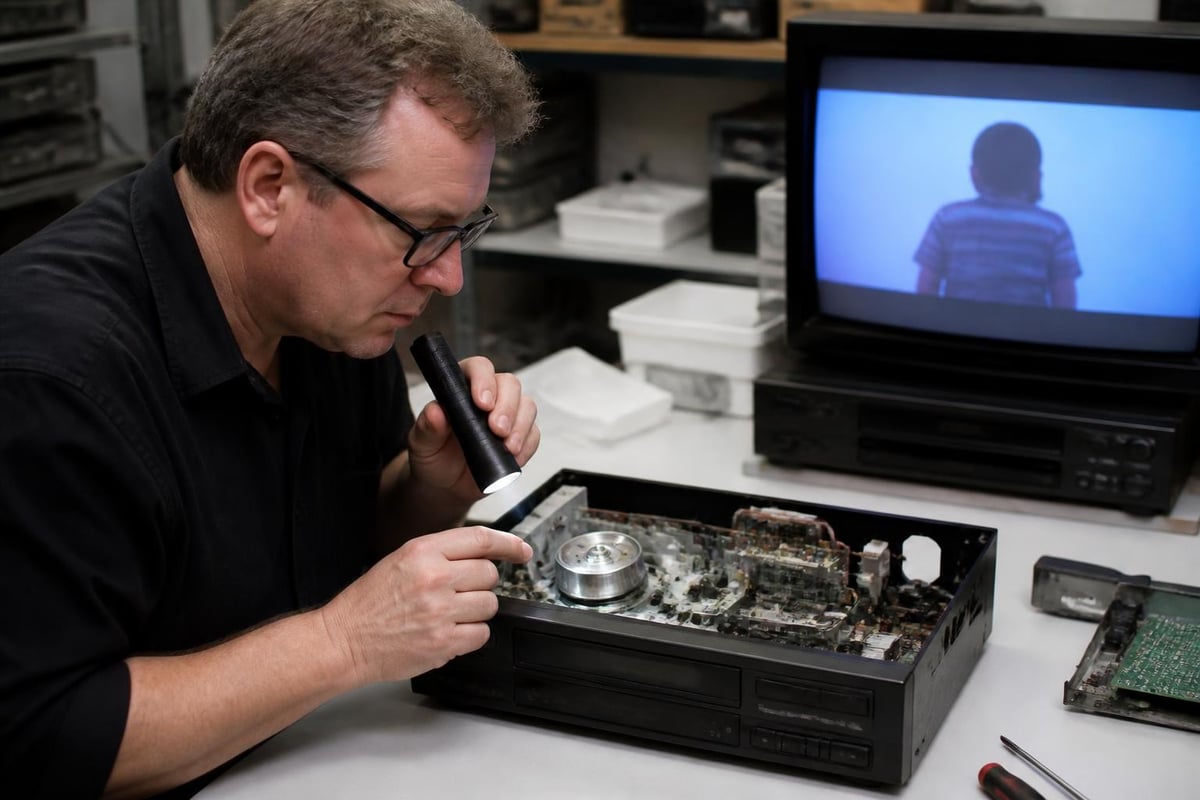
Specialized Knowledge Requirements
Professional videotape deck repair requires understanding of format-specific technical standards and proper handling procedures. The Library of Congress preservation guidelines emphasize that improper repairs can damage both equipment and irreplaceable tape content.
Technicians must understand time base correction, dropout compensation, tracking adjustment, and format-specific signal processing. Different formats like Betamax, MiniDV, and Hi8 each have unique mechanical and electronic characteristics requiring specialized expertise.
Finding VCR Repair Near Me in 2026
The search for "vcr repair near me" yields fewer results each year as traditional electronics repair shops close or shift focus to modern devices. Professional videotape equipment owners must take a strategic approach to locating qualified services.
Geographic Considerations
Major metropolitan areas typically offer better access to professional video equipment repair. Cities with active film production, broadcasting, or archival communities often maintain repair technicians who understand legacy formats.
However, geographic proximity matters less in 2026 than it did previously. Many professional repair services accept shipped equipment, and the cost of shipping often proves worthwhile when accessing truly qualified technicians.
| Service Type | Typical Turnaround | Geographic Scope | Best For |
|---|---|---|---|
| Local shop | 1-2 weeks | 25-mile radius | Quick fixes, routine maintenance |
| Regional specialist | 2-4 weeks | Ship nationwide | Complex repairs, rare formats |
| Manufacturer service | 4-8 weeks | Authorized centers only | Warranty work, critical equipment |
| Rental + repair | 1-3 days | Ship nationwide | Businesses needing zero downtime |
Evaluating Repair Shop Credentials
When searching for vcr repair near me, verification of technician qualifications prevents costly mistakes. Ask potential repair services specific questions:
What formats do you service? Generic "VCR repair" often means consumer VHS only. Professional decks require format-specific knowledge.
Do you have replacement parts in stock? Parts availability represents the biggest challenge for VCR repair in 2026. Shops with existing inventory can complete repairs faster.
What diagnostic equipment do you use? Professional service requires waveform monitors, vectorscopes, and format-specific test tapes, not just visual playback assessment.
Can you provide references from digitization or archival clients? Commercial clients with ongoing needs indicate consistent, reliable service quality.
The National Archives guidance on audiovisual equipment maintenance recommends establishing relationships with qualified repair providers before emergencies occur.
Alternative Resources
When traditional vcr repair near me searches fail, consider these alternatives:
Community repair events through organizations like Repair Café sometimes include volunteers with vintage electronics expertise. While not always equipped for professional deck repair, these events can help with simpler consumer equipment issues.
Broadcast and production equipment dealers occasionally offer repair services or can recommend trusted technicians. Their technician networks often include specialists who work on legacy equipment for studios maintaining archival capabilities.
Repair Versus Replacement Decisions
Not every malfunctioning VCR warrants professional repair. Strategic decision-making about repair investments protects budgets while maintaining operational capability.
Cost Analysis Framework
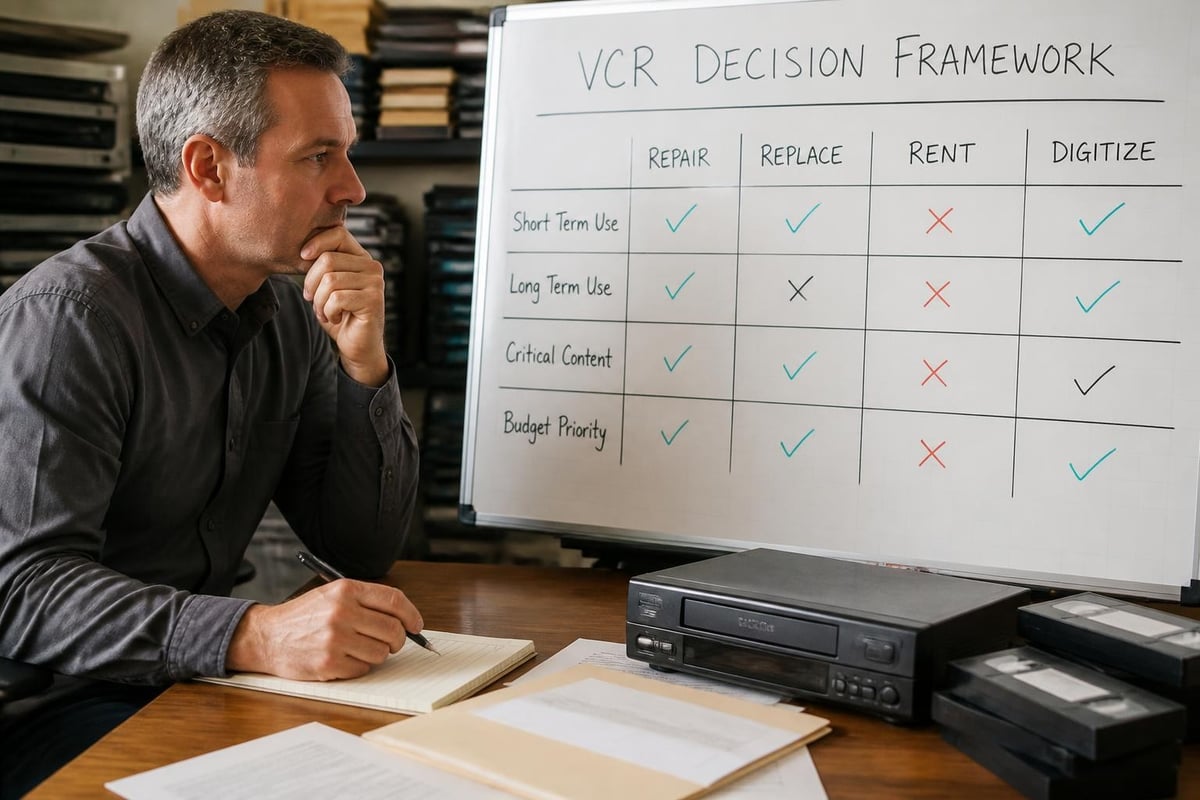
Consumer Reports repair-versus-replace guidance provides a useful framework adaptable to professional videotape equipment. Consider repair when:
- Equipment replacement cost exceeds 3-4 times the repair estimate
- The deck handles a rare format without viable alternatives
- You have ongoing digitization needs requiring consistent equipment
- The equipment is already calibrated for your workflow
Skip repair when:
- Repair costs approach or exceed replacement value
- Multiple major components need replacement
- Parts are unavailable or extremely expensive
- Superior alternatives exist for your application
Format-Specific Considerations
Different videotape formats present unique repair economics in 2026. MiniDV decks remain relatively available and serviceable since the format was widely used professionally through the 2010s. Betamax and Video8 equipment becomes increasingly difficult to repair as parts supplies dwindle.
Professional S-VHS decks often justify repair investment because high-quality playback requires specific models no longer manufactured. The detailed maintenance guidance from conservation specialists explains format-specific longevity factors.
The Rental Alternative
For businesses with sporadic VCR needs, rental often proves more economical than ownership and repair. Professional deck rentals starting at $99 monthly eliminate repair concerns while providing access to maintained, calibrated equipment.
Rental makes particular sense when:
- You digitize videotapes occasionally rather than continuously
- Multiple format capabilities are needed
- Equipment downtime directly impacts revenue
- Capital budget doesn't allow equipment purchase
| Scenario | Own & Repair | Rent Equipment | Service Bureau |
|---|---|---|---|
| Regular digitization business | Best if >20 tapes/month | Good for variable volume | Not cost-effective |
| Occasional archive project | Poor utilization | Best for <6 month projects | Consider for small batches |
| Personal collection | Maybe for common formats | Good for rare formats | Best for <10 tapes |
| Professional production house | Essential for immediate access | Supplement ownership | Not applicable |
Preventive Maintenance Reduces Repair Needs
Proactive maintenance dramatically reduces emergency vcr repair near me searches. Regular servicing extends equipment life and maintains playback quality critical for professional digitization.
Essential Maintenance Tasks
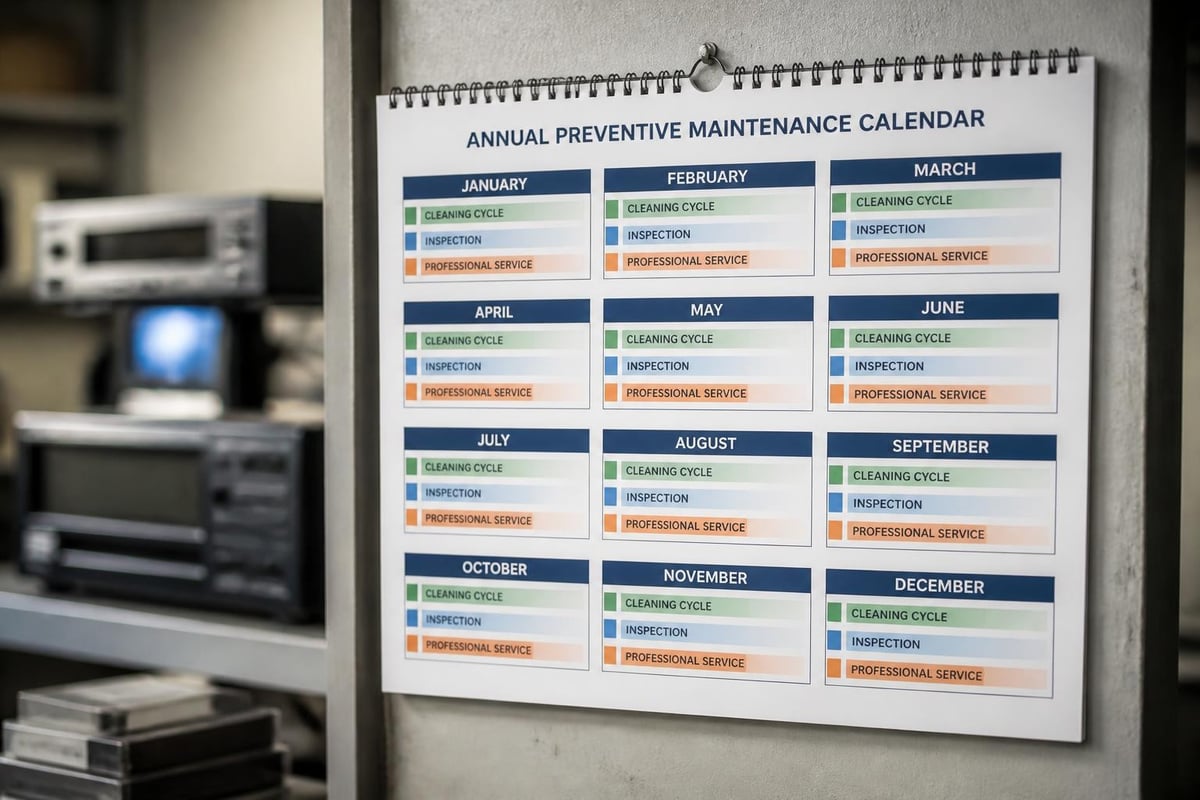
The IASA technical guidelines on magnetic tape preservation specify maintenance intervals for playback equipment used in archival applications:
Head cleaning should occur after every 10-20 hours of use, using appropriate cleaning materials. Abrasive cleaning cassettes can damage heads and should be avoided for professional equipment.
Tape path inspection identifies worn rubber components before they damage tapes. Pinch rollers, guide posts, and tension arms require regular examination.
Demagnetization removes accumulated magnetic charge from metal components that can affect playback quality. Professional decks should be demagnetized monthly during active use.
Lubrication of mechanical components follows manufacturer specifications. Over-lubrication attracts dust and causes as many problems as under-lubrication.
Maintenance Contract Benefits
Regular maintenance contracts provide predictable costs and reduced downtime compared to emergency repairs. Professional services typically offer maintenance packages including:
- Scheduled cleaning and adjustment visits
- Priority repair scheduling when issues arise
- Replacement parts inventory reserved for contract clients
- Detailed service records tracking equipment condition
VCR Supply's maintenance contracts reduce equipment downtime by addressing minor issues before they become major failures. For digitization businesses where every hour of deck downtime represents lost revenue, preventive maintenance delivers clear ROI.
In-House Maintenance Capabilities
Some routine maintenance can be performed in-house with proper training and tools. Basic head cleaning, external inspection, and cleaning of accessible components help maintain equipment between professional service intervals.
However, internal adjustments, video head replacement, and electrical repairs should remain with qualified technicians. The risks of damaging expensive equipment or irreplaceable tape content outweigh potential savings from DIY repairs beyond basic maintenance.
Special Considerations for Digitization Businesses
Companies operating digitization services face unique challenges when equipment fails. Customer deadlines, quality standards, and reputation all depend on reliable playback equipment.
Backup Equipment Strategy
No single VCR repair solution ensures zero downtime. Successful digitization operations maintain redundancy:
Primary equipment handles daily workload with regular professional maintenance. These decks receive the most investment in repairs and calibration.
Backup decks provide immediate failover when primary equipment fails. Even older or lesser-quality backups prevent customer deadline failures during repair turnaround times.
Rental equipment supplements owned decks during peak periods or when both primary and backup units fail simultaneously. Establishing relationships with rental providers before emergencies ensures rapid deployment.
Quality Control Requirements
The Federal Agencies Digital Guidelines Initiative establishes technical standards for videotape digitization. Meeting these standards requires properly functioning, well-maintained playback equipment.
Degraded video heads, tracking issues, or timing problems may produce technically successful transfers that fail quality review. Regular maintenance and timely repairs protect both output quality and business reputation.
Format Coverage Planning
Professional digitization businesses must support multiple formats. Rather than maintaining in-house repair capability for every format, strategic combinations of owned, rented, and serviced equipment optimize costs:
- Own frequently-used format decks (typically MiniDV and Digital8)
- Rent rarely-needed formats (Betamax, U-matic, Video8)
- Maintain service relationships for all owned equipment
- Keep current on parts availability and format-specific repair challenges
This approach balances capability, cost, and reliability while avoiding excessive capital tied up in rarely-used equipment.
Parts Availability and Long-Term Viability
The fundamental challenge for vcr repair near me in 2026 isn't finding technicians but sourcing replacement parts. Understanding parts availability informs smart repair decisions.
Critical Component Scarcity
Certain components face severe shortages:
Video heads represent the most critical and scarce component. Heads wear with use and directly affect playback quality. Many professional deck models now have no new-manufacture head replacements available, only salvaged parts from donor units.
Rubber components (belts, tires, rollers) deteriorate regardless of use due to age-related chemical breakdown. While aftermarket options exist for common consumer formats, professional deck rubber parts often require original manufacturer components.
Integrated circuits specific to particular models become unavailable as semiconductor manufacturers discontinue decades-old chips. Circuit board repair sometimes requires sourcing from parts machines.
Sourcing Strategies
Professional repair services maintain relationships with parts suppliers, maintain inventory of common failure components, and operate parts machine pools. When evaluating repair shops, ask about their parts sourcing capabilities and current inventory.
Some repair providers specialize in particular manufacturers or format families, concentrating parts inventory and expertise. Finding a shop that focuses on your specific deck model often yields better results than generalist services.
Future-Proofing Considerations
Equipment repair becomes less viable over time as parts deplete. For critical applications, consider:
- Purchasing backup units while still available
- Establishing multiple repair service relationships
- Planning migration to alternative playback solutions
- Documenting equipment-specific calibration and adjustment procedures
The professional videotape equipment market will continue shrinking. Strategic planning now prevents crisis situations later when repair truly becomes impossible.
Working With Remote Repair Services
Since local vcr repair near me options have diminished, many equipment owners must ship decks to distant repair facilities. Proper shipping and communication ensure successful remote repair experiences.
Shipping Best Practices
Professional videotape decks contain delicate mechanical and optical components requiring careful packing:
- Remove all tapes before shipping
- Original packaging provides best protection when available
- Double-box with minimum 3 inches cushioning material on all sides
- Mark boxes "Fragile Electronic Equipment" and indicate proper orientation
- Insure shipments for full equipment replacement value
- Use tracked shipping with signature confirmation
Document equipment condition with photos before packing. This protects both parties if shipping damage occurs.
Communication and Documentation
Clear communication with remote repair services prevents misunderstandings and delays:
Describe problems specifically: "Playback shows horizontal noise bars in bottom third of frame" rather than "doesn't work right." Include sample footage if possible.
Specify your application: Digitization, broadcast monitoring, or production use may require different repair priorities and quality thresholds.
Discuss timeline needs upfront. Rush service may be available for additional fees when standard turnaround doesn't meet your needs.
Request detailed repair reports explaining work performed, parts replaced, and recommendations for preventive maintenance or future concerns.
Cost Expectations for Professional VCR Repair
Understanding typical repair costs helps budget appropriately and evaluate estimates from vcr repair near me searches.
Standard Pricing Models
Most professional repair services follow this pricing structure:
Diagnostic fee covers initial equipment assessment and estimate preparation. Fees typically range from $45 to $150 depending on equipment complexity and service provider. Some shops apply diagnostic fees toward repair costs if you proceed with service.
Labor charges for actual repair work range from $75 to $150 per hour. Professional videotape equipment repair requires specialized knowledge commanding higher rates than consumer electronics service.
Parts costs vary enormously depending on component availability. Common rubber parts may cost $10-30 while rare video heads can exceed $500. Parts represent the most unpredictable cost element in VCR repair.
Return shipping adds $30-75 for professional packing and insured carrier service when using remote repair providers.
Typical Repair Cost Ranges
| Repair Type | Typical Cost | Notes |
|---|---|---|
| Basic cleaning & adjustment | $100-200 | Routine maintenance, no parts |
| Belt/roller replacement | $150-300 | Common wear items |
| Video head replacement | $300-800 | When parts available |
| Circuit board repair | $200-500 | Component-level work |
| Complete mechanical rebuild | $500-1200 | Extensive wear/damage |
These ranges assume parts availability. When components must be sourced from parts machines or international suppliers, costs increase significantly and turnaround times extend.
Getting Value From Repairs
Maximize repair investment value by:
- Requesting comprehensive service addressing all current issues in one repair cycle
- Asking about additional preventive work that adds minimal cost during existing service
- Understanding warranty terms on repair work and replacement parts
- Documenting recommended future maintenance intervals
- Requesting calibration verification after mechanical repairs
Quality repairs from experienced technicians provide years of continued service. Cheap repairs often fail prematurely, requiring repeated service calls that exceed the cost of doing the job properly initially.
Industry Resources and Technical Support
Beyond local vcr repair near me searches, industry organizations and technical resources provide valuable information for maintaining videotape playback equipment.
Professional Organizations
Organizations focused on audiovisual preservation maintain current technical information:
The Association of Moving Image Archivists (AMIA) connects professionals working with film and video preservation. Their conferences and publications address equipment maintenance and obsolescence challenges.
The International Association of Sound and Audiovisual Archives (IASA) publishes technical guidelines covering playback equipment care and handling procedures for archival applications.
Regional film and media preservation groups often maintain equipment technician referral lists and share information about parts sources and repair providers serving their communities.
Online Communities and Forums
Enthusiast communities focused on vintage video equipment share repair information, parts sources, and service provider recommendations. While advice quality varies, these forums often surface solutions for obscure problems and identify active repair services.
Exercise caution with DIY repair advice from online sources. Professional decks differ significantly from consumer equipment, and procedures appropriate for disposable VHS machines may damage valuable professional gear.
Manufacturer Support
Some original equipment manufacturers maintain limited support for discontinued professional products. Sony, Panasonic, and JVC authorized service centers occasionally service legacy equipment when parts remain available, though this option continues disappearing as companies close vintage product support departments.
Manufacturer service typically costs more than independent repair shops but offers factory-trained technicians and access to remaining official parts inventory. For critical applications, manufacturer service may justify premium pricing.
Building Long-Term Equipment Relationships
Rather than frantically searching vcr repair near me when equipment fails, successful videotape professionals build ongoing relationships with repair providers, rental companies, and parts suppliers.
Selecting Service Partners
Evaluate potential service partners on multiple criteria:
Technical competence with your specific equipment formats and models matters most. Generic electronics repair skills don't substitute for videotape-specific expertise.
Communication quality ensures you understand repair recommendations, costs, and timelines. Good service providers explain issues clearly and offer options rather than single solutions.
Business stability indicates the provider will be available for future needs. Established businesses with multiple technicians outlast individual operators approaching retirement.
Parts access separates providers who can actually fix equipment from those who merely provide diagnoses. Ask about current inventory and sourcing relationships.
Maintenance Agreements
Formal maintenance contracts with repair providers offer predictable costs and priority service. Agreements typically include:
- Scheduled preventive maintenance visits (quarterly or semi-annual)
- Priority scheduling when unscheduled repairs become necessary
- Discounted labor rates for contract clients
- Parts inventory reserved specifically for contract equipment
- Detailed service history documentation
For businesses depending on videotape equipment, maintenance contracts represent insurance against downtime and costly emergency repairs. The predictable annual cost simplifies budgeting compared to unpredictable repair expenses.
Knowledge Transfer
Working with experienced technicians provides learning opportunities. Ask questions during repairs to understand your equipment better:
- What components typically fail first on your deck models?
- What symptoms indicate emerging problems requiring attention?
- Which preventive maintenance tasks can you perform in-house?
- How should you optimize equipment settings for your specific application?
Understanding your equipment helps you recognize problems early, perform appropriate basic maintenance, and communicate more effectively with repair technicians when service becomes necessary.
Finding reliable vcr repair near me requires strategic thinking as traditional service options continue declining in 2026. By understanding repair economics, maintaining equipment proactively, and building relationships with qualified service providers, videotape professionals can extend equipment life and maintain operational capability. Whether you need occasional repairs or ongoing support for high-volume digitization operations, VCR Supply offers professional videotape deck repair with $45 diagnostics, rental options starting at $99 monthly, and maintenance contracts designed to keep your equipment running reliably.