VHS Video: Professional Guide to Preservation & Transfer

The VHS video format dominated home entertainment and professional video production for nearly three decades, creating an irreplaceable archive of cultural, historical, and personal content. Despite the format's obsolescence in consumer markets, millions of VHS tapes remain the sole repository for valuable footage, making professional-grade playback and digitization equipment essential for preservation work. Understanding the technical characteristics, deterioration patterns, and optimal transfer methodologies for VHS video separates successful archival projects from those that compromise irreplaceable content through improper handling or inadequate equipment.
Understanding VHS Video Format Specifications
VHS (Video Home System) records analog composite video using helical scan technology on half-inch magnetic tape. The format captures approximately 240 lines of horizontal resolution in NTSC markets and 280 lines in PAL regions, significantly lower than broadcast standards but sufficient for consumer applications throughout the 1980s and 1990s.
Technical Architecture and Recording Parameters
The VHS video signal embeds luminance and chrominance information through frequency modulation, creating vulnerability to specific types of degradation over time. Recording speed directly impacts quality, with SP (Standard Play) mode delivering optimal resolution while EP/SLP (Extended/Super Long Play) modes sacrifice picture quality for extended recording duration.
Key technical specifications include:
- Tape speed: 33.35 mm/s (SP mode, NTSC)
- Video bandwidth: Approximately 3 MHz
- Audio tracks: Linear mono or stereo, plus optional Hi-Fi stereo
- Maximum recording time: 2-8 hours depending on tape length and speed
Professional VHS decks offer superior head assemblies, time-base correction, and adjustable tracking compared to consumer models. These features prove critical when handling deteriorated magnetic media or extracting maximum quality from aging tapes.

Preservation Challenges Affecting VHS Video Collections
Magnetic tape deterioration follows predictable patterns that accelerate without proper environmental controls. VHS video collections face multiple degradation mechanisms simultaneously, creating urgency for digitization projects while working equipment remains available.
Common Deterioration Patterns
Binder hydrolysis represents the most common chemical degradation pathway for VHS tapes manufactured between 1975 and 1995. The polyurethane binder that adheres magnetic particles to the tape substrate absorbs atmospheric moisture, becoming sticky and shedding oxide material during playback.
Physical deterioration manifests as:
- Edge damage from improper winding tension
- Tape stretching causing tracking errors
- Oxide shedding contaminating playback heads
- Splice failures at tape repairs or edits
Environmental factors accelerate deterioration rates significantly. The Image Permanence Institute research demonstrates that temperature and humidity fluctuations cause more damage than constant (even if less than ideal) conditions. Storage above 70°F and 50% relative humidity dramatically shortens VHS tape lifespan.
| Degradation Type | Primary Cause | Playback Impact | Reversibility |
|---|---|---|---|
| Binder hydrolysis | Moisture absorption | Sticky tape, dropouts | Temporary (baking) |
| Oxide shedding | Age, poor storage | Head clogging, noise | Irreversible |
| Tape stretch | Tension issues | Tracking errors | Irreversible |
| Mold growth | High humidity | Physical damage | Partial (cleaning) |
The National Archives preservation guidance recommends immediate digitization for any VHS video materials showing signs of deterioration rather than attempting long-term analog preservation.
Professional VHS Video Playback Equipment Requirements
Consumer VCRs lack the mechanical precision and signal processing capabilities necessary for professional digitization workflows. Facilities handling VHS video transfer projects require specialized playback equipment that maximizes signal extraction while minimizing further tape damage.
Deck Selection Criteria
Professional and prosumer VHS decks incorporate time-base correctors (TBC) that stabilize the inherently unstable VHS video signal for proper analog-to-digital conversion. S-VHS capability provides backward compatibility while offering superior component output options even when playing standard VHS tapes.
Essential features for professional applications:
- Time-base correction for signal stability
- Manual tracking control for damaged tape optimization
- S-Video or component outputs bypassing composite video limitations
- Audio level controls for proper gain staging
- Head hour meters for maintenance scheduling
Equipment maintenance directly impacts transfer quality. Regular head cleaning, proper demagnetization, and tension adjustment prevent introducing artifacts during the capture process. Professional VCR maintenance contracts ensure decks remain calibrated to manufacturer specifications.

Specialized S-VHS Deck Advantages
S-VHS format equipment delivers measurably superior results when transferring standard VHS video content. The enhanced heads and circuitry extract maximum detail from VHS tapes, while S-Video outputs separate luminance and chrominance signals before the composite encoding that degrades standard VHS connections.
Digitization facilities operating on tight margins benefit from equipment rental options that provide access to professional-grade S-VHS decks without capital expenditure. Monthly rental programs starting at $99 enable scaling operations according to project volume.
Optimal Digital Capture Methodology for VHS Video
Converting VHS video to digital formats requires balancing technical quality against practical workflow efficiency. The Federal Agencies Digital Guidelines Initiative recommendations establish preservation master specifications that maintain maximum information for future format migrations.
Capture Hardware Configuration
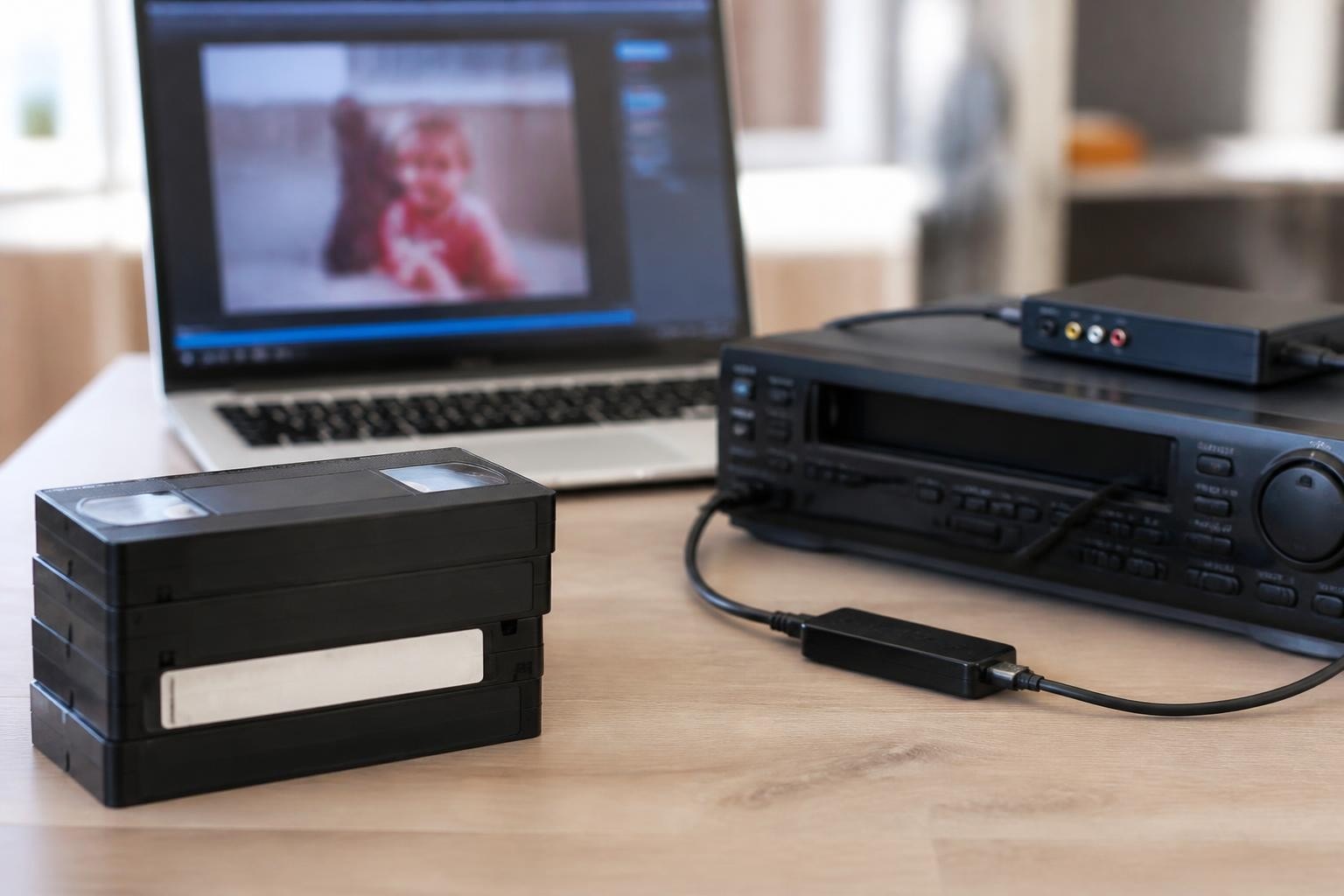
Professional VHS video digitization workflows use hardware capture devices rather than software-only solutions. Hardware encoding reduces CPU load while providing consistent quality across long capture sessions spanning multiple tapes.
Recommended signal path components:
- Professional VHS deck with S-Video output
- Time-base corrector (if not deck-integrated)
- Hardware capture device supporting 10-bit 4:2:2 sampling
- Calibrated monitoring for real-time quality verification
- RAID storage for uncompressed or lightly compressed captures
Frame-accurate capture starts with proper deck setup. Manual tracking adjustment optimizes picture stability for each individual tape, as VHS video quality varies significantly between recordings based on original equipment quality, tape condition, and recording speed used.
Resolution and Codec Selection
VHS video contains approximately 333×480 pixels of actual picture information in NTSC format, though digital captures typically render at 720×480 to maintain proper aspect ratio and pixel geometry. Upscaling beyond native resolution provides no quality benefit and increases storage requirements without preserving additional content.
| Codec | File Size (1 hour) | Quality | Use Case |
|---|---|---|---|
| Uncompressed 10-bit | ~110 GB | Maximum | Preservation master |
| FFV1 lossless | ~45 GB | Excellent | Archival master |
| ProRes 422 HQ | ~30 GB | Excellent | Production master |
| H.264 high profile | ~4 GB | Good | Access copy |
The Library of Congress preservation FAQ recommends creating both preservation masters and access copies, with preservation files using lossless or mathematically reversible compression only.
Workflow Optimization for High-Volume Transfer Operations
Commercial digitization shops processing hundreds or thousands of VHS video tapes require standardized workflows that maintain consistent quality while maximizing throughput. Systematic approaches prevent errors, reduce handling time, and create auditable documentation.
Intake and Assessment Protocols
Every VHS video tape entering a digitization workflow should undergo visual inspection and condition assessment before playback. Physical damage assessment prevents catastrophic deck failures that can destroy both tape content and expensive playback equipment.
Pre-transfer checklist items:
- Case and label condition documentation
- Tape pack visual inspection for warping
- Edge condition assessment for damage
- Mold or contamination presence check
- Test playback for sticky shed syndrome
Tapes showing binder hydrolysis symptoms require baking at controlled temperature and humidity before transfer attempts. Standard protocols specify 6-8 hours at 125-135°F in forced-air ovens, though exact parameters depend on tape formulation and degradation severity.
Equipment rental services prove particularly valuable during assessment phases when specialized format-specific decks may be needed temporarily. A professional VCR rental enables testing playback on multiple deck types before committing to purchase equipment for specific tape formats.
Quality Control and Verification
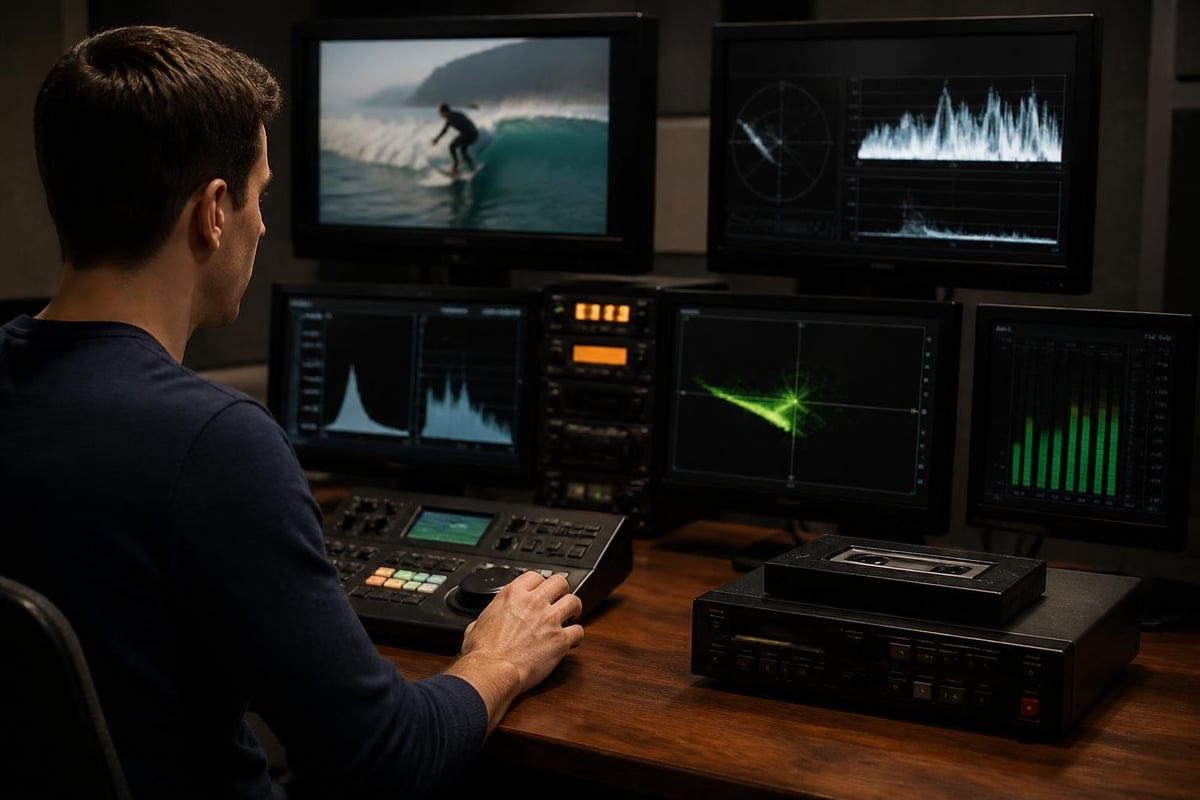
Real-time monitoring during capture prevents wasting resources on failed transfers discovered only during post-processing review. Waveform monitors and vectorscopes provide objective signal quality measurement beyond simple visual assessment.
Critical monitoring parameters include:
- Luminance levels (IRE units within legal broadcast range)
- Chroma amplitude and phase consistency
- Sync stability and dropout frequency
- Audio levels and channel balance
Automated quality checking tools can flag dropouts, sync errors, and level violations for manual review. The community-maintained capture workflows provide scripting examples for integrating quality metrics into production pipelines.
Equipment Maintenance and Long-Term Reliability
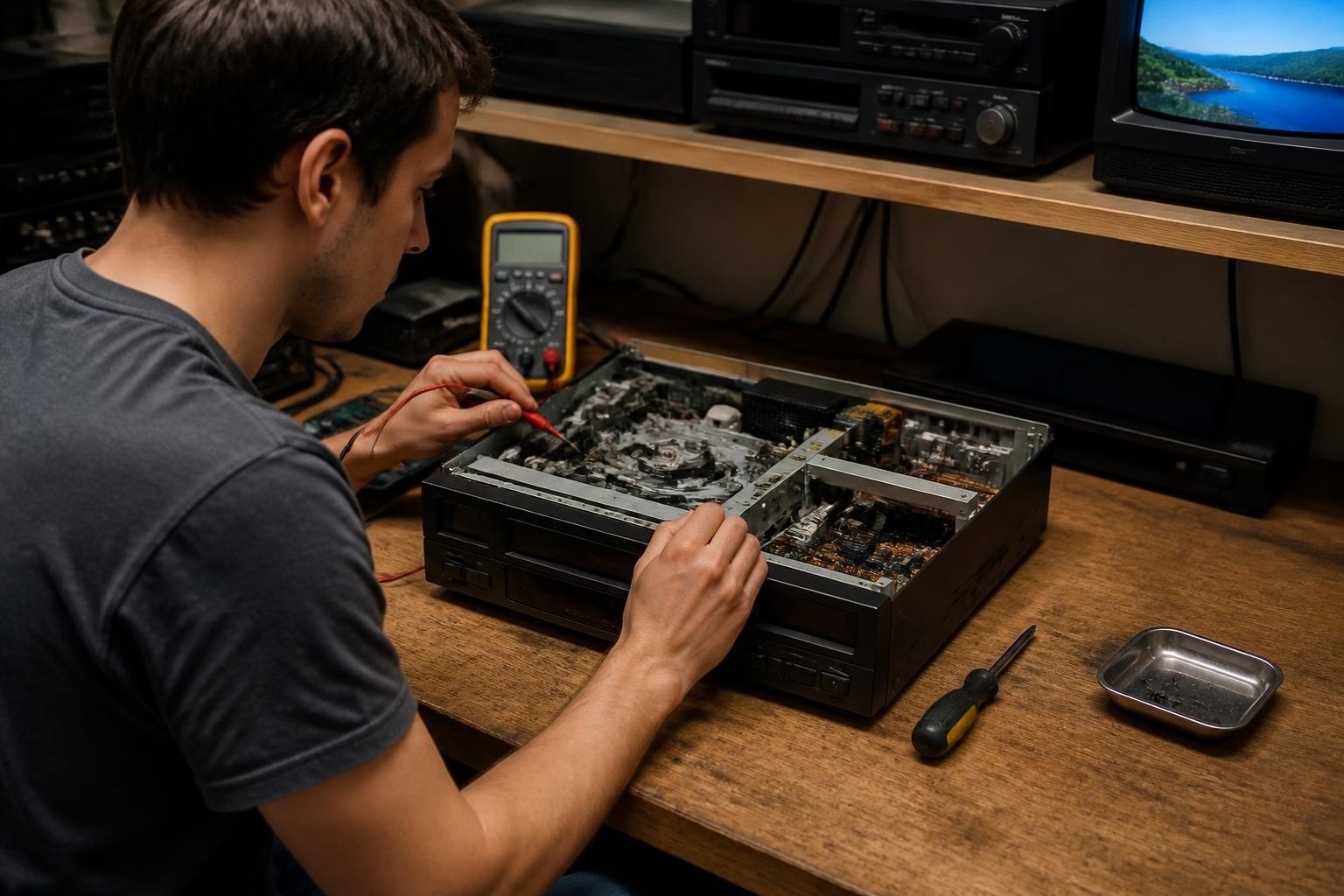
Professional VHS video transfer operations depend on maintaining aging equipment that manufacturers no longer produce. Strategic maintenance programs extend equipment lifespan while minimizing unexpected downtime that disrupts production schedules.
Preventive Maintenance Schedules
VHS deck reliability correlates directly with head condition and mechanical alignment. Regular cleaning prevents contamination buildup that causes tracking errors and dropouts, while periodic alignment verification ensures optimal tape-to-head contact geometry.
Recommended maintenance intervals:
- Daily: Manual head cleaning after heavy use
- Weekly: Demagnetization of heads and tape path
- Monthly: Capstan and pinch roller inspection/cleaning
- Quarterly: Mechanical alignment verification
- Annually: Complete disassembly, cleaning, and calibration
Access to professional repair services with diagnostic capabilities prevents extended downtime when equipment failures occur. Facilities offering $45 diagnostic fees and transparent repair estimates enable budgeting for inevitable maintenance costs.
Parts Availability and Strategic Planning
Component scarcity increases annually as VHS equipment ages beyond manufacturer support windows. Strategic parts inventory for commonly failing components (belts, rollers, heads) ensures rapid repair turnaround rather than waiting for increasingly difficult sourcing.
Critical spare components to stock:
- Video heads (complete drum assemblies)
- Rubber belts (multiple sizes)
- Pinch rollers and capstan motors
- Loading mechanism gears
- Power supply capacitors
Digitization operations should plan equipment redundancy, maintaining multiple decks of each format to prevent complete workflow stoppage during repairs. Monthly equipment rental programs provide backup capacity without capital investment in fully redundant systems.
Format Variations and Specialized VHS Video Types
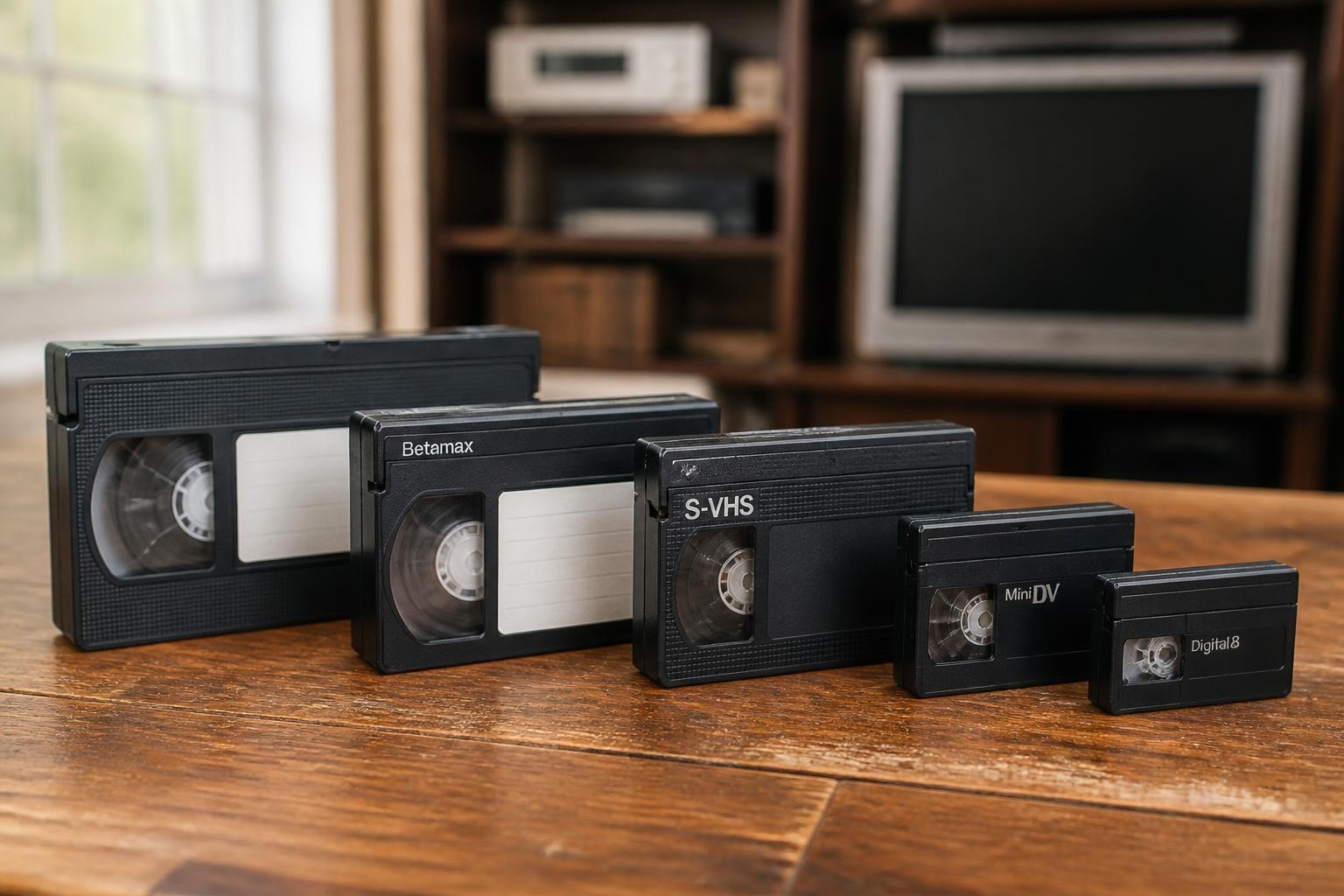
Standard VHS spawned multiple variants optimizing different parameters for specific applications. Professional transfer operations encounter these specialized formats regularly and require appropriate playback equipment for proper signal extraction.
S-VHS and S-VHS-C Formats
Super VHS improves resolution to approximately 400 horizontal lines through increased luminance bandwidth and improved tape formulation. S-VHS decks maintain backward compatibility with standard VHS while offering enhanced playback quality even for conventional tapes through superior circuitry.
The compact S-VHS-C variant uses smaller cassettes (requiring adapters for standard-size deck playback) popular in camcorders during the 1990s. These tapes demand special handling attention due to the mechanical adapter interface introducing additional failure points.
VHS-HQ and Other Consumer Enhancements
Various manufacturers implemented proprietary enhancement circuits branded as VHS-HQ, VHS with HiFi audio, and similar marketing terminology. These systems improve specific signal aspects without changing fundamental recording parameters or tape compatibility.
Transfer operations must recognize that playback deck quality matters more than original recording enhancements. A professional deck specialized for digitization work extracts superior results from any VHS video recording compared to consumer equipment regardless of original enhancement features.
Legal and Copyright Considerations for Transfer Services
Commercial VHS video digitization operations must navigate complex copyright law that treats format shifting differently depending on content ownership and transfer purpose. Understanding these distinctions prevents legal liability while serving legitimate customer needs.
Personal Archive vs. Commercial Content
Copyright law generally permits format shifting of personally owned media for private use, though specific legal frameworks vary by jurisdiction. Commercial content transfers require rights clearance even when customers possess physical tapes, as ownership of physical media differs from copyright ownership.
Transfer services should implement intake procedures that:
- Verify customer ownership of physical media
- Document content type and origin
- Obtain written liability releases
- Decline transfers of obvious commercial releases
- Maintain transfer records for compliance verification
The digital preservation guidance for personal archiving addresses these considerations from an individual perspective, while commercial operations require consultation with legal counsel familiar with copyright and fair use doctrine.
VHS video preservation presents time-sensitive challenges requiring professional equipment, systematic workflows, and technical expertise that separate successful digitization projects from those that compromise irreplaceable content. Whether processing personal archives or managing commercial transfer operations, access to properly maintained playback equipment directly determines capture quality and project success rates. VCR Supply provides the specialized playback decks, repair services, and maintenance support that digitization facilities need to deliver consistent, high-quality results while managing equipment costs through flexible rental programs starting at $99 monthly.