VHS Video Tape: A Complete Guide for Digitization Shops
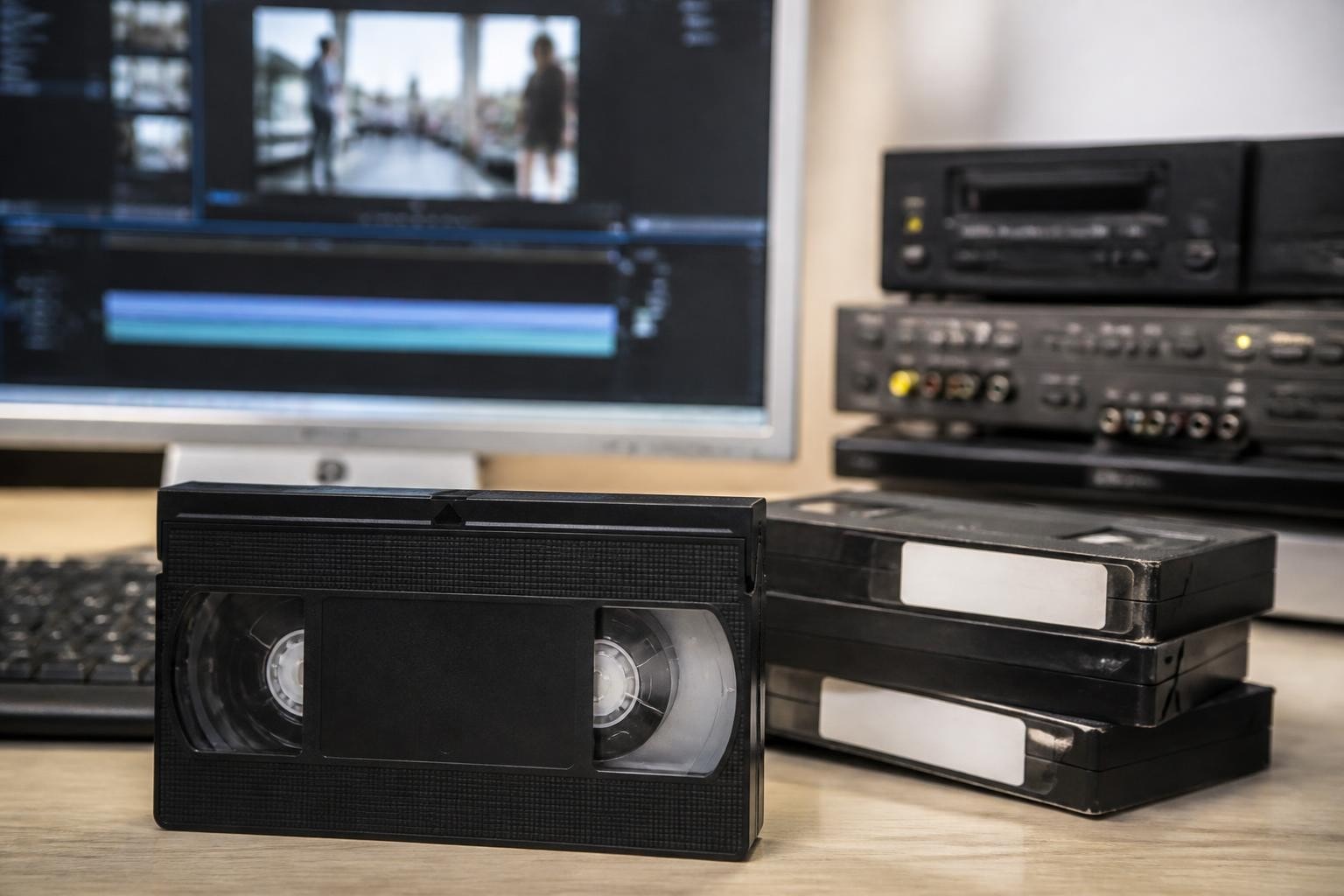
The VHS video tape format dominated consumer and professional video markets for nearly three decades, creating an enormous legacy collection that now requires urgent preservation attention. For digitization shops, media archivists, and preservation facilities, understanding the technical characteristics, deterioration patterns, and proper handling of VHS media remains essential to successful transfer projects. As institutions and individuals rush to preserve irreplaceable recordings before magnetic media degrades beyond recovery, professional-grade equipment and expertise have never been more critical.
Understanding VHS Video Tape Technology and Format Specifications
VHS (Video Home System) emerged in the mid-1970s as a half-inch helical scan videotape format developed by JVC. The format's design prioritized extended recording time and manufacturing affordability over picture quality, which ultimately secured its market dominance against competitors like Betamax and Video 2000.
The physical construction of a vhs video tape consists of polyester base film coated with ferric oxide or metal particle magnetic material. Standard cassette dimensions measure 187mm × 104mm × 25mm, containing tape widths of 12.65mm. Recording occurs through a rotating drum with video heads that create diagonal tracks across the tape at a writing speed of approximately 5.8 meters per second.
Technical Recording Parameters
VHS employs frequency modulation to record luminance information and color-under technique for chrominance data. The system records video at 240 horizontal lines of resolution in North America (NTSC) and 250 lines in Europe (PAL). Audio tracks run linearly along the tape edge, with Hi-Fi models adding FM audio tracks within the helical video scan.
| VHS Specification | NTSC Value | PAL Value |
|---|---|---|
| Video Bandwidth | 3.0 MHz | 3.0 MHz |
| Luminance Carrier | 3.4-4.4 MHz | 3.8-4.8 MHz |
| Chrominance Carrier | 629 kHz | 627 kHz |
| Tape Speed (SP) | 33.35 mm/s | 23.39 mm/s |
| Maximum Recording Time | 240 min (T-160) | 300 min (E-240) |
The IEC 60774 standards define formal specifications for helical-scan videotape cassette systems, providing authoritative technical references for preservation work.

Preservation Challenges Facing VHS Collections
Magnetic videotape represents one of the most vulnerable media formats in archival collections. VHS tapes face multiple deterioration mechanisms that compound over time, creating an urgent preservation timeline for institutions and businesses managing significant collections.
Physical and Chemical Degradation Patterns
Binder hydrolysis ranks among the most serious threats to vhs video tape longevity. The polyurethane binder holding magnetic particles to the polyester base absorbs moisture from atmospheric humidity, causing the polymer to break down. This process, commonly called "sticky shed syndrome," manifests as gummy residue that clogs video heads and causes catastrophic playback failures.
Magnetic remanence decay gradually erodes the recorded signal over time. Studies indicate VHS recordings lose measurable signal strength after 10-20 years under typical storage conditions, with accelerated loss under poor environmental control.
Additional deterioration factors include:
- Tape pack deformation from improper winding tension or temperature fluctuations
- Edge damage from repeated handling and mechanical stress
- Oxide shedding as binder adhesion fails
- Print-through where magnetic signals transfer between tape layers
- Fungal growth in high-humidity environments
The U.S. National Archives guidelines on machine-readable media provide institutional-level preservation practices addressing these deterioration mechanisms.
Environmental Storage Requirements
Proper environmental control dramatically extends vhs video tape lifespan. Professional archives maintain climate-controlled storage following specific parameters:
| Environmental Factor | Recommended Range | Critical Threshold |
|---|---|---|
| Temperature | 15-20°C (59-68°F) | Below 25°C (77°F) |
| Relative Humidity | 20-30% RH | 30-50% RH maximum |
| Air Quality | Filtered, low particulates | No corrosive gases |
| Light Exposure | Darkness preferred | Minimal UV exposure |
Fluctuations prove as damaging as absolute values. Temperature swings cause tape dimensional changes, while humidity cycling accelerates hydrolysis. The British Film Institute's preservation documentation emphasizes consistent environmental conditions as fundamental to magnetic media longevity.
Professional VHS Digitization Workflows and Equipment Requirements
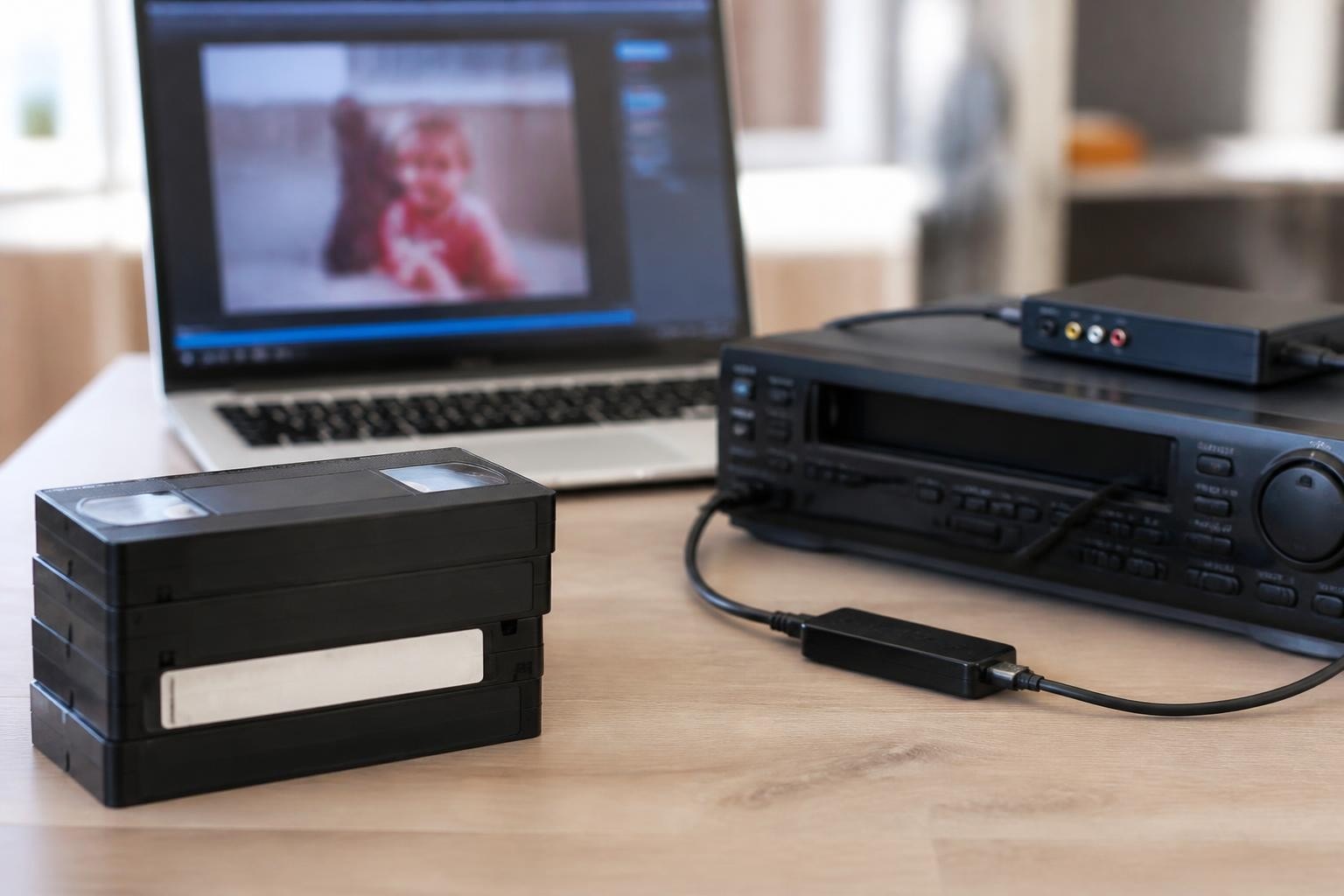
Converting vhs video tape collections to digital formats requires systematic workflows, calibrated equipment, and quality control processes. Digitization shops handling client materials or institutional projects must balance throughput efficiency against preservation quality standards.
Equipment Selection and Deck Specifications
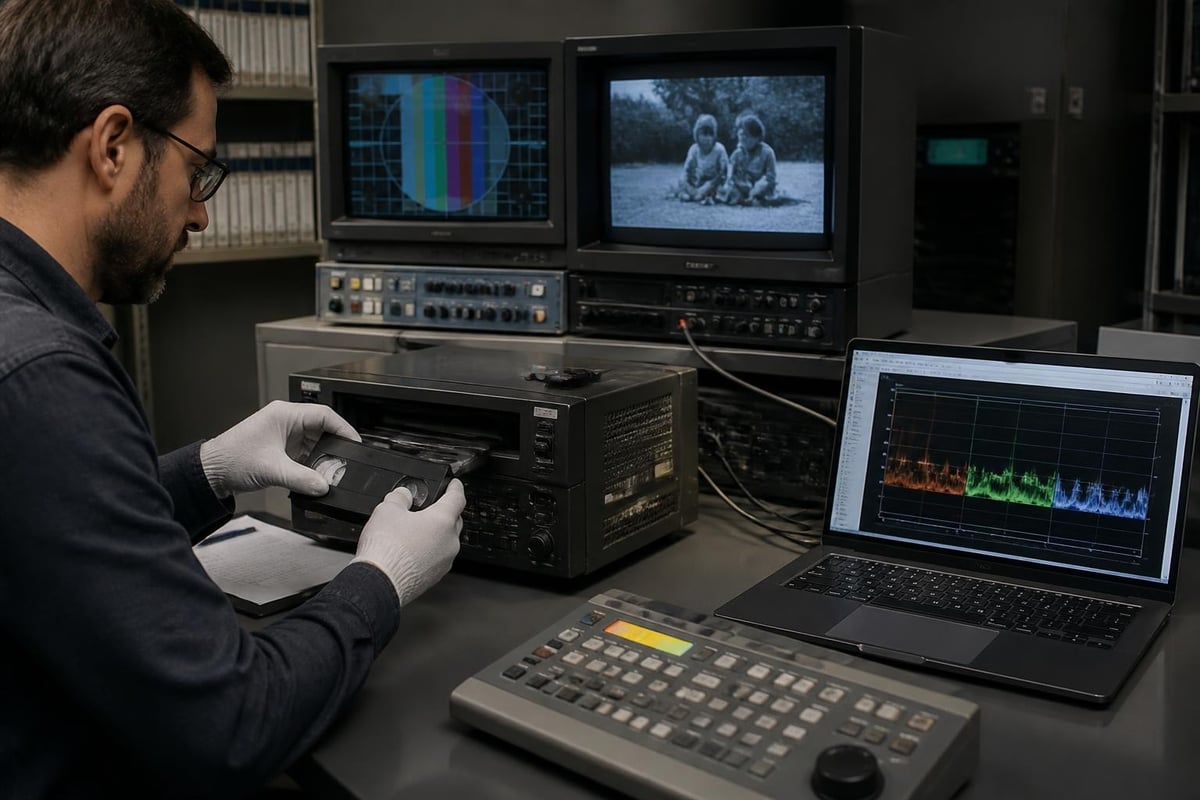
Professional VHS decks offer superior performance compared to consumer models. Broadcast-grade equipment features precision tape transport mechanisms, time base correction, and enhanced signal processing that maximize recovery from degraded source tapes.
S-VHS decks provide additional capabilities for digitization facilities. These professional machines play both standard VHS and S-VHS formats, offering component video outputs and superior luminance/chrominance separation. Key models include the JVC BR-S525U, Panasonic AG-7355, and Sony SVO-5800.
Critical deck features for preservation work include:
- Adjustable tracking controls for alignment with tapes recorded on different machines
- TBC (time base correction) to stabilize timing errors inherent in consumer formats
- Component outputs (Y/C or Y/Pb/Pr) for maximum quality signal extraction
- Professional monitoring outputs for real-time quality assessment
- Manual tape loading for gentle handling of fragile materials
Regular maintenance keeps equipment functioning at specification. Professional facilities establish maintenance schedules including head cleaning, tape path inspection, and periodic calibration against reference tapes.
Capture Settings and Quality Parameters
The Canada Conservation Institute's technical bulletin on VHS digitization provides detailed guidance on optimal capture specifications for preservation masters.
Uncompressed capture represents the preservation ideal, though file size considerations often necessitate light compression. Common approaches include:
- 10-bit uncompressed 4:2:2 for maximum preservation quality (approximately 28 GB/hour)
- JPEG2000 lossless for reduced file sizes with mathematical reversibility (10-15 GB/hour)
- FFV1 in Matroska container as open-source preservation format (8-12 GB/hour)
- ProRes 422 HQ for practical production workflows (18-22 GB/hour)
Resolution settings should match source material specifications. NTSC VHS digitizes at 720×480 pixels (or 640×480 for 4:3 aspect ratio preservation), while PAL content captures at 720×576 pixels. Frame rates follow source standards: 29.97 fps for NTSC, 25 fps for PAL.
Quality Control and Assessment Protocols
Systematic quality control identifies problems early and ensures archival standards. Professional workflows incorporate multiple verification stages:
Pre-transfer inspection examines physical condition, identifies damage requiring special handling, and documents original tape condition through photography and written notes. This assessment determines appropriate playback equipment and flags tapes requiring pre-treatment or conservation.
Real-time monitoring during capture allows operators to detect playback errors, tracking problems, or dropout events. Waveform monitors and vectorscopes verify signal levels and color accuracy against broadcast standards.
Post-capture verification compares digital files against source tapes through sampling protocols. Comprehensive projects verify 100% of content, while pragmatic workflows may sample beginning, middle, and end segments plus random intervals.
The Society of Motion Picture and Television Engineers standards inform professional digitization specifications and quality benchmarks used across preservation facilities.
Institutional Digitization Programs and Capacity Planning
Large-scale vhs video tape digitization requires strategic planning, resource allocation, and realistic timeline development. Archives, libraries, and commercial facilities face similar challenges balancing preservation urgency against budget constraints and technical capacity.
Program Development and Workflow Scaling
The Smithsonian's Audiovisual Media Preservation Initiative demonstrates institutional-scale digitization program development. Their approach emphasizes collection assessment, prioritization frameworks, and phased implementation matching available resources.
Collection surveying establishes scope and identifies priorities. Survey data should capture:
- Total linear hours requiring digitization
- Format breakdown (VHS, S-VHS, VHS-C variants)
- Condition assessment categories (excellent, good, fair, poor)
- Content significance rankings
- Rights and access considerations
Throughput calculations determine required capacity. A single operator with one deck typically processes 8-10 hours of content daily including handling, capture setup, monitoring, and quality verification. Programs targeting 10,000 hours of VHS content require 1,000-1,250 operator-days, translating to approximately four years with one dedicated position or one year with four parallel stations.
Equipment Rental and Maintenance Strategies
Many digitization shops leverage equipment rental rather than purchasing aging VHS decks with uncertain parts availability. Monthly rental arrangements provide flexibility to scale capacity up during peak periods without long-term equipment commitments.
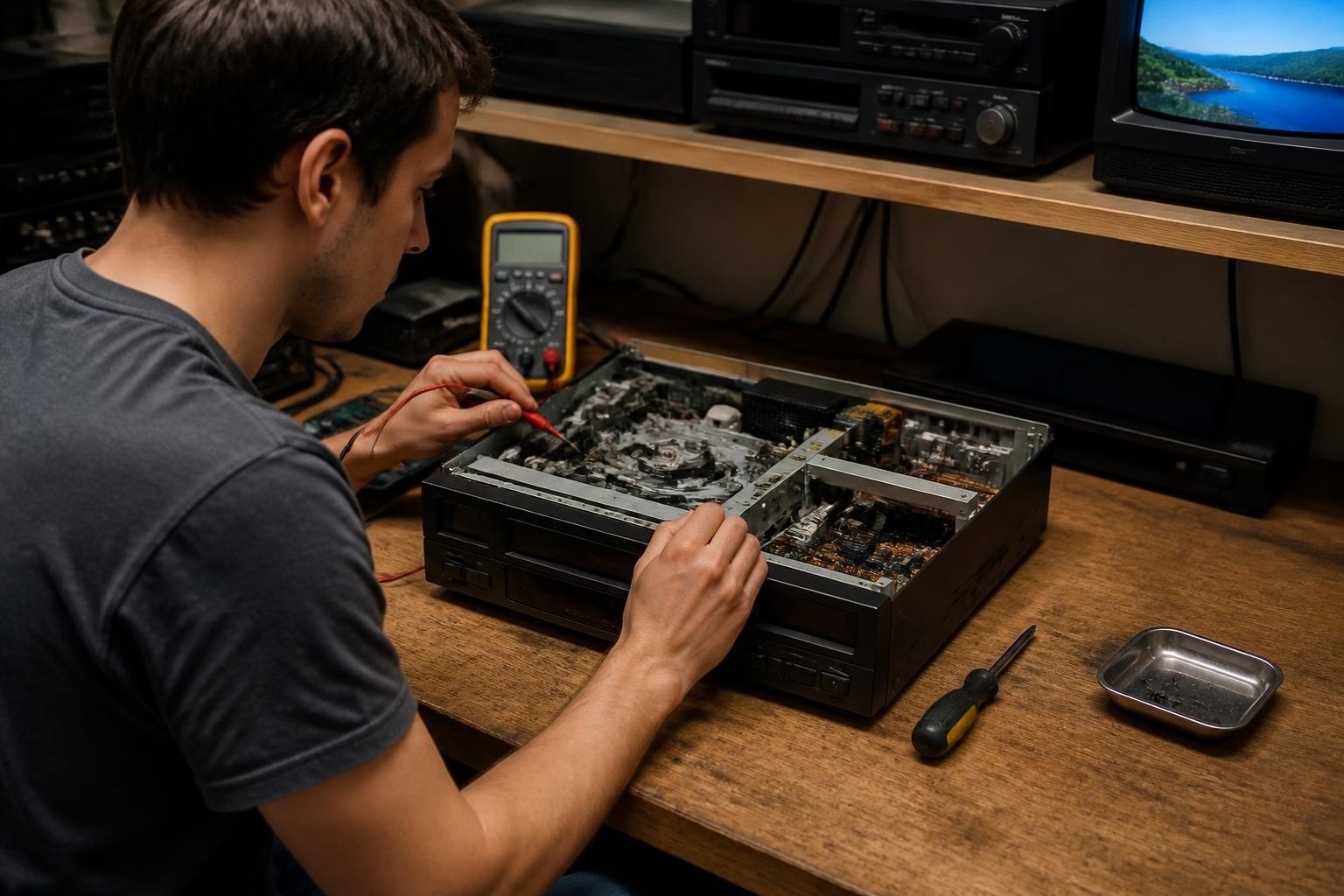
Maintenance contracts reduce unexpected downtime when operating multiple decks continuously. Professional facilities calculate that every week of equipment failure delays project completion timelines and impacts revenue from client contracts. Preventive maintenance and rapid repair access justify their costs through improved reliability.
Shops processing client vhs video tape collections should maintain backup equipment or established rental relationships to prevent bottlenecks. A diagnostic fee structure allows cost-effective assessment of inherited equipment before committing to major repairs.
Industry Standards and Best Practice Resources
Professional digitization work requires grounding in established standards and evolving best practices. Multiple organizations provide guidance, though practitioners must adapt recommendations to specific collection needs and resource constraints.

Authoritative Standard-Setting Bodies
The Library of Congress AV Conservation guidelines document institutional workflows developed through decades of magnetic media preservation. Their Packard Campus capabilities represent state-of-the-art approaches, though scaled implementations prove more practical for most facilities.
IASA (International Association of Sound and Audiovisual Archives) publishes technical guidelines addressing handling, storage, and digitization of magnetic media. Their TC-06 document specifically addresses video preservation, including VHS format considerations.
AMIA (Association of Moving Image Archivists) provides professional community resources, training opportunities, and conferences where practitioners share evolving techniques for handling obsolete formats.
Addressing the Preservation Urgency
The Digital Preservation Coalition's analysis of videotape digitization challenges frames the urgency facing institutions worldwide. Millions of hours of unique recordings face permanent loss as playback equipment fails and magnetic signals fade.
Equipment obsolescence compounds time pressure. VHS deck manufacturing ended in 2016, parts supplies dwindle annually, and repair technician expertise concentrates in fewer hands. Each year increases the risk that playback equipment necessary for specific tape variants becomes unavailable.
Media degradation acceleration creates a narrowing preservation window. Tapes stored in uncontrolled environments for 30-40 years approach the end of viable playback. Once binder hydrolysis advances beyond initial stages, even professional restoration techniques cannot recover content.
This urgency drives institutional programs and creates sustained demand for commercial digitization services. Facilities with reliable equipment access, experienced operators, and established workflows position themselves to serve this growing market.
VHS Variants and Special Format Considerations
Beyond standard VHS, digitization facilities encounter numerous format variants requiring specialized equipment or adapted workflows. Understanding these variations ensures proper handling and prevents equipment damage or failed transfers.
Common VHS Derivatives
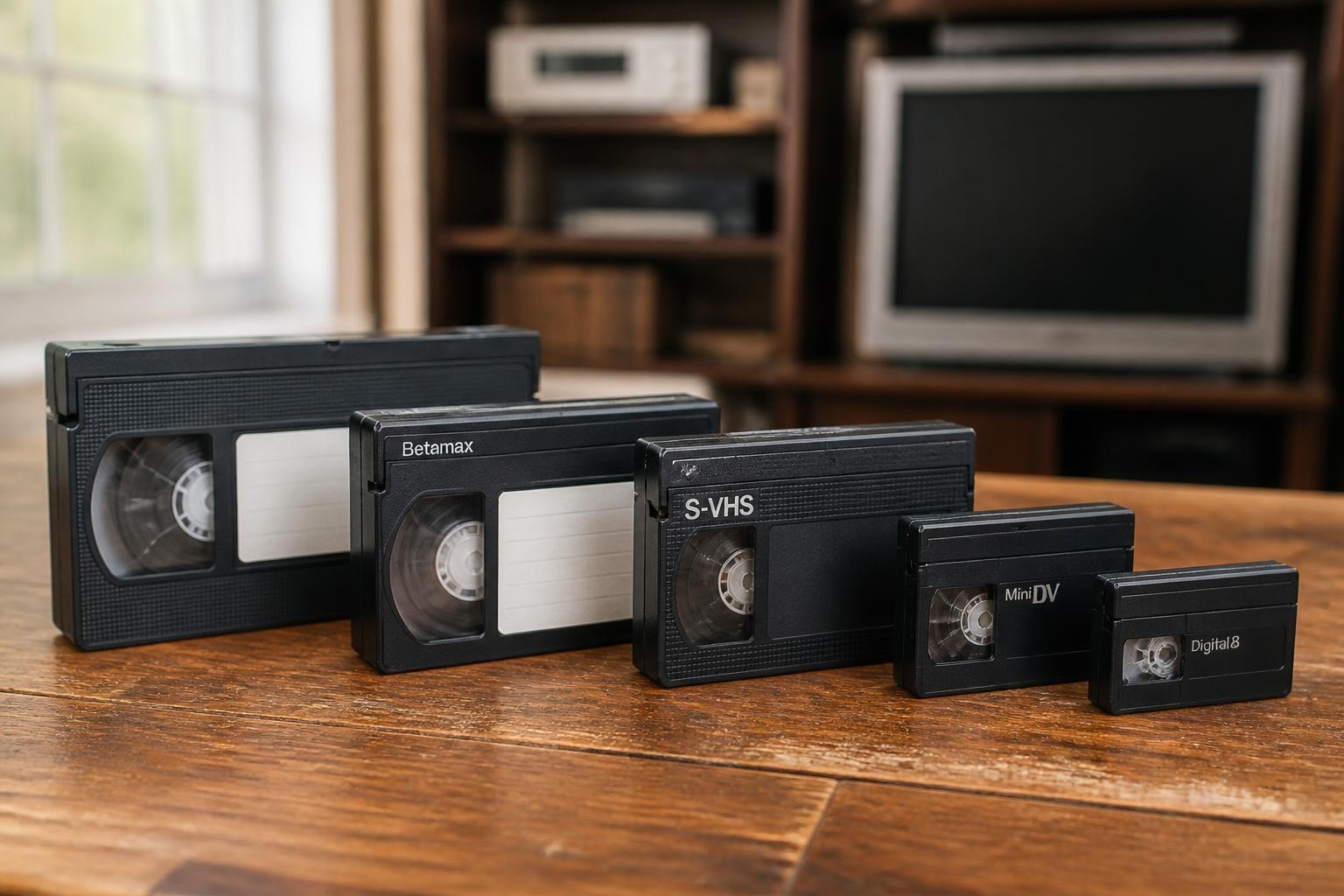
S-VHS (Super VHS) achieved approximately 400 lines of horizontal resolution through higher recording bandwidth and improved tape formulations. S-VHS tapes play in S-VHS decks but produce standard VHS quality in regular VHS players. Professional digitization requires S-VHS playback equipment to capture the enhanced resolution.
VHS-C (Compact) used smaller cassettes popular in camcorders. An adapter allows playback in standard VHS decks, though dedicated VHS-C equipment provides optimal results for valuable recordings.
D-VHS represented a digital recording variant incompatible with analog VHS. These tapes require specific D-VHS decks increasingly difficult to source.
Professional VHS Applications
Broadcast facilities used VHS for off-air monitoring, time-shifted recording, and distribution to smaller stations. These professional applications often employed higher-grade tape stock and better-maintained recording equipment, resulting in superior preservation outcomes compared to consumer recordings.
Industrial and educational VHS materials frequently utilized extended play (EP/SLP) modes, sacrificing quality for recording time. EP-mode recordings require special playback attention as tracking proves more critical and degradation more visible.
Commercial video releases sometimes employed Macrovision copy protection, which can interfere with time base correctors and capture equipment. Professional facilities require TBC units capable of handling copy-protected signals without introducing artifacts.
Practical Considerations for Digitization Service Providers
Operating a successful vhs video tape digitization business requires balancing technical quality, operational efficiency, and client communication. Service providers must establish clear processes addressing common scenarios and client expectations.
Intake Assessment and Client Communication
Condition documentation protects both parties when accepting client materials. Photographing tape condition, noting visible damage, and testing playback quality before quoting prices prevents disputes over pre-existing damage.
Transparent communication about technical limitations manages expectations. VHS inherently produces lower resolution than modern standards, and no transfer process improves source quality beyond the original recording. Clients often need education about realistic quality outcomes.
Pricing structures should reflect actual costs including:
- Operator time for setup, monitoring, and quality verification
- Equipment depreciation and maintenance
- Storage and handling of source materials
- Metadata creation and file organization
- Quality control and client review processes
Managing Equipment Resources
Service providers processing substantial vhs video tape volumes face ongoing equipment challenges. Decks experience mechanical wear, tape contact damages video heads, and rubber pinch rollers deteriorate from heat and chemical exposure.
Strategic equipment planning balances purchasing used decks against rental arrangements. Used professional decks require inspection and often immediate service, while rental provides maintained equipment without capital investment.
Facilities should maintain relationships with repair technicians specializing in legacy videotape equipment. The diagnostic fee model allows cost-effective assessment when equipment malfunctions, with repair authorization based on actual findings rather than speculative quotes.
VCR Supply provides both rental options starting at $99 monthly for facilities needing temporary capacity increases and repair services with transparent diagnostic fees, helping digitization shops maintain operational continuity.
VHS video tape preservation represents both an urgent archival challenge and a sustained business opportunity for qualified service providers. Success requires technical expertise in format specifications, proper equipment maintained at professional standards, and systematic workflows ensuring consistent quality. Whether operating an institutional program or commercial digitization facility, access to reliable playback equipment determines project viability. VCR Supply supports the preservation community with professional deck rentals, expert repair services, and maintenance contracts designed to keep digitization projects on schedule and minimize costly equipment downtime.