Betamax Video Recorders: Legacy Technology Today
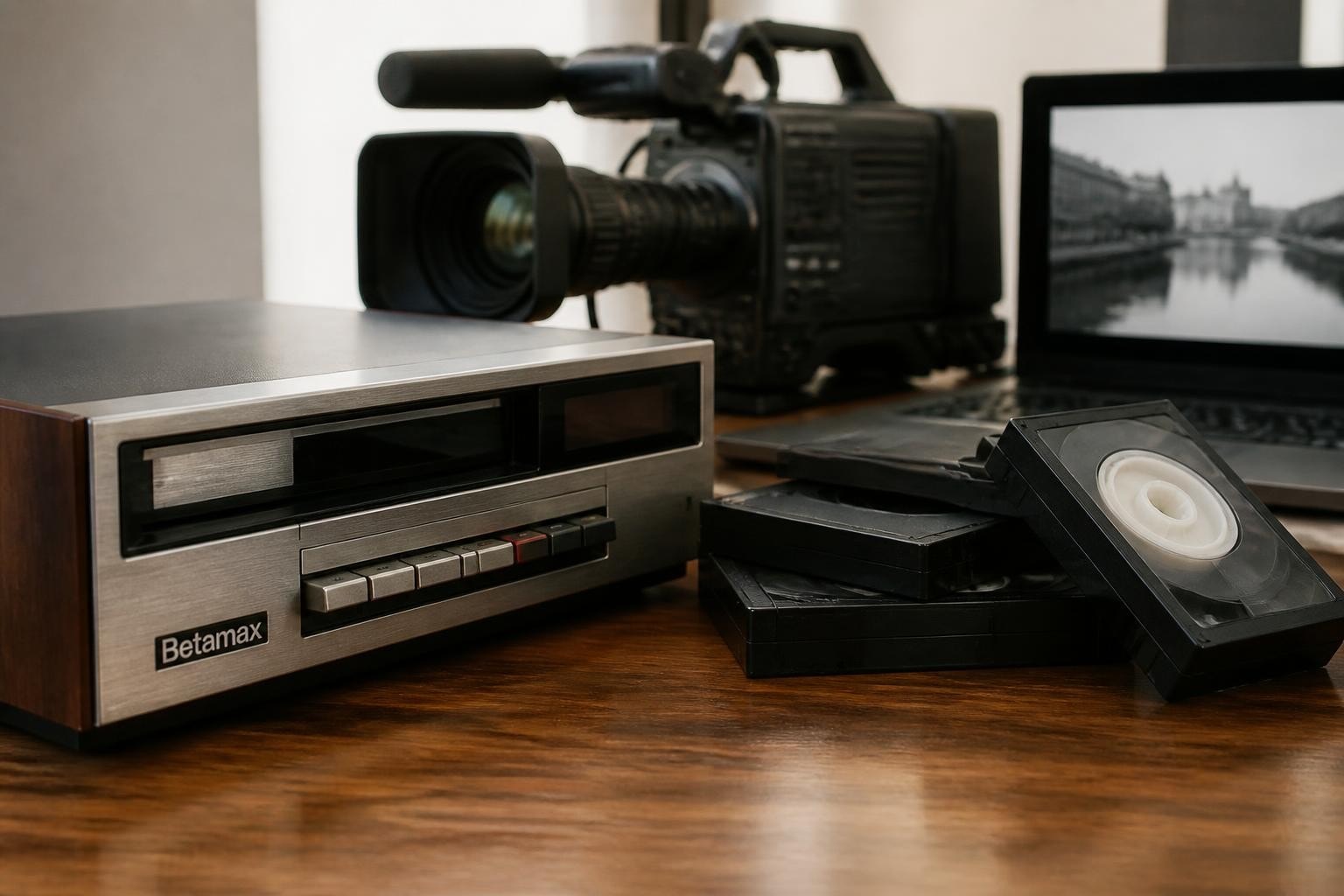
When Sony introduced betamax video recorders in 1975, they revolutionized how people consumed media at home. Despite losing the format war to VHS by the mid-1980s, Betamax technology left an indelible mark on video recording history and continues to serve important roles in professional digitization work today. For businesses operating in the videotape transfer industry, understanding Betamax's technical specifications, maintenance requirements, and current market applications remains essential knowledge. The superior image quality and robust engineering that characterized these machines from the start now makes them valuable tools for preserving decades of recorded content.
Understanding the Betamax Format's Technical Foundation
Sony designed betamax video recorders with a focus on video quality that set them apart from competing formats. The original Betamax specification recorded video at a higher horizontal resolution than early VHS systems, delivering approximately 250 lines compared to VHS's 240 lines. This difference, while modest on paper, produced noticeably sharper images when viewed on quality monitors.
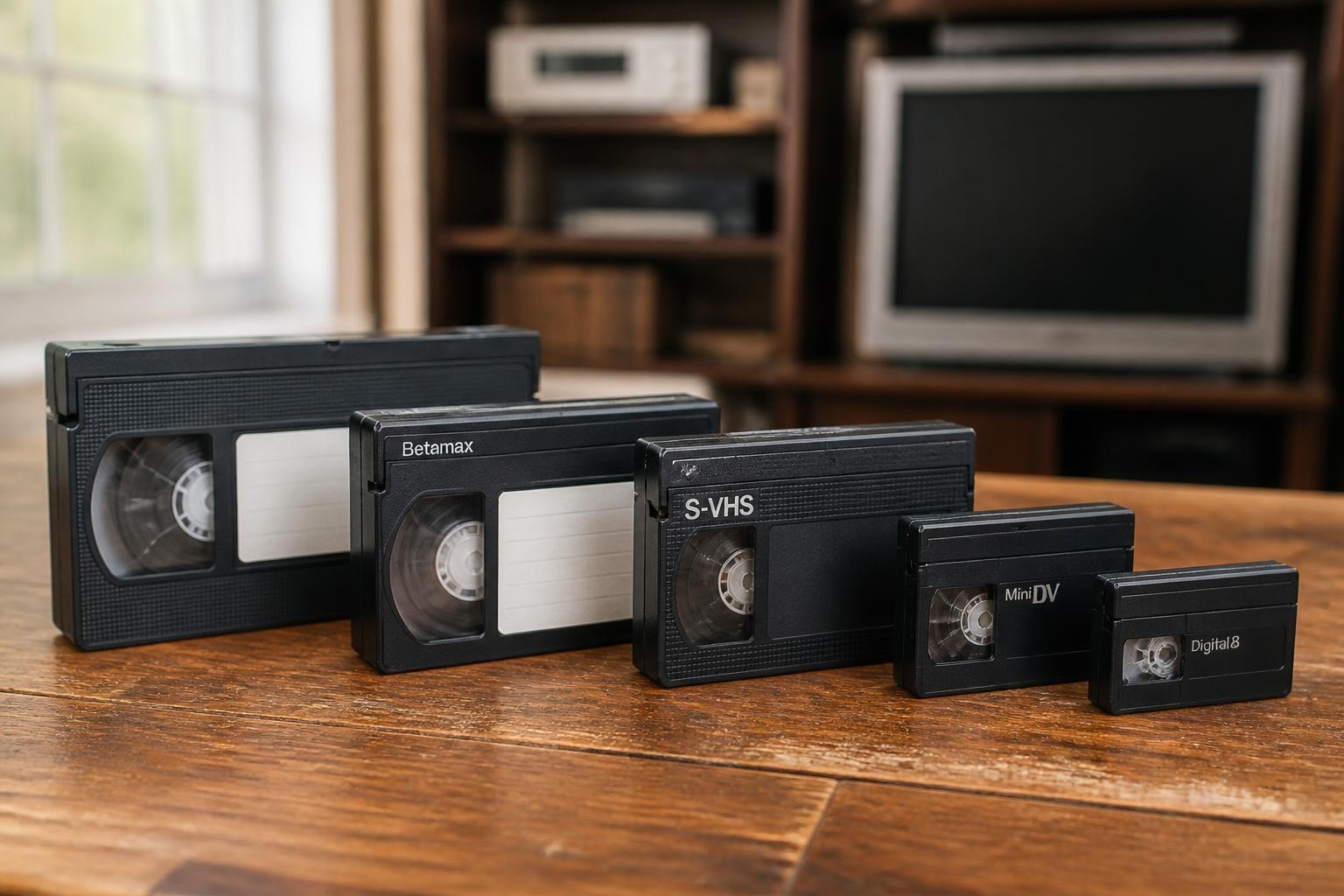
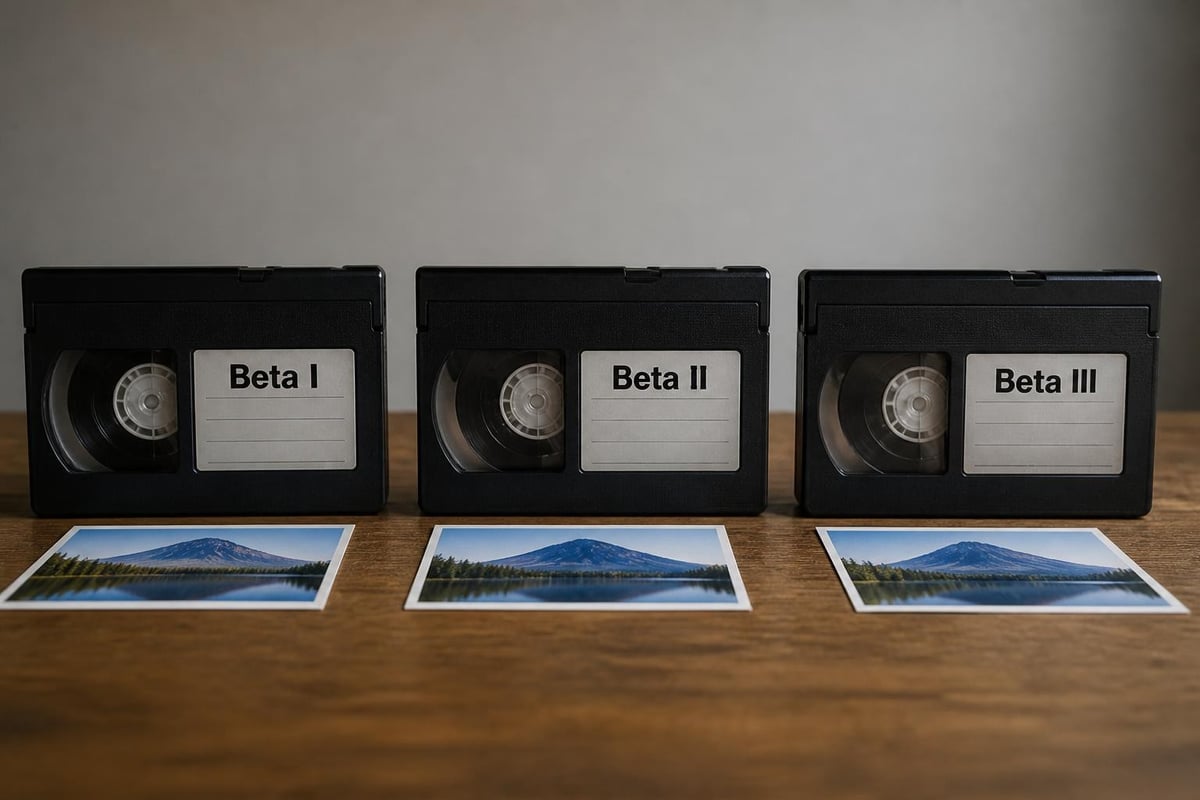
The physical cassette design reflected Sony's commitment to compact engineering. Betamax tapes measured smaller than VHS cassettes, with dimensions of approximately 156mm × 96mm × 25mm. The tape itself ran at 1.873 cm/second in the original Beta I speed, later joined by Beta II (0.937 cm/s) and Beta III (0.469 cm/s) modes that sacrificed some quality for extended recording time.
Key Technical Specifications
Betamax systems employed several innovative features that influenced later videotape development:
- Azimuth recording: Reduced crosstalk between adjacent tracks without requiring guard bands
- Helical scan technology: Two video heads mounted on a rotating drum at precise angles
- Superior color reproduction: Color-under recording technique with 688 kHz carrier frequency
- Stable tracking: Advanced servo systems maintained consistent tape speed
The engineering innovations behind VCR technology placed Betamax at the forefront of consumer video development, with refinements that professionals still appreciate today.
Professional Applications and Broadcast Variants
While consumer betamax video recorders gradually disappeared from retail shelves, Sony leveraged the underlying technology to create professional broadcast formats. Betacam, introduced in 1982, used the same cassette shell as consumer Betamax but employed component video recording instead of composite. This fundamental difference made Betacam tapes incompatible with standard Betamax machines, though the mechanical similarities reduced manufacturing costs.
Betacam SP (Superior Performance), released in 1986, became the broadcast industry standard for decades. These professional decks delivered exceptional image quality with metal particle tape formulations and higher writing speeds. Many television stations continued using Betacam SP equipment well into the 2000s, creating vast archives that require specialized playback equipment for digitization.
Format Comparison Table
| Format | Release Year | Video Quality | Primary Use | Tape Speed |
|---|---|---|---|---|
| Betamax | 1975 | 250 lines | Consumer | 1.873 cm/s |
| Betacam | 1982 | 300+ lines | Broadcast | 10.15 cm/s |
| Betacam SP | 1986 | 340 lines | Professional | 11.86 cm/s |
| ED Beta | 1988 | 500 lines | High-end consumer | 2.656 cm/s |
Understanding these distinctions matters for digitization professionals who may encounter various Betamax-related formats in client archives. The Betamax format specifications detail the exact playback requirements for different tape generations.
The Format War and Cultural Impact
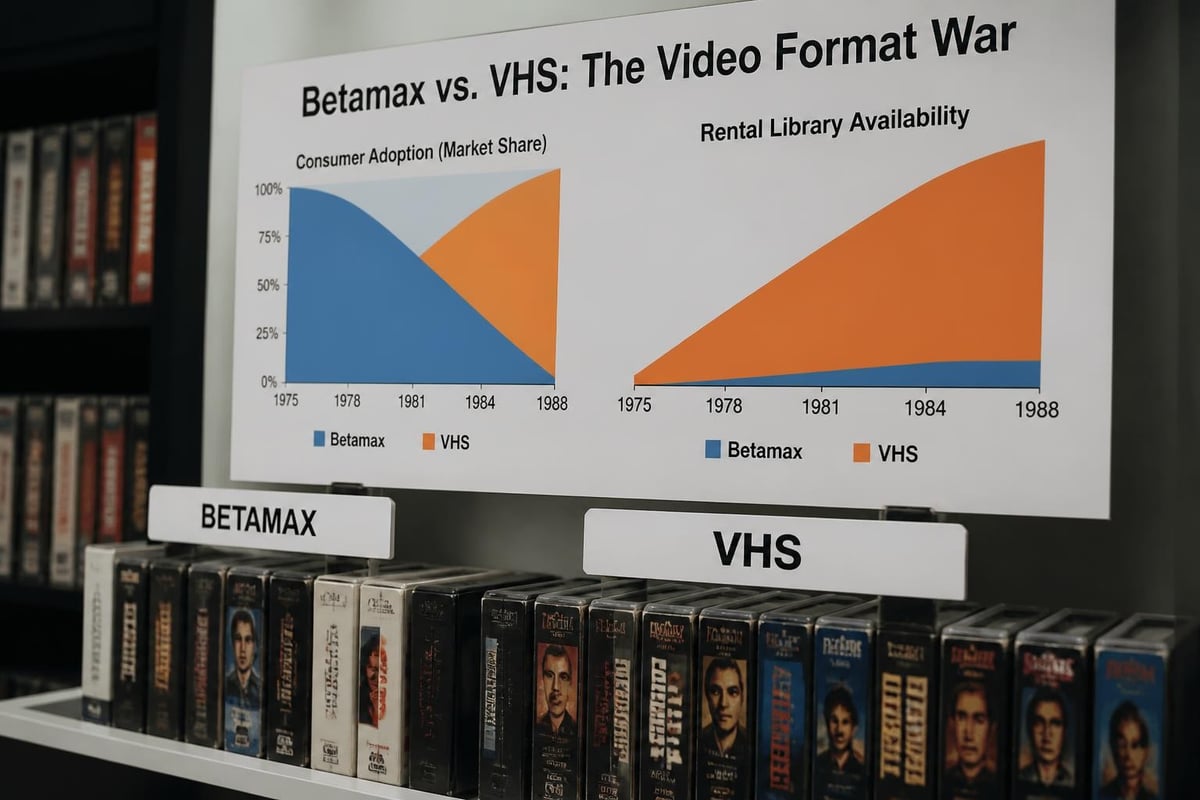
The competition between betamax video recorders and VHS systems became one of technology's most studied market battles. Several factors contributed to VHS's eventual dominance, despite Betamax's technical advantages. VHS machines offered longer recording times from the start, with two-hour and later four-hour capabilities that suited American programming schedules better than Betamax's initial one-hour limit.
The rental market played a decisive role in consumer choice. Video rental stores stocked more VHS titles because more households owned VHS machines, creating a self-reinforcing cycle. Sony's licensing strategy also limited the number of manufacturers producing Betamax equipment, while JVC licensed VHS technology broadly to competitors like Panasonic, RCA, and Zenith.
Legal Precedent and Fair Use
The 1984 Supreme Court decision in Sony Corp. v. Universal City Studios established crucial precedents for home recording. Universal had sued Sony, arguing that betamax video recorders enabled copyright infringement through time-shifting television programs. The Court's ruling that home taping for personal use constituted fair use shaped decades of technology policy. This landmark Betamax case established principles that later applied to digital recording technologies.
The decision's impact extended beyond videotape recording. It established that manufacturers of copying equipment bear no liability for potential copyright infringement by users, provided the devices have substantial legitimate uses. This principle influenced subsequent debates about digital audio tape, CD burners, and eventually peer-to-peer file sharing.
Current Market for Betamax Equipment
Despite production of consumer betamax video recorders ending in 2002, demand persists among digitization professionals and archivists. The British Film Institute's preservation efforts highlight the ongoing need for functioning playback equipment to access historical recordings. Families discover decades-old tapes in attics and closets, containing irreplaceable memories of weddings, birthdays, and family gatherings that require working decks for transfer.
The market for Betamax equipment divides into several categories. Consumer-grade machines from the 1980s and early 1990s vary widely in condition, with many units requiring substantial service after years of storage. High-end models like the Sony SL-HF series and ED Beta machines command premium prices when fully functional. Professional Betacam equipment remains sought after for archival work, though prices have declined as institutions complete digitization projects.
Equipment Availability and Pricing
Finding reliable betamax video recorders presents challenges for digitization businesses:
- Used consumer decks: Typically range from $50-$300 depending on condition
- Refurbished professional units: Command $500-$2,000 with service guarantees
- Replacement parts: Increasingly scarce, with belts and rubber components deteriorating
- Rental options: Provide cost-effective access for occasional digitization needs
Businesses focused on videotape transfer often find that rental services for Betamax equipment offer better economics than purchasing aging hardware outright.
Maintenance Challenges and Repair Considerations
Operating betamax video recorders in 2026 requires understanding specific maintenance needs that differ from servicing modern digital equipment. Rubber components including belts, tires, and pinch rollers deteriorate over time regardless of use, making even never-used "new old stock" machines potentially problematic. The degradation accelerates in humid environments or with temperature fluctuations.
Video heads represent another critical maintenance concern. These precision components wear gradually with use but can fail suddenly if tape oxide shedding increases beyond normal levels. Regular cleaning with appropriate solutions and lint-free swabs extends head life significantly. However, replacement heads for many Betamax models are no longer manufactured, making worn heads effectively irreparable.
Common Repair Requirements
Professional VCR repair services address several recurring Betamax issues:
- Belt replacement: Stretched or broken belts prevent loading and playback functions
- Capacitor failures: Aging electrolytic capacitors cause power supply and servo problems
- Mode switch cleaning: Oxidized contacts in mechanical switches create intermittent operation
- Head drum bearing service: Worn bearings introduce noise and tracking instability
The International Association of Sound and Audiovisual Archives provides technical documentation outlining proper maintenance procedures for Betamax equipment in archival settings.
Digitization Workflow Integration
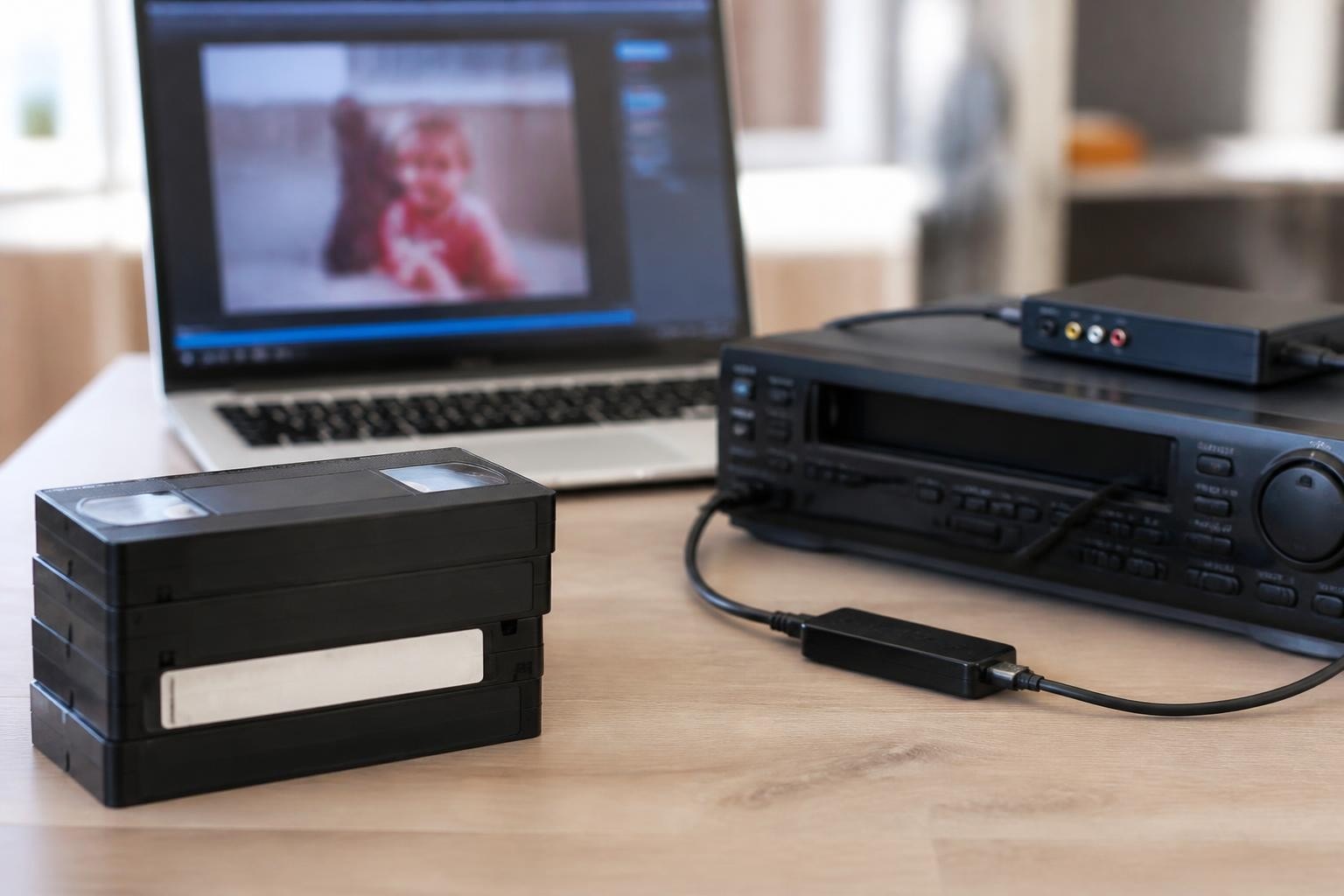
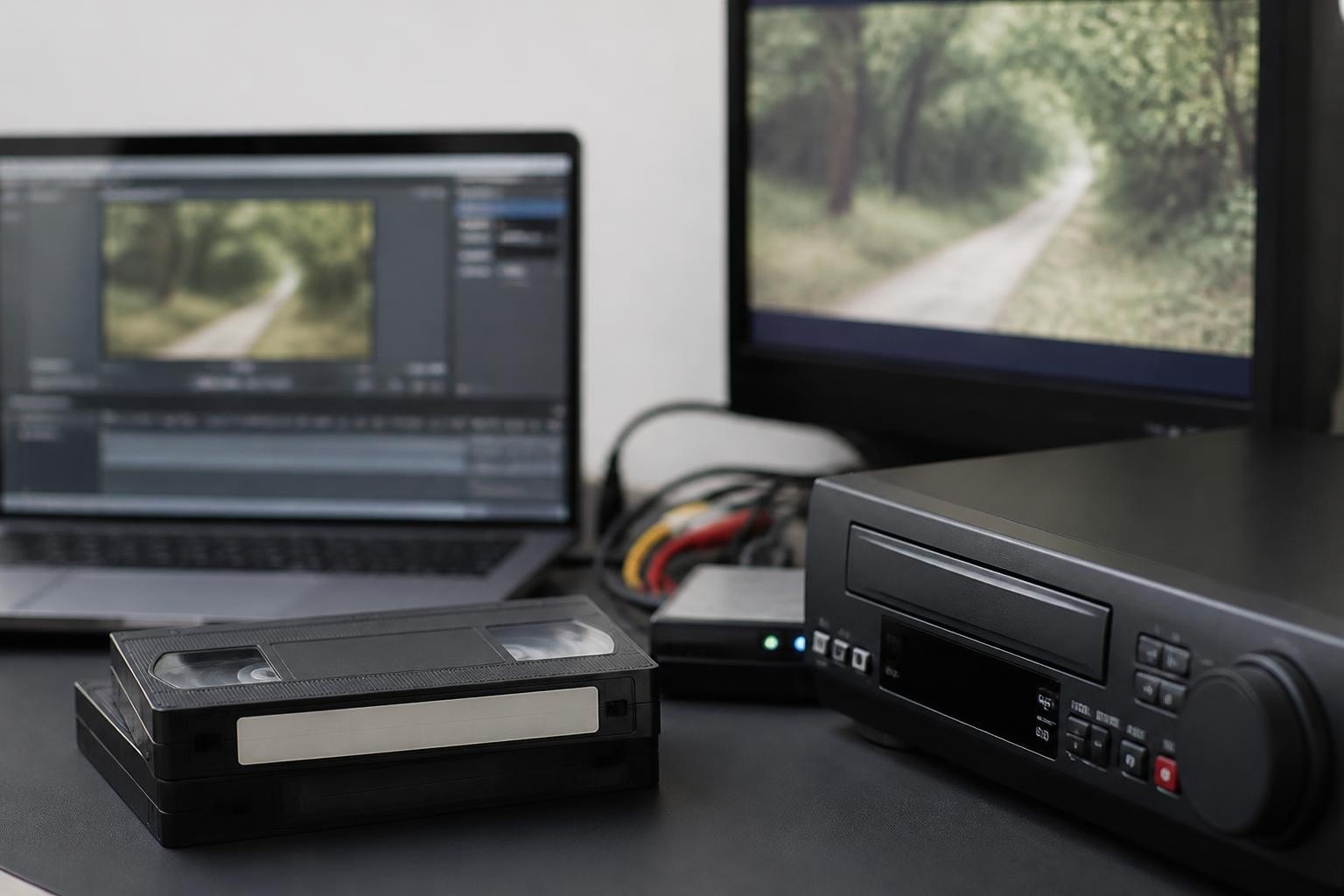
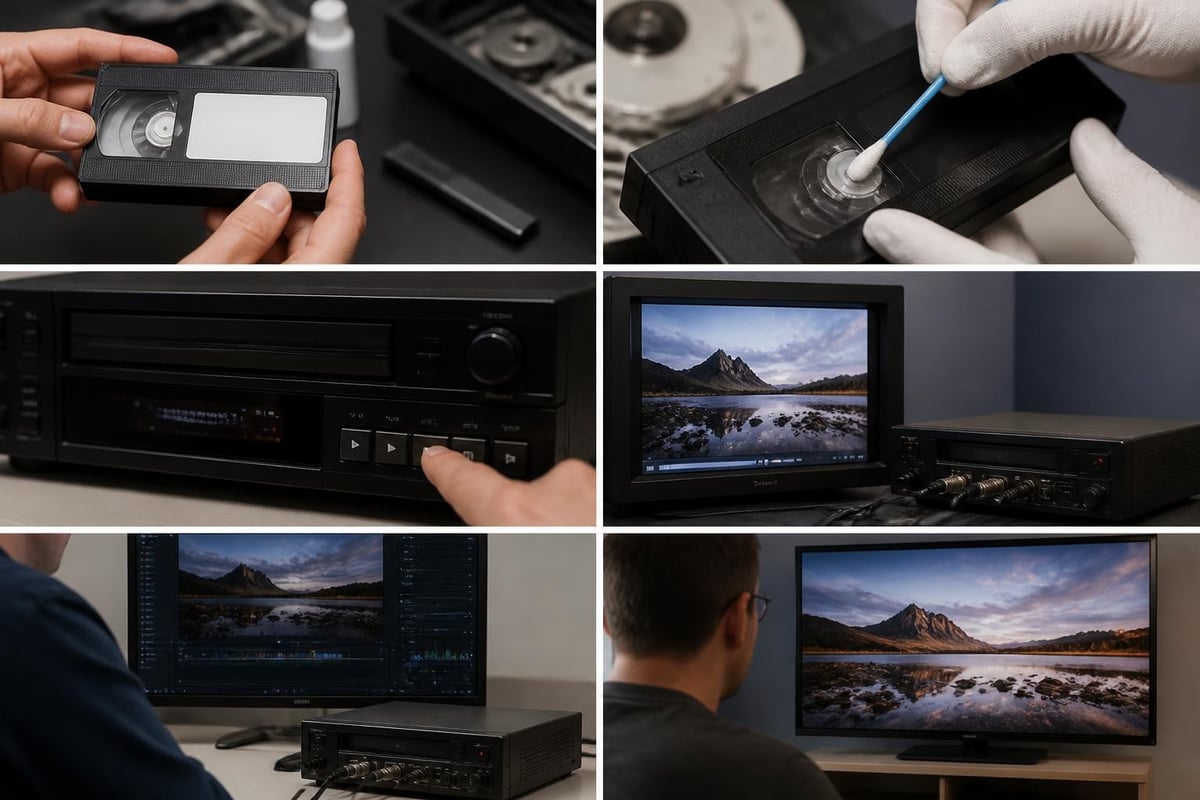
Digitization shops that regularly handle Betamax content develop workflows optimized for the format's characteristics. The superior image quality of well-maintained betamax video recorders justifies careful attention to signal path optimization. Using S-Video connections instead of composite video preserves the format's resolution advantages, while time base correctors stabilize any residual timebase errors from aging machines.
Tape assessment before playback prevents damage to valuable recordings and expensive equipment. Visual inspection identifies obvious problems like broken shells, exposed tape, or mold growth. Testing with expendable material confirms proper machine operation before loading irreplaceable tapes. Fast-forward and rewind cycles exercise tape packs stuck from years of storage, reducing the risk of tape edge damage during playback.
Optimal Capture Settings
| Parameter | Recommended Setting | Rationale |
|---|---|---|
| Resolution | 720×480 (NTSC) | Matches source format |
| Frame rate | 29.97 fps | Native Betamax timing |
| Codec | Uncompressed or FFV1 | Preserves maximum quality |
| Audio | 48 kHz, 16-bit | Exceeds source bandwidth |
Quality control during capture prevents wasted time from undetected problems. Monitoring both video and audio ensures the entire recording transfers successfully. Some tapes exhibit intermittent dropouts, tracking errors, or audio wow requiring multiple playback attempts with machine adjustments between passes.
Strategic Equipment Planning for Businesses
Digitization businesses serving clients with Betamax content face strategic decisions about equipment acquisition and maintenance. Purchase costs represent only part of the total ownership equation. Service requirements, replacement parts availability, and operational downtime all impact profitability. A machine acquired inexpensively may prove expensive if it requires frequent repairs or produces inconsistent results requiring re-work.
Professional maintenance contracts reduce the risk of extended equipment downtime during busy periods. Scheduled preventive service catches developing problems before they cause failures. For businesses without in-house repair expertise, establishing relationships with qualified technicians ensures rapid turnaround when problems occur.
The decision between owning versus renting betamax video recorders depends on utilization rates and capital availability. High-volume operations handling dozens of Betamax tapes monthly benefit from owning multiple decks for redundancy. Occasional users who encounter Betamax content quarterly or less find that monthly rental options starting at $99 provide better economics than ownership.
Archive Preservation and Historical Significance
The World Intellectual Property Organization's analysis of VCR history emphasizes how betamax video recorders fundamentally changed media consumption patterns. Before home video recording, viewers either watched programs when broadcast or missed them entirely. Time-shifting capabilities empowered consumers to control their viewing schedules, a concept so commonplace today that its revolutionary nature easily gets overlooked.
Institutions worldwide maintain Betamax collections documenting cultural moments, family histories, and artistic works never transferred to other media. These recordings face dual threats from physical tape degradation and playback equipment scarcity. Magnetic tape loses signal strength over decades as particles demagnetize or detach from backing material. Proper storage in climate-controlled environments slows but doesn't halt this process.
Preservation Priority Framework
Archives assess Betamax collections using several criteria to prioritize digitization efforts:
- Uniqueness: Content existing only on Betamax receives highest priority
- Condition: Tapes showing degradation signs need immediate attention
- Historical value: Documentary or cultural significance justifies resource allocation
- Rights status: Clear ownership simplifies digitization and access decisions
- Demand: Researcher requests indicate value to user communities
Professional digitization facilities with comprehensive format support, including various videotape formats, enable institutions to address entire collections systematically rather than fragmenting work across multiple vendors.
Technical Evolution and Format Variants
Sony continually refined betamax video recorders throughout the format's production run, introducing enhanced models with improved specifications. SuperBeta, introduced in 1985, increased horizontal resolution to approximately 290 lines through improved video head design and signal processing. While not a new format requiring different tapes, SuperBeta recordings played back as standard Betamax on older machines, though without the resolution enhancement.
Extended Definition Betamax (ED Beta) arrived in 1988 as Sony's high-end consumer response to Super VHS. ED Beta machines recorded at higher tape speeds with wider track widths, achieving approximately 500 lines of resolution. The format required special ED Beta cassettes with higher-grade tape formulations. Despite superior performance, ED Beta appeared too late to reverse VHS's market dominance and found limited adoption.
Technical Comparison Matrix
| Feature | Standard Beta | SuperBeta | ED Beta |
|---|---|---|---|
| Horizontal Resolution | 250 lines | 290 lines | 500 lines |
| Tape Speed | 1.873 cm/s | 1.873 cm/s | 2.656 cm/s |
| Track Width | 33 microns | 29 microns | 37 microns |
| Backward Compatibility | Full | Playback only | Limited |
Understanding these variants helps digitization professionals optimize playback settings for specific tape types, ensuring maximum quality transfer from each recording.
Business Models and Service Offerings
Digitization businesses incorporating betamax video recorders into their service portfolio capture market segments often underserved by competitors focused solely on VHS and digital formats. Marketing strategies emphasizing comprehensive format support attract clients with mixed media collections who prefer consolidating transfer work with a single vendor.
Pricing structures for Betamax transfer services typically account for the specialized equipment requirements and lower volume compared to VHS work. Per-tape pricing ranging from $20-$40 reflects equipment costs and setup time. Volume discounts encourage clients with larger collections while maintaining profitability. Rush service premiums compensate for schedule disruption when clients need expedited turnaround.
Equipment acquisition strategies vary based on business models and customer demand. Some digitization shops maintain small Betamax equipment inventories adequate for occasional jobs while partnering with specialized rental providers for periods of higher demand. This hybrid approach minimizes capital investment while ensuring customer commitments remain achievable.
Quality Assurance and Customer Expectations
Client satisfaction in Betamax digitization work depends heavily on setting realistic expectations about achievable quality. Well-preserved tapes recorded on quality machines can produce surprisingly good digital transfers that rival or exceed VHS quality. However, degraded tapes, poor original recordings, or equipment problems limit final output quality regardless of digitization expertise.
Transparent communication about tape condition and expected results prevents disappointment and disputes. Offering complimentary assessment where clients review sample digitization before committing to full collection processing builds trust and reduces rejection rates. Providing before/after comparisons helps clients understand the value delivered even when source material limitations constrain final quality.
Quality Control Checklist
Comprehensive quality assurance for Betamax digitization includes:
- Visual inspection for image clarity and stability
- Audio level verification and noise assessment
- Synchronization confirmation throughout recording
- Dropout detection and quantification
- Metadata accuracy verification
- File format and compression validation
Documentation of known issues protects both service provider and client by establishing shared understanding of source material limitations versus digitization problems.
Betamax video recorders remain essential tools for digitization professionals despite the format's consumer market exit two decades ago. The technical quality, vast archive of content, and ongoing preservation needs ensure continued demand for working equipment and expertise. Whether you need temporary access to Betamax playback equipment for a specific project or require ongoing repair support for machines in your facility, VCR Supply provides rental services starting at $99 monthly and comprehensive repair capabilities with preventive maintenance contracts that minimize downtime. Professional videotape equipment support ensures your digitization business can serve clients across all legacy formats reliably and profitably.