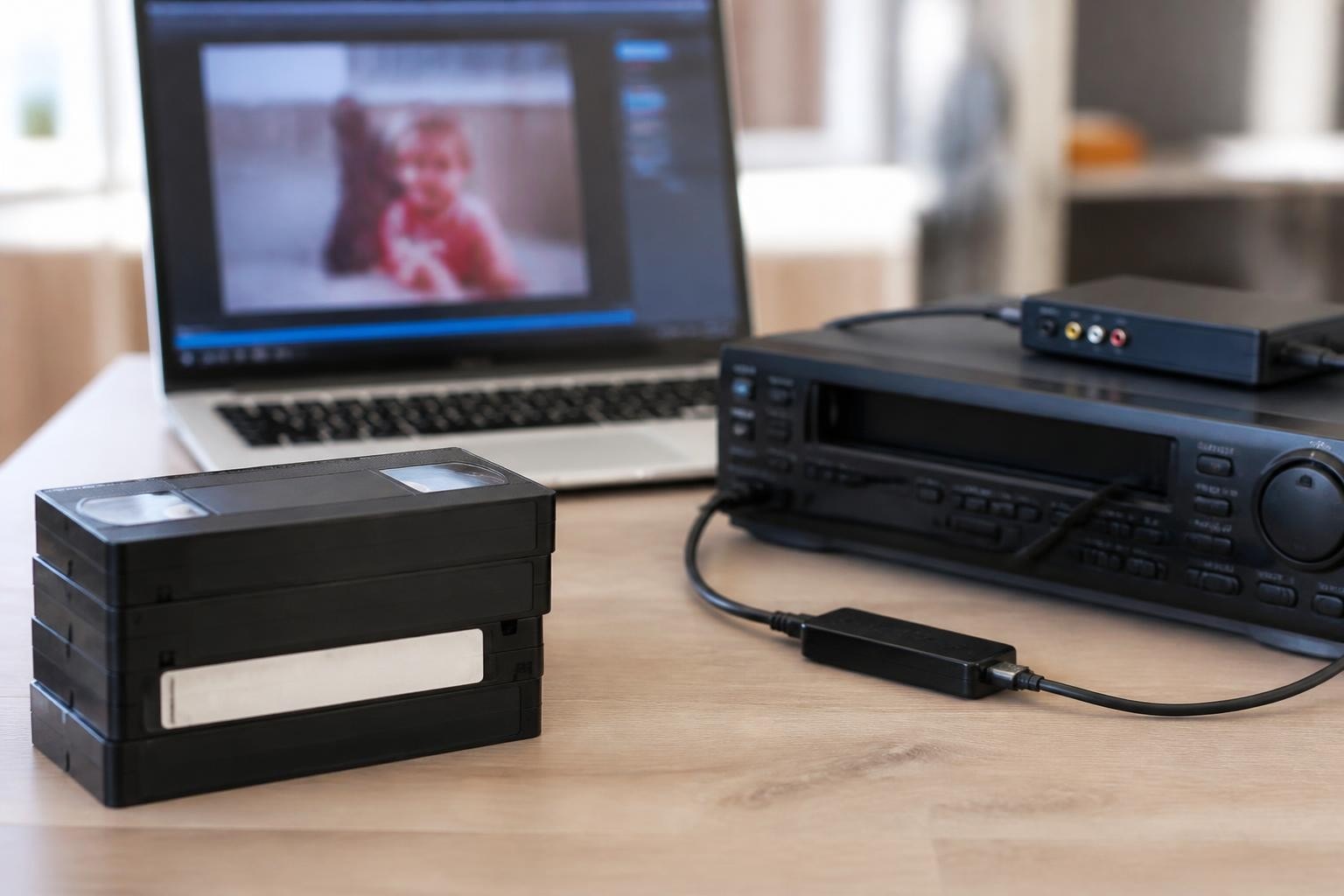
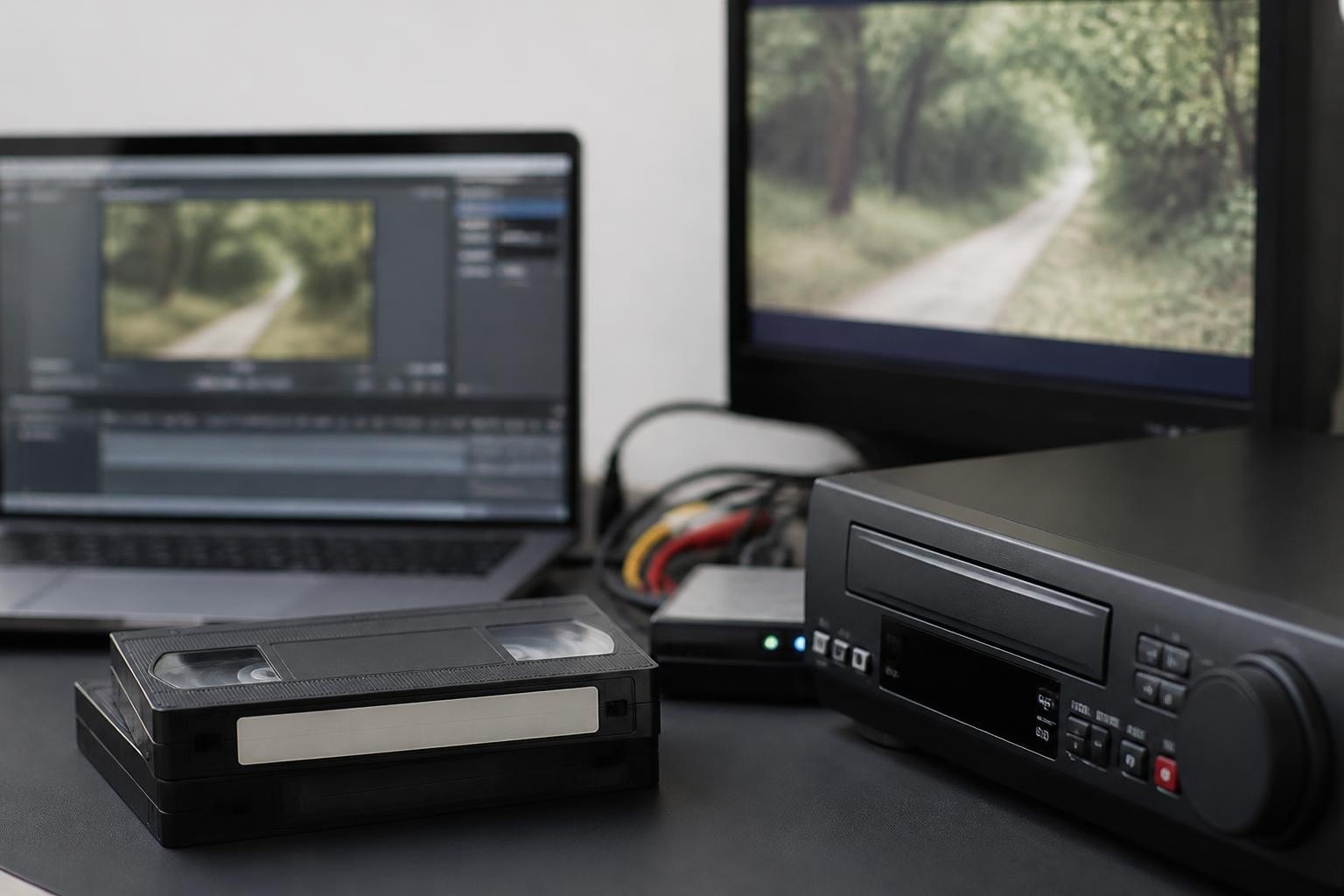
Sony VCR: Professional Equipment for Video Preservation
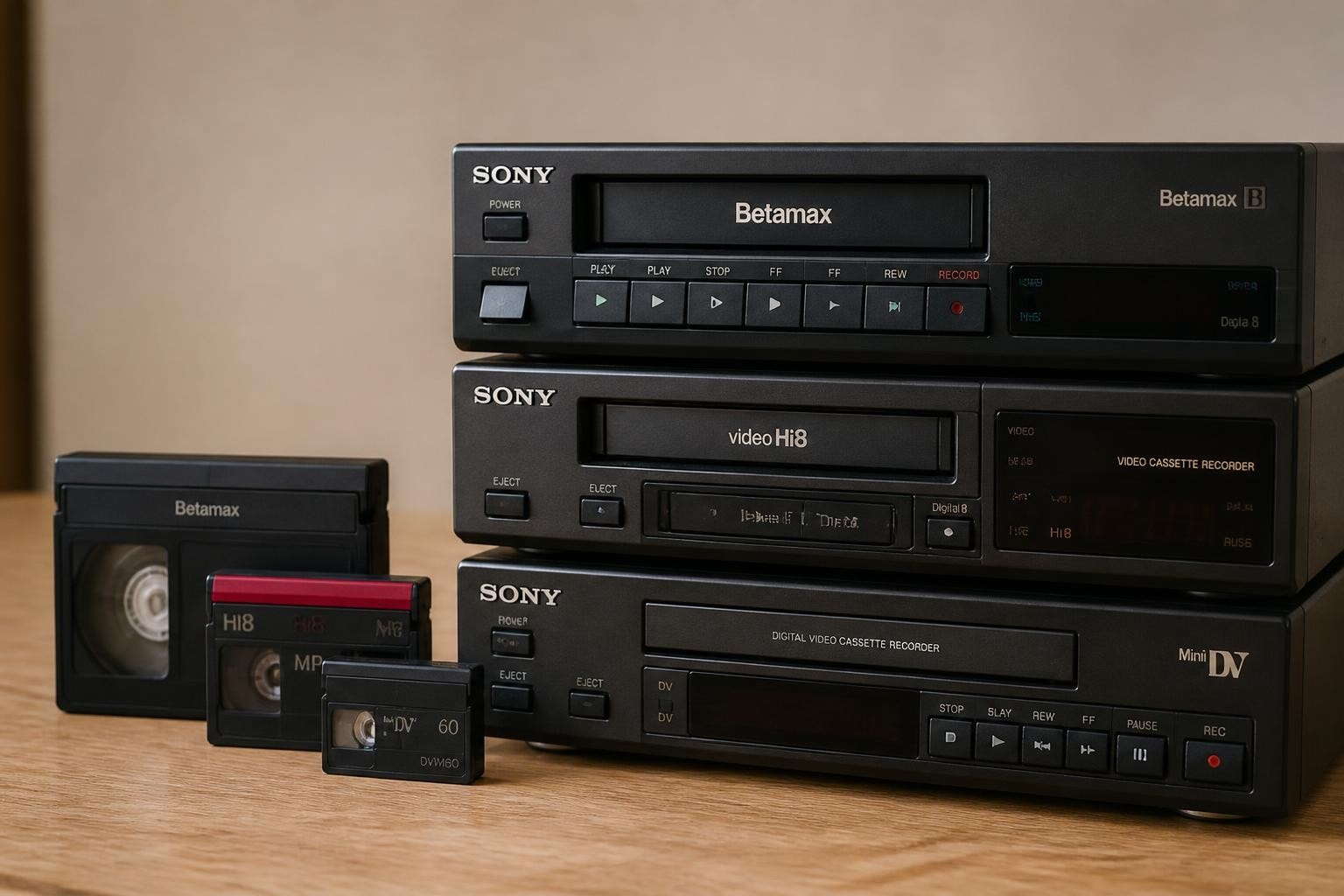
Sony's contribution to videocassette recorder technology fundamentally shaped the video preservation industry and continues to influence digitization workflows in 2026. While the consumer VCR market has largely disappeared, professional Sony VCR equipment remains essential for digitization shops, archivists, and media preservation specialists who must work with decades of video content stored on magnetic tape. Understanding the technical evolution, format variations, and maintenance requirements of Sony VCR equipment enables businesses to make informed decisions about equipment acquisition, rental strategies, and long-term preservation planning. The legacy of Sony's engineering choices during the format wars created distinct technical advantages that still matter for professional work today.
The Engineering Legacy of Sony VCR Technology
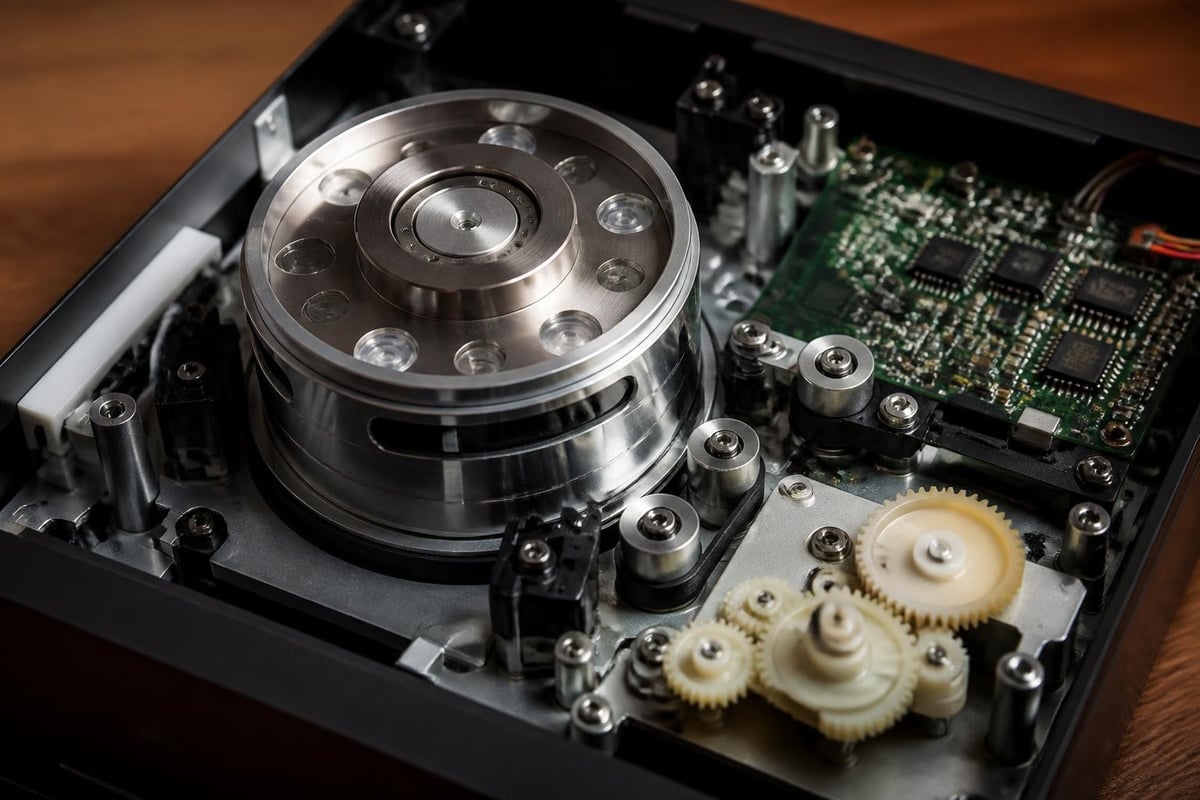
Sony's entry into videocassette recording began with Betamax in 1975, introducing innovations that would influence all subsequent formats. The company pioneered helical-scan recording techniques and precision head drum assemblies that delivered superior image quality compared to competing technologies. These engineering foundations carried forward into professional formats like Betacam SP, Digital8, and MiniDV.
Betamax: Superior Engineering Meets Market Reality
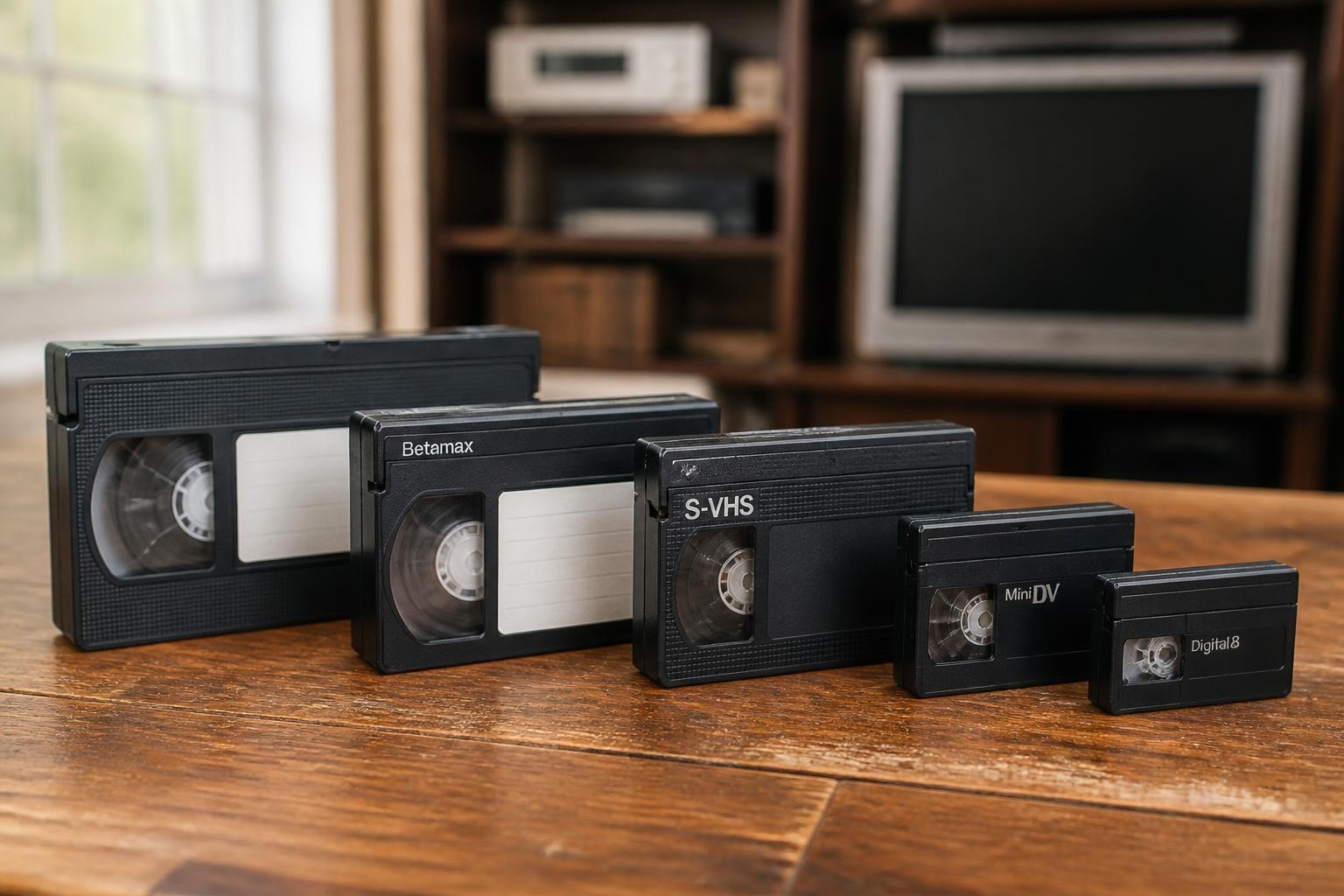
The Sony VCR story begins with Betamax, a format that offered technical advantages over VHS but ultimately lost the consumer market battle. Betamax machines featured:
- Higher horizontal resolution (250 lines versus VHS's 240 lines)
- More stable tape transport mechanisms
- Superior color reproduction through enhanced chroma processing
- Compact cassette design that influenced later professional formats
For digitization professionals working with archival Betamax content today, these technical advantages translate into better source quality for preservation projects. The development of VCR technology involved fundamental engineering decisions about track width, tape speed, and signal processing that Sony optimized for quality rather than recording duration.
Despite losing the consumer format war, Betamax technology evolved into professional broadcast standards. The strategic dynamics of the VHS-Betamax competition demonstrated how network effects and licensing strategies could override technical superiority, but professional markets continued to value Sony's engineering approach.
Professional Sony VCR Formats for Digitization Work
Modern digitization operations encounter multiple Sony VCR formats, each with distinct technical characteristics and preservation requirements. Understanding these format differences ensures appropriate equipment selection and optimal transfer quality.
Digital8: Consumer Technology with Professional Applications
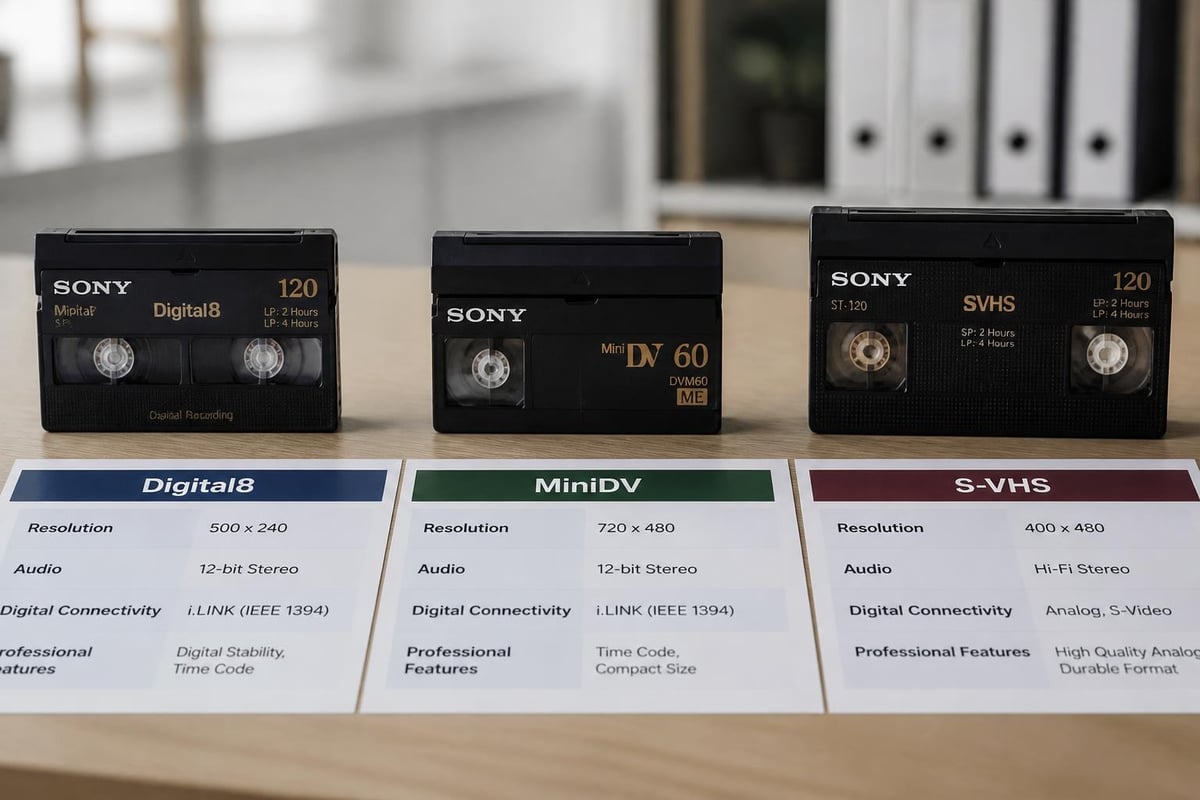
Digital8 represents Sony's bridge between analog Video8/Hi8 and pure digital recording. These decks record digital DV format signals onto standard Hi8 cassettes, providing backward compatibility with analog Video8 and Hi8 tapes. Key features include:
| Feature | Specification | Professional Advantage |
|---|---|---|
| Video Resolution | 500 horizontal lines | Exceeds analog VHS/S-VHS |
| Audio Recording | 16-bit, 48kHz PCM | CD-quality stereo |
| Format Compatibility | Digital8, Hi8, Video8 | Three formats in one deck |
| Tape Consumption | Standard speed | 60-minute Hi8 = 60 minutes Digital8 |
The Sony GV-D200 exemplifies professional Digital8 capability in a portable form factor. This deck provides IEEE 1394 (FireWire) output for direct digital transfer, eliminating analog conversion losses. For shops handling mixed Video8/Hi8/Digital8 collections, Digital8 equipment rental offers cost-effective access to multi-format capability.
MiniDV: Sony's Digital Video Standard
MiniDV became the dominant consumer digital video format from the late 1990s through the early 2000s. Sony VCR equipment in MiniDV format serves as the foundation for countless digitization projects involving:
- Wedding and event videography archives
- Independent film and documentary footage
- Educational institution video collections
- News gathering and documentary production materials
Professional MiniDV decks offer superior transport reliability compared to camcorder playback. Dedicated deck mechanisms handle tape better, reducing the risk of damage to irreplaceable content. MiniDV equipment typically includes professional I/O options, timecode support, and enhanced error correction.
S-VHS: Analog Precision for Professional Work
While JVC developed S-VHS, Sony manufactured professional S-VHS decks that incorporated the company's precision engineering. These machines delivered 400+ line horizontal resolution, making them valuable for high-quality analog transfers. Professional S-VHS decks feature:
- Time base correction for stable playback
- Professional-grade transport mechanisms
- Balanced audio outputs
- RS-422 serial control interfaces
For businesses managing S-VHS digitization workflows, Sony's professional offerings combined S-VHS compatibility with broadcast-quality components. The format remains relevant for educational institutions, production companies, and broadcasters with extensive S-VHS archives.
Maintenance Requirements for Sony VCR Equipment
Professional Sony VCR equipment requires systematic maintenance to ensure reliable operation and optimal transfer quality. The precision mechanics and analog components in these machines degrade over time, making preventive maintenance essential for digitization businesses.
Critical Maintenance Areas
Head drum assemblies represent the most critical component in any Sony VCR. Video heads contact the tape at high speed, creating wear that eventually degrades playback quality. Professional decks require head replacement after 1,000 to 2,000 operating hours, depending on format and usage patterns.
Maintenance schedules should address:
- Video head inspection and cleaning - Weekly for high-volume operations
- Audio head and erase head servicing - Monthly cleaning and alignment checks
- Capstan and pinch roller replacement - Every 500-1,000 hours or when slip occurs
- Tape path cleaning - Before each major project or weekly minimum
- Mechanical lubrication - Annual service for loading mechanisms and tape guides
Preventive Maintenance Contracts
Digitization shops operating multiple Sony VCR units benefit from structured maintenance contracts that reduce equipment downtime. Regular professional service extends equipment lifespan and prevents mid-project failures that delay client deliverables.
A comprehensive maintenance program includes baseline performance testing, systematic parts replacement based on operating hours, and documentation of service history. This approach proves particularly valuable for businesses maintaining multiple format capabilities across Betamax, Digital8, MiniDV, and S-VHS equipment.
| Maintenance Level | Frequency | Typical Tasks | Expected Outcome |
|---|---|---|---|
| Operator Cleaning | Weekly | External cleaning, basic tape path | Prevents contamination |
| Technical Service | Quarterly | Head inspection, alignment check | Maintains specifications |
| Comprehensive Overhaul | Annual | Full disassembly, parts replacement | Extends equipment life |
| Component Replacement | As needed | Heads, belts, motors | Restores like-new performance |
Sourcing and Supporting Sony VCR Equipment in 2026
Acquiring functional Sony VCR equipment requires understanding the secondary market, evaluating equipment condition, and planning for ongoing parts availability. Professional digitization operations cannot rely on consumer-grade equipment from online marketplaces without risking project delays and quality issues.
Equipment Acquisition Strategies
Professional refurbished equipment offers the most reliable path to functional Sony VCR capabilities. Refurbished units undergo comprehensive testing, mechanical restoration, and electrical calibration before deployment. This process ensures equipment meets operational specifications rather than simply powering on.
Key evaluation criteria include:
- Operating hour count - Lower hours indicate less wear on critical components
- Service documentation - Complete maintenance records demonstrate proper care
- Specification compliance - Equipment should meet or exceed original factory specifications
- Parts availability - Certain models have better long-term parts support
- Format specificity - Match equipment to your primary digitization formats
For businesses with variable workload or project-based needs, VCR equipment rental provides access to professional-grade Sony decks without capital investment. Starting at $99 per month, rental programs enable capacity expansion during peak periods while avoiding the maintenance burden of equipment ownership.
Repair Service Considerations
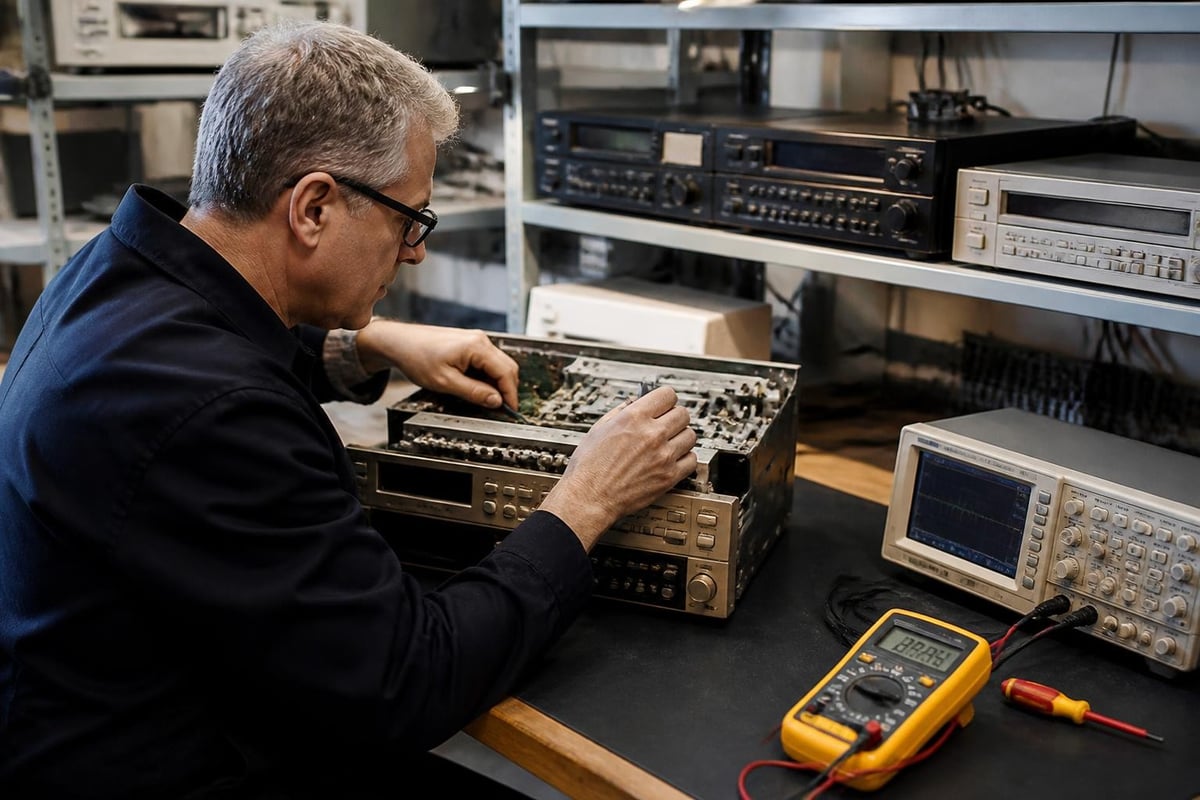
When Sony VCR equipment fails, specialized repair service becomes essential. General electronics repair shops lack the expertise, service documentation, and parts inventory necessary for professional videotape deck repair. Professional VCR repair services offer diagnostic evaluation, parts sourcing, and calibration capabilities specific to video equipment.
The diagnostic process for Sony VCR equipment typically includes:
- Visual inspection of tape path and mechanical components
- Head drum testing and signal quality measurement
- Transport mechanism evaluation under load conditions
- Electronic circuit testing and power supply verification
- Output signal analysis against format specifications
Repair costs vary based on failure type and parts availability. A $45 diagnostic fee establishes the specific problem before committing to repair work. Common repairs include head replacement ($200-$400), belt replacement ($100-$150), and electronic board repair ($150-$300).
Format-Specific Considerations for Sony VCR Operations
Each Sony VCR format presents unique operational challenges and opportunities for digitization businesses. Understanding these format-specific considerations optimizes equipment selection and workflow design.
Betamax Archive Projects
Professional Betamax digitization work requires equipment capable of handling tapes that may be 30-40 years old. Tape degradation, binder breakdown, and mechanical issues affect playback reliability. The Sony SL-2700 represents a professional-grade Betamax deck with robust transport mechanisms suitable for archival work.
Preservation-focused projects benefit from following Library of Congress digitization guidelines that establish best practices for magnetic media handling. These protocols minimize risk to irreplaceable content while maximizing transfer quality.
Digital8 Multi-Format Capability
Digital8 Sony VCR equipment serves triple duty, playing Digital8, Hi8, and Video8 formats. This versatility makes Digital8 decks particularly valuable for shops handling diverse consumer video collections. However, operators must understand the tape speed differences:
- Digital8 recording: Standard speed consumes tape at normal rate
- Hi8/Video8 playback: Deck automatically switches to analog mode
- LP mode compatibility: Some decks support long-play modes with quality tradeoffs
The World Intellectual Property Organization's overview of VCR technology history provides context for understanding how format standardization and compatibility evolved across Sony's product line.
MiniDV Professional Applications
MiniDV remains relevant for documentary preservation and media archive projects. Professional Sony MiniDV decks offer advantages over camcorder playback:
- Superior tape handling reduces mechanical stress on tapes
- Professional monitoring enables real-time quality assessment
- Timecode reliability supports frame-accurate editing workflows
- Digital connectivity through IEEE 1394 preserves quality
Building Sustainable Sony VCR Workflows
Successful digitization operations integrate Sony VCR equipment into comprehensive workflows that address intake, quality control, transfer execution, and deliverable creation. Equipment represents just one component of a larger operational system.
Workflow Design Principles
Effective workflows separate equipment functions to prevent bottlenecks. A typical professional setup includes:
- Intake and inspection station - Physical tape assessment before playback
- Playback and capture station - Dedicated Sony VCR with calibrated monitoring
- Quality control station - Separate system for verifying transfer results
- Storage and delivery system - Network infrastructure for file management
This separation allows multiple projects to progress simultaneously while isolating equipment problems to specific workflow stages. When a Sony VCR requires service, production continues on unaffected stations.
Quality Assurance Protocols
Professional digitization demands systematic quality verification throughout the transfer process. For Sony VCR operations, this includes:
Pre-transfer equipment testing establishes baseline performance. Daily calibration checks verify that output signals meet specifications before beginning client work. This prevents wasting time on transfers that fail quality standards.
Real-time monitoring during capture identifies dropout, tracking errors, or signal degradation that requires intervention. Professional Sony VCR equipment includes outputs for monitoring video and audio independently, enabling operators to catch problems immediately.
Post-transfer verification confirms that captured files accurately represent source content without corruption or data loss. Automated tools scan for dropouts, audio sync issues, and color anomalies that indicate equipment problems or tape degradation.
Capacity Planning and Equipment Rotation
Businesses managing high-volume digitization projects must plan for equipment capacity and redundancy. Sony VCR equipment availability varies by format, making strategic equipment acquisition essential for avoiding project delays.
Key planning considerations include:
- Format distribution - Maintain equipment matching your project mix
- Redundant capability - Keep backup decks for critical formats
- Service rotation - Schedule maintenance during low-demand periods
- Parts inventory - Stock common replacement components for quick repairs
Professional equipment rental provides flexibility for temporary capacity increases without permanent capital investment. Short-term rentals support one-time archive projects or seasonal demand fluctuations.
The Business Case for Professional Sony VCR Equipment
Investing in professional-grade Sony VCR equipment versus consumer alternatives yields measurable business benefits for digitization operations. While initial costs appear higher, total cost of ownership favors professional equipment through improved reliability, service life, and transfer quality.
Professional versus Consumer Equipment Economics
| Factor | Consumer Equipment | Professional Equipment |
|---|---|---|
| Initial Cost | $50-$200 (used) | $500-$2,000 (refurbished) |
| Expected Service Life | 100-300 hours | 2,000-5,000 hours |
| Maintenance Costs | High (frequent failures) | Moderate (predictable service) |
| Output Quality | Variable | Consistent, spec-compliant |
| Repair Options | Limited/impossible | Full service available |
| Client Confidence | Low | High (professional results) |
Professional Sony VCR equipment justifies premium pricing through superior reliability and consistent results. Consumer decks frequently fail mid-project, creating delays and requiring emergency equipment sourcing. Professional equipment failures occur less frequently and support systematic repair rather than replacement.
Risk Mitigation Through Professional Equipment
Digitization businesses face substantial liability when working with irreplaceable client content. Using appropriate professional equipment demonstrates due diligence and reduces risk of damage to source materials. Insurance considerations, client contracts, and professional standards all favor properly maintained professional Sony VCR equipment over consumer alternatives.
Sony VCR technology continues serving essential roles in video preservation and digitization despite the format's consumer market disappearance. Professional digitization shops require reliable equipment, expert maintenance, and format-specific expertise to deliver quality results for archival projects. Whether you need professional videotape deck rental starting at $99 per month, comprehensive repair services with $45 diagnostics, or maintenance contracts to keep your equipment operational, VCR Supply provides the specialized support digitization businesses require to maintain professional Sony VCR capabilities in 2026.