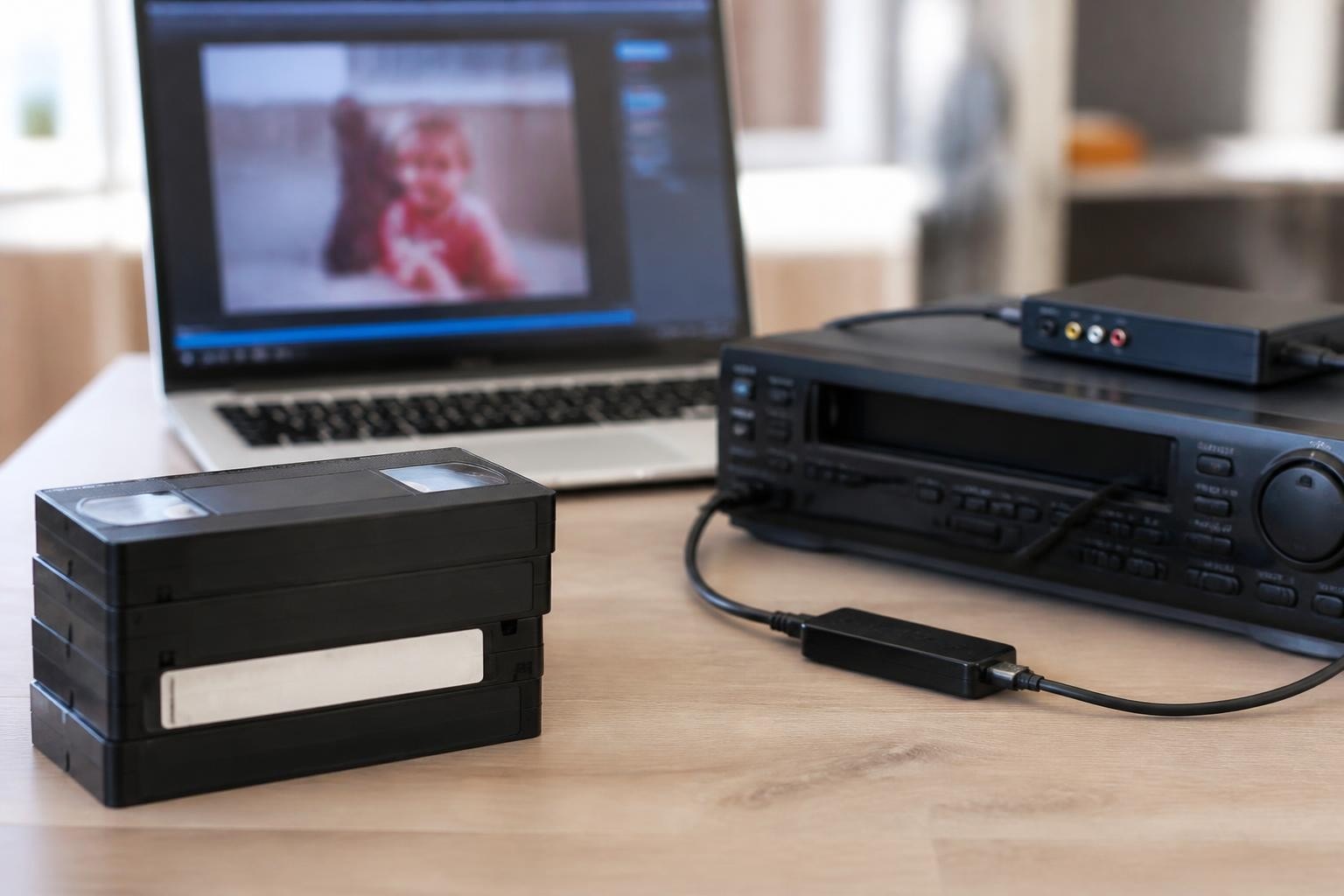
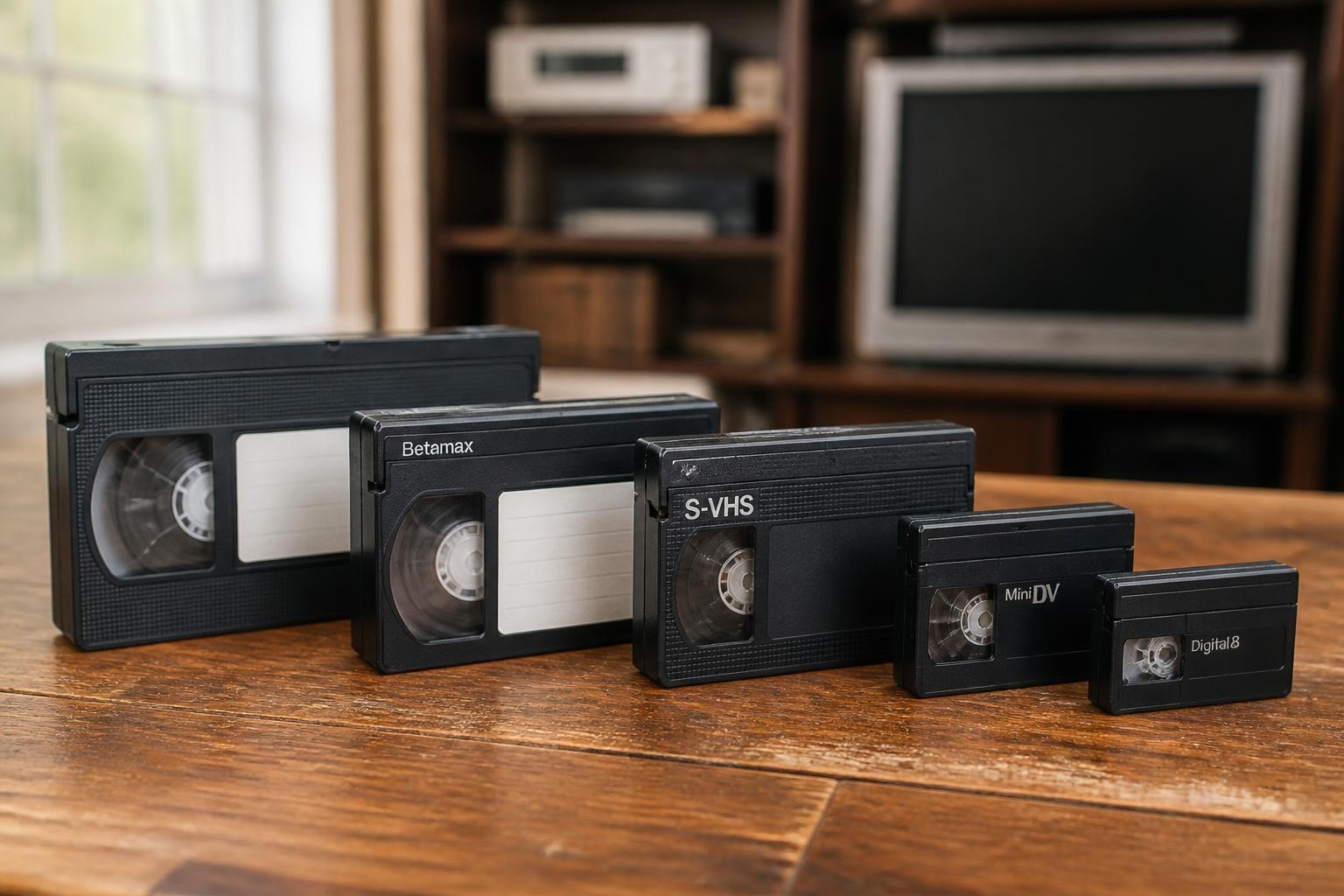
Super VHS VCR: Professional S-VHS Deck Buyer's Guide
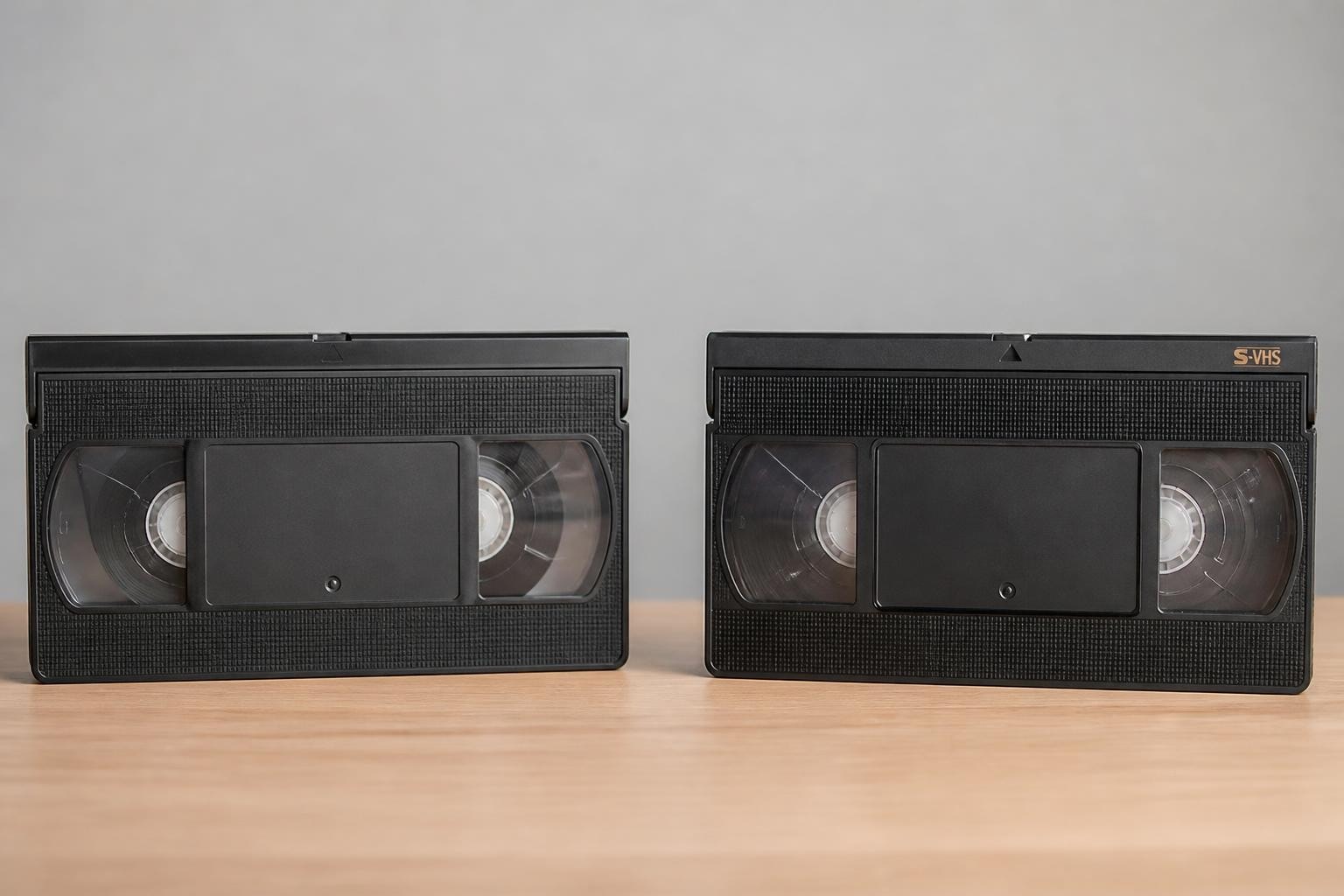
The super vhs vcr revolutionized analog video recording when JVC introduced the format in 1987, offering nearly double the horizontal resolution of standard VHS while maintaining backward compatibility with existing tapes. For digitization professionals and archival facilities, understanding the technical advantages and operational requirements of S-VHS equipment remains essential even in 2026, as millions of tapes recorded in this format still require proper playback and capture. These professional-grade decks continue serving critical roles in preservation workflows, corporate archives, and media transfer operations where quality cannot be compromised.
Technical Superiority of the Super VHS Format
The super vhs vcr achieved its enhanced image quality through several engineering innovations that separated it from consumer VHS equipment. While standard VHS recorded luminance information at approximately 3 MHz bandwidth, S-VHS extended this to 5.4 MHz, delivering horizontal resolution of over 400 lines compared to VHS's 240 lines.
Advanced Recording Architecture
S-VHS implemented a separated Y/C signal path that kept luminance and chrominance signals distinct throughout the recording chain. This separation eliminated the cross-color artifacts and dot crawl that plagued composite VHS recordings. The technical specifications maintained by standards bodies defined precise tape formulation requirements and recording parameters.

The format required specialized tape with finer magnetic particles capable of handling higher frequency signals. S-VHS cassettes used metal-evaporated or metal particle formulations rather than standard ferric oxide, enabling the increased bandwidth necessary for enhanced resolution.
Key technical improvements included:
- Higher carrier frequency for luminance recording
- Improved video heads with narrower track width
- Enhanced tape transport mechanisms for stability
- Superior head-switching circuitry to minimize noise bars
- Time base correction integration on professional models
Professional Applications in Modern Digitization Workflows
Despite the format's age, super vhs vcr equipment remains indispensable for facilities handling legacy media conversion. Corporate archives, broadcasting stations, legal discovery firms, and genealogical services regularly encounter S-VHS tapes requiring accurate playback for digital preservation.
| Application Type | Primary Use Case | Critical Requirements |
|---|---|---|
| Corporate Archives | Training videos, product documentation | TBC integration, tracking adjustment |
| Legal Discovery | Depositions, surveillance footage | Frame-accurate playback, timecode |
| Broadcast Stations | News footage, commercial archives | Professional monitoring, audio quality |
| Family History | Wedding videos, home movies | Gentle tape handling, drop-out compensation |
Preservation Standards Compliance
Professional digitization operations must adhere to archival standards when transferring S-VHS content to digital formats. The Library of Congress preservation guidelines specify technical parameters for capture resolution, file formats, and metadata requirements that govern how super vhs vcr playback integrates into contemporary workflows.
Working with S-VHS format decks requires understanding both the historical context of the recordings and the technical chain needed to extract maximum quality during digitization. Many facilities choose to rent S-VHS equipment rather than maintain permanent inventory, especially when project volumes fluctuate seasonally.
Organizations following Association of Moving Image Archivists standards recognize that proper super vhs vcr selection directly impacts preservation outcomes. The deck's condition, age, and maintenance history significantly affect playback fidelity and the likelihood of tape damage during transfer.
Selecting the Right Super VHS VCR for Your Operation
Choosing appropriate S-VHS playback equipment involves evaluating several technical and operational factors. Not all super vhs vcr models offer equivalent performance, and digitization quality depends heavily on deck capabilities.
Essential Features for Professional Use
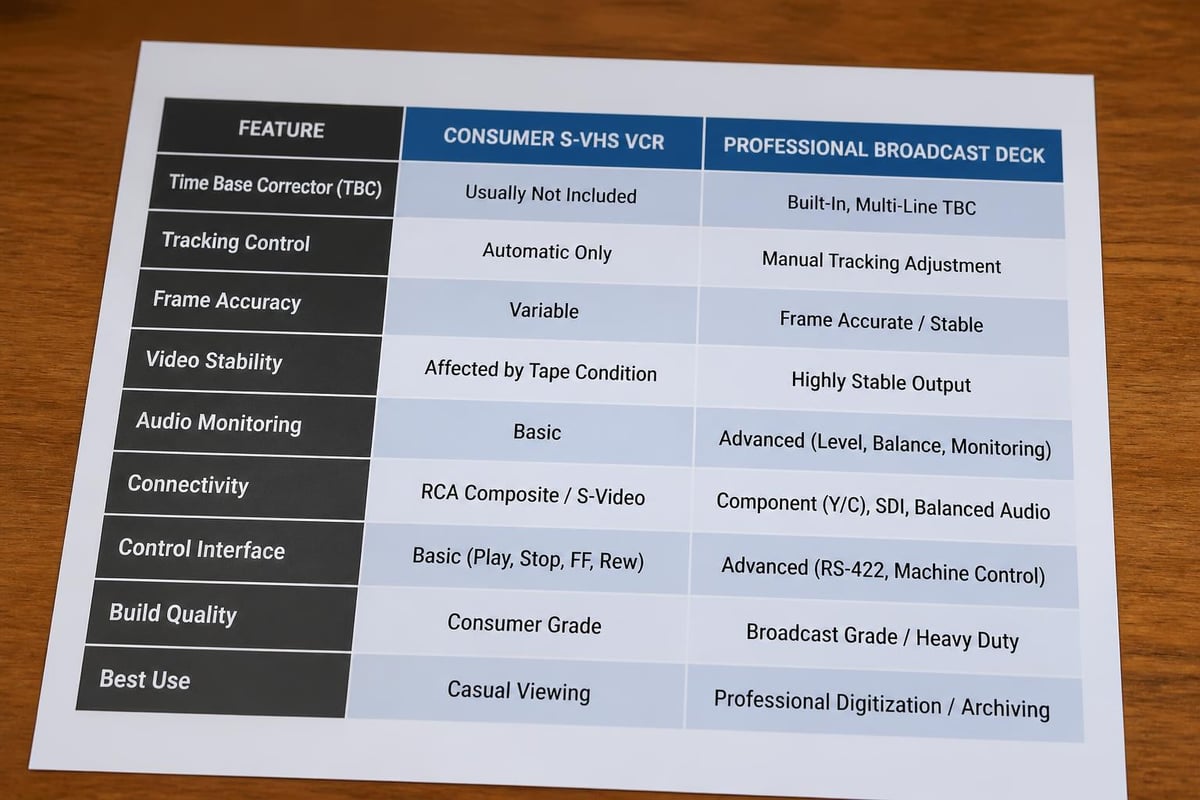
Professional-grade S-VHS decks distinguish themselves through specific features absent from consumer models:
- Time Base Correction (TBC): Stabilizes video timing to eliminate horizontal picture jitter
- Frame-accurate jog/shuttle: Enables precise cueing for editing and documentation
- S-Video input/output: Maintains Y/C separation throughout the signal chain
- Audio dubbing capabilities: Allows soundtrack correction without video disturbance
- Manual tracking control: Compensates for tapes recorded on misaligned machines
- RS-232/422 control: Integrates with automated digitization systems
The super vhs vcr models most valued by digitization professionals typically include the JVC BR-S525U, Sony SVO-5800, and Panasonic AG-7750. These broadcast-grade units provide the reliability and feature sets necessary for high-volume operations.
Connectivity and Integration Considerations
Modern digitization workflows require super vhs vcr units to interface with contemporary capture hardware and software. Professional decks offer multiple output options:
- S-Video (Y/C): Preferred connection maintaining signal separation
- Component video: Available on select professional models
- Composite video: Backward compatibility with monitoring equipment
- Balanced audio XLR: Professional audio routing with lower noise floor
- Control protocols: Serial control for batch processing automation
Understanding these connections ensures optimal quality when feeding signals to capture cards or external analog-to-digital converters. The technical guidance published for VHS digitization applies equally to S-VHS workflows with appropriate adjustments for the higher-resolution format.
Maintenance Requirements and Operational Lifespan
Operating a super vhs vcr in a production environment demands proactive maintenance to ensure consistent playback quality and prevent costly tape damage. These mechanical devices contain hundreds of moving parts subject to wear, requiring systematic service schedules.
Critical Maintenance Tasks
Monthly service requirements:
- Video head cleaning using appropriate cleaning cassettes
- Capstan and pinch roller inspection and cleaning
- Tape path guide cleaning to prevent oxide buildup
- Audio head cleaning for soundtrack fidelity
- Moisture and dust control in storage environments
Quarterly professional service:
- Video head wear assessment and replacement planning
- Mechanical alignment verification using test tapes
- Voltage regulation and power supply testing
- Belt tension and condition evaluation
- Lubrication of mechanical assemblies
Facilities processing high volumes of tapes benefit from structured maintenance contracts that reduce unexpected downtime and extend equipment operational life. Regular preventive service costs substantially less than emergency repairs during critical projects.
Typical Operational Lifespan
A well-maintained super vhs vcr can provide 8-12 years of reliable service in professional environments, though this varies significantly based on usage intensity and environmental conditions. Decks processing 40+ hours weekly typically require head replacement every 18-24 months, while lighter-duty units may operate 3-4 years between head services.
| Component | Typical Lifespan | Warning Signs | Replacement Cost |
|---|---|---|---|
| Video heads | 1,500-2,000 hours | Tracking difficulty, snow | $350-$800 |
| Pinch roller | 3,000-4,000 hours | Tape slippage, speed variation | $45-$85 |
| Drive belts | 4-6 years | Mechanical failure, speed drift | $25-$65 |
| Capacitors | 10-15 years | Power issues, instability | $150-$400 |
Understanding these lifecycle costs helps facilities budget appropriately and plan equipment rotation strategies. Many operations maintain multiple super vhs vcr units to ensure continuity during maintenance periods.
Troubleshooting Common Playback Issues
Even properly maintained S-VHS equipment encounters playback challenges, particularly when handling tapes stored in suboptimal conditions or recorded on poorly aligned machines. Identifying and resolving these issues requires both technical knowledge and systematic diagnosis.
Tracking and Alignment Problems
Tracking issues represent the most frequent challenge when operating a super vhs vcr with unfamiliar tapes. Symptoms include horizontal noise bars, picture breakup, or complete loss of video. The technical specifications governing VHS recording explain how tape speed variations and head alignment affect playback compatibility.
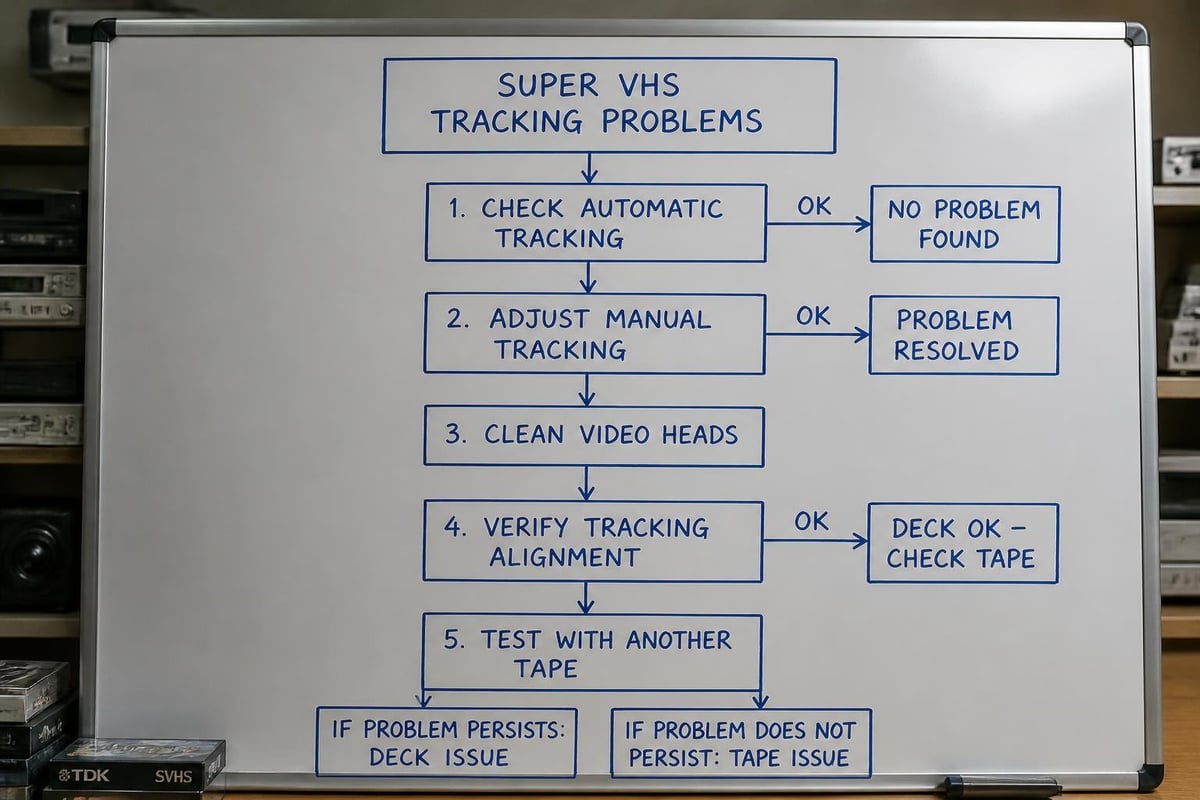
Systematic troubleshooting approach:
- Attempt playback with automatic tracking enabled
- Manually adjust tracking control while observing video quality
- Clean video heads and retry if tracking adjustment proves ineffective
- Test with a known-good reference tape to verify deck alignment
- Consider the tape may require playback on the original recording deck
Audio and Sync Complications
Audio dropout, sync instability, and time base errors plague aged S-VHS tapes and worn equipment. Professional digitization requires identifying whether problems originate from the tape, the super vhs vcr, or downstream equipment.
Time base correction becomes essential when processing tapes exhibiting sync instability. Professional decks with built-in TBC circuitry compensate automatically, while external TBCs can stabilize output from consumer-grade machines lacking this feature.
Rental Versus Purchase Economics for Digitization Operations
Facilities planning S-VHS digitization projects face a fundamental decision: purchasing equipment outright or utilizing rental services. The economics vary significantly based on project scope, frequency, and long-term volume projections.
Financial Comparison Analysis
| Scenario | Purchase | Rental | Break-Even Point |
|---|---|---|---|
| Single large project (500+ tapes) | $1,200-$2,500 | $297-$495 (3 months) | One-time use favors rental |
| Quarterly projects | $1,200-$2,500 | $1,188-$1,980 annually | 12-18 months continuous use |
| Ongoing operations | $1,200-$2,500 + maintenance | $1,188-$1,980 annually | Depends on maintenance costs |
Purchasing a super vhs vcr makes economic sense for facilities with continuous digitization workflows exceeding 15-20 hours weekly. However, purchase decisions must account for hidden costs including maintenance, repairs, storage, and eventual obsolescence.
Rental arrangements provide several strategic advantages beyond basic economics. Professional VCR rental services typically include maintained, aligned equipment that arrives ready for production use. When decks malfunction during projects, rental providers swap equipment quickly, minimizing downtime that could devastate project timelines.
Operational Flexibility Benefits
Renting super vhs vcr equipment offers flexibility that ownership cannot match:
- Scale capacity to match seasonal volume fluctuations
- Access multiple formats simultaneously for diverse tape collections
- Avoid obsolescence risk as equipment technology evolves
- Eliminate maintenance overhead and diagnostic expertise requirements
- Test different models before committing to major purchases
Organizations processing varied tape formats benefit particularly from rental flexibility. A facility handling MiniDV, Digital8, and S-VHS projects can rent appropriate equipment for each format without maintaining permanent inventory across all platforms.
Format Migration and Long-Term Preservation Planning
Operating a super vhs vcr in 2026 exists within a broader context of analog format obsolescence and digital preservation imperatives. Organizations must balance immediate playback needs against long-term accessibility requirements for digitized content.
Capture Quality Parameters
Digitizing S-VHS content requires careful attention to technical parameters that affect long-term usability. The enhanced resolution of the format demands capture settings that preserve available quality:
Recommended capture specifications:
- Resolution: 720×480 minimum (NTSC) or 720×576 (PAL)
- Frame rate: Match source material (29.97 fps NTSC, 25 fps PAL)
- Color space: YUV 4:2:2 for preservation masters
- Codec: Uncompressed or lossless compression for masters
- Audio: 48 kHz/24-bit minimum for professional content
- File format: Wrapper formats supporting embedded metadata
These specifications align with preservation standards while acknowledging that super vhs vcr output cannot match modern digital acquisition quality. The goal involves capturing maximum available information without introducing additional generational loss.
Metadata and Documentation Standards
Professional digitization workflows extend beyond technical capture to encompass comprehensive metadata creation. Each digitized S-VHS tape should include documentation about the source material, playback equipment, capture settings, and any restoration or correction applied during transfer.
Facilities following archival best practices maintain detailed records including:
- Original tape format and condition assessment
- Super vhs vcr model and serial number used for playback
- Tracking and alignment adjustments required
- Time base correction settings applied
- Color correction or restoration performed
- Operator notes regarding playback anomalies
This documentation proves invaluable when questions arise about digital file authenticity, quality decisions, or the need for re-digitization as technology evolves.
Equipment Sourcing and Service Provider Evaluation
Locating reliable super vhs vcr equipment and qualified service providers presents increasing challenges as the format ages and technical expertise becomes scarce. Digitization facilities must carefully evaluate suppliers to ensure equipment quality and service reliability.
Evaluating Rental and Service Providers
When selecting a VCR repair service or rental provider, several criteria distinguish professional operations from inadequate suppliers:
- Equipment inventory depth across multiple formats and models
- Maintenance documentation showing service history and alignment records
- Technical support availability from experienced video engineers
- Replacement equipment access for rapid swap during failures
- Transparent pricing with clear terms for rental periods and service fees
Professional providers maintain calibrated test equipment and reference tapes for proper deck alignment. They understand the nuances of different super vhs vcr models and can recommend appropriate equipment for specific project requirements.
Service Level Expectations
Commercial-grade digitization operations require service providers who understand production deadlines and quality standards. Rental agreements should specify equipment condition, alignment status, and available support channels when technical issues arise.
Repair services should provide detailed diagnostics before proceeding with work. A $45 diagnostic fee represents standard practice, giving facilities clear understanding of required repairs and associated costs before authorizing service. Comprehensive maintenance programs prevent unexpected failures during critical projects.
Technical Resources and Continuing Education
Maintaining expertise with super vhs vcr technology requires ongoing education as experienced technicians retire and institutional knowledge dissipates. Digitization professionals benefit from documented technical resources and preservation community engagement.
The historical technical literature from S-VHS introduction provides foundational understanding of format design principles and engineering constraints. This context helps troubleshoot problems and understand equipment capabilities and limitations.
Modern preservation organizations maintain technical resources addressing analog video digitization workflows. Facilities serious about quality outcomes invest in staff training covering video signal theory, tape physics, and equipment operation best practices.
Essential knowledge areas include:
- Video signal standards and sync pulse requirements
- Magnetic recording principles and tape chemistry
- Mechanical deck operation and alignment procedures
- Signal path troubleshooting from tape to digital capture
- Format identification and compatibility assessment
Organizations can develop internal expertise or partner with specialists who maintain these skills across diverse equipment platforms. The relatively small community of analog video preservation experts means networking and information sharing prove valuable for solving unusual technical challenges.
Understanding super vhs vcr technology, maintenance requirements, and integration into modern digitization workflows enables facilities to extract maximum quality from aging tape collections while controlling costs and timelines. Whether your operation processes occasional archival projects or maintains continuous production schedules, access to properly maintained professional S-VHS equipment determines success. VCR Supply provides rental services starting at $99 monthly and comprehensive repair with $45 diagnostics, delivering the expertise and equipment reliability that digitization professionals require without the overhead of equipment ownership and maintenance management.