VCR for VHS Tapes: Professional Equipment Guide 2026
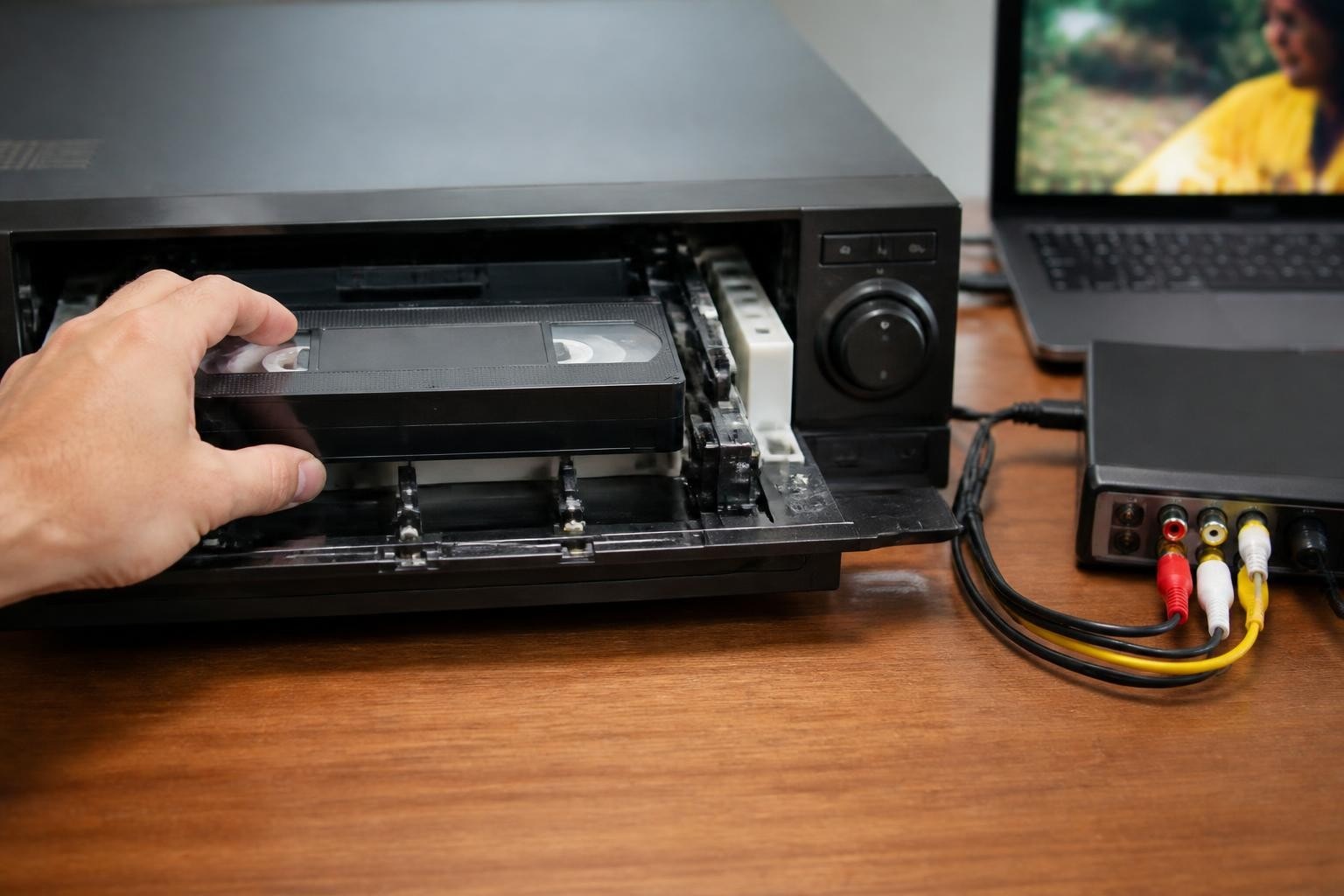
Finding a reliable vcr for vhs tapes remains essential for digitization professionals, archives, and media preservation businesses in 2026. Despite the decline of consumer VCR manufacturing, professional-grade videotape decks continue to serve a critical role in preserving decades of recorded content stored on VHS and related analog formats. Understanding the differences between consumer and professional equipment, maintaining aging hardware, and following preservation standards determines the quality and longevity of digitization projects.
Professional VCR Equipment vs Consumer Models
The distinction between professional and consumer VCRs significantly impacts digitization quality and operational reliability. Consumer models, designed for home entertainment, typically lack the precision components and robust construction required for commercial digitization workflows.
Build Quality and Component Differences
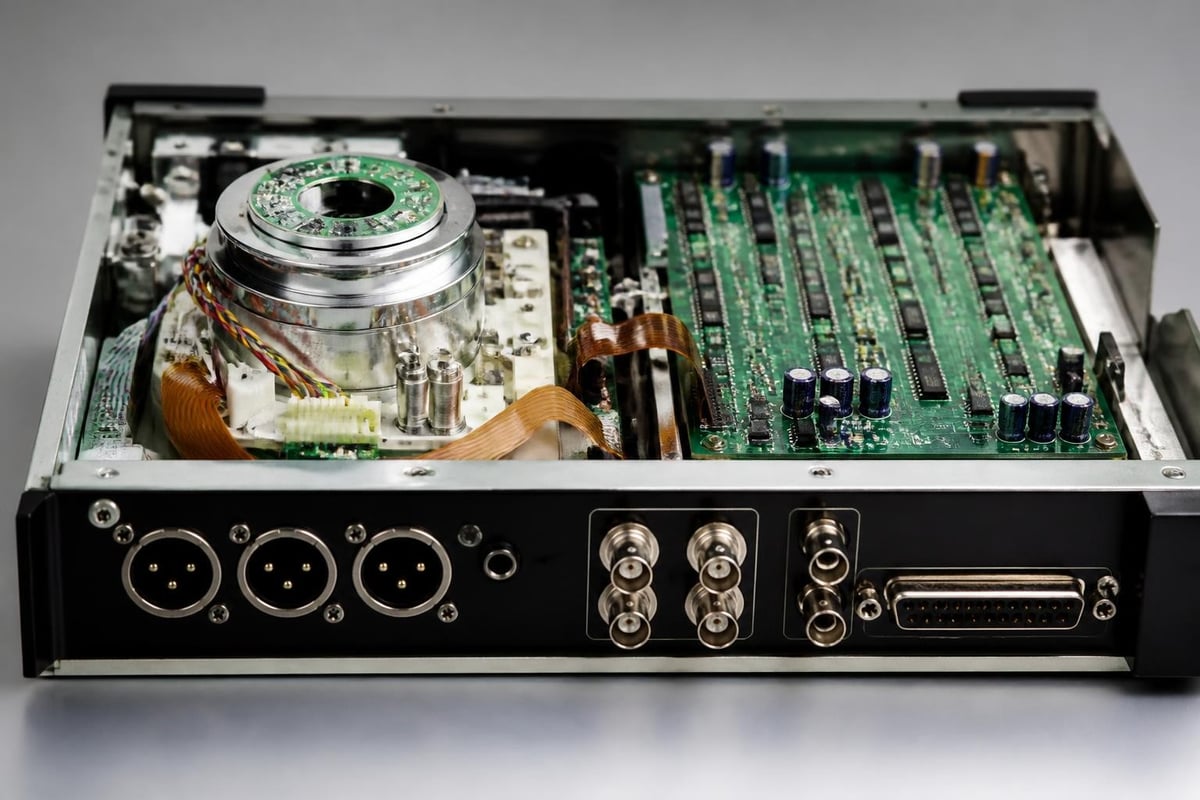
Professional VCR decks feature superior video heads, precision transport mechanisms, and higher-quality signal processing circuits. These components deliver better tracking stability, reduced dropout rates, and consistent color reproduction across extended operating periods. Time Base Correctors (TBC) built into many professional units compensate for timing errors inherent in analog videotape playback, producing cleaner output signals for digital capture.
Commercial-grade vcr for vhs tapes models incorporate metal chassis construction, industrial-grade motors, and replaceable wear components. This design philosophy supports continuous operation cycles far exceeding consumer equipment capabilities. Many professional decks include XLR audio connections, RS-422 control interfaces, and professional reference video inputs that consumer models omit entirely.
Format Compatibility Considerations
Different VCR models support varying tape formats and recording standards. Standard VHS playback represents the baseline capability, while S-VHS decks offer backward compatibility with VHS alongside enhanced resolution for Super VHS recordings. This versatility proves essential when processing mixed tape collections containing both standard and high-grade recordings.
| Feature | Consumer VCR | Professional VCR |
|---|---|---|
| Video Heads | 2-4 heads | 4-6 heads (some flying erase) |
| TBC Integration | Rarely included | Often built-in or optional |
| Construction | Plastic chassis | Metal frame construction |
| Audio I/O | RCA stereo | XLR balanced + RCA |
| Operating Hours (MTBF) | 500-1000 hours | 5000-10000 hours |
| Serviceability | Limited parts availability | Modular, replaceable components |
Professional models from manufacturers like JVC, Sony, and Panasonic dominated broadcast and production environments. These units often include jog/shuttle controls, frame-accurate editing capabilities, and extensive menu adjustments for tracking, audio levels, and video parameters.
Selecting the Right VCR for Digitization Projects
Choosing appropriate playback equipment depends on project scope, tape condition, budget constraints, and expected volume. Digitization shops face unique requirements compared to one-time personal transfers.
Assessing Project Requirements
Volume considerations drive equipment selection decisions. Processing hundreds or thousands of tapes annually demands robust professional equipment with readily available replacement parts and maintenance support. Smaller operations might initially consider semi-professional models but should evaluate long-term reliability against rental alternatives.
Tape condition assessment helps determine necessary features. Collections containing aged, damaged, or poorly stored tapes benefit from decks offering advanced tracking controls, multiple playback speeds, and manual tension adjustments. Professional vcr for vhs tapes equipment provides these diagnostic and recovery capabilities that consumer models lack.
Key selection criteria include:
- Tracking range and automatic/manual adjustment options
- Time Base Corrector quality (internal or external compatibility)
- Audio channel configuration (mono, stereo, linear, hi-fi)
- Control interface requirements (RS-422, infrared, front panel)
- Parts availability and repair service accessibility
- Format support breadth (VHS, S-VHS, VHS-C adapter compatibility)
Rental vs Purchase Economics
Equipment acquisition strategy significantly affects operational costs and flexibility. Purchasing refurbished professional decks requires substantial upfront investment, typically ranging from $800 to $3,000 per unit depending on model and condition. This approach makes sense for established operations with consistent volume.
VCR rental services offer compelling alternatives for variable workloads, specialized format requirements, or businesses avoiding capital expenditures. Monthly rental costs starting around $99 provide access to maintained professional equipment without depreciation concerns or repair overhead. This model particularly benefits digitization shops managing seasonal demand fluctuations or testing market demand before committing to equipment purchases.
Maintenance and Repair Considerations
Professional vcr for vhs tapes equipment requires systematic maintenance to ensure consistent performance and extend operational lifespan. Neglecting routine care accelerates component wear and degrades output quality.
Preventive Maintenance Protocols
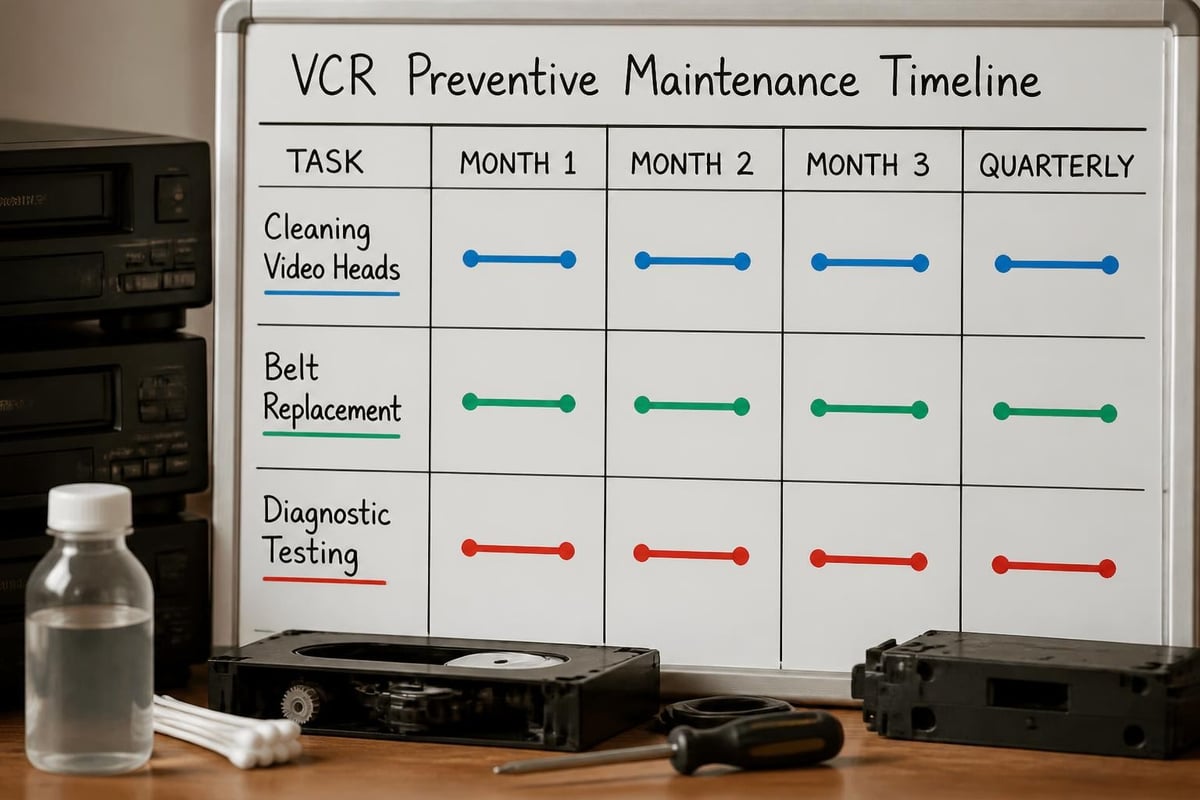
Regular cleaning cycles prevent buildup of oxide particles shed from aging tapes. Video head cleaning should occur every 20-30 hours of operation using appropriate cleaning cassettes or manual cleaning with specialized solutions. Critical maintenance tasks include:
- Video head inspection and cleaning (every 20-30 operating hours)
- Capstan and pinch roller cleaning (weekly for active use)
- Guide roller cleaning and inspection (monthly)
- Belt tension verification and replacement (annually or as needed)
- Audio head alignment verification (quarterly for precision work)
- Lubrication of mechanical components per manufacturer specifications
Environmental factors influence maintenance frequency. Operating environments with temperature fluctuations, high humidity, or airborne particulates accelerate component degradation. The Library of Congress preservation guidelines emphasize controlled storage and operating conditions for both tapes and playback equipment.
Common Repair Scenarios
Component failure patterns emerge predictably in aging vcr for vhs tapes equipment. Rubber belts deteriorate over time regardless of use, becoming brittle or losing tension. Video head wear manifests as increased dropouts, tracking difficulties, or complete playback failure. Capacitor degradation in power supply and signal processing circuits causes intermittent operation or complete failure.
Professional repair services provide diagnostic testing, component-level troubleshooting, and parts replacement capabilities. Diagnostic fees typically start around $45, with repair costs varying based on parts requirements and labor complexity. Establishing relationships with qualified repair technicians or securing maintenance contracts reduces downtime and ensures priority service access.
Parts Availability Challenges
Declining VCR production creates ongoing parts scarcity concerns. Original equipment manufacturer (OEM) components become increasingly difficult to source, particularly for discontinued models. This reality makes equipment selection strategic-choosing models with active support communities, available aftermarket parts sources, or cross-compatible components from similar models.
| Component Type | Availability Status | Typical Replacement Interval |
|---|---|---|
| Video Heads | Limited, model-specific | 1500-3000 operating hours |
| Drive Belts | Widely available | 2-5 years (age-dependent) |
| Capacitors | Generic replacements available | 10-20 years |
| Mechanical Assemblies | Scarce, salvage sources | Varies widely |
| Circuit Boards | Very limited, model-specific | Rarely replaceable |
Digitization Standards and Best Practices
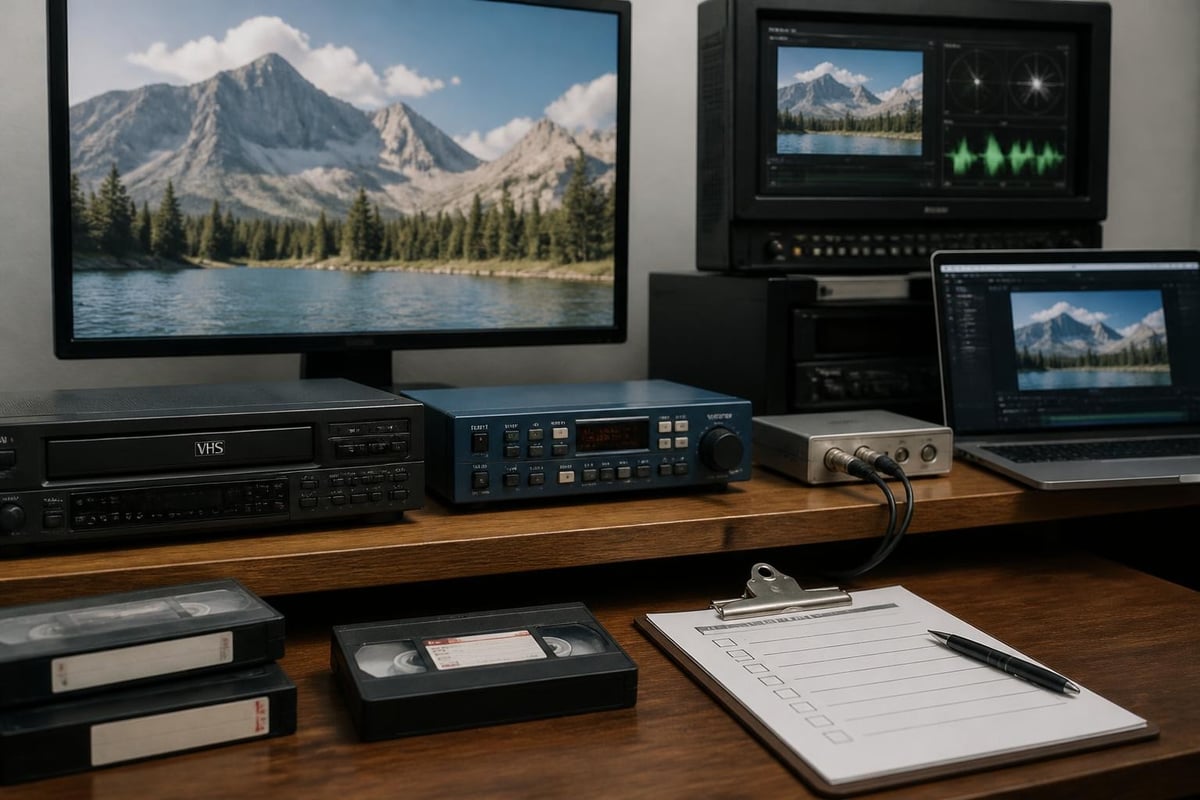
Professional digitization workflows incorporate established standards ensuring archival quality and format longevity. Simply connecting a vcr for vhs tapes to a computer capture device produces suboptimal results without proper signal conditioning and format selection.
Signal Path Optimization
Analog video signals deteriorate through unnecessary processing stages or inadequate cabling. Direct connections using high-quality cables minimize signal loss between the VCR and digitization interface. Component video connections (Y/Pb/Pr) preserve more color information than composite video for equipment supporting this option, though VHS format limitations constrain ultimate quality regardless of connection type.
External Time Base Correctors prove essential when working with decks lacking internal TBC circuits. These devices stabilize timing errors, reduce jitter, and improve synchronization with digital capture hardware. The National Archives digitization guidelines specify TBC use as standard practice for professional videotape transfer projects.
Audio signal handling requires equal attention. Hi-fi VHS tracks deliver superior audio quality compared to linear tracks, but playback equipment must properly decode these FM audio signals. Professional decks offer selectable audio monitoring and output routing, enabling verification of optimal audio source selection.
Capture Format Selection
Digital file format choices balance quality preservation against file size and compatibility requirements. Uncompressed or lossless compression formats maintain maximum fidelity for archival masters, while compressed formats serve access copy distribution needs.
Recommended archival capture specifications include:
- Video codec: Uncompressed 10-bit 4:2:2 or FFV1 lossless compression
- Resolution: 720×480 (NTSC) or 720×576 (PAL) maintaining native format
- Frame rate: 29.97 fps (NTSC) or 25 fps (PAL) matching source material
- Audio format: Uncompressed PCM, 48 kHz, 24-bit, stereo
- Container format: AVI, MOV, or Matroska (MKV) for preservation masters
The IASA technical guidelines provide comprehensive recommendations for audiovisual digitization projects, addressing both technical parameters and quality control procedures. Following these standards ensures compatibility with long-term preservation systems and future migration strategies.
Format-Specific Considerations
While standard VHS represents the most common format, professional digitization operations encounter numerous related formats requiring specialized playback equipment or adapters.
VHS Format Variations
Standard VHS tapes recorded at SP (Standard Play) speed offer optimal quality but limited recording time. LP (Long Play) and EP/SLP (Extended Play) modes sacrifice quality for extended duration, complicating playback when tape condition deteriorates. Professional vcr for vhs tapes decks typically handle all speed modes, though EP playback quality varies significantly between models.
VHS-C compact cassettes require mechanical adapters for playback in standard VCR decks. These adapters introduce additional mechanical complexity and potential failure points. Some professional operations prefer dedicated VHS-C players or camcorder playback when processing significant VHS-C volumes.
S-VHS and Enhanced Formats
Super VHS (S-VHS) recording delivers approximately 400 lines of horizontal resolution compared to VHS's 240 lines. However, S-VHS playback requires compatible decks recognizing the format's higher bandwidth luminance recording. Many professional S-VHS decks offer backward compatibility with standard VHS while providing superior performance on S-VHS recordings through separate Y/C (S-Video) outputs.
W-VHS (Wide VHS) and D-VHS formats represent rare variations requiring specialized equipment. W-VHS analog widescreen recordings appear occasionally in archives, while D-VHS digital recordings used MPEG-2 compression for high-definition content. Equipment supporting these formats carries premium pricing and limited availability.
Professional Broadcast Formats
Commercial production environments frequently utilized higher-grade formats sharing VHS's form factor. Betacam SP dominated broadcast applications with superior quality and reliability, while U-matic preceded VHS in institutional settings. Understanding format differences helps digitization operations properly scope equipment requirements and project timelines.
Preservation Planning for Tape Collections
Successful digitization extends beyond equipment selection to encompass comprehensive preservation planning. Magnetic tape degradation continues regardless of digitization status, making systematic approaches essential.
Tape Condition Assessment
Pre-digitization inspection identifies tapes requiring special handling or restoration before playback. Visible mold growth, vinegar syndrome odor (acetate-backed tapes), or sticky shed syndrome necessitate professional conservation treatment. The Digital Preservation Coalition handbook outlines environmental and handling protocols minimizing further degradation during assessment and digitization.
Common tape condition issues include:
- Mold contamination requiring cleaning before playback
- Binder hydrolysis (sticky shed) needing baking treatment
- Physical damage (creases, breaks, edge damage)
- Housing deterioration (broken shells, damaged windows)
- Lost or incorrect labeling requiring content verification
Physical damage assessment determines whether tapes can safely play on valuable professional equipment or require disposable consumer-grade decks for initial testing. Severely damaged tapes may need specialized recovery services or acceptance that content retrieval proves impossible without risking complete media destruction.
Format Obsolescence and Equipment Life Cycles
Magnetic tape formats face inevitable obsolescence as playback equipment ages beyond economically viable repair. The National Archives guidance on machine-readable media emphasizes proactive migration before equipment failure makes content inaccessible. This reality creates urgency for digitization projects while functional vcr for vhs tapes equipment remains available.
Equipment life cycle planning balances current operational needs against future availability constraints. Organizations processing large tape collections should consider:
- Securing backup playback equipment before complete market exhaustion
- Establishing relationships with specialized repair services
- Documenting equipment configurations and optimal settings
- Training multiple staff members on operation and basic troubleshooting
- Prioritizing highest-value content for immediate digitization
Storage Environment Optimization
Post-digitization tape storage preserves original media for potential re-digitization as technology improves or quality standards evolve. Controlled temperature (65-70°F) and relative humidity (30-40%) environments significantly extend magnetic media lifespan. The personal digital archiving guide from the National Digital Information Infrastructure and Preservation Program provides practical recommendations applicable to both institutional and commercial settings.
Proper storage positioning (vertical orientation), appropriate shelving, and regular environmental monitoring prevent accelerated degradation. Even digitized collections warrant preservation as digital files cannot perfectly capture analog artifacts that future enhancement technologies might better render.
Equipment Rental and Service Models
Professional digitization operations increasingly adopt flexible equipment strategies balancing capital constraints against operational demands. Traditional ownership models face competition from rental and service alternatives offering distinct advantages.
Monthly Rental Benefits
Equipment rental eliminates depreciation concerns while providing access to maintained, professionally serviced units. Monthly rental programs starting around $99 include routine maintenance, technical support, and replacement units during repair periods. This approach proves particularly valuable for:
- Project-based work with defined timelines
- Seasonal volume fluctuations
- Format-specific requirements (occasional Betamax or Digital8 projects)
- New business ventures testing market demand
- Organizations avoiding capital equipment budgets
Rental agreements typically include insurance coverage, shipping logistics, and technical consultation services. These bundled benefits reduce operational complexity compared to equipment ownership requiring separate maintenance contracts, parts sourcing, and troubleshooting expertise.
Maintenance Contract Advantages
For organizations owning vcr for vhs tapes equipment, maintenance contracts provide predictable costs and reduced downtime. Regular service visits, priority repair scheduling, and discounted parts pricing protect against unexpected expenses that disrupt project timelines. Preventive maintenance contracts typically cost less than reactive repair approaches while extending equipment lifespan through systematic care.
Service level agreements (SLAs) define response times, replacement equipment availability, and performance guarantees. These contractual protections prove essential for operations with client commitments or tight delivery schedules where equipment failures create costly delays.
Professional VCR equipment selection, maintenance, and operation determine digitization project success and long-term sustainability. Understanding the technical distinctions between consumer and professional decks, implementing systematic maintenance protocols, and following established preservation standards ensures optimal quality and operational efficiency. Whether managing ongoing digitization operations or occasional format-specific projects, access to reliable, well-maintained equipment remains fundamental. VCR Supply provides professional videotape deck rentals starting at $99 monthly and expert repair services with maintenance contracts designed specifically for digitization shops requiring consistent performance and minimal downtime.