Videotape Types Guide: Identify Your Tapes Fast

A video tape is a magnetic tape that stores moving images and sound, and you can identify most of them in under a minute by checking three things: the cassette size, the shape of the shell, and the logo printed on the label. The sections below walk through those checks, then cover each common consumer and professional format, what separates look-alikes, and how to judge tape condition before you play anything.
Video Tape vs. Videotape: What Is the Correct Spelling?
Both spellings are used, and both are correct. "Videotape" as a single word is the standard form in dictionaries, archives, and most technical writing, while "video tape" as two words remains common in everyday search and conversation. The medium is also called a video cassette, a VCR tape, or simply a tape, depending on the format and the era.
For digitization shops, the more useful question is what the tape is called by format, because the format determines which deck can play it. A "video tape" is a category. VHS, Betamax, Video8, and MiniDV are the formats inside it.
Three Quick Checks to Identify Any Tape
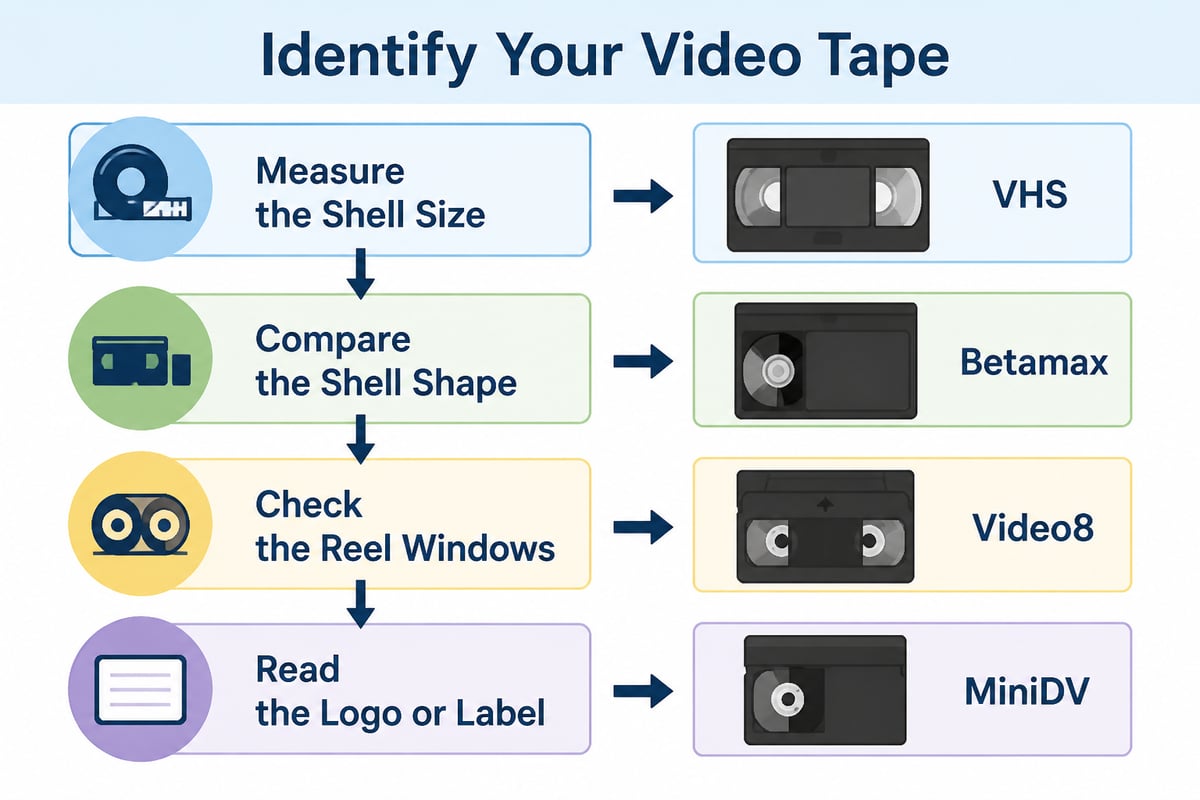
You can narrow nearly any cassette to a short list of formats by measuring it, looking at its shape, and reading its label.
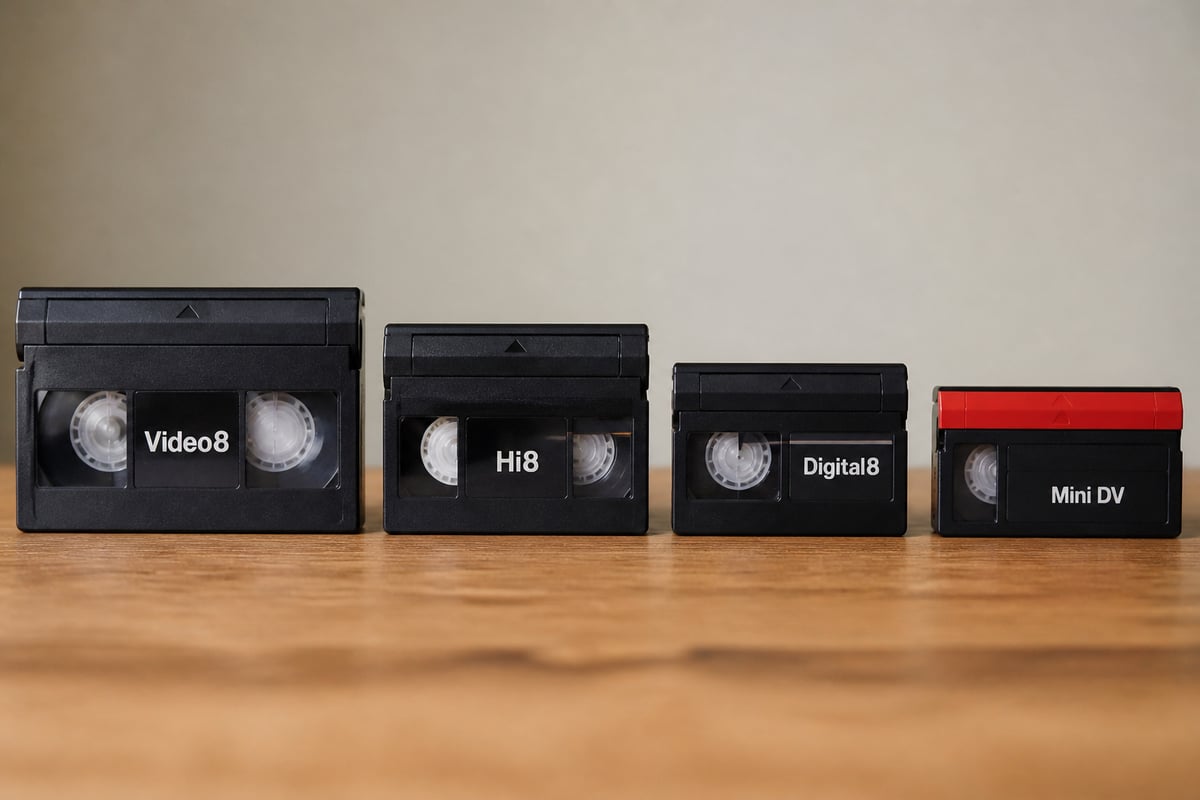
- Measure the shell. A full-size VHS cassette is roughly 7.4 by 4.1 inches. A Betamax shell is slightly smaller. Video8, Hi8, Digital8, and MiniDV cassettes are close to the size of an audio cassette or smaller.
- Check the shell shape and window layout. Betamax and VHS shells look similar at a glance, but VHS has a more squared profile and a different reel window arrangement. U-matic is chunky and noticeably thicker.
- Read the logo and text. Most tapes print the format name on the spine or face. S-VHS, Hi8, and Digital8 variants usually carry a distinct logo or color band.
If the label is missing or worn, look at the bottom edge for the write-protect tab position and the access door design. The door on a VHS cassette hinges at the front; on a MiniDV cassette it is a small flip cover.
Common Video Tape Formats at a Glance
The table below summarizes the formats a digitization shop sees most often, with the key feature that separates each from its closest look-alike.
| Format | Type | Distinguishing feature |
|---|---|---|
| VHS | Analog consumer | Full-size cassette, the most common tape |
| S-VHS | Analog prosumer | Same shell as VHS, higher-grade tape and S-VHS logo |
| VHS-C | Analog consumer | Compact shell, plays in a VHS deck via adapter |
| Betamax | Analog consumer | Smaller shell than VHS, reels set differently |
| U-matic | Analog professional | Thick, heavy shell, often 3/4-inch tape |
| Video8 / Hi8 | Analog camcorder | Small cassette, Hi8 uses metal-particle tape |
| Digital8 | Digital camcorder | Hi8-sized shell, records digital data |
| MiniDV | Digital camcorder | Very small cassette, DV logo |
Analog Formats: VHS, S-VHS, VHS-C, and Betamax
The analog household formats are the ones most families have in a closet, and they are easy to tell apart once you know where to look.
VHS is the format most people picture when they think of a video tape. It was the dominant home format for decades, and the large installed base means VHS decks and tapes still turn up constantly. Our guide to the VHS video tape covers the format in more detail.
S-VHS uses the same outer shell as VHS but a higher-grade tape that supports greater horizontal resolution. The shell looks nearly identical, so the S-VHS logo is the reliable tell. Playing an S-VHS recording requires an S-VHS-capable deck to get the full quality, which is why shops that handle these tapes keep dedicated machines. The difference between the two is explained in VHS vs. S-VHS.
VHS-C is a compact cassette made for camcorders. It cannot go straight into a standard deck; it needs a cassette-shaped adapter. If you are handling these, our notes on how to repair a VHS-C tape cover common failures such as a loose leader.
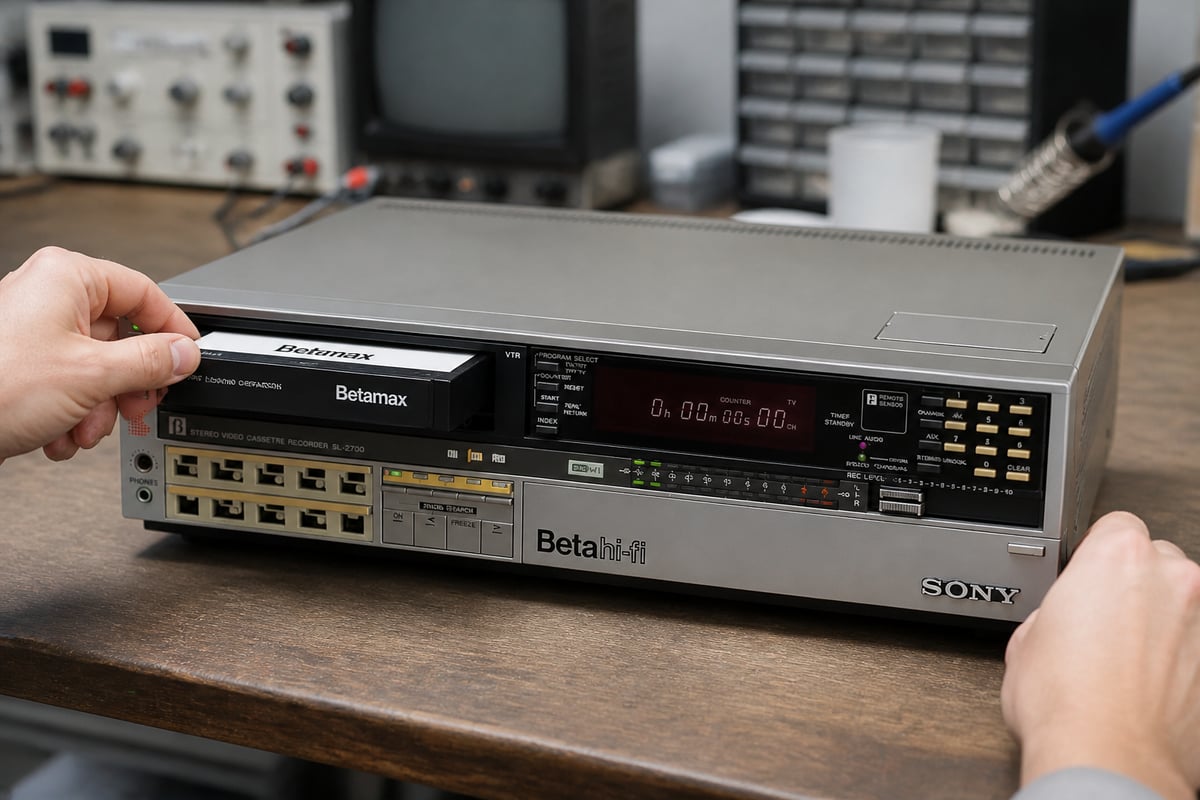
Betamax came first and was smaller than VHS, with a different reel arrangement. Few households own working decks today, which makes playback equipment the bottleneck. The history of the format and its decks is covered in Betamax video tape.
Camcorder Formats: Video8, Hi8, Digital8, and MiniDV
Camcorder tapes are small, and the biggest identification trap is that several formats share a similar shell size while recording in completely different ways.
- Video8: The original 8mm analog format, with a small cassette and a Video8 logo. Video8 equipment is still serviceable but increasingly scarce.
- Hi8: Same shell as Video8 but recorded on metal-particle tape for sharper picture. Look for the Hi8 logo.
- Digital8: A digital recording stored on Hi8-style tape. A Digital8 deck can usually also play analog Hi8 and Video8, which is useful for shops that want to cover several formats with one machine. See our overview of Digital8 tape.
- MiniDV: The smallest of the group, with a digital signal and a DV logo. The notes on MiniDV tape explain how it differs from the 8mm family.
A Hi8 cassette in a Digital8 camcorder is a classic mix-up: the tape can physically fit, but a digital recording on a tape sold for analog use may have higher dropout rates. Always confirm what the camcorder actually recorded, not just what the cassette says.
Professional and Broadcast Formats
Professional tapes are less common in homes but regularly arrive at digitization shops from schools, local stations, and corporate archives.
U-matic is a 3/4-inch cassette that served as a broadcast and institutional workhorse. The shell is thick and heavy compared with consumer tapes, which makes it easy to spot. Beyond U-matic, the Betacam family (Betacam SP, Digital Betacam, and Betacam SX) uses a shell that looks like a larger Betamax, but it is a distinct professional format with its own decks. Others such as DVCAM and DVCPRO use shells similar to MiniDV in a larger size.
If you are unsure whether a tape is consumer or professional, size is the first clue. Professional cassettes are usually noticeably larger and heavier, and the label often includes a format code and a running-time rating.
What Replaced Video Tapes?
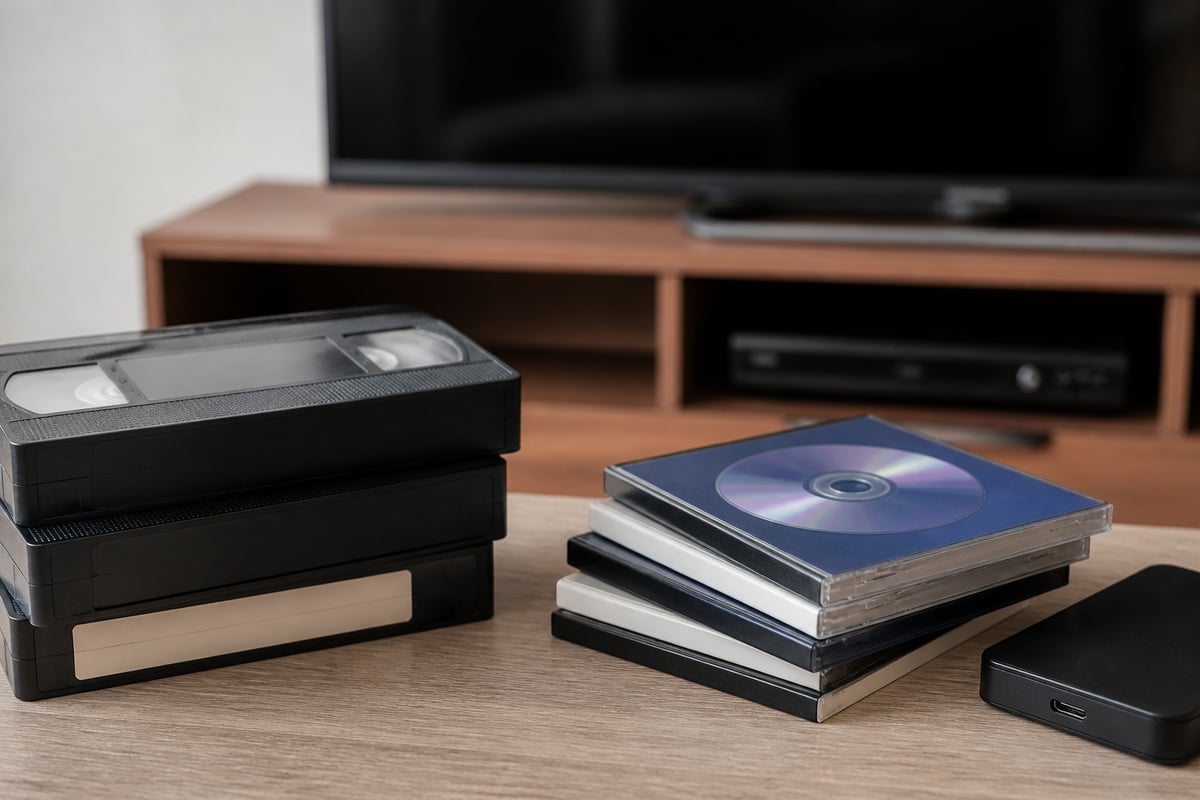
Optical discs replaced video tapes first, followed by solid-state memory and streaming. DVD became a common format for home playback in the 2000s, and camcorders moved to hard drives, memory cards, and eventually phones. Today most video is stored as digital files rather than on any physical tape.
That replacement is the reason digitization demand keeps growing. Tape formats stopped being manufactured at scale, so the decks that play them now come from used, refurbished, or rented stock.
Do Video Tapes Still Exist?
Yes, video tapes still exist, and some professional formats remain in limited production, though consumer tapes are no longer widely made. Many home recordings sit in basements, attics, and archives, and many are deteriorating.
Tape life is finite. The U.S. National Archives estimates that magnetic tapes stored under archival conditions generally last about 10 to 50 years before decay makes them difficult to handle. The same agency's machine-readable media guidance recommends reformatting videotapes older than five years, and prioritizing deteriorating tapes with important content.
Check Tape Condition Before You Play It
Inspecting a tape before loading it protects both the recording and the deck. Playing a damaged cassette can shed oxide onto heads, jam transport, or stretch a fragile tape.
Run through this list before each load:
- Look for mold. White or gray fuzz on the tape edge or inside the shell means the tape needs cleaning or specialist handling, not playback.
- Check for sticky shed. Tapes that squeal or leave residue on rollers may need treatment before transfer.
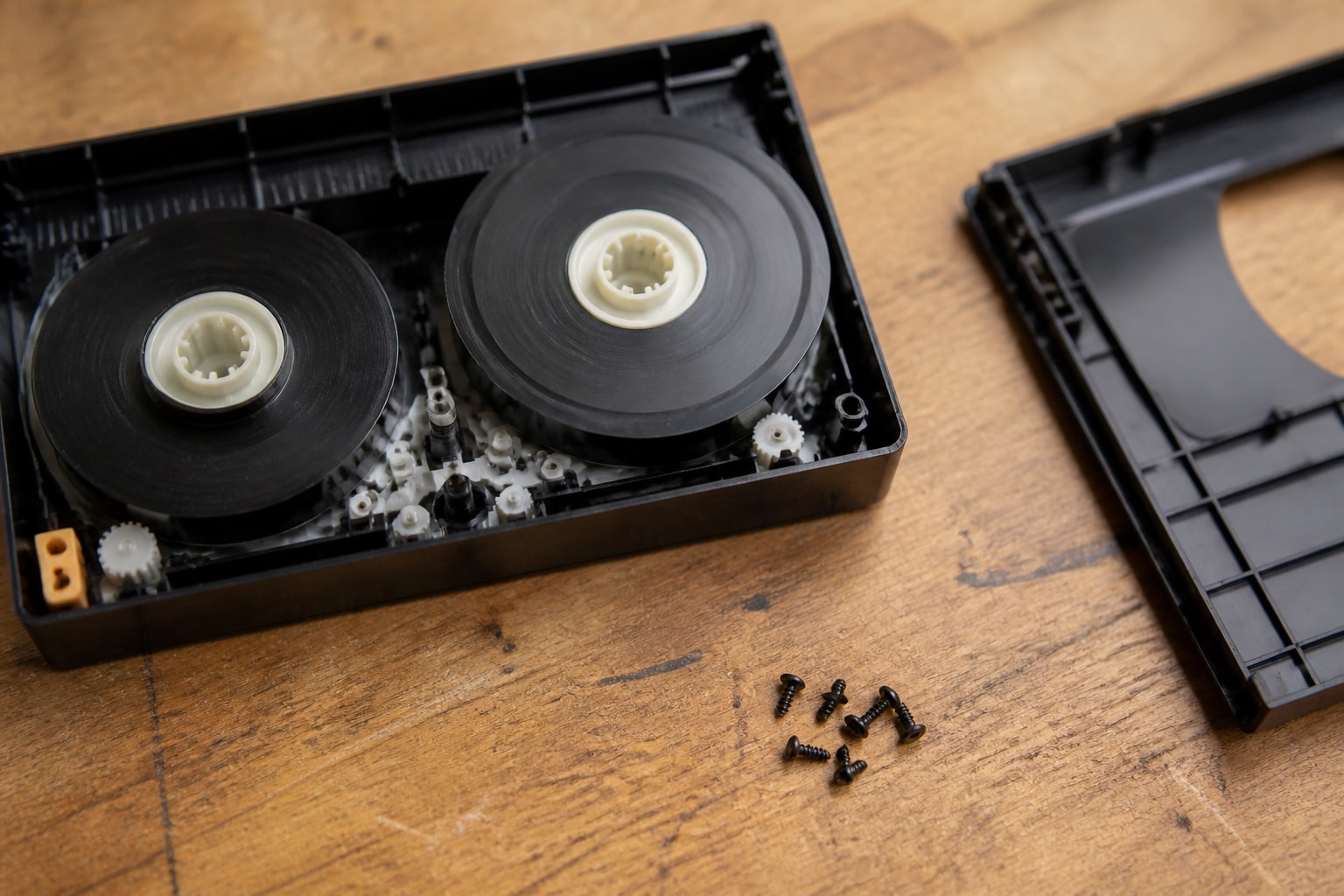
- Inspect the shell. Cracks, warped corners, or loose screws can cause transport jams.
- Test the leader. A broken or detached leader is a common failure in older cassettes.
- Confirm the write-protect tab so you do not record over the original.
Playback itself carries risk, since a worn or damaged tape can be harmed further each time it runs. Making preservation and access copies before repeated playback is a sensible precaution. Clean, well-maintained decks reduce that risk, and so do correct transport settings.
Storage Basics That Protect Your Tapes
Storage conditions strongly affect how long a tape stays playable. The National Film and Sound Archive of Australia recommends storing videotapes at 18 to 24°C and 35 to 45% relative humidity. Stable conditions matter more than a perfect number, since swings in temperature and humidity accelerate binder breakdown.
Guidance on storing videotapes generally covers upright positioning, protective cases, and places to avoid, such as attics and basements near heat or moisture. Keep tapes away from magnets and speakers, and store them in their cases.
Matching the Tape to the Right Deck
Once you know the format, the next step is the deck. A format match is necessary but not always sufficient, because variants within a format can need different features. Some practical pairings:
- S-VHS tapes need an S-VHS deck to reproduce their full resolution.
- VHS-C tapes need the adapter cassette and a working VHS deck.
- Digital8 decks often handle Hi8 and Video8 as well, which reduces the number of machines a shop needs.
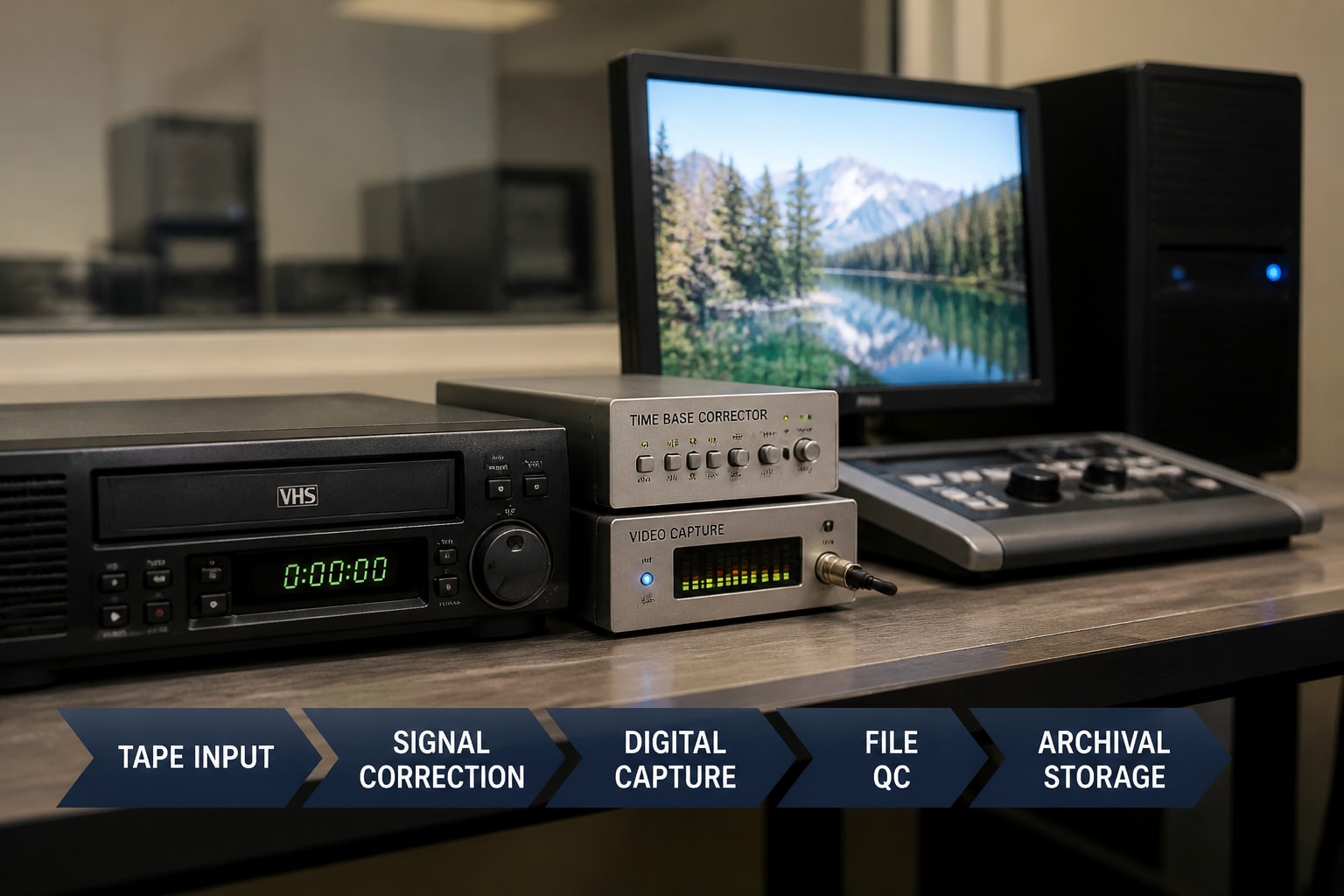
- Time base correction can matter for unstable analog tapes. See our explanation of TBC and VHS.
Betamax is the format where equipment is hardest to source. A serviced deck makes the difference between a clean transfer and a damaged tape. VCR Supply offers an inspected Sony SL-2700 Betamax deck for rent, or you can send in your own unit for diagnostics and repair.
Decks wear out as belts stretch, heads clog, and idler tires harden. When a deck starts eating tapes or producing tracking errors, VHS video tape repair guidance can help you tell whether the fault is in the machine or the cassette.
FAQ
What is video tape called?
A video tape is called a videotape, a video cassette, or a VCR tape, and each specific type has a format name such as VHS, Betamax, Video8, or MiniDV. The format name matters most because it determines which deck can play the tape.
Is a VHS tape the same as a video tape?
A VHS tape is one kind of video tape, not the whole category. Video tape includes many other formats, from Betamax and U-matic to Hi8, Digital8, and MiniDV, each with its own cassette and deck requirements.
Start by sorting your collection by cassette size and logo, then set aside any tape that shows mold, residue, or a cracked shell before it goes near a deck. If your shop handles Betamax, MiniDV, S-VHS, or Digital8 and needs reliable playback equipment, VCR Supply rents and repairs professional videotape decks, with rentals starting at $99 per month, a $45 diagnostic fee for repairs, and maintenance contracts to reduce downtime. For Betamax work specifically, ask about the serviced Sony SL-2700 and keep your transfers moving.