VCR Recorder Guide: Choosing and Using One Today
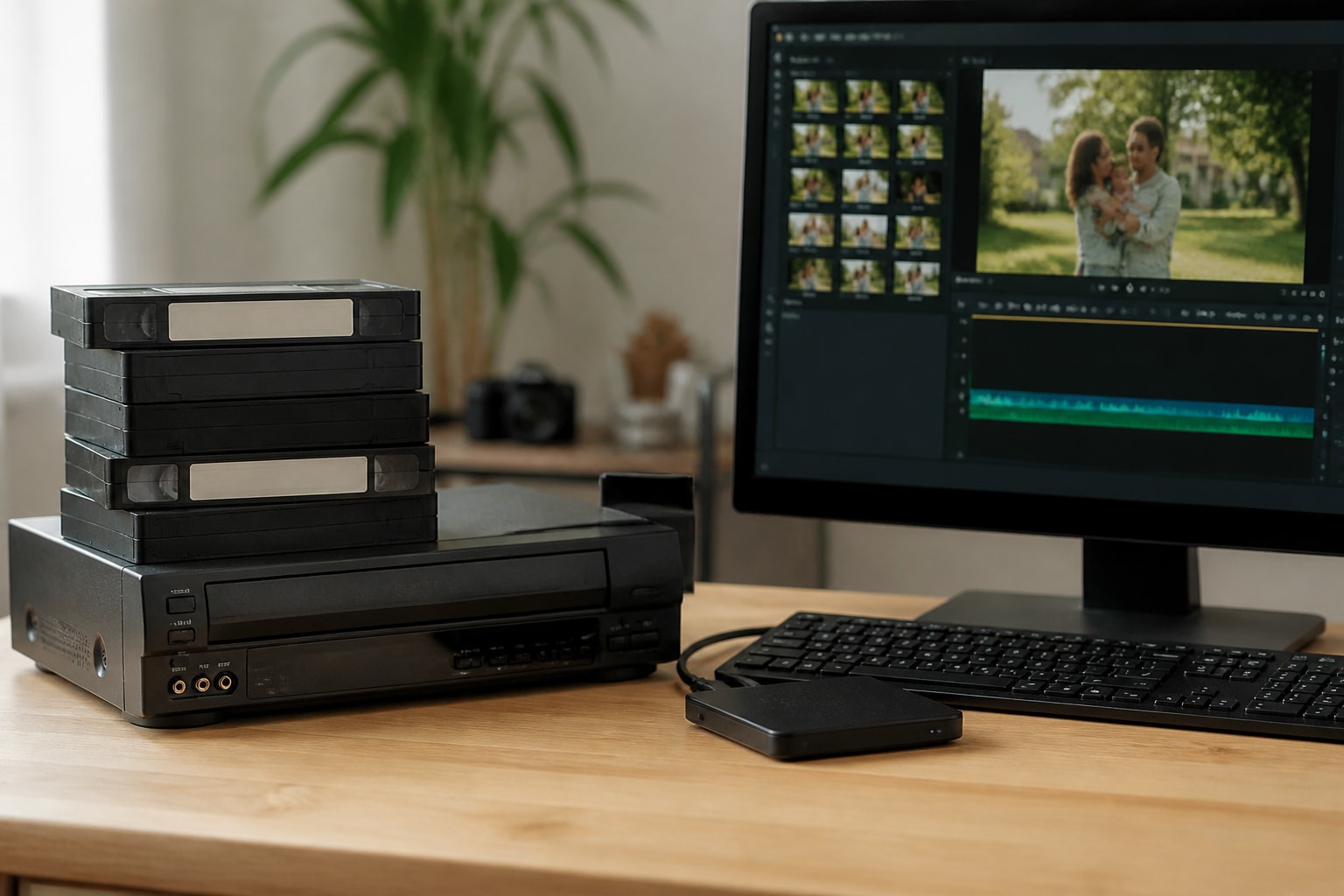
A VCR recorder is a videotape deck that plays and records analog video on cassettes such as VHS, and in 2026 it is still the only practical way to watch or preserve tapes that were never digitized. New units are scarce, so most buyers are choosing among refurbished consumer decks, used professional machines and rented equipment. This guide explains what to look for, how to connect one, what it costs to keep one running, and when repair makes more sense than replacement.
What a VCR Recorder Does and Why People Still Want One
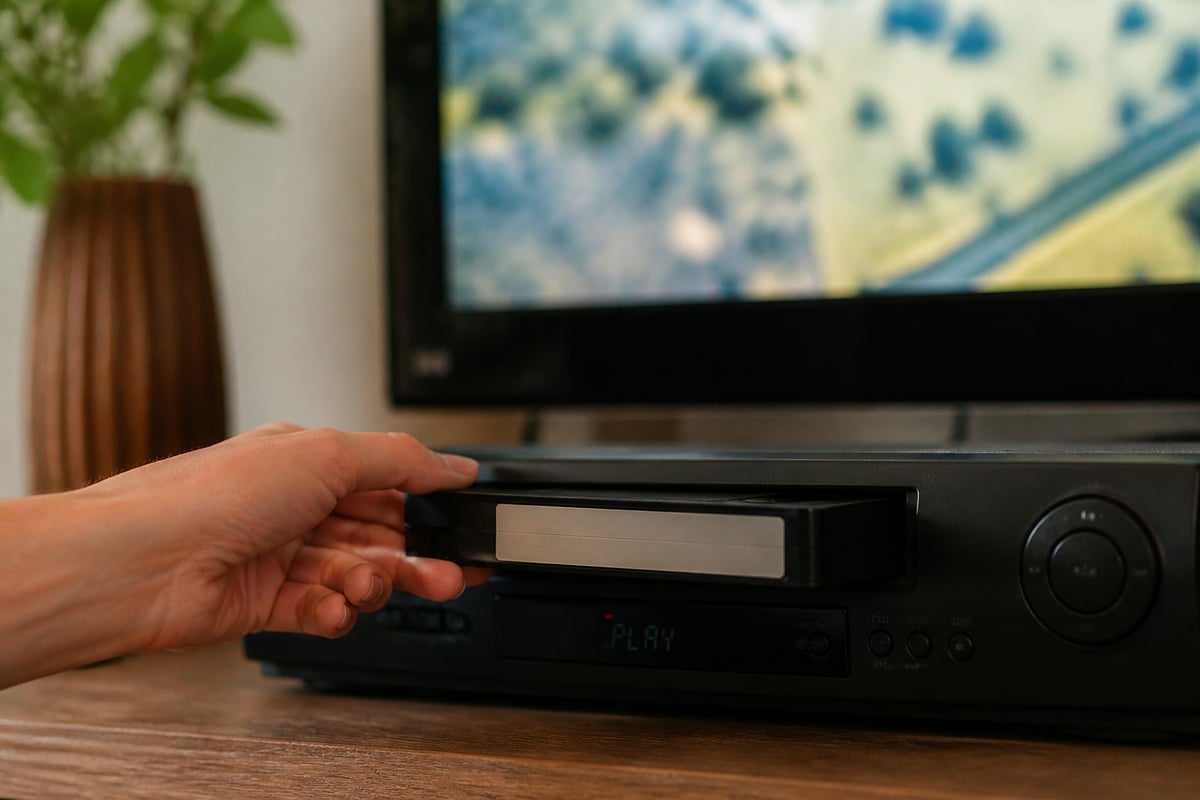
A VCR recorder reads magnetic tape through a spinning head drum, converts the signal to video and audio, and sends it to a television or capture device. Most also record, which is the feature that separates a full recorder from a playback-only deck.
The demand today comes from a few predictable groups:
- Families with home movies recorded on VHS, VHS-C or Hi8 in the 1980s and 1990s
- Digitization shops that convert tape to digital files for customers
- Archivists, schools and libraries with legacy collections
- Collectors who want to watch commercial releases as originally issued
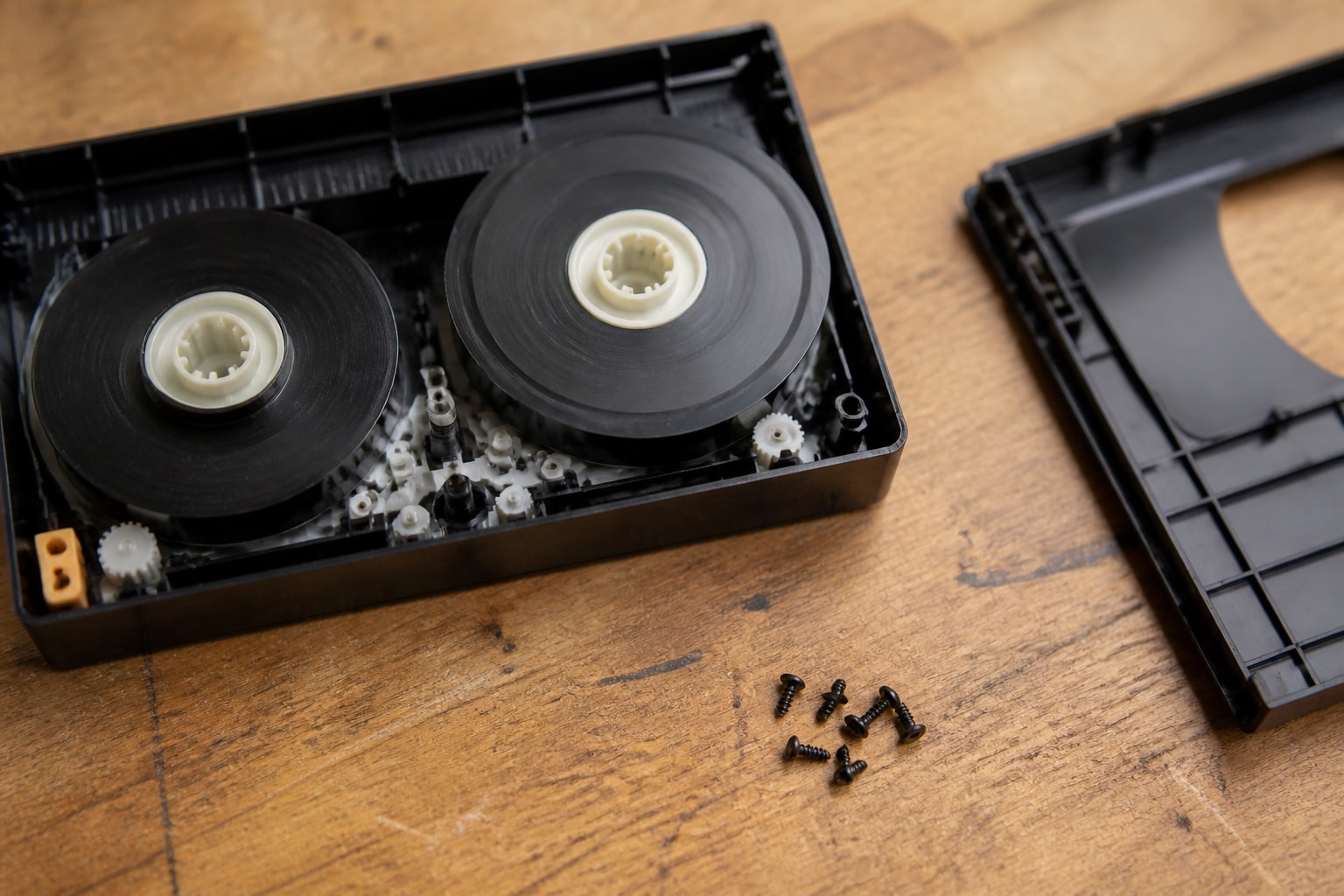
Tape does not last indefinitely. Oxide shedding, mold and stretched film all worsen with time, so the machine you use matters as much as the tape itself. A deck with misaligned heads or a worn tape path can damage a cassette that has already survived thirty years.
Do People Still Make VCRs?
New VCRs are essentially no longer manufactured, so supply now comes from existing stock, refurbishers and the used market.
This changes how you should shop. Instead of choosing from current models, you are choosing from a finite pool of machines that were built between roughly 1985 and 2010 and have aged to varying degrees. Belts harden, rollers glaze, capacitors drift and lubricants dry out. A machine that looks pristine can still be mechanically tired.
Professional decks are in a similar position. Formats such as S-VHS, MiniDV and Digital8 were supported by a handful of manufacturers, and parts are now harvested from donor units. For a more detailed look at how the original consumer machines developed, the history of the first VCR is a useful reference.
Choosing a VCR Recorder: What to Check Before You Buy
The best VCR recorder for your needs depends on the tape format, the intended use and whether you need clean transfers or simply casual playback. Start with format, because a standard VHS deck cannot play every cassette type.
Match the deck to the tape format
- VHS: Plays standard VHS cassettes. Nearly every consumer deck handles this.
- S-VHS: Needs an S-VHS deck for full-quality playback of S-VHS recordings. A standard deck cannot read them properly. See the comparison of VHS and S-VHS for the differences.
- VHS-C: Plays in a standard deck only through a cassette adapter.
- Betamax: Requires a Betamax deck. The formats are not interchangeable, as outlined in this explanation of VHS and Betamax.
- MiniDV and Digital8: Need dedicated decks, covered in guides to the MiniDV tape deck and Digital8 tape.
Features worth paying for
For digitization work, four features have the largest effect on quality:
- Four-head or six-head design. Hi-fi audio and cleaner freeze-frame depend on head count.
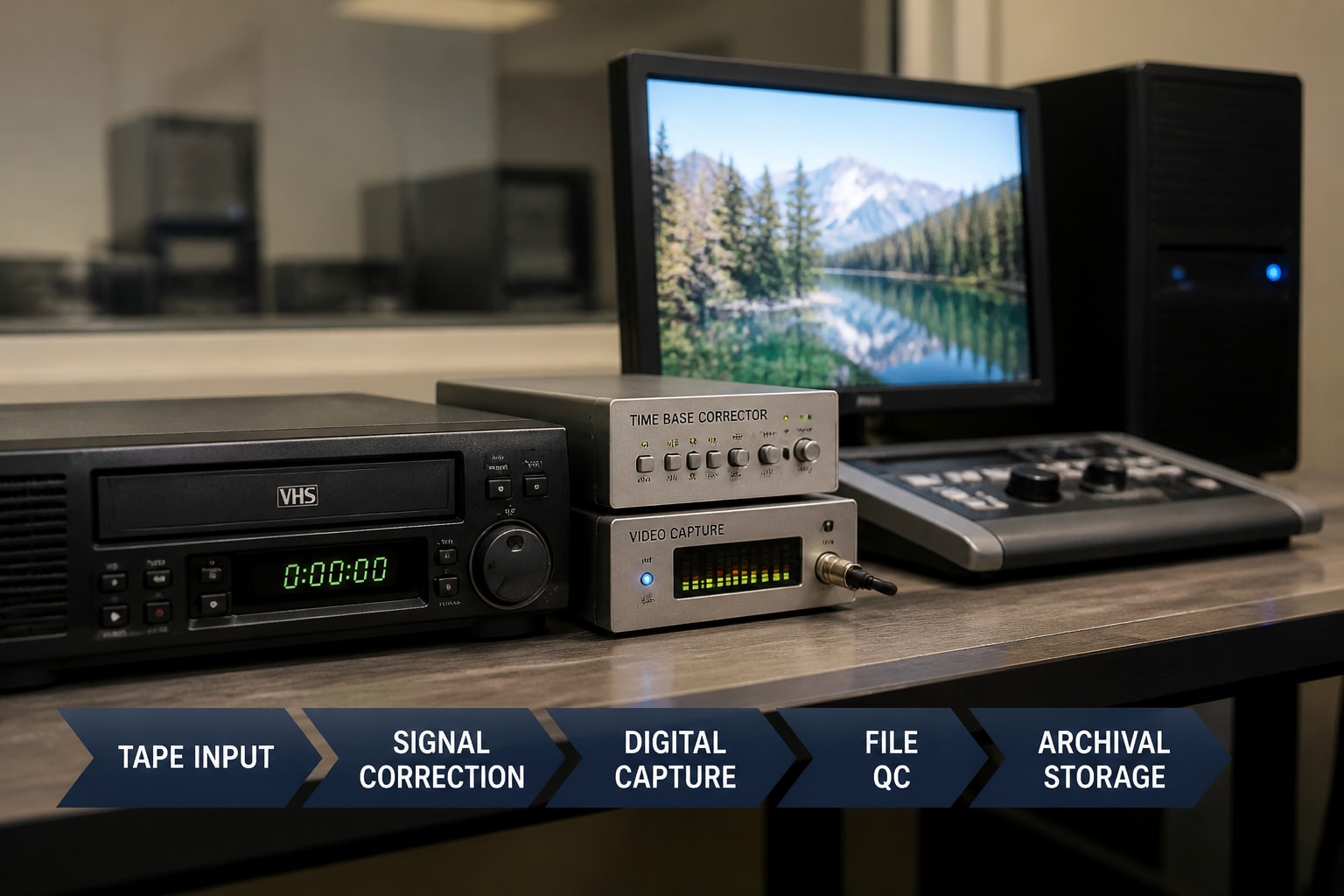
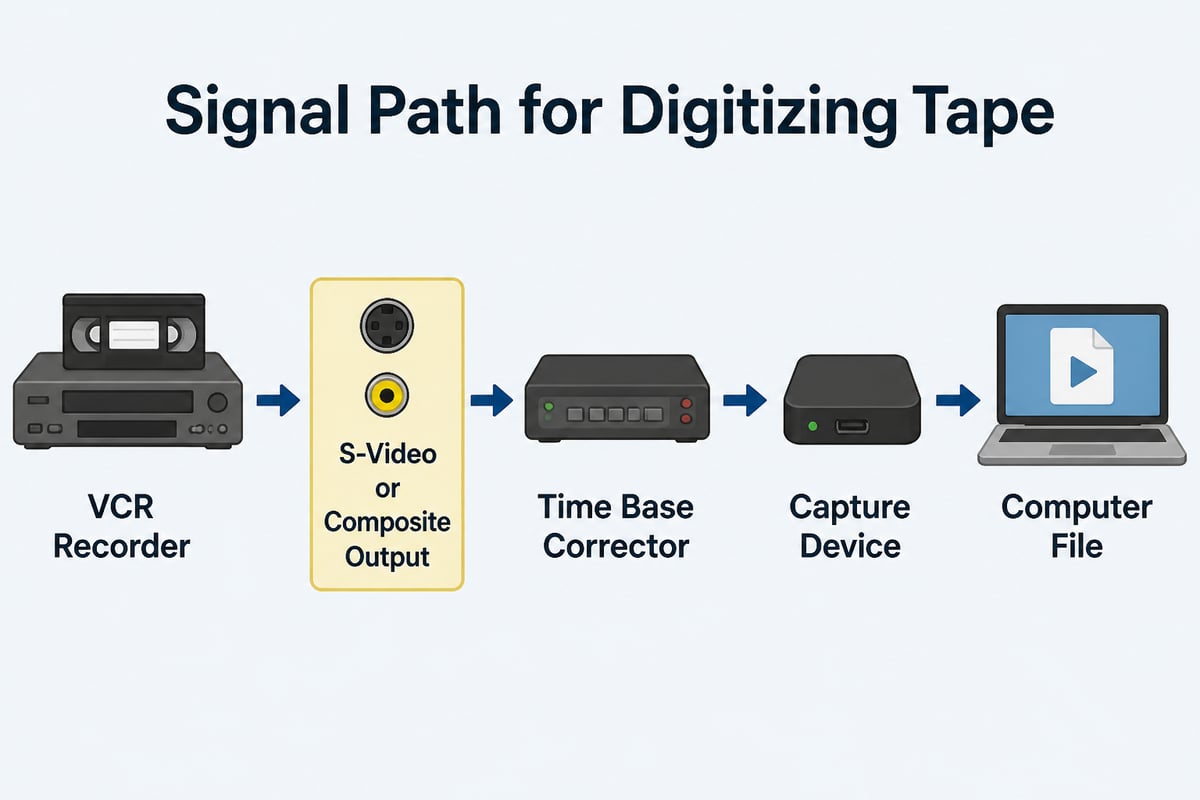
- Built-in time base corrector (TBC). A TBC stabilizes timing errors that cause wobble and tearing in captured video. Standalone options are discussed in this guide to TBC for VHS.
- S-Video output. This keeps color and brightness separate and produces a sharper image than composite.
- Manual tracking control. Older tapes often need adjustment to eliminate noise bars.
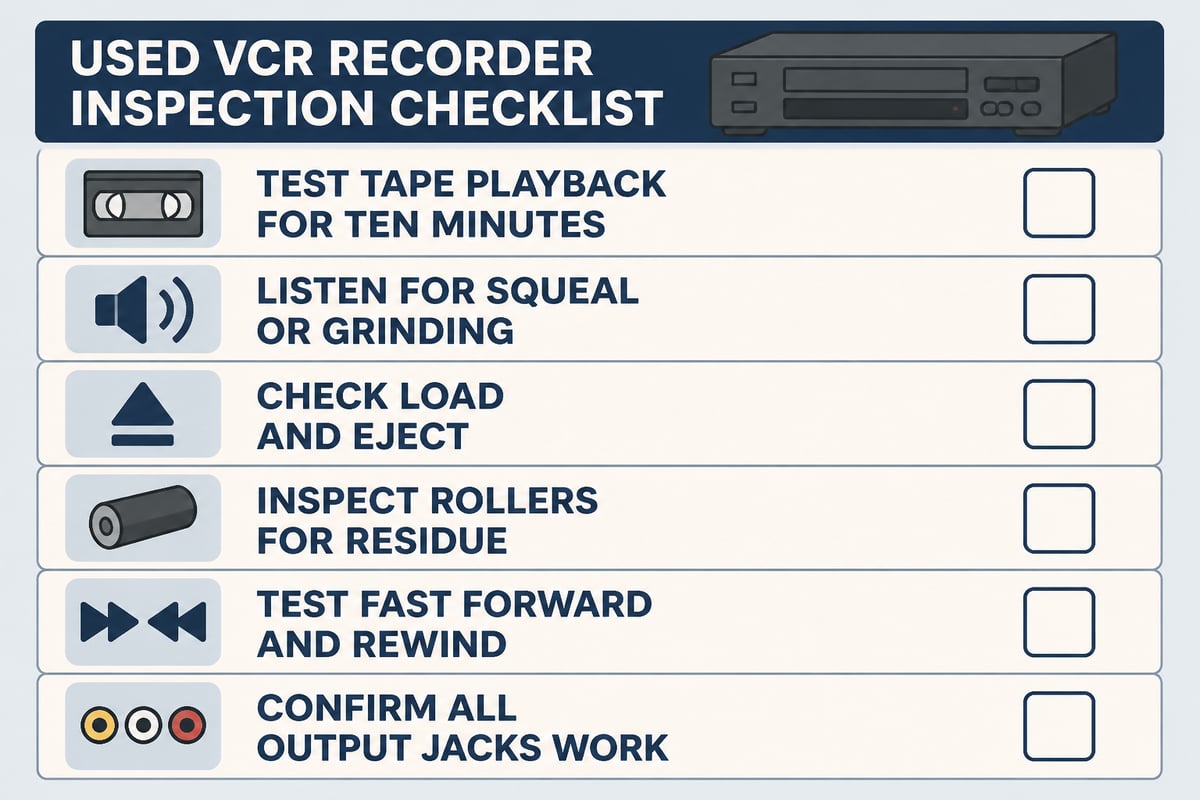
Inspection checklist for used units
- Insert a test tape and let it play for at least ten minutes
- Listen for squealing, grinding or intermittent speed changes
- Check that the tape loads and ejects without hesitation
- Look at the tape path for visible residue or sticky rollers
- Test fast forward and rewind for consistent speed
- Confirm that all output jacks carry a signal
Where to Buy a VHS Player or VCR Recorder
You can buy a VCR recorder from online marketplaces, thrift stores, estate sales, electronics refurbishers and, for professional formats, specialist equipment dealers. Each source carries a different level of risk.
Online marketplaces offer the widest selection and the most listings for niche formats, but condition claims vary and returns are often limited. Thrift stores and estate sales are cheap, though units are untested and frequently sit unused for years. Refurbishers cost more but usually test and clean machines first.
For commercial work, buying outright carries a hidden cost. Every deck you own eventually needs service, and parts availability keeps shrinking. Many shops find that renting a deck for a project or a busy season is more economical than owning a machine that may sit idle between jobs.
Can You Play a VHS in a VCR?
Yes, a standard VHS cassette plays in any working VCR, provided the cassette is a full-size VHS tape and the deck supports the tape speed it was recorded at. Problems arise only when the formats differ or the tape is damaged.
A few practical cautions apply:
- Never force a cassette. If it will not load, the mechanism or the cassette has a problem.
- Inspect tape before playing. Look for mold, cracked shells or loose tape.
- Confirm tape speed. SP, LP and EP recordings play on most decks, but some very old machines lack LP or EP support.
- Do not play damaged tapes in a good deck. Repair the cassette first. Detailed steps are in the guide to VHS tape repair.
Tapes that have been stored in damp or hot conditions deserve extra caution. Playing a moldy tape can transfer spores and residue to the heads and tape path, which then affects every cassette that follows.
Connecting a VCR Recorder to a TV or Capture Device
Connecting a VCR recorder takes three steps: pick the right output, use the matching cable and select the correct input on the receiving device. The right cable depends on what the deck offers.
| Connection | Quality | Typical use |
|---|---|---|
| Composite (yellow RCA) | Basic | Older TVs, quick playback |
| S-Video | Better | Capture cards, S-VHS decks |
| RF coaxial | Lowest | TVs with no other input |
For most modern displays, the practical route is a composite or S-Video connection into an adapter or capture device, since current TVs often lack analog inputs. Sony's support guidance on connecting a VCR or DVD player to a TV explains how cable choice depends on the player's output.
If you are routing a deck into a DVD recorder or similar device, check the manufacturer's support documentation for the correct line input selection step.
Are VCR Recorders Worth Anything?
Most consumer VCR recorders are worth little, while certain professional and specialty decks retain real value. Resale price depends on format, condition and demand rather than age alone.
Typical value ranges depend on category:
- Common consumer VHS decks: Low value, widely available
- High-end S-VHS and professional decks: Higher value, especially with a built-in TBC
- Betamax and rare formats: Variable, often driven by collector or archival demand
- Working MiniDV and Digital8 decks: Steady demand from digitization shops
Condition drives price more than anything else. A deck that has been serviced and tested will sell for noticeably more than an identical untested unit. Collectors also pay attention to original remotes, packaging and low-hour head drums.
For a professional shop, the question is less about resale and more about uptime. A deck that earns revenue every week is worth far more than its market price suggests.
Maintenance and Repair: Keeping a VCR Recorder Running
A VCR recorder needs periodic cleaning and mechanical service, and most failures trace back to worn belts, dirty heads, hardened rollers or dried lubricant. Regular upkeep helps prevent many common tape problems.
Routine care
- Clean heads only as needed, using proper cleaning methods rather than frequent abrasive cleaning tapes
- Keep decks dust-free and store them away from humidity
- Avoid playing tapes known to be moldy or shedding
- Allow decks to acclimate to room temperature before use
Common faults and what they usually mean
| Symptom | Likely cause |
|---|---|
| Snowy or noisy picture | Dirty or worn heads |
| Tape loads then ejects | Sensor, belt or loading mechanism fault |
| Audio dropout | Worn audio head or alignment drift |
| Chewed tape | Worn pinch roller or tension issue |
| Won't power on | Power supply or capacitor failure |
When a deck fails, repair is often more practical than hunting for a replacement, particularly with professional formats where substitutes are scarce. Bench diagnosis separates a simple belt replacement from a deeper electronic fault. For general background, the articles on VHS repair and video recorder repairs outline common issues.
Shops that depend on their equipment can use professional VCR and videotape deck repair from VCR Supply, which covers bench diagnosis, preventive service and mechanical and electronic repair of customer-owned professional tape decks. Preventive service can be easier to schedule than an emergency repair during a busy production week.
Renting, Owning or Repairing: Which Makes Sense?
Rent when demand is seasonal or the format is uncommon, own when you use a deck daily and have service access, and repair when a deck you already own is mechanically sound but worn. The right choice follows utilization and risk.
A quick way to decide:
- Estimate monthly tape volume. Low or irregular volume favors renting.
- Count backup options. A single deck with no spare is a business risk if it fails mid-project.
- Check parts availability for the format. Rarer formats favor renting or service contracts.
- Compare downtime cost to repair cost. If one lost week costs more than a service visit, maintenance contracts become attractive.
Digitization shops often combine approaches: they own one or two workhorse decks, rent additional units for peak periods and keep a maintenance arrangement in place. Product pages and contact details on the VCR Supply site are the right place to confirm which formats and terms are currently available.
FAQ
Where can I buy the VHS Player?
Used VHS players are sold through online marketplaces, thrift stores, estate sales and refurbishers. Refurbished units cost more but are usually tested, which matters because many used machines have aged mechanically.
Can I record onto a VHS tape with any VCR?
Only a deck with recording capability can record, and some units sold today are playback-only. Check the specifications or test the record function before purchase, and make sure the tape's record-protection tab has not been removed.
Is it better to repair an old VCR or replace it?
Repair is usually the better choice for professional or less common formats, since replacements are scarce and a serviced deck can run reliably for years. For a common consumer VHS deck that is cheap to replace, the repair cost may exceed the unit's value.
Start by listing every tape format in your collection or customer queue, since that determines which decks you actually need. If you run a digitization workflow and want to avoid downtime, VCR Supply rents professional decks and offers maintenance contracts to reduce interruptions. For a deck you already own, send it to professional VCR and videotape deck repair, where diagnosis carries a diagnostic fee.