VCR Repair Service Near Me: Professional Deck Solutions
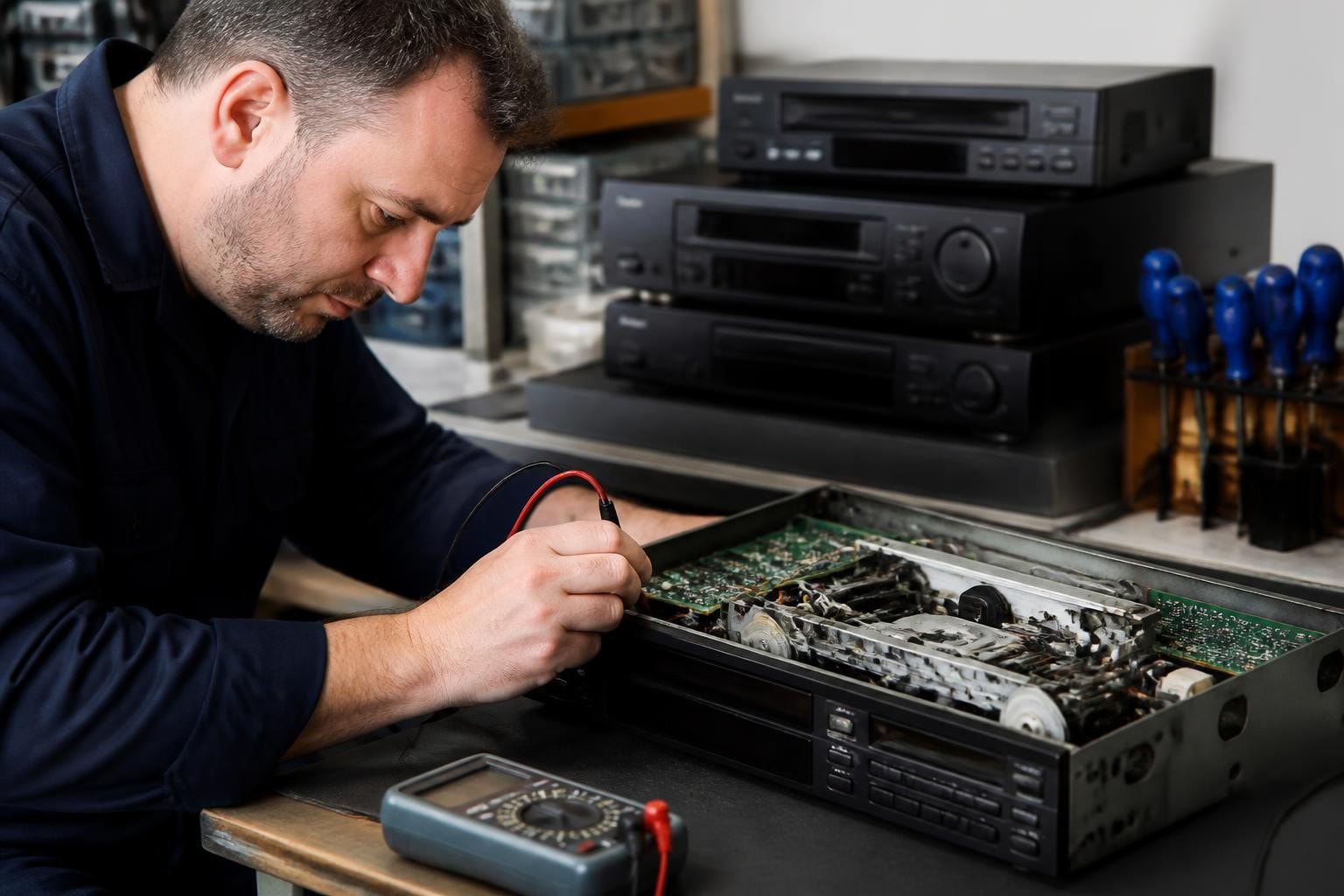
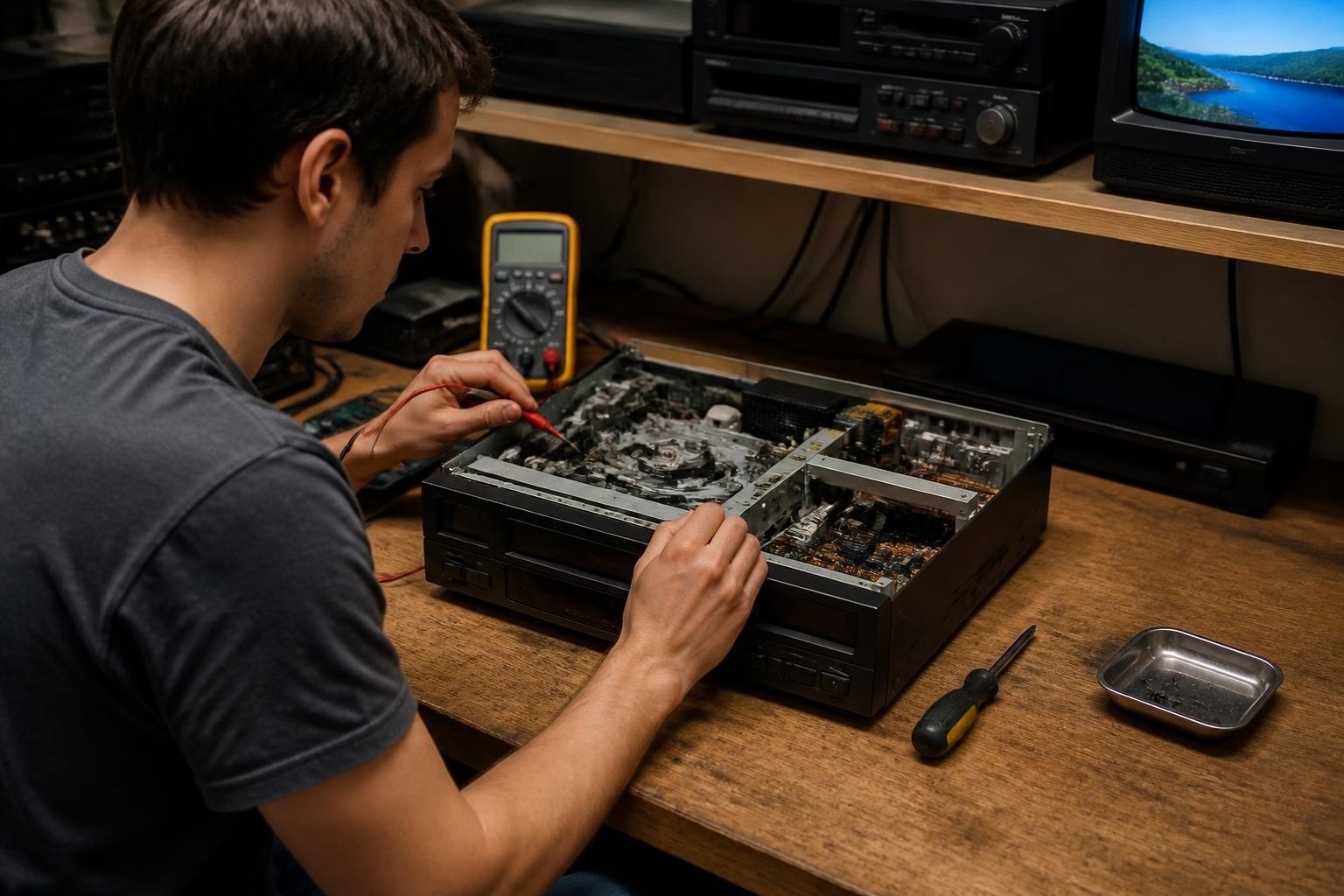
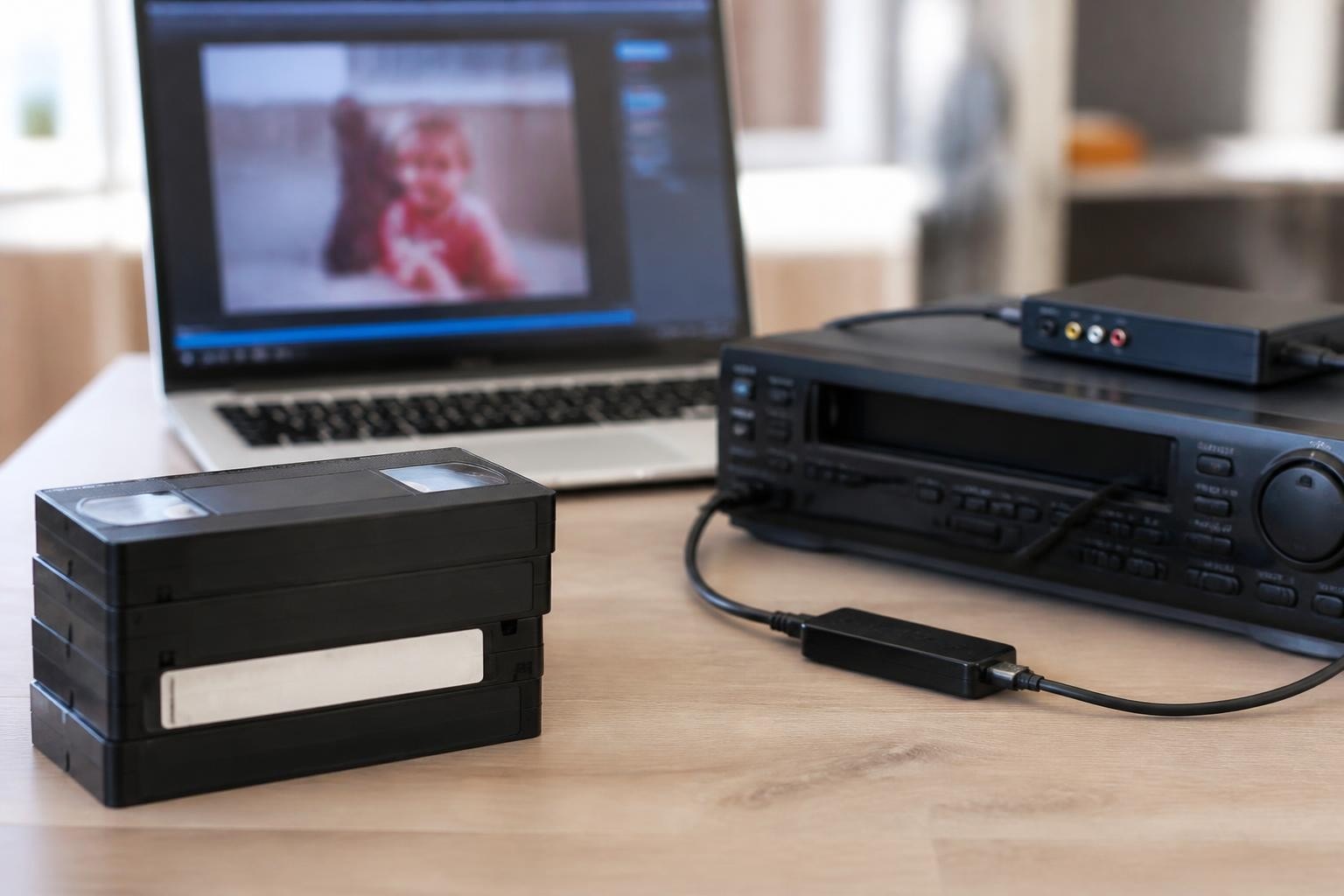
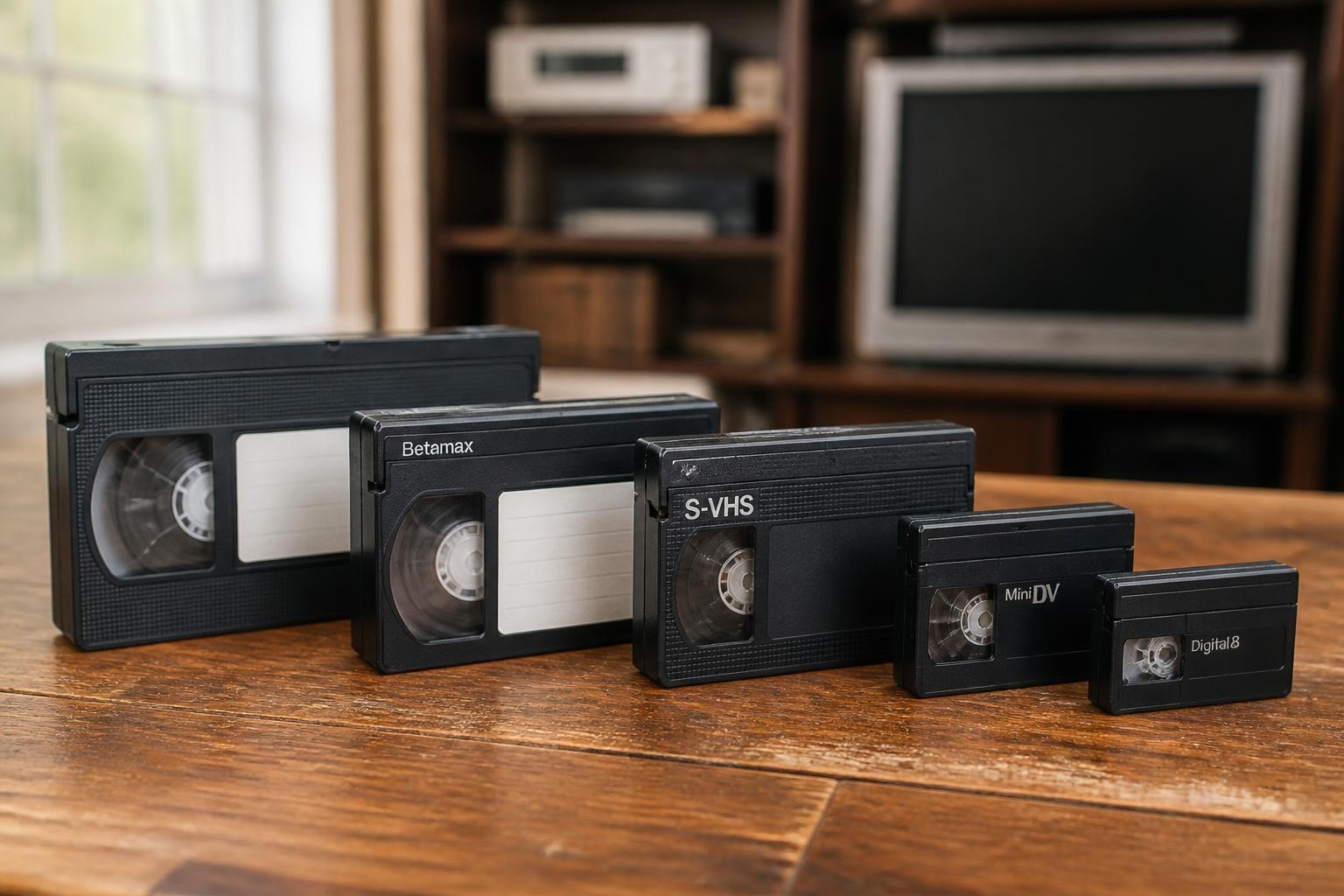
When your professional videotape equipment fails during a critical digitization project, finding a reliable vcr repair service near me becomes an urgent priority. Professional-grade VCR decks and videotape players are essential tools for digitization businesses, archivists, and media preservation specialists who rely on equipment that can handle various formats including MiniDV, S-VHS, Digital8, and Betamax. Unlike consumer-grade VCRs that were once commonplace in households, professional decks require specialized knowledge, genuine replacement parts, and technical expertise that most general electronics repair shops simply cannot provide. The challenge intensifies as these machines age and qualified technicians become increasingly scarce across the industry.
Understanding Professional VCR Repair Requirements
Professional videotape deck repair differs significantly from consumer VCR servicing in both complexity and stakes. Digitization shops and archival institutions depend on equipment that maintains precise tracking, optimal head alignment, and consistent playback quality across thousands of hours of operation.
Critical Components That Require Specialized Service
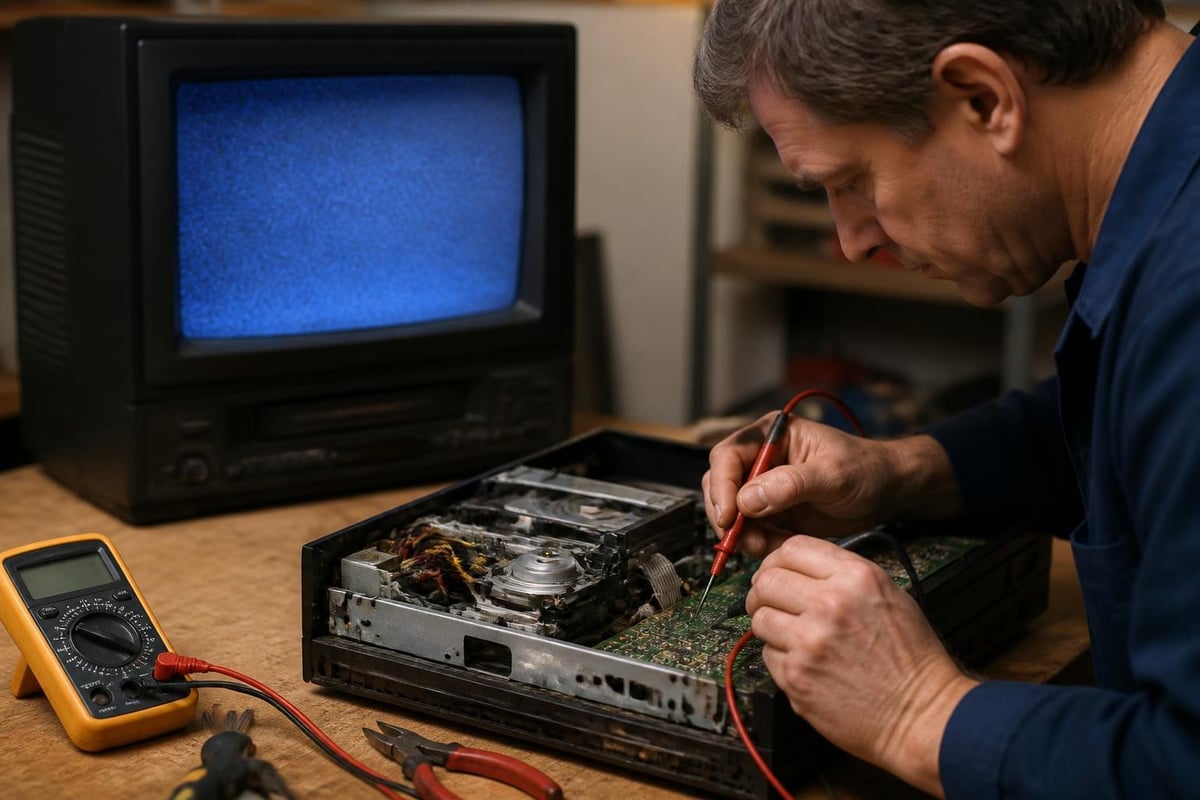
Professional VCR repair addresses multiple complex systems simultaneously. The video head drum assembly requires microscopic precision during alignment and cleaning. Capstan and pinch roller mechanisms must maintain exact tension to prevent tape damage. Transport motors, loading mechanisms, and optical sensors all work in concert to ensure reliable playback.
Common failure points include:
- Video head wear and contamination requiring cleaning or replacement
- Belts and rubber components that degrade over time
- Capacitor failures in power supply circuits
- Mechanical transport issues affecting tape loading and threading
- Control track and servo system malfunctions
The diagnostic process alone demands specialized test equipment and deep format knowledge. A professional vcr repair service near me must understand the nuances between S-VHS circuitry versus Betamax mechanisms, as each format presents unique repair challenges.
Format-Specific Technical Considerations
Different videotape formats require specialized repair approaches and component knowledge. MiniDV decks utilize digital recording technology with precision drum assemblies that demand microscopic alignment. Digital8 combines digital recording with Hi8 tape transport mechanisms, creating unique repair scenarios that require understanding both analog and digital systems.
| Format | Common Repair Issues | Specialized Tools Required | Average Repair Complexity |
|---|---|---|---|
| MiniDV | Drum assembly wear, digital board failures | Digital oscilloscope, alignment jigs | High |
| S-VHS | Head clogging, Y/C separation issues | FM deviation meter, vectorscope | Medium-High |
| Digital8 | Hybrid transport failures, codec errors | Digital analyzer, tape tension gauge | High |
| Betamax | Tracking drift, speed control problems | Beta alignment tape, servo analyzer | Medium |
Professional repair services must stock format-specific replacement parts that are no longer manufactured. Finding authentic Sony drum assemblies for professional Digital8 decks or JVC transport components for S-VHS machines requires extensive industry connections and parts inventory management.
Evaluating Local VCR Repair Options
Searching for "vcr repair service near me" yields varying results, from hobbyists to specialized professional service centers. Distinguishing between adequate consumer repair and professional-grade deck servicing requires careful evaluation of capabilities and expertise.
Key Qualifications to Verify
Technical certifications and experience matter significantly. Look for repair services with documented experience in professional broadcast and archival equipment. Technicians should demonstrate familiarity with service manuals, possess format-specific test equipment, and understand preservation-quality playback standards that align with Library of Congress preservation guidance for magnetic media.
Request specific information about:
- Years of experience with professional videotape decks
- Inventory of replacement parts for your specific formats
- Access to factory service documentation and schematics
- Calibration equipment for video and audio alignment
- Turnaround times and warranty coverage
A qualified vcr repair service near me should provide detailed diagnostic reports explaining failures, recommended repairs, and cost estimates before proceeding with work. Transparency in the repair process indicates professional standards and customer-focused service.
Red Flags in VCR Repair Services
Certain warning signs indicate a repair service may lack the expertise for professional deck work. Be cautious of services that cannot differentiate between consumer and professional equipment grades, lack format-specific knowledge, or cannot provide references from digitization businesses or archival clients.
Avoid repair services that:
- Refuse to provide itemized repair estimates
- Cannot explain diagnostic findings in technical detail
- Lack proper ESD (electrostatic discharge) protection protocols
- Suggest "universal" replacement parts for format-specific components
- Have no experience with your specific deck model or format
Understanding proper handling procedures for magnetic media becomes essential when evaluating whether a repair service can safely work with valuable archival tapes during testing and calibration.
The Economics of Repair Versus Replacement
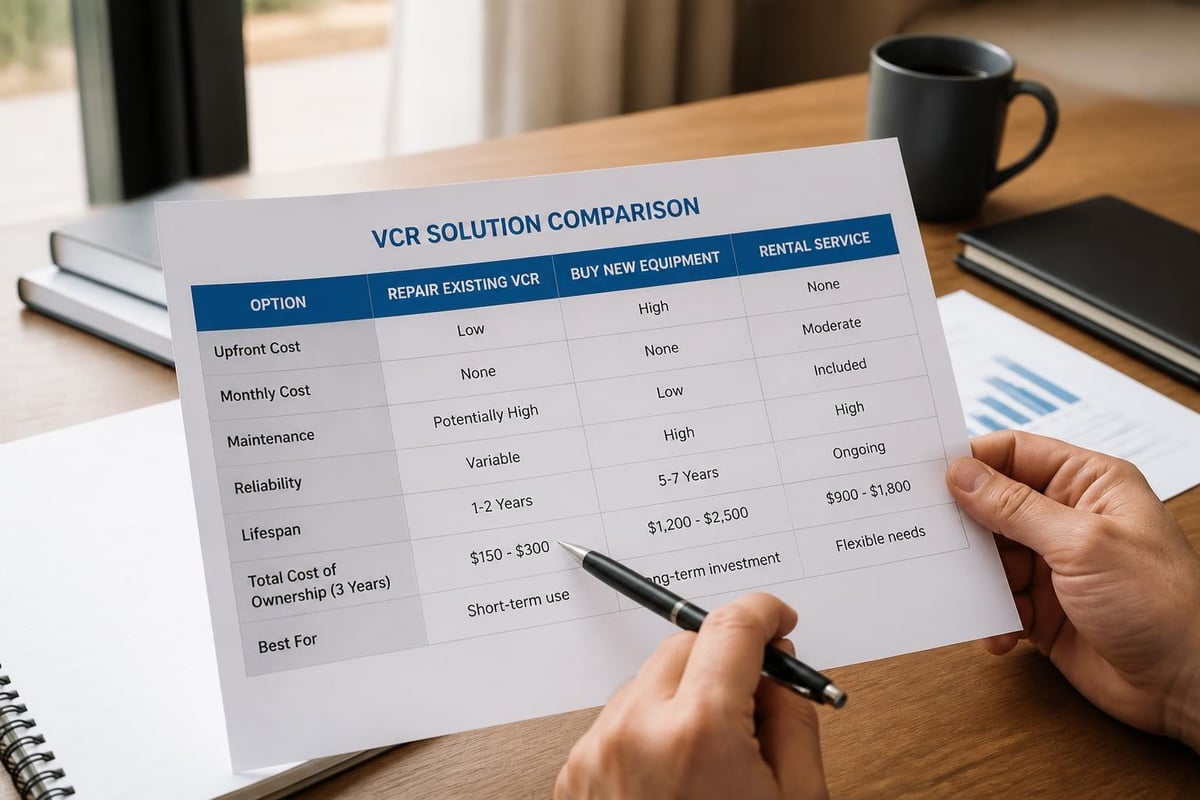
Professional videotape decks represent significant investments, and repair decisions carry financial implications beyond immediate fix costs. A comprehensive analysis compares repair expenses against equipment replacement, rental alternatives, and long-term operational reliability.
Cost-Benefit Analysis Framework
When a professional deck fails, evaluate total cost of ownership across multiple scenarios. A $300 repair on a deck worth $800 used may seem expensive until compared against finding, vetting, and purchasing replacement equipment. Factor in downtime costs for digitization businesses where every day without operational equipment represents lost revenue.
Consider these financial factors:
- Diagnostic fee (typically $45-$75 for professional assessment)
- Parts costs for format-specific components
- Labor charges for complex repairs
- Shipping costs if local vcr repair service near me options are unavailable
- Opportunity cost of equipment downtime
- Probability of additional failures within 12 months
VCR maintenance contracts offer predictable costs and reduced downtime through preventive service, potentially eliminating emergency repair situations entirely. Regular maintenance extends equipment lifespan and maintains optimal performance for critical digitization work.
When Rental Makes More Sense Than Repair
For digitization shops facing extended repair timelines or uncertain equipment reliability, professional deck rental provides immediate access to calibrated, maintained equipment. Starting at $99 per month, rental services eliminate capital expenditure while ensuring consistent equipment availability.
| Option | Upfront Cost | Monthly Cost | Downtime Risk | Best For |
|---|---|---|---|---|
| Emergency Repair | $200-$600 | $0 | 1-3 weeks | Single deck failures, recent equipment |
| Equipment Purchase | $500-$2000 | $0 | Immediate (if in stock) | Long-term needs, multiple format requirements |
| Monthly Rental | $0 | $99-$299 | None | Project-based work, testing formats, backup capacity |
| Maintenance Contract | $150-$400 | $25-$75 | Minimal | High-volume operations, mission-critical equipment |
Rental arrangements also provide flexibility when working with obscure formats or testing digitization workflows before committing to equipment purchases. Many businesses maintain a core equipment fleet while renting specialized decks for specific format requirements.
Maintenance Strategies to Minimize Repair Needs
Proactive maintenance significantly reduces the frequency and severity of repair requirements for professional videotape equipment. Implementing systematic care protocols extends equipment lifespan and maintains consistent playback quality essential for professional digitization work.
Preventive Maintenance Protocols
Regular cleaning schedules prevent most common failures. Video heads require cleaning after every 20-30 hours of operation or when playback quality degrades. Use appropriate cleaning solutions and procedures specific to each format, as improper cleaning techniques can damage delicate head assemblies. The iFixit repair documentation provides valuable guidance for proper maintenance procedures.
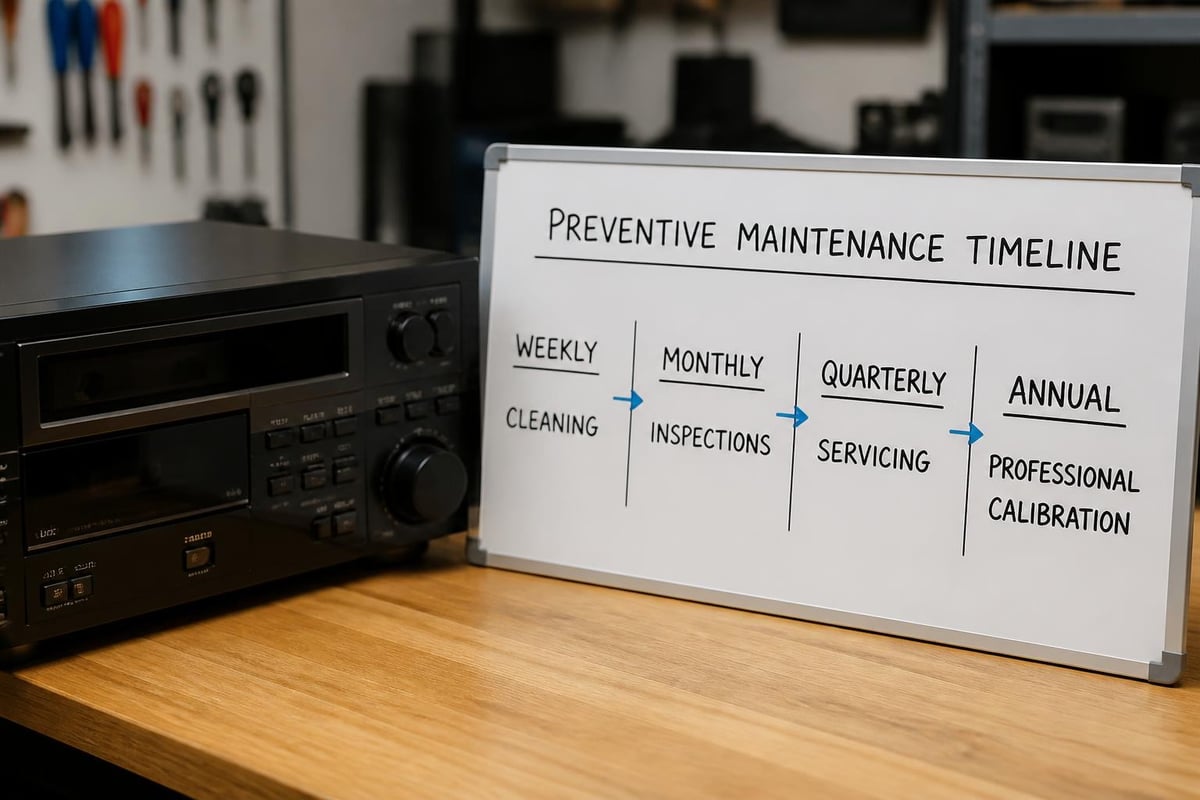
Establish these maintenance intervals:
- Weekly: Visual inspection of tape path, head cleaning as needed
- Monthly: Comprehensive cleaning of video heads, capstan, and pinch rollers
- Quarterly: Lubrication of mechanical assemblies, belt tension verification
- Annually: Professional alignment check, capacitor assessment, transport calibration
Environmental controls protect equipment from premature failure. Maintain operating environments between 60-75°F with 30-50% relative humidity, conditions that also align with proper video storage practices for the tapes themselves.
Recognizing Early Warning Signs
Identifying developing problems before complete failure allows planned repairs rather than emergency service. Tracking performance metrics helps establish baseline equipment behavior and detect degradation patterns.
Monitor these performance indicators:
- Video signal quality (noise, dropouts, tracking stability)
- Audio fidelity and channel balance
- Transport smoothness during loading and playback
- Unusual mechanical sounds or vibrations
- Inconsistent tape threading or ejection behavior
When performance degrades gradually, scheduling preventive repair through a vcr repair service near me prevents sudden failures during critical projects. Many issues caught early require only minor adjustments or component replacements rather than extensive overhauls.
Geographic Challenges in Finding Specialized Repair
The scarcity of qualified VCR repair technicians creates geographic barriers for many digitization businesses and archival institutions. As the videotape era recedes further into history, specialized repair expertise concentrates in fewer locations, complicating local service access.
National Service Networks and Shipping Solutions
When local vcr repair service near me searches yield no qualified results, national repair services with mail-in programs provide alternatives. Reputable services offer shipping instructions, proper packaging guidance, and insured transit to protect valuable equipment during transport.
Shipping considerations include:
- ESD-safe packaging materials for electronic components
- Adequate cushioning to prevent transport damage
- Insurance coverage matching equipment replacement value
- Clear documentation of observed symptoms and failures
- Removal of tapes before shipping to prevent damage
Some specialized repair centers offer expedited service for time-sensitive projects, though premium charges apply. Establishing relationships with distant repair services before emergencies occur streamlines the process when equipment failures demand immediate attention.
Building Repair Relationships Before Crisis
Proactive relationship building with qualified repair services provides critical advantages when failures occur. Discussing equipment configurations, obtaining baseline diagnostics, and establishing service accounts during normal operations eliminates delays during emergencies.
Research and vet potential repair partners by requesting:
- Sample diagnostic reports from similar equipment repairs
- References from other digitization businesses or archives
- Detailed explanations of their parts sourcing capabilities
- Service level agreements and turnaround commitments
- Pricing structures for common repair scenarios
Professional VCR equipment rental services often maintain repair capabilities or partnerships, providing integrated solutions for equipment access and maintenance needs.
Professional-Grade Equipment Considerations
Understanding the distinction between consumer and professional videotape equipment clarifies why specialized repair services command premium pricing and why general electronics repair shops cannot adequately service professional decks.
Engineering Differences That Impact Repair
Professional decks incorporate substantially more robust components, modular construction for serviceability, and precision adjustments unavailable in consumer units. Broadcast-quality S-VHS deck rentals exemplify equipment built for thousands of operational hours rather than hundreds.
Professional deck advantages:
- Metal transport mechanisms versus plastic consumer components
- Replaceable video head assemblies rather than sealed units
- Professional-grade audio circuits with balanced outputs
- Time code readers and frame-accurate control
- Modular circuit boards enabling component-level repair
These engineering differences mean that professional deck repair requires access to service manuals, alignment procedures, and calibration specifications that consumer equipment never provided. A vcr repair service near me claiming professional deck expertise should demonstrate familiarity with these technical requirements.
Format Obsolescence and Parts Availability
As manufacturers discontinued videotape equipment production, replacement parts inventory became finite. Critical components like video head drums, RF modulators, and format-specific integrated circuits face increasing scarcity.
| Component Type | Availability Status | Alternative Solutions | Price Trend |
|---|---|---|---|
| Video Head Drums | Limited new-old-stock | Refurbished from donor units | Rising 15-25% annually |
| Drive Belts | Aftermarket available | Generic sizing, some compromise | Stable |
| Capacitors | Modern equivalents available | Electronic component suppliers | Stable to declining |
| ICs and Processors | Scarce for proprietary designs | Salvage from parts units required | Rising 30-50% annually |
Repair services maintaining parts inventory for professional decks represent valuable resources worth preserving through ongoing relationships. When seeking a vcr repair service near me, inquire specifically about parts access for your deck models.
Environmental and Disposal Considerations
When equipment reaches end-of-life and repair becomes economically unfeasible, responsible disposal protects the environment and complies with regulatory requirements for electronic waste containing hazardous materials.
Electronic Waste Regulations
VCR equipment contains components requiring specialized disposal procedures. Circuit boards include lead solder, power supplies contain capacitors with potentially hazardous materials, and older equipment may incorporate components with environmental concerns addressed by EPA electronic waste guidelines.
Responsible disposal requires:
- Identification of certified e-waste recyclers in your jurisdiction
- Data security considerations for decks with internal memory
- Component recovery for parts inventory when economically viable
- Documentation of disposal for regulatory compliance
- Separation of hazardous components per local regulations
Some repair services offer trade-in programs or parts harvesting from irreparable units, extending the useful life of scarce components while ensuring environmentally responsible disposal of remaining materials.
Balancing Preservation and Sustainability
The tension between preserving videotape playback capability and managing obsolete equipment inventory requires strategic decision-making. Maintaining excessive backup equipment inventory ties up capital and storage space, while insufficient backup capacity risks project delays when primary equipment fails.
Digitization businesses should establish clear criteria for equipment retention, repair investment limits, and disposal timelines. Understanding media preservation principles helps contextualize equipment decisions within broader collection management strategies.
Alternative Service Models
Traditional repair-when-broken approaches represent only one equipment management strategy. Alternative models provide different risk profiles and financial structures that may better align with specific business operations.
Maintenance Contracts and Preventive Service
Scheduled maintenance contracts shift equipment management from reactive to proactive, reducing unexpected downtime and extending equipment lifespan. Professional maintenance programs include regular cleaning, alignment verification, and component replacement before failure occurs.
Typical maintenance contract benefits:
- Priority service scheduling and expedited turnaround
- Discounted repair rates for covered equipment
- Regular performance reporting and trend analysis
- Parts inventory management and advance ordering
- Predictable monthly expenses versus variable repair costs
For high-volume digitization operations, maintenance contracts reduce total cost of ownership by preventing catastrophic failures and maintaining optimal performance. When evaluating a vcr repair service near me for maintenance contracts, verify their capacity to support your equipment volume and format diversity.
Hybrid Ownership and Rental Strategies
Combining owned equipment with strategic rental addresses peak capacity needs and format diversity without excessive capital investment. Core equipment for primary formats justifies purchase and maintenance investment, while specialty format deck rentals provide economic access to less-frequently-needed playback capability.
This approach optimizes:
- Capital allocation toward highest-use equipment
- Flexibility for project-specific format requirements
- Risk distribution across ownership and rental models
- Access to current equipment without depreciation concerns
Many digitization businesses maintain relationships with both a local vcr repair service near me for owned equipment and national rental services for supplemental capacity and specialized formats.
Professional videotape deck repair requires specialized knowledge, format-specific expertise, and access to increasingly scarce replacement parts that general electronics repair cannot provide. Whether you need emergency repair, preventive maintenance, or flexible rental solutions for your digitization operation, VCR Supply offers comprehensive services including professional deck repair starting with a $45 diagnostic fee, maintenance contracts to minimize downtime, and rental options from $99 per month for MiniDV, S-VHS, Digital8, and Betamax formats.