VHS and Betamax: The Format War That Changed Video
The rivalry between vhs and betamax stands as one of the most significant technology battles in consumer electronics history. Throughout the late 1970s and 1980s, these two videocassette formats competed fiercely for dominance in the home video market, with lasting implications that extend far beyond their original consumer applications. For digitization professionals today, understanding the technical distinctions and historical context of these formats remains essential, as countless archival projects, preservation initiatives, and client transfers still depend on accessing content stored on these aging media.
The Technical Origins of Two Competing Standards
Sony introduced Betamax in 1975 as the first widely available home videocassette format, designed with a focus on picture quality and compact cassette design. The format utilized a sophisticated tape path and high-quality video heads to deliver superior resolution compared to earlier consumer video systems. One year later, JVC launched VHS (Video Home System) with a different engineering philosophy that prioritized recording time and manufacturing partnerships over absolute picture quality.
Core Technical Specifications
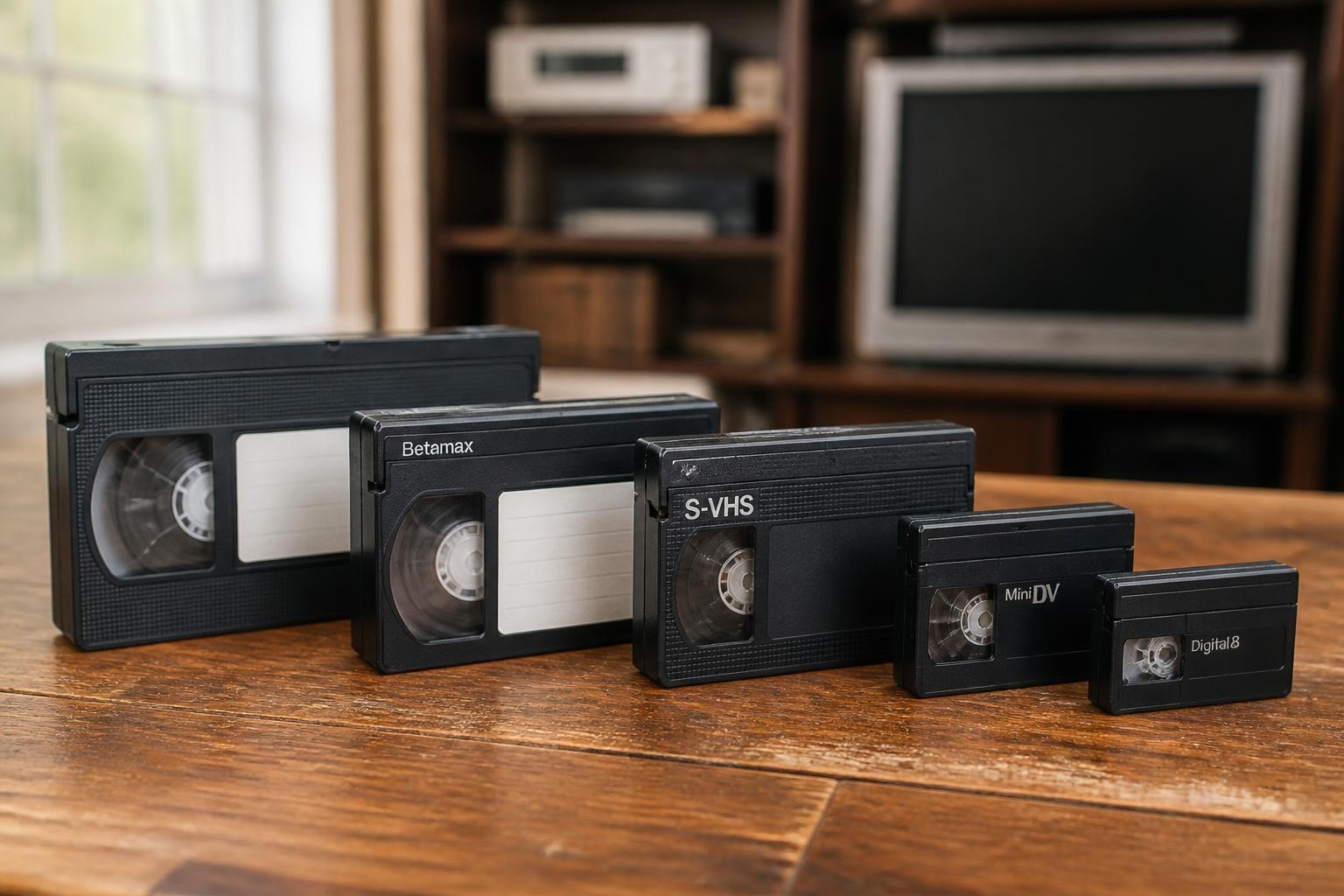
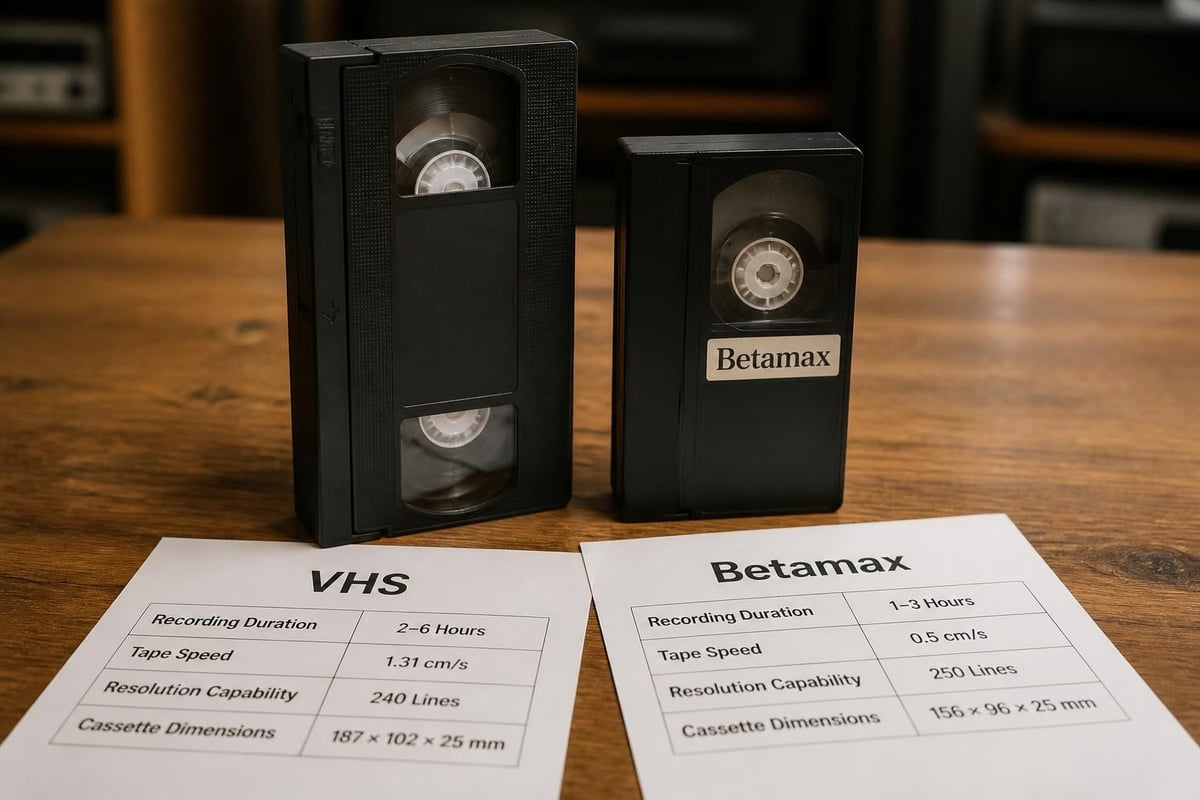
The fundamental differences between vhs and betamax shaped their respective capabilities and market positioning. Betamax cassettes measured smaller than VHS tapes, with dimensions of approximately 156mm × 96mm × 25mm compared to VHS's 188mm × 104mm × 25mm. This size difference reflected Sony's commitment to portable, space-efficient design.
Recording time differentiated the formats significantly:
- Early Betamax models offered only one hour of recording time
- VHS launched with two-hour capacity, later expanding to six hours in EP mode
- Betamax eventually extended to five hours but never matched VHS's maximum duration
- Professional Betamax variants prioritized quality over extended recording
The U.S. National Archives provides detailed specifications for identifying and understanding the physical characteristics of both formats, which proves invaluable for digitization professionals working with mixed tape collections.
Video Quality and Recording Methods
Betamax employed a superior video recording mechanism that resulted in measurably better horizontal resolution. Testing revealed Betamax could deliver approximately 250 lines of horizontal resolution in standard mode, while VHS typically achieved 240 lines. Though this difference seems modest, videophiles and professionals noticed the quality advantage in side-by-side comparisons.
The tape speed told an important story about each format's priorities. Betamax ran tape at higher speeds, contributing to better image quality but limiting recording duration. VHS engineers achieved longer recording times through slower tape speeds and more efficient track utilization, accepting some quality compromise for practical advantages consumers valued.
| Specification | Betamax | VHS |
|---|---|---|
| Horizontal Resolution | ~250 lines | ~240 lines |
| Tape Speed (SP mode) | 1.87 cm/s | 2.339 cm/s |
| Audio Quality | Hi-Fi stereo (later models) | Hi-Fi stereo (later models) |
| Cassette Size | Compact | Larger |
| Maximum Runtime (standard) | 5 hours | 6+ hours |
Market Dynamics and the Path to VHS Dominance
The competition between vhs and betamax extended far beyond technical specifications into strategic business decisions that ultimately determined market outcomes. Sony initially maintained tight control over Betamax licensing, limiting the number of manufacturers who could produce compatible equipment. This approach protected quality standards but restricted market penetration.
JVC pursued an opposite strategy by liberally licensing VHS technology to numerous manufacturers including Panasonic, Hitachi, Sharp, and others. This open approach created a network effect where more manufacturers meant more affordable players, wider retail availability, and greater consumer confidence in format longevity.
The Rental Market Catalyst
Video rental stores emerged as unexpected kingmakers in the format war. Store owners faced practical inventory decisions: stocking both formats doubled costs and complexity, while choosing one format maximized selection within budget constraints. The economic dynamics of network effects favored the format with the largest installed base, creating a self-reinforcing cycle.
VHS's longer recording time proved decisive for rental applications. Movies could fit on a single VHS tape, while some films required two Betamax cassettes, creating inventory and customer experience challenges. This practical advantage accelerated VHS adoption among rental outlets, which in turn influenced consumer purchasing decisions.
Key factors in VHS market victory:
- Licensing strategy that expanded manufacturer partnerships
- Recording duration that accommodated full-length films
- Lower manufacturing costs that enabled competitive pricing
- Rental store adoption that built consumer momentum
- Marketing emphasis on convenience over technical superiority
The Betamax Legal Legacy
Beyond the format competition itself, Sony's Betamax created landmark legal precedent that continues shaping technology policy today. The 1984 Supreme Court case Sony Corp. of America v. Universal City Studios, commonly called the "Betamax case," established that manufacturers of recording devices aren't liable for potential copyright infringement by users, provided the devices have substantial non-infringing uses.
This decision proved foundational for subsequent technology innovations from DVRs to cloud storage services. The Stanford Law analysis of Betamax litigation demonstrates how this ruling enabled decades of digital innovation by protecting technology creators from liability for user actions.

Professional Applications and Broadcast Variants
While consumer vhs and betamax battled for living room dominance, professional variants of both formats found specialized applications in broadcast and production environments. Sony developed Betacam and Betacam SP, which became industry standards for electronic news gathering and studio production despite consumer Betamax's market defeat.
These professional formats shared the Betamax tape path and cassette form factor but employed component video recording and higher tape speeds for broadcast-quality results. Many digitization shops still encounter these professional variants when working with broadcast archives and corporate video collections. Understanding the relationship between consumer and professional formats helps when working with Betamax deck rentals for specialized transfer projects.
S-VHS and Super Betamax Enhancements
Both formats eventually introduced higher-quality variants targeting enthusiast and semi-professional markets. S-VHS (Super VHS) appeared in 1987 with improved resolution approaching 400 horizontal lines, finding applications in industrial video, wedding videography, and low-budget production. The format maintained backward compatibility with standard VHS while offering meaningful quality improvements for S-VHS deck applications.
Super Betamax never achieved the same market presence as S-VHS, arriving too late to reverse Betamax's consumer market decline. However, the technological improvements demonstrated that quality advances alone couldn't overcome established market momentum and network effects.
Preservation Challenges for Digitization Professionals
Today's digitization specialists regularly encounter both vhs and betamax tapes in archival and transfer projects. These aging formats present specific preservation challenges that require proper equipment and handling protocols. Tape degradation accelerates as these formats pass 30-40 years old, making timely digitization increasingly urgent for valuable recordings.
Common preservation issues include:
- Magnetic oxide shedding that clogs video heads
- Backing layer deterioration causing sticky shed syndrome
- Cassette mechanism failures from dried lubricants
- Tracking instabilities from tape dimensional changes
- Mold growth in tapes stored in humid conditions
The Preservation Self-Assessment Program guidelines offer detailed recommendations for assessing videotape collection condition and prioritizing digitization efforts based on format stability and content value.
Equipment Availability and Maintenance
Finding functional playback equipment represents a growing challenge as manufacturers discontinued both formats decades ago. Professional-grade decks that remain operational often require specialized maintenance to sustain reliable performance. Many digitization facilities maintain equipment inventories for multiple formats, but the expertise required for proper VCR repair becomes increasingly rare.
Rental options provide cost-effective access to professional-grade playback equipment for projects that don't justify permanent equipment purchases. This approach makes sense for facilities handling occasional legacy format transfers or testing equipment capabilities before committing to acquisitions.
Format Identification and Collection Assessment
Digitization professionals frequently encounter unlabeled tapes or collections containing mixed formats requiring identification before processing. While vhs and betamax cassettes differ noticeably in size, other factors including recording speed, audio tracks, and quality settings affect optimal playback configuration.
The British Film Institute's videotape overview provides cultural and technical context for working with videotape in archival settings, addressing both identification procedures and workflow considerations for heritage collections.
Physical Inspection Protocols
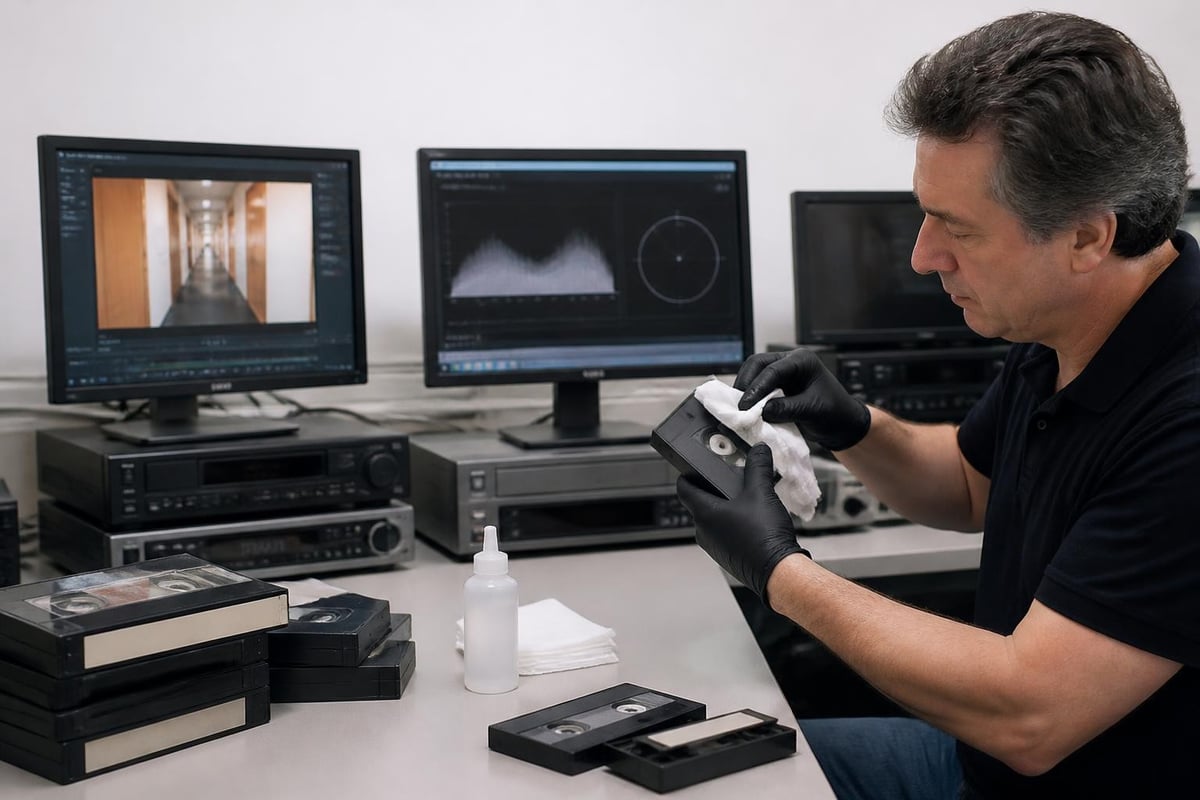
Proper tape assessment begins with external cassette examination, checking for damage, mold, or deterioration indicators. Opening cassettes for internal inspection should only occur in controlled environments with proper tools, as improper handling can damage tape or introduce contamination.
| Assessment Factor | What to Check | Why It Matters |
|---|---|---|
| Cassette Condition | Cracks, broken parts, label information | Determines handling requirements |
| Tape Pack | Evenness, tightness, visible damage | Indicates storage history and playback risk |
| Oxide Surface | Shedding, discoloration, debris | Predicts head clogging and transfer quality |
| Cassette Windows | Clarity, tape visibility | Enables visual inspection without opening |
Contemporary Relevance for Digitization Services
The vhs and betamax legacy extends into current digitization practice in multiple ways. Understanding these formats' technical characteristics informs proper playback configuration, quality assessment, and client communication about realistic outcome expectations. Many clients lack awareness of format differences and limitations, creating opportunities for educational service approaches.
Professional digitization facilities benefit from maintaining format-specific expertise and equipment access. While consumer-grade players suffice for basic home video transfers, archival and commercial projects often require professional decks with time base correction, manual tracking adjustment, and superior signal processing. These capabilities directly impact final digitization quality and client satisfaction.
The Federal Agencies digitization bibliography compiles technical resources and best practices specifically addressing videotape migration challenges, offering evidence-based guidance for establishing quality workflows.
Building Sustainable Equipment Strategies
Digitization businesses face strategic decisions about equipment acquisition, maintenance, and replacement. Purchasing used professional decks provides capabilities unavailable in consumer models, but requires technical expertise for evaluation and ongoing maintenance. Maintenance contracts help reduce equipment downtime by scheduling preventive service and ensuring rapid response when problems occur.
Rental arrangements offer flexibility for managing variable demand and accessing specialized equipment for particular projects. Starting at accessible monthly rates, rental services enable testing format capabilities and client demand before committing to equipment purchases. This approach particularly suits businesses expanding service offerings or handling format-specific projects with defined timelines.
Technical Specifications Impact on Digitization Outcomes
The engineering differences between vhs and betamax directly affect digitization results and workflow requirements. Betamax's superior resolution potential means properly maintained tapes played on quality equipment can yield noticeably better digital transfers than equivalent VHS sources. However, tape condition and storage history often matter more than theoretical format advantages.
Optimization factors for each format:
- Tracking adjustment: Critical for both formats but especially VHS long-play recordings
- Time base correction: Essential for stable digital capture from either format
- Head cleaning frequency: More critical with Betamax due to higher tape speed
- Playback speed verification: Ensuring correct speed prevents pitch and duration errors
- Audio channel configuration: Both formats offered mono, stereo, and hi-fi options
Understanding these variables enables digitization professionals to configure equipment appropriately and set realistic client expectations about achievable quality from aged source materials.
The Market Lessons for Today's Technology Landscape
The vhs and betamax competition offers enduring insights into technology adoption patterns, market dynamics, and the complex relationship between technical merit and commercial success. Superior specifications don't guarantee market victory when competing factors like ecosystem development, pricing, convenience, and network effects influence adoption decisions.
Modern technology companies study this format war when developing platform strategies, licensing approaches, and ecosystem development plans. The lessons remain relevant as new format competitions emerge in areas from streaming protocols to data storage architectures. For digitization professionals, this history provides context for understanding why certain formats achieved longevity while technically superior alternatives disappeared.
Equipment Sourcing and Service Infrastructure
Maintaining operational playback equipment for both formats requires strategic planning and supplier relationships. Original equipment manufacturers no longer support these products, creating dependency on specialized service providers with legacy format expertise. Sourcing replacement parts, alignment tools, and technical documentation presents ongoing challenges as equipment ages and service knowledge becomes scarcer.
Professional facilities serious about quality legacy format transfers invest in maintaining backup equipment and establishing relationships with knowledgeable repair services. This infrastructure enables reliable service delivery even as equipment availability tightens. Some operations maintain multiple decks per format to ensure capacity during maintenance periods and provide redundancy against unexpected failures.
For organizations evaluating whether to build internal capabilities or partner with specialized providers, factors including project volume, format diversity, quality requirements, and available technical expertise inform optimal approaches. The total cost of equipment ownership extends beyond purchase price to include maintenance, storage, operator training, and eventual replacement costs that accumulate over time.
Format Authentication and Quality Verification
Professional digitization workflows incorporate verification steps to ensure accurate format identification and optimal playback configuration. Automated format detection helps but may misidentify tapes recorded at non-standard speeds or containing unusual recording characteristics. Manual verification by experienced operators prevents errors that compromise final output quality.
Quality control procedures should confirm correct playback speed, appropriate tracking adjustment, optimal color and brightness levels, and successful audio channel capture. These verification steps catch configuration errors before extensive processing occurs, saving time and preventing client dissatisfaction from preventable quality issues.
The parallel histories of VHS and Betamax illuminate both the technical evolution of videotape technology and the market forces that determine format success. For digitization professionals, this knowledge informs better service delivery, equipment decisions, and client communication. Whether your facility handles occasional legacy transfers or operates a high-volume digitization service, access to reliable professional videotape deck equipment and expertise ensures you can meet client needs across diverse format requirements. With rental options starting at $99 monthly and expert repair services available, maintaining capabilities for these important historical formats remains both practical and affordable for businesses committed to preserving analog video heritage.