VHS and VCR: Professional Guide for Digitization Shops
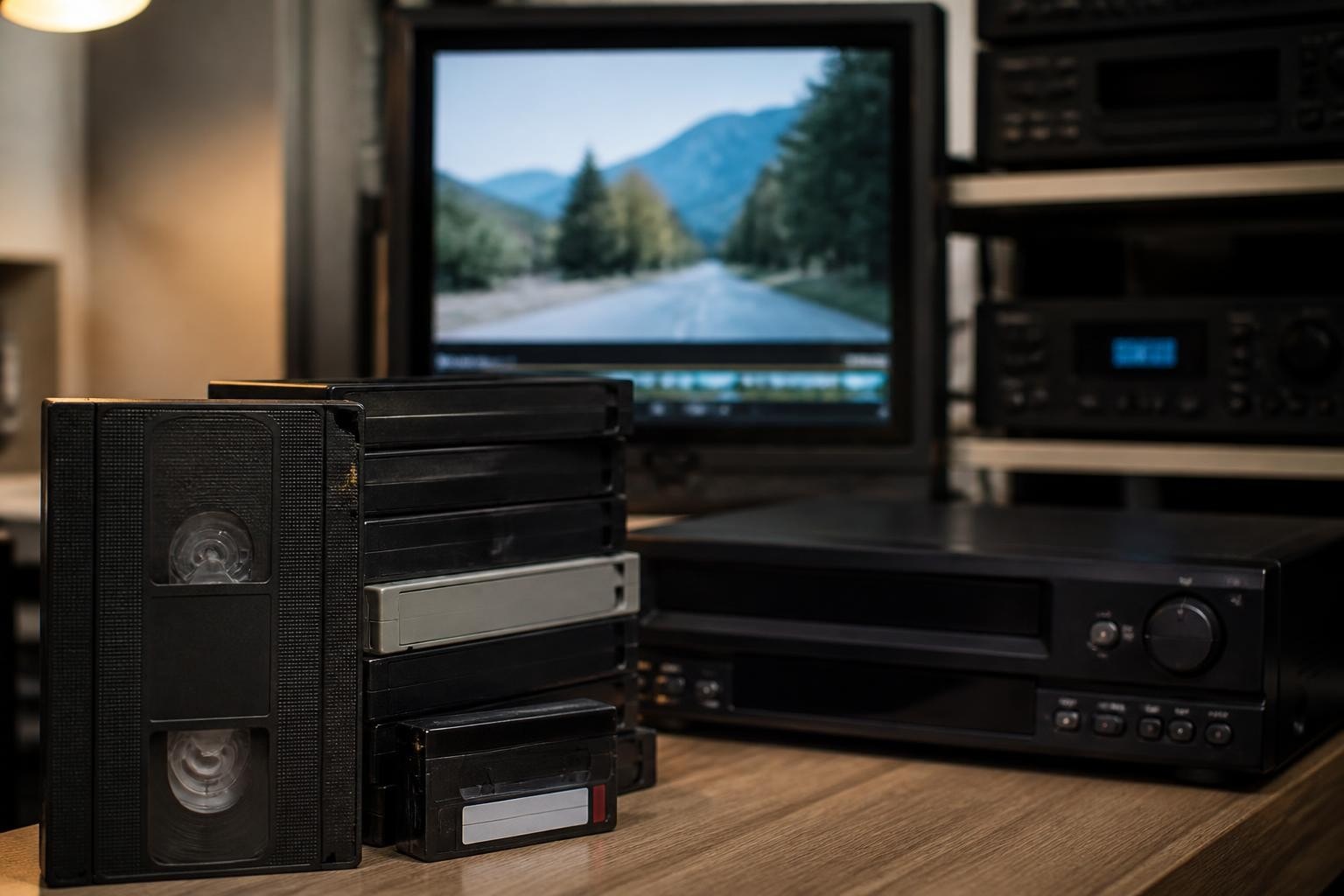
The relationship between vhs and vcr technology represents one of the most successful consumer electronics partnerships in history, dominating home entertainment for nearly three decades. For digitization professionals working in 2026, understanding the technical specifications, maintenance requirements, and operational challenges of VHS videotape and VCR playback equipment remains essential. As archives, libraries, and private collections race against time to preserve magnetic media before degradation renders them unplayable, the demand for reliable VCR equipment and expert repair services continues to grow. This comprehensive guide explores the technical foundations of VHS and VCR technology, practical considerations for professional digitization operations, and best practices for maintaining playback equipment in commercial environments.
Understanding VHS and VCR Technology Fundamentals
VHS (Video Home System) emerged in 1976 as JVC's answer to Sony's Betamax format, quickly becoming the dominant home video standard through strategic licensing and longer recording times. The vhs and vcr ecosystem evolved through multiple generations, from the original VHS to S-VHS, VHS-C, and D-VHS variants, each offering incremental improvements in video quality and recording density.
Technical Specifications That Define VHS Performance
VHS tape uses half-inch magnetic tape wound on reels inside a cassette, recording video through helical scan technology with two rotating video heads. The standard plays at 3.335 centimeters per second for SP (Standard Play) mode, delivering approximately 240 lines of horizontal resolution. Professional digitization operations must account for these technical parameters when calibrating equipment and setting capture standards.
Key VHS technical specifications include:
- Video bandwidth: approximately 3 MHz
- Audio tracks: two linear mono tracks or Hi-Fi stereo
- Tape width: 12.7mm (½ inch)
- Recording time: 2-8 hours depending on speed mode
- Signal-to-noise ratio: typically 40-45 dB
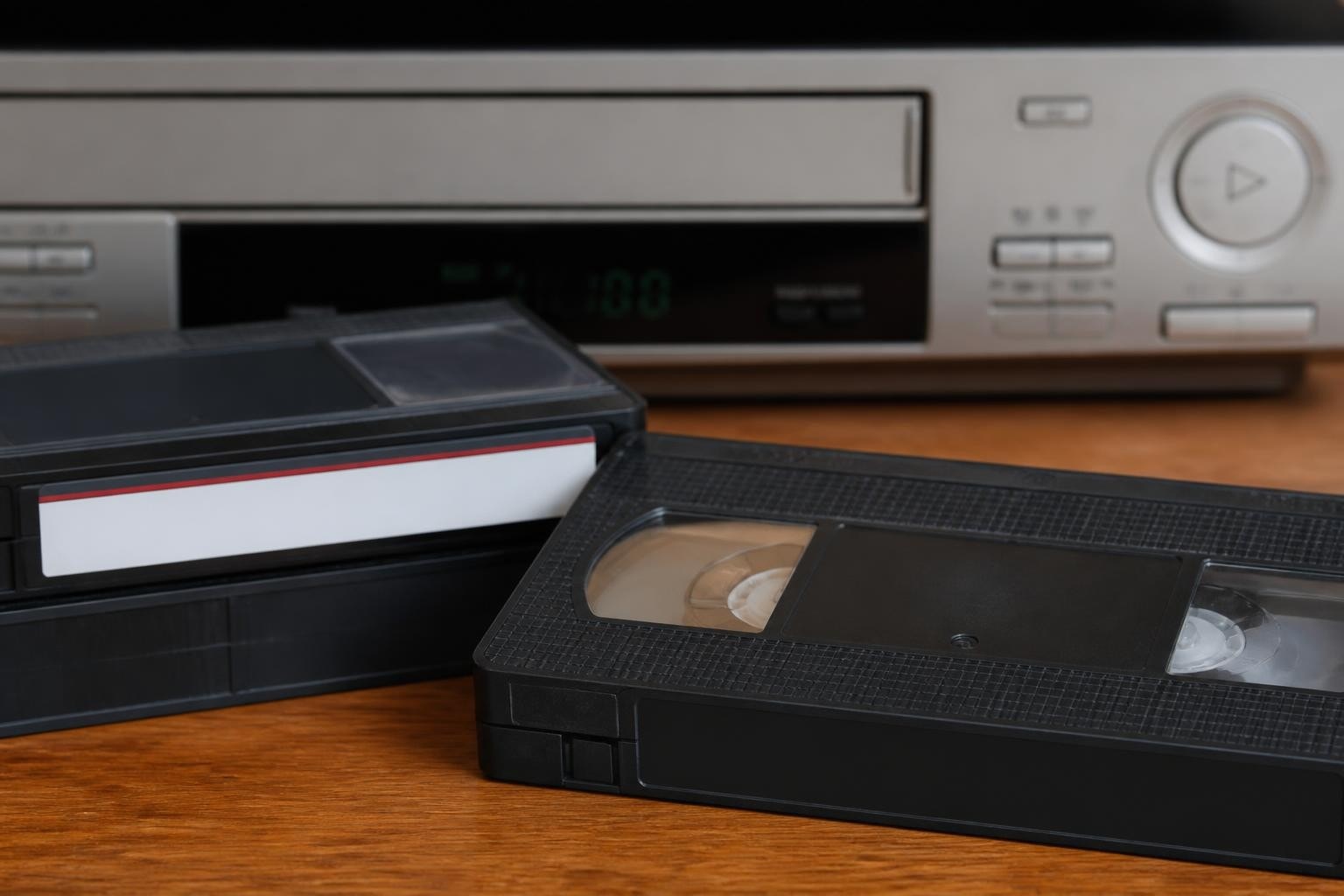
VCRs translate the magnetic patterns on VHS tape into electrical signals through precisely aligned video heads mounted on a rotating drum. This complex electromechanical system requires regular maintenance and careful adjustment to maintain optimal playback quality, particularly when working with aged or deteriorated tapes.
Professional VCR Equipment for Digitization Operations
Selecting appropriate VCR equipment separates amateur digitization efforts from professional-grade preservation work. Consumer-grade VCRs sold through retail channels rarely meet the performance standards required for archival transfer projects, lacking the time-base correctors, professional outputs, and adjustability needed for optimal results.
Professional VHS decks from manufacturers like JVC, Panasonic, and Sony incorporated broadcast-quality components and industrial-grade construction designed for continuous operation. The JVC SR-VS30U exemplifies this category, offering S-VHS playback, TBC functionality, and component video outputs essential for high-quality transfers.
Commercial vs. Consumer VCR Differences
| Feature | Consumer VCR | Professional VCR |
|---|---|---|
| Video heads | 2-4 heads | 4-6 heads with extended life |
| Time-base correction | None or basic | Built-in TBC with adjustability |
| Outputs | Composite, RF | Component, S-Video, balanced audio |
| Duty cycle | 2-4 hours/day | 8-24 hours/day continuous |
| Tracking control | Automatic only | Manual fine adjustment |
| Service access | Limited | Full diagnostic and adjustment points |
Digitization shops processing dozens or hundreds of tapes monthly benefit significantly from professional VCR equipment designed for sustained use. These machines incorporate cooling systems, heavy-duty transport mechanisms, and replaceable wear components that extend operational life far beyond consumer models.
VHS Preservation Challenges in 2026
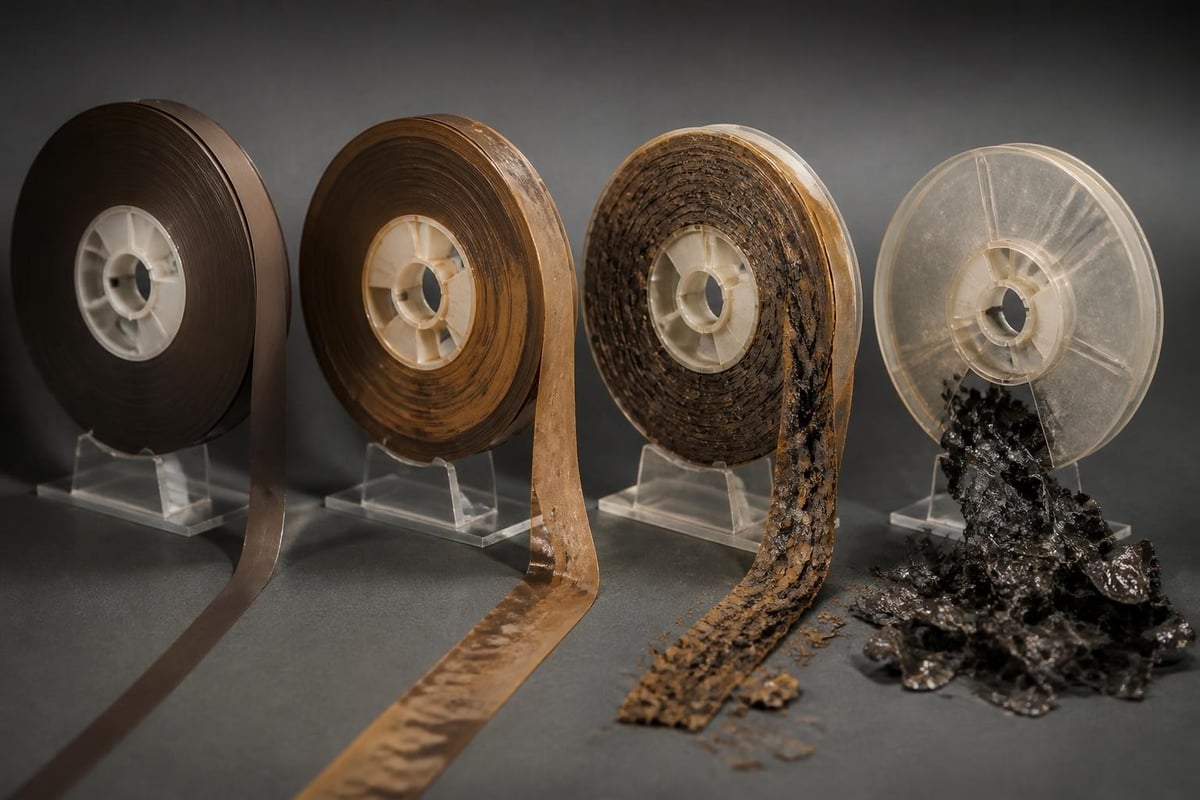
The urgency surrounding vhs and vcr preservation has intensified dramatically as magnetic tape reaches the limits of its archival stability. Most VHS tapes manufactured in the 1980s and 1990s have now exceeded their expected 20-30 year lifespan, with many exhibiting advanced degradation symptoms that complicate or prevent successful playback.
Common Tape Degradation Issues
Sticky-shed syndrome affects tapes where the binder holding magnetic particles to the polyester base deteriorates, causing the tape to stick to itself and shed oxide particles. This condition clogs video heads, causes dropout, and can render tapes temporarily unplayable until treated through careful baking processes described in the Canadian Conservation Institute's technical bulletin on VHS digitization.
Environmental factors accelerating VHS degradation:
- High humidity (above 60% RH) promoting hydrolysis
- Temperature fluctuations causing expansion/contraction stress
- Exposure to magnetic fields erasing or corrupting signals
- UV light breaking down plastic housing and tape substrate
- Poor storage (vertical stacking, compression) causing physical deformation
The National Archives provides detailed guidance on proper storage conditions for magnetic media, recommending temperatures between 60-70°F and relative humidity of 30-40% for extended preservation. However, even under ideal conditions, VHS tape degradation remains inevitable, making immediate digitization the only reliable preservation strategy.
Operational Considerations for VCR Rental and Repair Services
For digitization businesses, the decision between purchasing, leasing, or renting VCR equipment depends on workflow volume, budget constraints, and format diversity. Many shops discover that VCR rental services provide flexibility to scale capacity during peak periods without capital expenditure on equipment that may sit idle during slower months.
Cost Analysis for Digitization Operations
A complete professional VHS digitization workstation requires more than just a VCR. Time-base correctors, video processors, capture interfaces, and monitoring equipment can easily exceed $5,000-10,000 in initial investment. Monthly rental starting at $99 allows shops to access professional-grade equipment while preserving capital for other business needs.
The FADGI Technical Guidelines establish minimum technical standards for digitizing cultural heritage materials, specifying capture resolutions, bit depths, and quality control procedures that require professional equipment to achieve. Meeting these standards becomes economically viable through equipment rental models that spread costs across active projects.
Equipment Maintenance and Downtime Management
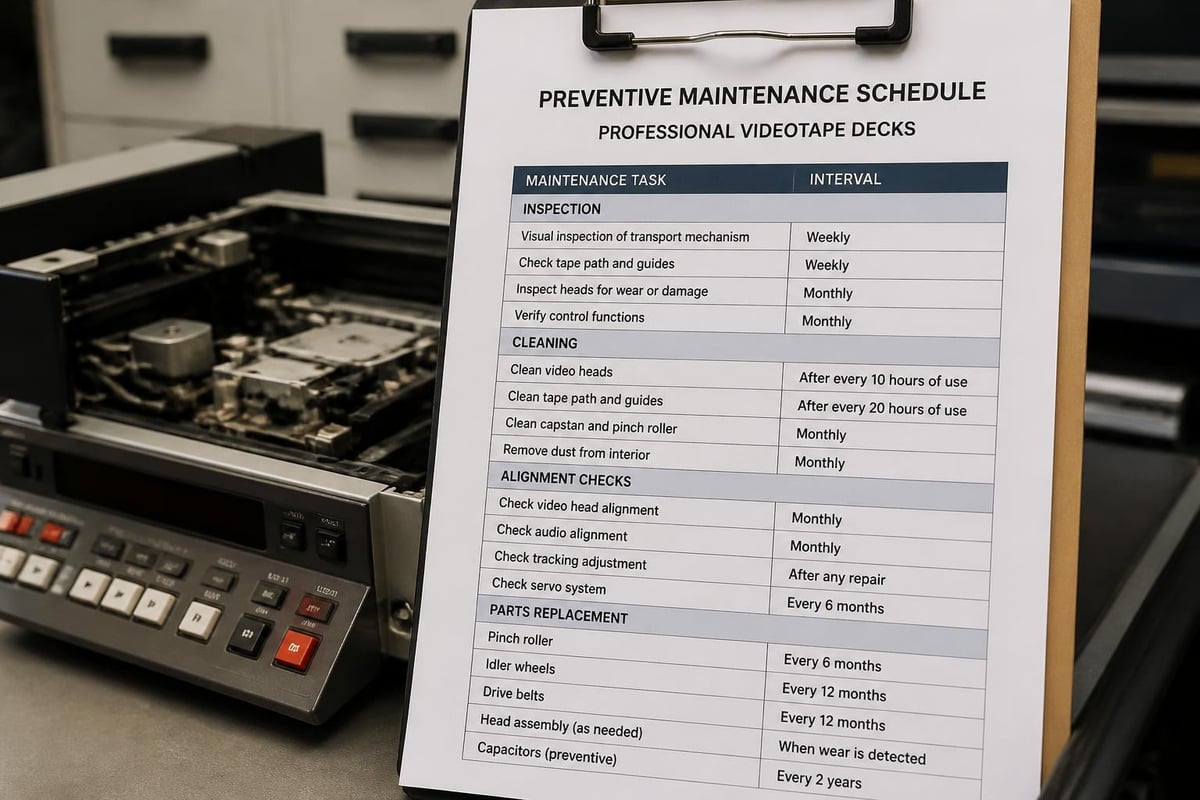
VCRs contain hundreds of mechanical and electronic components subject to wear, drift, and failure. Video head life typically ranges from 1,000-3,000 operating hours depending on tape condition and cleaning practices. Capstan motors, pinch rollers, drive belts, and mode switches require periodic replacement to maintain reliable operation.
Critical maintenance intervals for professional VCRs:
- Video head cleaning: after every 8-10 hours of operation or between tapes showing dropout
- Tape path cleaning: weekly during active use
- Capstan and pinch roller inspection: monthly
- Tracking and alignment verification: quarterly or after 200 operating hours
- Complete service and parts replacement: annually or after 500 hours
Professional VCR repair services become essential when diagnostic expertise exceeds in-house capabilities. A $45 diagnostic fee represents minimal investment compared to the cost of missed deadlines, rejected deliverables, or damaged client materials resulting from malfunctioning equipment.
Format Variations and Cross-Compatibility Requirements
While standard VHS dominates preservation workloads, digitization shops encounter numerous format variations requiring specialized playback equipment. S-VHS tapes, which offer approximately 400 lines of horizontal resolution through improved recording density, require S-VHS-compatible decks for optimal playback. S-VHS deck rental provides access to equipment capable of extracting maximum quality from these higher-resolution recordings.
VHS-C and Format Adaptations
VHS-C (Compact) cassettes use the same tape formulation and recording method as full-size VHS but in a smaller shell designed for camcorders. These tapes require either a mechanical adapter or a VCR with built-in VHS-C playback capability. Many digitization projects include mixed format collections where VHS, S-VHS, and VHS-C materials arrive intermixed, requiring flexible equipment configurations.
| Format | Tape Width | Resolution | Common Sources | Playback Equipment |
|---|---|---|---|---|
| VHS | 12.7mm | 240 lines | Home recordings, retail releases | Standard VHS deck |
| S-VHS | 12.7mm | 400 lines | Prosumer camcorders, independent productions | S-VHS compatible deck |
| VHS-C | 12.7mm | 240 lines | Compact camcorders | VHS-C adapter or compatible deck |
| D-VHS | 12.7mm | 1080i digital | Digital recordings, HDTV captures | D-VHS specific deck |
The California Revealed AV Format Guide provides practical conservation notes on identifying format variations and selecting appropriate playback equipment, particularly valuable when working with unlabeled or poorly documented collections.
Institutional Scale VHS and VCR Operations
Large-scale preservation initiatives undertaken by libraries, archives, and cultural institutions face unique challenges managing vhs and vcr workflows at volumes ranging from thousands to millions of tapes. The Library of Congress Packard Campus operations illustrate the infrastructure required for institutional digitization, including robotic tape handling systems, parallel transfer stations, and quality control protocols.
Workflow Optimization Strategies
Commercial digitization shops can adapt institutional best practices to improve efficiency and consistency. Standardized intake procedures, condition assessment protocols, and metadata capture systems reduce per-tape processing time while improving deliverable quality. The Library of Congress digitization preparation guide outlines practical workflows for preparing videotape collections, including inventory management, condition reporting, and prioritization frameworks.
Effective digitization workflow stages:
- Intake and documentation: record format, condition, duration
- Preliminary inspection: identify physical damage, mold, or degradation
- Equipment preparation: clean heads, verify calibration, test signals
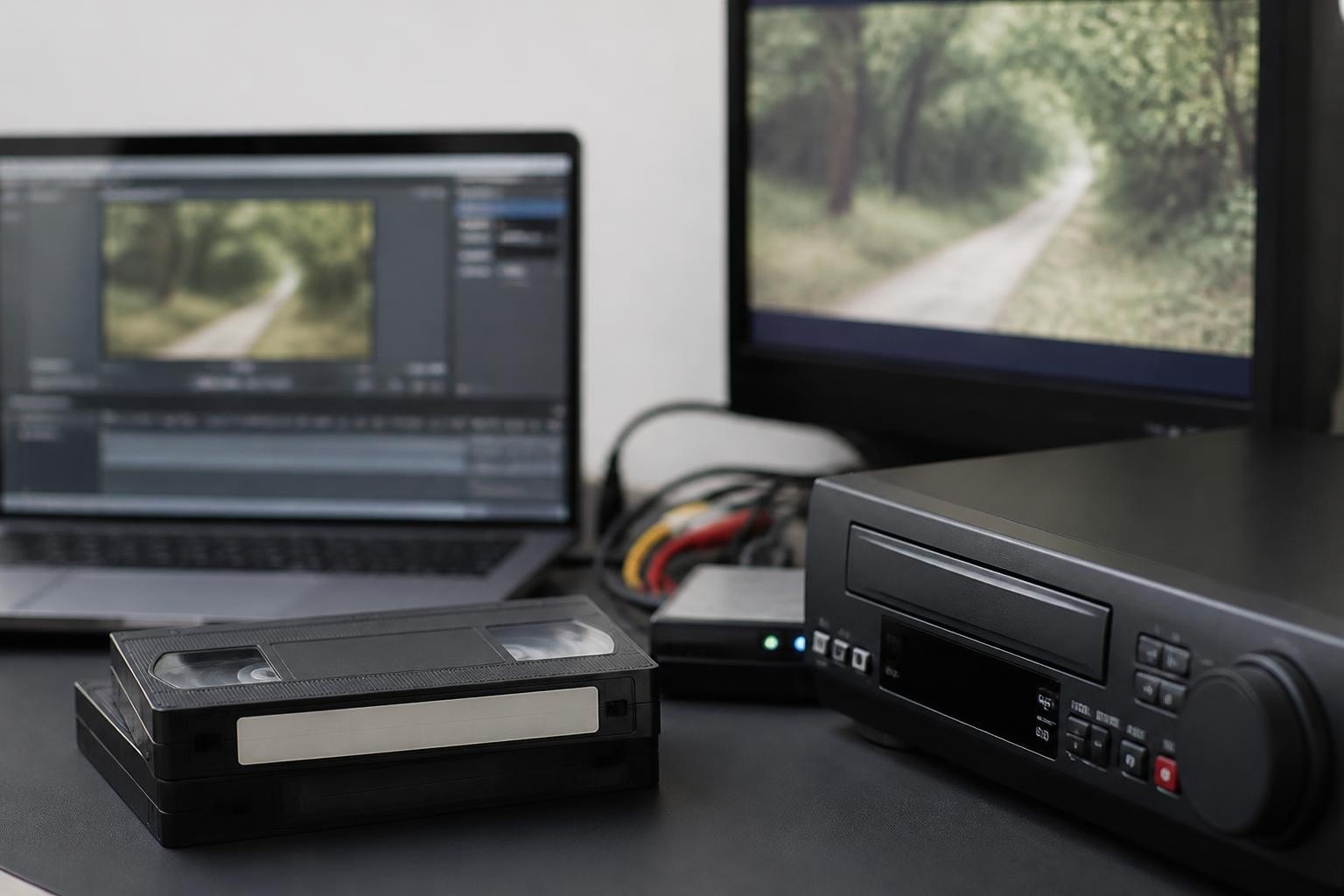
- Playback and capture: monitor levels, document issues, create preservation master
- Quality control: verify complete capture, check for dropout or artifacts
- Metadata creation: embed technical and descriptive information
- Deliverable creation: generate access copies, archive masters
Implementing maintenance contracts reduces unplanned downtime by scheduling preventive service during natural workflow breaks rather than emergency repairs during active projects. This proactive approach maintains consistent equipment performance and extends the operational life of professional VCR decks.
Technical Standards and Quality Control
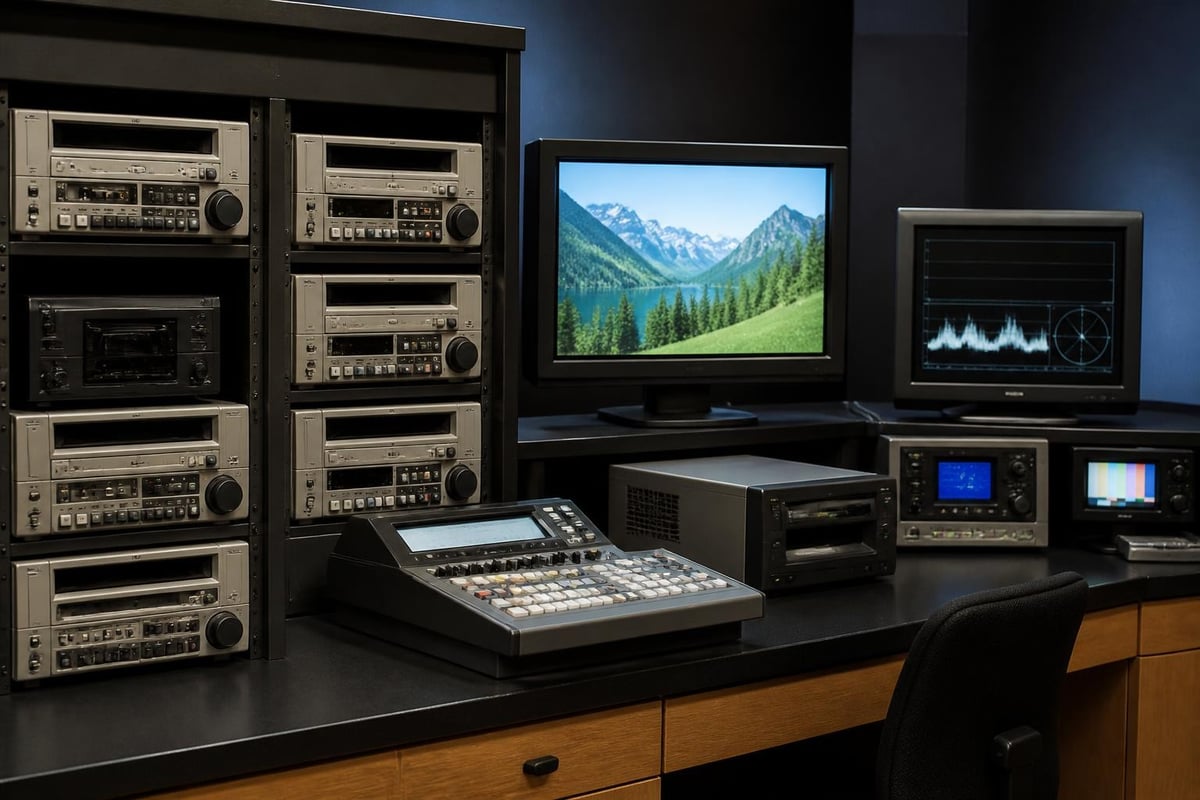
Professional vhs and vcr digitization requires adherence to technical standards that ensure captured files meet archival quality benchmarks and remain accessible for decades. The CLIR Magnetic Tape Storage and Handling Guide provides technical review of expected lifetimes and degradation patterns, informing decisions about capture parameters and quality thresholds.
Capture Parameters for VHS Materials
VHS presents unique technical challenges because the original recording already represents a compromise between quality and recording time. Capturing VHS at resolutions higher than the source can support doesn't improve quality but does create unnecessarily large files. Industry best practices recommend:
- Resolution: 720×480 (NTSC) or 720×576 (PAL) matching broadcast standards
- Bit depth: 10-bit uncompressed or mathematically lossless compression
- Color space: YUV 4:2:2 for archival masters
- Frame rate: 29.97 fps (NTSC) or 25 fps (PAL) matching source
- Audio: 48kHz, 24-bit uncompressed stereo
Time-base correction becomes particularly important when digitizing aged VHS tapes exhibiting timing instability. Professional VCRs with built-in TBC circuitry or external time-base correctors stabilize irregular signals, reducing geometric distortion and improving overall image quality in captured files.
Multi-Format Digitization Capabilities
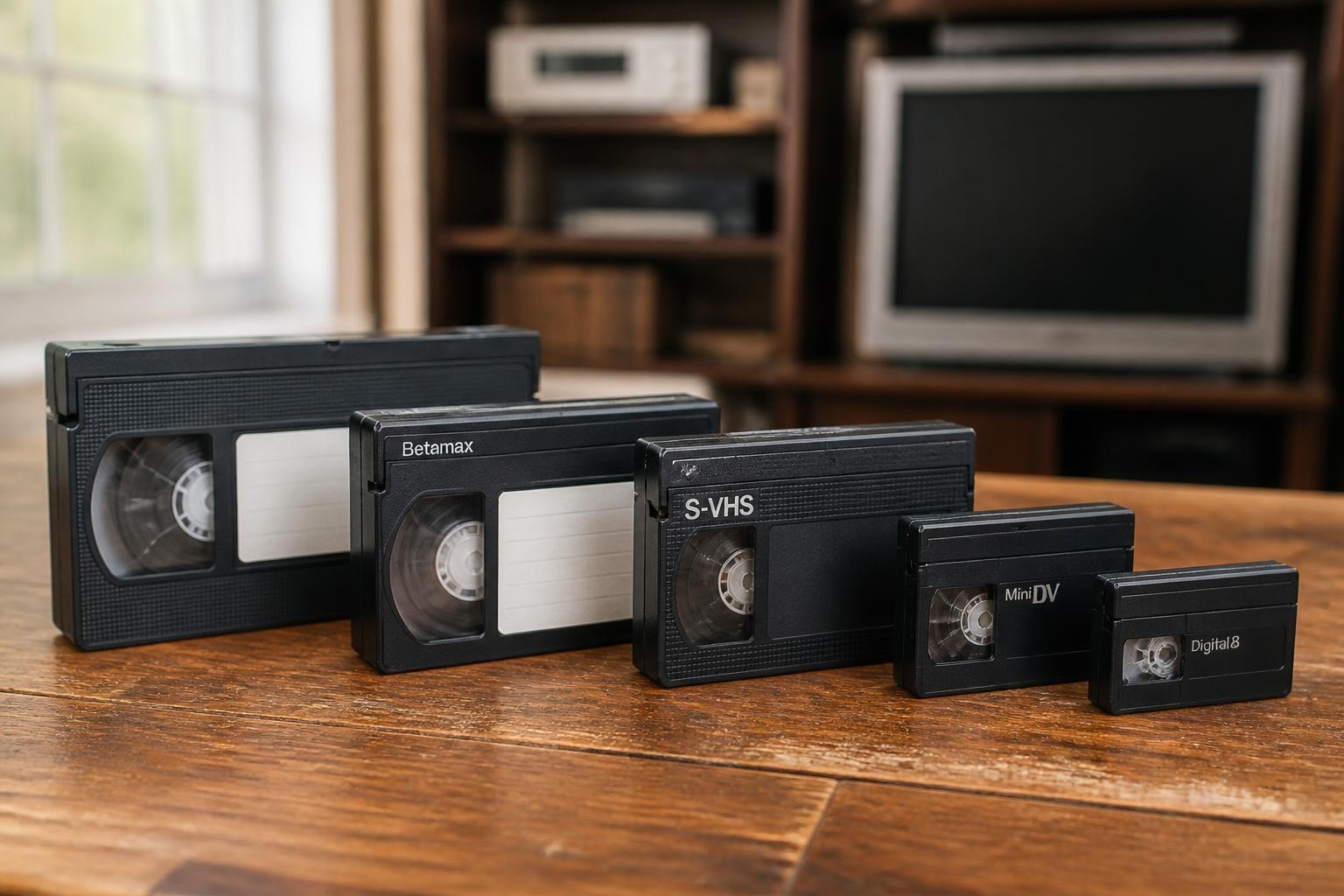
While VHS represents a significant portion of preservation workloads, professional digitization shops increasingly handle diverse tape formats requiring specialized playback equipment. MiniDV, Digital8, Betamax, and various professional formats like Betacam SP and U-matic each demand format-specific decks and technical knowledge.
Building Comprehensive Format Support
Maintaining dedicated equipment for every possible format creates significant financial and space burdens. Strategic equipment rental allows shops to access MiniDV, Digital8, and Betamax decks as projects require without permanent investment in specialized machines used infrequently.
This flexible approach proves particularly valuable for smaller digitization businesses competing for diverse projects. The ability to confidently bid on multi-format collections while controlling overhead costs creates competitive advantages in markets where institutional clients regularly solicit proposals for complex preservation work.
Troubleshooting Common VCR and Playback Issues
Even well-maintained professional VCRs experience periodic issues requiring diagnostic expertise and targeted repairs. Understanding common failure modes helps operators distinguish between tape-related problems and equipment malfunctions, preventing unnecessary service calls while identifying legitimate repair needs.
Systematic Diagnostic Approaches
Tracking problems manifest as noise bars, distortion, or unstable images and may result from either tape defects or VCR alignment issues. Testing known-good reference tapes isolates the problem source. If reference tapes play correctly, the issue lies with specific tapes; if problems persist across all tapes, VCR adjustment or repair becomes necessary.
Dropout and video noise appear as brief white flashes or sparkles in the image, caused by oxide shedding, head clogs, or contaminated tape paths. Regular head cleaning addresses most contamination issues, but persistent dropout despite cleaning indicates damaged tapes or worn video heads requiring professional service.
Common VCR failure symptoms and likely causes:
- No playback, tape loads but no picture: Video head clog, head drum failure, or signal processing fault
- Audio plays but no video: Video head failure or amplifier circuit problem
- Tape won't load or ejects immediately: Mode switch failure, sensor misalignment, or mechanism jam
- Playback speed incorrect: Capstan motor or servo circuit malfunction
- Intermittent operation: Thermal issues, cracked solder joints, or failing capacitors
Professional repair services provide access to specialized test equipment, service manuals, and genuine replacement parts unavailable to general users, ensuring repairs restore equipment to original specifications rather than temporary fixes.
Future of VHS and VCR in Preservation Work
As calendar years advance beyond 2026, the preservation window for vhs and vcr materials continues narrowing. Tape degradation accelerates exponentially once chemical breakdown begins, and the supply of functional playback equipment diminishes as remaining VCRs age beyond economical repair. The British Film Institute's conservation teams exemplify institutional responses to these challenges, prioritizing at-risk materials and investing in equipment maintenance to extend preservation capabilities.
Market Dynamics and Equipment Availability
Professional VCR manufacturing ceased over a decade ago, transforming the market into a finite pool of existing equipment requiring increasingly specialized maintenance. This scarcity drives demand for reliable repair services and creates opportunities for businesses offering professional-grade rental equipment with guaranteed performance and backup units.
Digitization shops planning for sustained operations must consider equipment redundancy, parts inventory, and relationships with specialized repair providers. A single point of failure in critical VCR equipment can halt production entirely when working against client deadlines or grant-funded project schedules.
Professional vhs and vcr preservation requires specialized equipment, technical expertise, and reliable service support that many digitization shops struggle to maintain economically. Whether you need short-term access to professional decks for a specific project or ongoing equipment support with minimized downtime, VCR Supply provides rental and repair services tailored to digitization professionals. With monthly rental rates starting at $99 and comprehensive repair services backed by maintenance contracts, you can focus on delivering quality transfers while we ensure your equipment performs reliably.