VHS S-VHS: Understanding Format Differences & Benefits
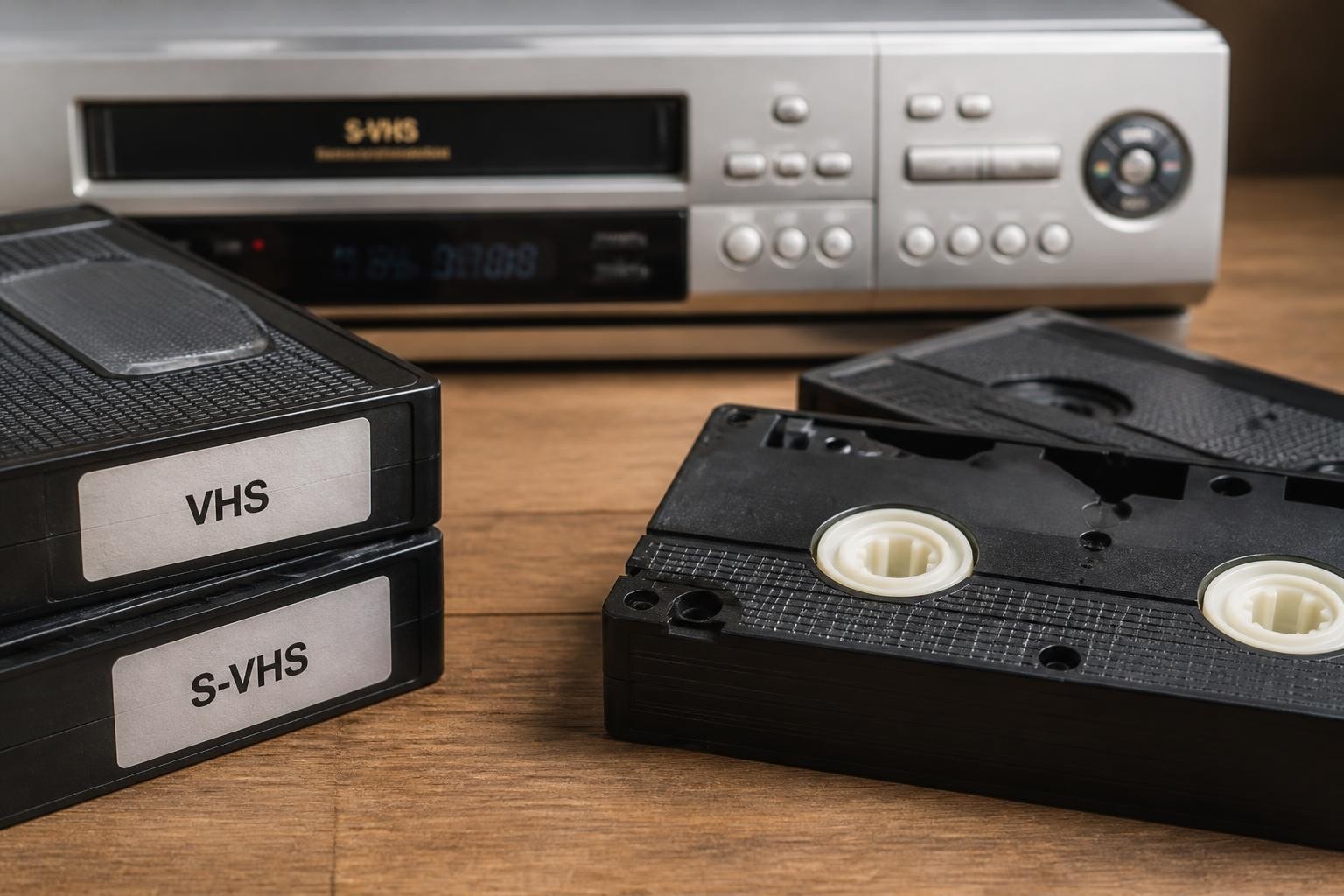
Understanding the distinction between standard VHS and its superior counterpart S-VHS remains crucial for digitization professionals, archivists, and preservation specialists working with analog videotape materials. While both formats share physical tape dimensions and compatibility features, the technical differences between vhs s vhs systems dramatically impact image quality, archival potential, and professional applications. This comprehensive guide examines the technical specifications, practical advantages, and essential considerations when working with these formats in 2026.
Technical Foundations: How VHS S-VHS Differ
The fundamental distinction between standard VHS and S-VHS centers on recording methodology and signal processing. Standard VHS employs composite video recording, combining luminance (brightness) and chrominance (color) information into a single signal. S-VHS revolutionized consumer and professional video by separating these components, delivering substantially higher resolution and color fidelity.
Resolution and Bandwidth Specifications
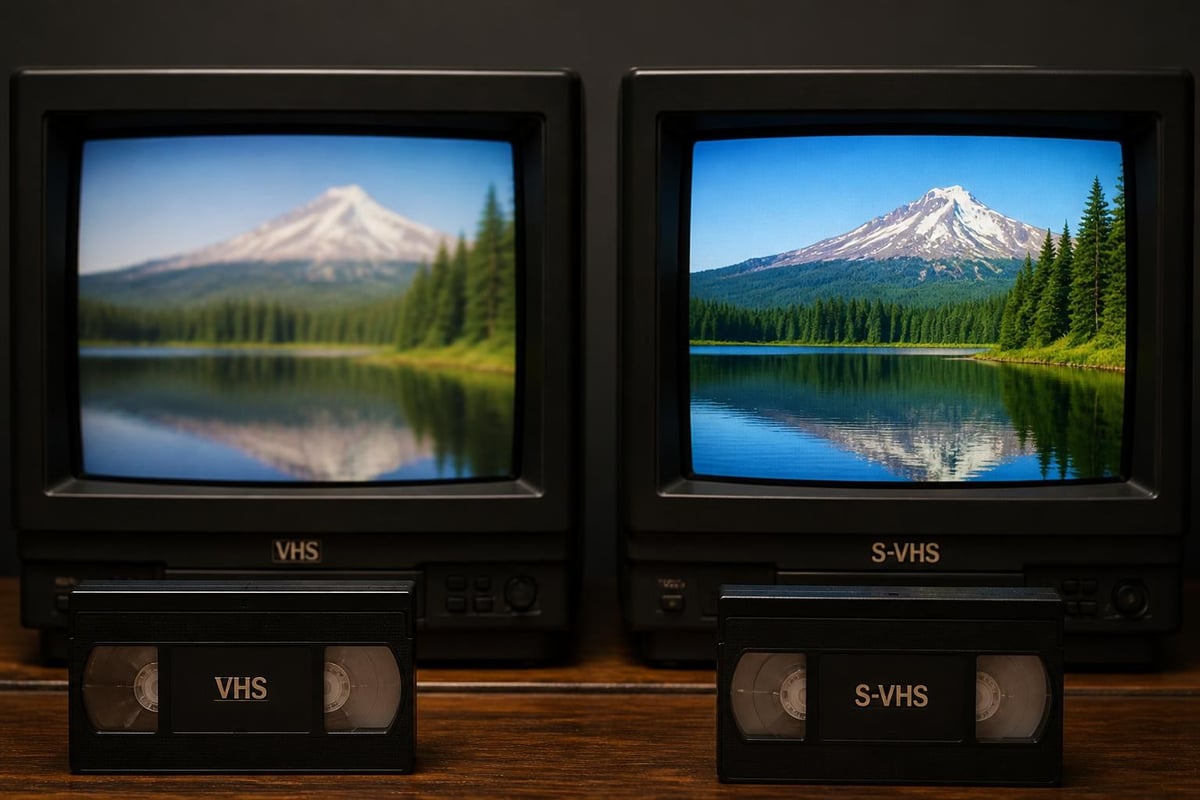
S-VHS provides approximately 400 lines of horizontal resolution compared to VHS's 240 lines, representing a 67% improvement in detail capture. This enhanced resolution stems from wider bandwidth allocation for the luminance signal.
| Format | Horizontal Resolution | Luminance Bandwidth | Audio Quality |
|---|---|---|---|
| VHS | 240 lines | 3.0 MHz | Mono/Hi-Fi Stereo |
| S-VHS | 400 lines | 5.0 MHz | Hi-Fi Stereo |
| Professional S-VHS | 400+ lines | 5.5 MHz | Hi-Fi Stereo + Linear |
The technical specifications outlined by IEC standards define these distinctions formally, ensuring consistent performance across equipment manufacturers. Understanding these specifications helps digitization professionals select appropriate playback equipment for preservation projects.
Tape Formulation and Magnetic Properties
Beyond recording methodology, vhs s vhs formats utilize different magnetic particle formulations. S-VHS tapes incorporate smaller, more refined magnetic particles that enable higher-density recording. This advanced formulation accommodates the increased bandwidth requirements while maintaining reliable signal stability over time.
Standard VHS tape uses iron oxide or cobalt-modified iron oxide particles, while S-VHS employs metal-evaporated or advanced metal particle formulations. These materials provide:
- Superior coercivity for sharper transitions between magnetic domains
- Reduced noise floor enabling cleaner high-frequency signals
- Enhanced durability for professional applications and repeated playback
- Better archival stability when stored in controlled environments
Professional digitization facilities working with S-VHS deck rental equipment must account for these material differences when establishing maintenance schedules and cleaning protocols.
Backward Compatibility and Practical Considerations
One significant advantage of S-VHS technology lies in its backward compatibility with standard VHS tapes. Professional S-VHS decks can play standard VHS recordings, though the reverse typically does not hold true without specific compatibility modes built into consumer VHS players.
Playback Modes and Signal Output
S-VHS decks offer multiple output configurations that dramatically affect digitization quality:
S-Video (Y/C) Output delivers separated luminance and chrominance signals, preserving the format's quality advantages through the transfer chain. This connection method remains essential for professional archival work and is specifically recommended in preservation-focused technical guidance for maintaining maximum signal integrity.
Composite Output combines signals for compatibility with standard equipment but sacrifices the resolution benefits that distinguish S-VHS from regular VHS. Digitization professionals should avoid composite connections when transferring S-VHS materials unless client requirements or equipment limitations necessitate this approach.
Component Output (available on select professional models) further enhances signal separation and represents the optimal connection for high-quality S-VHS transfers. Many professional S-VHS formats benefit from this output configuration when paired with appropriate capture hardware.
Professional Applications in Digitization Workflows
The vhs s vhs quality differential creates distinct use cases within professional digitization environments. Understanding when S-VHS investment delivers measurable return helps shops optimize equipment portfolios and client service offerings.
Commercial and Broadcast Legacy Content
Television stations, production companies, and commercial videographers frequently adopted S-VHS for field production, corporate communications, and broadcast distribution during the 1990s. These archives now require specialized playback equipment as highlighted by BAVC preservation programs focused on professional analog formats.
Digitization shops serving institutional clients encounter S-VHS materials in several contexts:
- Corporate training videos produced between 1990-2005
- Wedding and event documentation by professional videographers
- Industrial and medical imaging applications
- Educational content created for classroom distribution
- News gathering footage from regional broadcast operations
Each application demands different quality thresholds and metadata requirements. Shops offering VCR maintenance contracts recognize that consistent S-VHS deck performance prevents costly project delays when processing time-sensitive institutional collections.
Consumer Prosumer Market Segment
Beyond professional applications, enthusiast videographers invested in S-VHS equipment for personal projects requiring superior image quality. These consumer recordings present unique preservation challenges:
Tape condition variability increases with consumer-grade storage practices. Home users rarely maintained controlled temperature and humidity, accelerating magnetic degradation and binder breakdown. Professional digitization requires thorough inspection protocols before attempting playback.
Equipment matching considerations become critical when consumer tapes exhibit tracking issues or non-standard recordings. The Video History Project's preservation format discussions examine how equipment compatibility affects transfer success rates across various consumer and professional formats.
Playback adjustments frequently demand manual tracking control, skew adjustment, and tension optimization. Experienced technicians understand that vhs s vhs consumer recordings may require multiple deck attempts to achieve optimal playback quality.
Quality Assessment and Transfer Standards
Establishing consistent quality metrics ensures reliable service delivery and client satisfaction. Professional digitization workflows implement systematic assessment protocols that account for format-specific characteristics.
Signal Analysis Benchmarks
Quantitative signal measurement provides objective quality validation throughout the transfer process:
| Measurement | VHS Acceptable | S-VHS Acceptable | Professional Target |
|---|---|---|---|
| Signal-to-Noise Ratio | 42 dB | 46 dB | 48+ dB |
| Chrominance Phase Error | ±10° | ±5° | ±3° |
| Luminance Non-Linearity | 10% | 5% | 3% |
| Dropout Duration | 2ms cumulative | 1ms cumulative | <0.5ms cumulative |
These benchmarks guide equipment selection and maintenance priorities. Facilities utilizing VCR repair services should establish performance baselines that trigger preventive maintenance before quality degradation affects client deliverables.
Capture Hardware Configuration
Digitization quality depends equally on playback deck performance and capture interface specifications. The relationship between vhs s vhs source material and digital conversion requires careful attention to:
Analog-to-Digital Converter (ADC) Resolution: Minimum 10-bit sampling depth preserves the dynamic range advantages of S-VHS source material. 8-bit conversion introduces quantization artifacts that negate format benefits.
Sampling Rate Selection: 4:2:2 chroma sampling maintains color fidelity from S-VHS Y/C signals. Lower sampling rates (4:1:1 or 4:2:0) compromise the color resolution improvements that justify S-VHS equipment investment.
Codec Configuration: Lossless or minimally compressed intermediate formats preserve archival value. The RFP guide for digitizing videotape provides institutional standards for codec selection and quality control procedures applicable to professional S-VHS transfers.
Equipment Selection and Maintenance Priorities
Professional digitization operations require strategic equipment investment balanced against project volume, client requirements, and maintenance capabilities. The vhs s vhs equipment decision involves multiple technical and financial considerations.
Deck Model Categories and Capabilities
S-VHS decks span consumer, prosumer, and professional categories with corresponding capability differences:
Consumer S-VHS VCRs (discontinued manufacturing circa 2009) offer basic playback with Y/C outputs but limited manual controls. These models serve occasional transfer needs but lack the adjustment range necessary for challenging tapes.
Prosumer S-VHS Decks include models like the JVC SR-VS30U, which provide enhanced manual controls, TBC (time base correction), and professional connectivity. These decks represent the practical minimum for consistent professional work and are frequently available through VCR leasing programs that preserve capital for other business needs.
Professional Editing Decks deliver comprehensive manual adjustments, built-in processing amplifiers, and RS-422 control interfaces. While offering maximum flexibility, these units command premium prices and maintenance costs justified only by high-volume specialized applications.

Preventive Maintenance Protocols
Sustained playback quality from vhs s vhs equipment demands systematic maintenance addressing mechanical and electronic subsystems:
- Head cleaning intervals: Every 8-10 hours of operation using appropriate cleaning cassettes or manual methods
- Tape path inspection: Weekly examination for oxide buildup, guide wear, and mechanical alignment
- Electronic calibration: Monthly verification of tracking, skew, and audio/video levels
- Mechanical lubrication: Quarterly service of loading mechanisms and transport motors
- Complete overhaul: Annual comprehensive service including belt replacement and electronics calibration
Professional facilities implement maintenance contracts that schedule preventive service before performance degradation affects production quality. This proactive approach minimizes unexpected downtime and extends equipment service life.
Business Planning for Format Specialization
Digitization businesses must evaluate whether dedicated vhs s vhs capabilities align with market demand and competitive positioning. Strategic analysis encompasses equipment investment, skill development, and marketing considerations.
Market Demand Assessment
Regional and client-base factors influence S-VHS service viability. Shops serving institutional clients (universities, corporations, government agencies) encounter higher S-VHS volumes than consumer-focused operations. Market research should quantify:
- Format distribution across existing client tape collections
- Price sensitivity for premium S-VHS transfer services
- Competitive landscape regarding local S-VHS capabilities
- Volume projections supporting equipment investment justification
- Technical reputation requirements in target market segments
The comprehensive overview of S-VHS provides historical context useful for educating potential clients about format significance and preservation urgency.
Pricing Strategy Development
Premium format capabilities justify corresponding service pricing. Professional digitization operations typically implement tiered pricing that reflects equipment costs, technical expertise, and processing time requirements:
| Service Tier | VHS Rate | S-VHS Rate | Premium Justification |
|---|---|---|---|
| Standard | $20/tape | $30/tape | Specialized equipment, format expertise |
| Professional | $35/tape | $50/tape | Signal optimization, quality verification |
| Archival | $60/tape | $85/tape | Full restoration, professional metadata |
Transparent pricing communication emphasizes the technical differences between vhs s vhs formats and the specialized equipment investment necessary for optimal results. Educational marketing helps clients understand value beyond simple format conversion.
Future-Proofing Analog Format Services
As videotape playback equipment ages beyond manufacturer support, strategic planning ensures continued service capability through equipment acquisition, parts management, and technical knowledge preservation.
Equipment Acquisition Strategies
New S-VHS deck manufacturing ceased over fifteen years ago, creating supply challenges for professional operations. Successful digitization businesses implement multi-source acquisition strategies:
Refurbished professional decks from specialized vendors provide reliability with warranty coverage. These units undergo comprehensive rebuilding including mechanical overhaul and electronic calibration.
Used equipment evaluation requires technical expertise to assess mechanical condition, electronic performance, and remaining service life. Experienced technicians identify models with superior longevity and parts availability.
Bulk purchasing opportunities enable parts harvesting and backup unit availability. Multiple identical deck models simplify parts inventory and technician training while providing immediate replacement capability during repairs.
Rental programs through specialized providers offer predictable monthly costs without capital equipment investment. Services like professional deck rental starting at $99 per month provide flexibility for variable workload demands while including maintenance support.
Technical Knowledge Preservation
As technicians experienced with analog video formats retire, knowledge transfer becomes critical for sustained capability. Progressive operations document:
- Deck-specific adjustment procedures with photographic references
- Common failure modes and diagnostic troubleshooting workflows
- Parts cross-reference databases linking discontinued components to available substitutes
- Client communication templates explaining vhs s vhs technical differences
- Quality control checklists ensuring consistent transfer standards
This documentation supports new technician training and maintains service consistency as staff transitions occur. Investment in knowledge preservation parallels equipment maintenance as essential business continuity planning.
Signal Processing and Enhancement Considerations
Professional vhs s vhs transfers may incorporate signal processing that corrects playback deficiencies without compromising archival authenticity. Appropriate processing enhances viewability while maintaining technical integrity.
Time Base Correction Implementation
Time base errors manifest as horizontal picture instability resulting from tape speed variations during recording or playback. S-VHS material benefits from TBC application that:
Stabilizes horizontal sync preventing computer capture interface synchronization failures common with uncorrected analog signals. Modern capture hardware often refuses to lock onto signals with excessive time base error.
Enables downstream processing including color correction, noise reduction, and standards conversion. Processing algorithms require stable sync reference that TBC provides.
Improves compression efficiency by eliminating unnecessary frame-to-frame differences caused by timing instability rather than actual content changes. This consideration matters particularly for web delivery and streaming applications.
Built-in TBC functionality represents a key differentiator when selecting S-VHS playback equipment. External TBC units add cost and signal path complexity but provide essential correction for challenging source material.
Appropriate Enhancement Boundaries
Signal enhancement walks a careful line between restoration and alteration. Professional archival practice recognizes that vhs s vhs transfers should preserve source characteristics while correcting obvious technical deficiencies:
Acceptable corrections include dropout compensation, time base stabilization, and level adjustment to standard broadcast ranges. These interventions address playback and recording artifacts rather than altering original content.
Questionable enhancements encompass noise reduction, sharpening, and color "improvement" that may obscure original production intent or introduce processing artifacts. Such modifications should only proceed with explicit client authorization and comprehensive documentation.
Prohibited alterations for archival work include content cropping, aspect ratio manipulation, and creative color grading. Preservation transfers maintain complete technical authenticity even when aesthetic results appear suboptimal by contemporary standards.
Clear client communication about processing options, limitations, and archival implications prevents misunderstandings and establishes appropriate expectations for vhs s vhs transfer projects.
Understanding the technical distinctions and professional applications of VHS and S-VHS formats enables digitization businesses to serve clients effectively while making informed equipment investments. Whether you need reliable S-VHS deck rental starting at $99 monthly, professional repair services with a $45 diagnostic fee, or maintenance contracts to ensure consistent transfer quality, VCR Supply provides the specialized equipment and support that professional digitization operations require. Our focus on professional videotape formats ensures your business maintains the technical capabilities necessary for quality archival transfers well into the future.