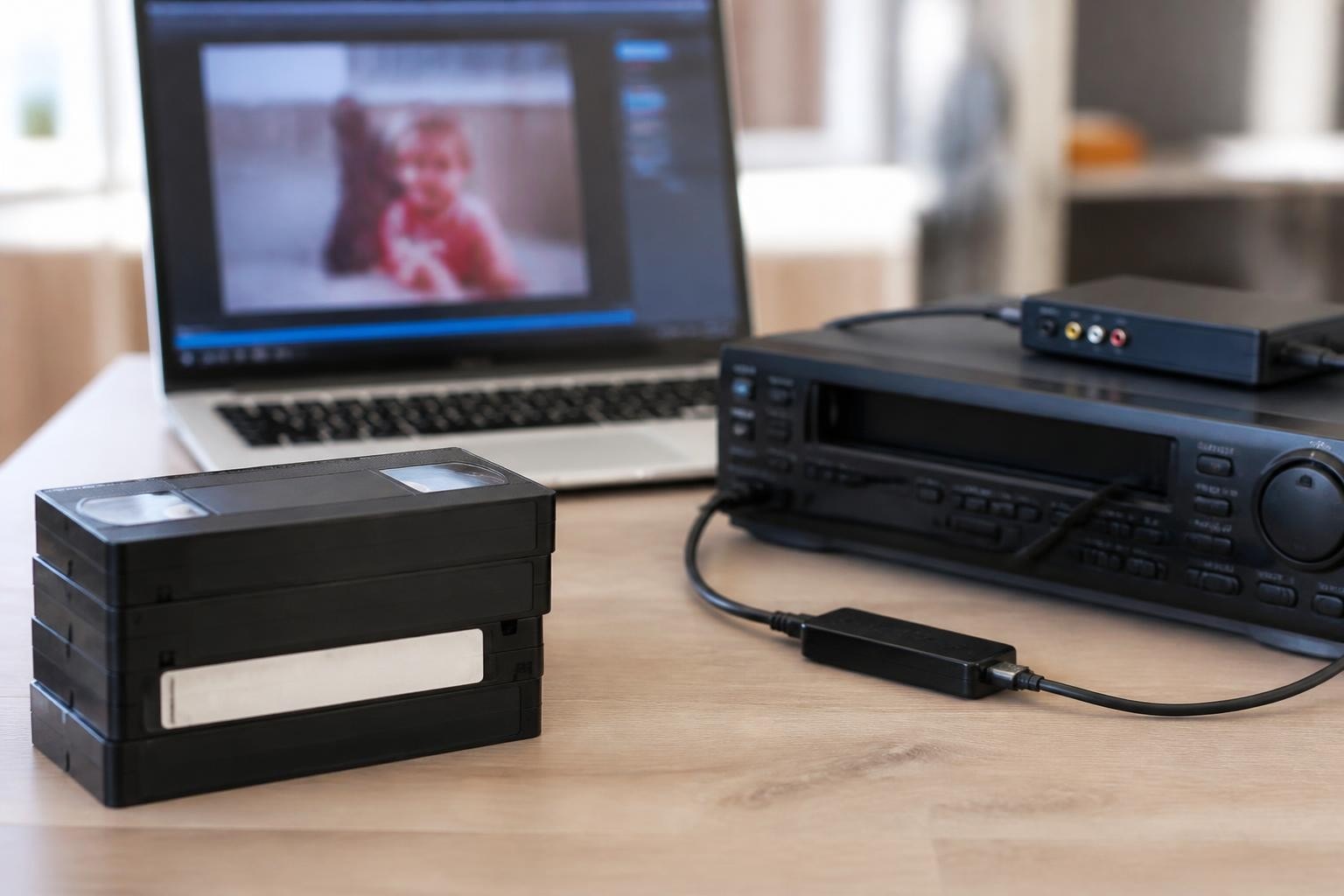
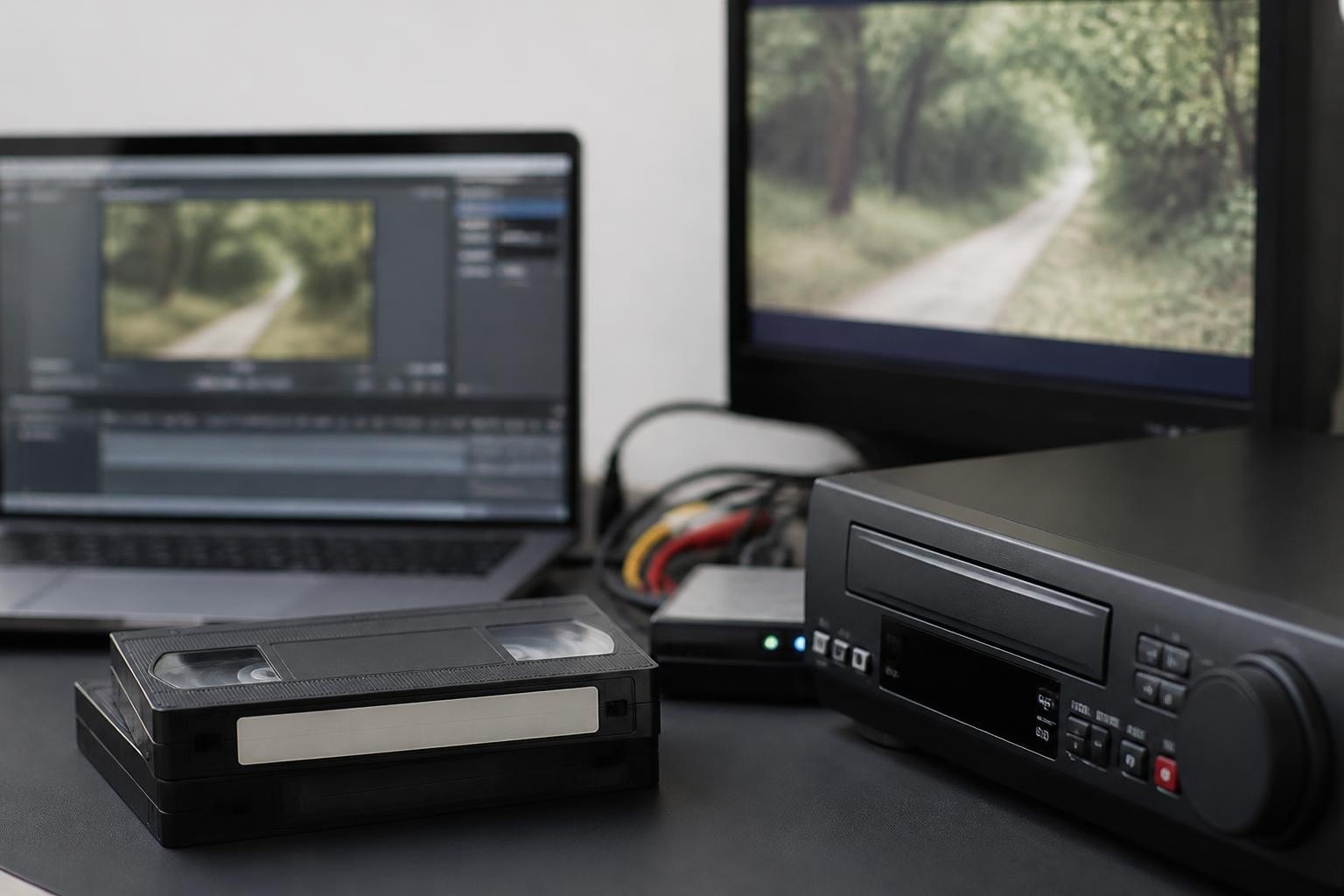
VHS Tape: Professional Guide to Preservation & Transfer
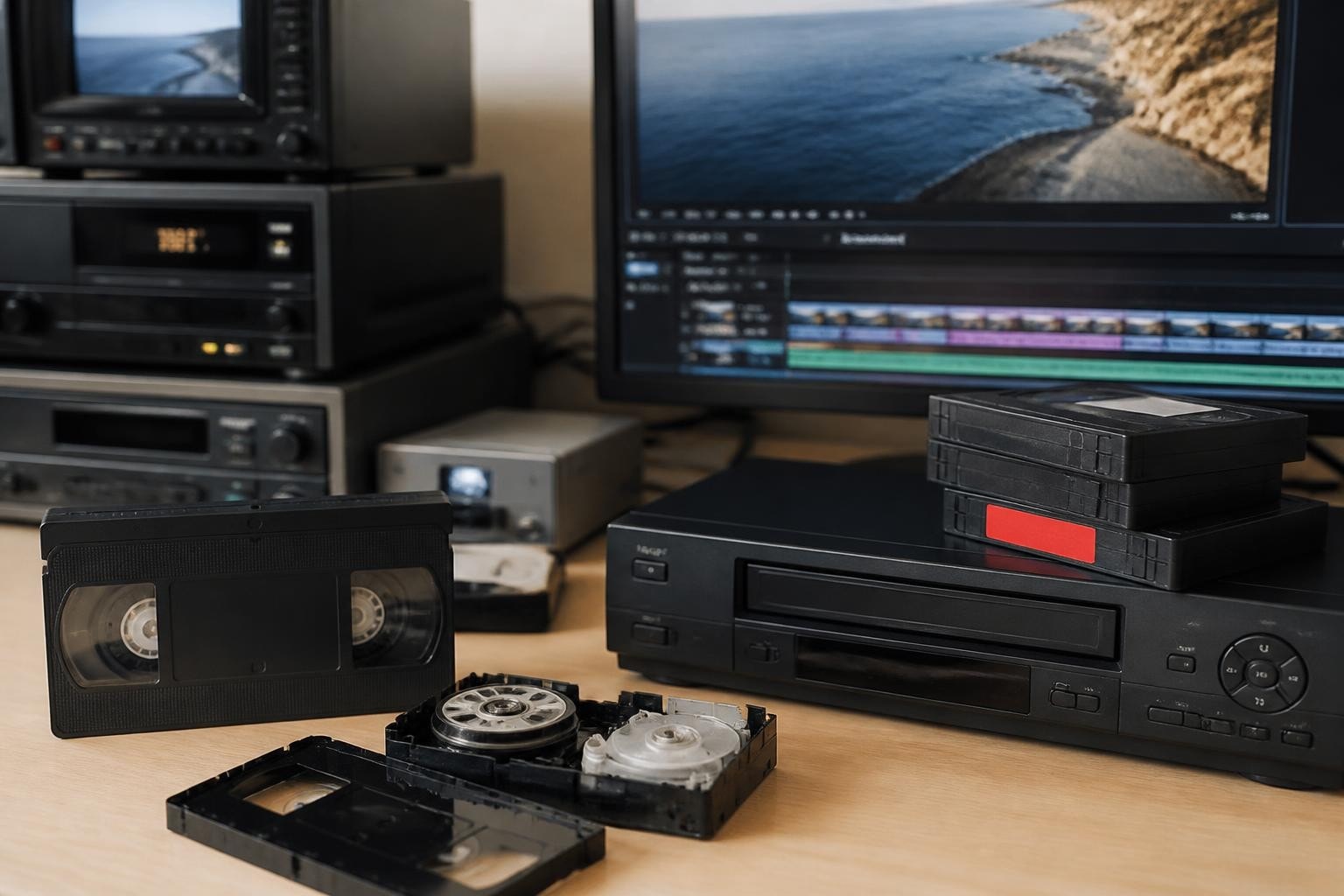
The VHS tape revolutionized home video and professional recording for over three decades, creating billions of hours of irreplaceable content now requiring careful preservation. From family memories to broadcast-quality recordings, this magnetic media format faces deterioration challenges that demand immediate attention from digitization professionals. Understanding the technical specifications, degradation patterns, and proper handling procedures for VHS tape becomes essential for anyone managing videotape collections or operating a professional transfer business in 2026.
Understanding VHS Tape Technology and Construction
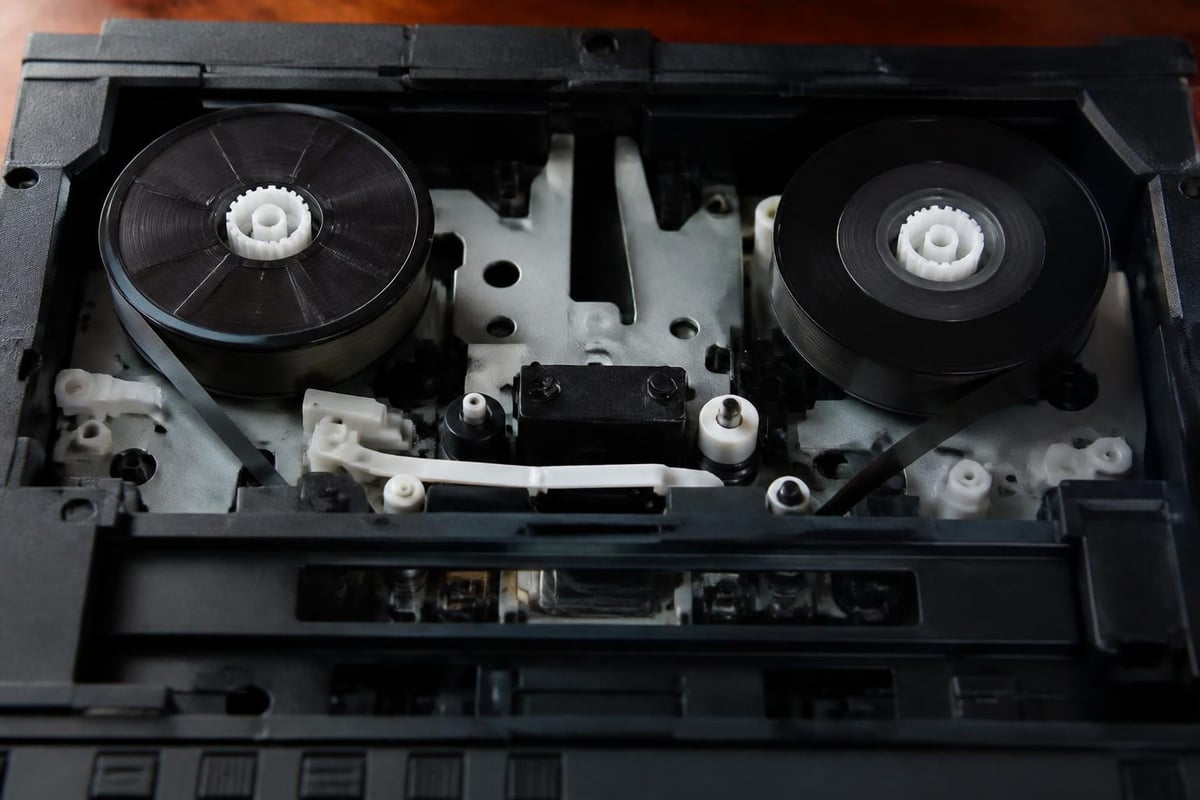
VHS tape consists of a polyester base coated with iron oxide particles suspended in a binder material, wound onto plastic reels inside a protective cassette shell. The cassette measures approximately 7.4 × 4.1 × 1 inches and contains roughly 246 to 430 meters of half-inch wide magnetic tape, depending on recording duration.
The magnetic coating stores video and audio signals through patterns of magnetization along the tape surface. SMPTE Journal technical research demonstrates how VHS recorders use helical scan technology, where rotating video heads record diagonal tracks across the tape while linear audio tracks run along the edges.
Physical Components That Impact Playback Quality
Several internal components determine whether a VHS tape will play successfully:
- Leader tape: Clear plastic sections at beginning and end that protect recorded content
- Splicing points: Joints where leader meets recorded tape, potential failure locations
- Pressure pad: Spring-loaded felt component maintaining tape-to-head contact
- Cassette shell: Plastic housing with moving parts, hubs, and access doors
- Write-protection tab: Removable plastic segment preventing accidental recording
The cassette shell includes moving parts that can break or malfunction after years of storage. Plastic components become brittle, springs lose tension, and internal felt pads deteriorate or detach. These mechanical failures often prevent playback even when the magnetic tape itself remains viable.
Degradation Patterns and Preservation Challenges
Magnetic tape deteriorates through multiple simultaneous processes, each accelerated by improper storage conditions. The iron oxide particles lose magnetic strength over time, reducing signal quality and introducing dropouts in the video image. Binder hydrolysis occurs when moisture breaks down the chemical bonds holding magnetic particles to the tape base, creating a sticky residue that gums up playback equipment.
Temperature and humidity fluctuations cause the most severe damage to VHS tape collections. The Image Permanence Institute research identifies ideal storage conditions between 65-70°F with 30-40% relative humidity. Higher temperatures accelerate chemical degradation while low humidity causes lubricant migration and tape brittleness.
Common Degradation Symptoms
Professional digitization operators encounter these deterioration indicators regularly:
- Sticky shed syndrome: Binder breakdown creating tacky surface residue
- Edge damage: Physical deterioration along tape edges from tension stress
- Print-through: Magnetic signal transfer between wound tape layers
- Oxide shedding: Magnetic coating flaking off the base material
- Dimensional instability: Tape stretching or shrinking affecting tracking
The Library of Congress preservation guidance emphasizes that VHS tape quality deteriorates even under optimal storage, making timely digitization essential for content preservation. Each playback cycle adds mechanical stress, potentially causing additional damage to already fragile media.
Professional Equipment Requirements for VHS Transfer
Successful VHS tape digitization requires properly maintained playback equipment with specific technical capabilities. Consumer-grade VCRs from the 1990s and 2000s no longer provide reliable service due to worn mechanisms, degraded capacitors, and alignment drift. Professional S-VHS decks offer superior performance through better build quality, time base correction, and adjustable playback parameters.
| Equipment Type | Key Advantages | Typical Applications |
|---|---|---|
| S-VHS Pro Decks | TBC, frame-by-frame, broadcast quality | High-value commercial transfers |
| Standard VHS Decks | Universal compatibility, affordable rental | Volume consumer digitization |
| Portable VHS Units | Compact size, battery operation | Field assessment and testing |
Professional S-VHS deck rental services provide access to maintained equipment without the capital investment required for ownership. Rental agreements starting at $99 per month enable digitization shops to scale capacity based on project volume while avoiding the maintenance burden of aging technology.
Maintenance and Calibration Considerations
VHS playback equipment requires regular maintenance to deliver consistent results across different tape conditions. Cleaning video heads between tapes prevents cross-contamination and oxide buildup that causes tracking errors. Demagnetizing heads and tape path components removes accumulated magnetic charge that degrades playback quality.
Critical maintenance intervals for professional VHS equipment include:
- Video head cleaning: After every 8-10 hours of operation
- Capstan and pinch roller cleaning: Weekly in high-volume environments
- Demagnetization: Monthly or when tracking issues appear
- Mechanical alignment: Annually or after 500 operating hours
- Capacitor replacement: Every 5-7 years regardless of symptoms
VCR maintenance contracts reduce downtime by scheduling preventive service before failures occur. Professional technicians identify worn components, perform alignment procedures, and replace consumable parts before they impact transfer quality.
Proper Handling and Preparation Procedures
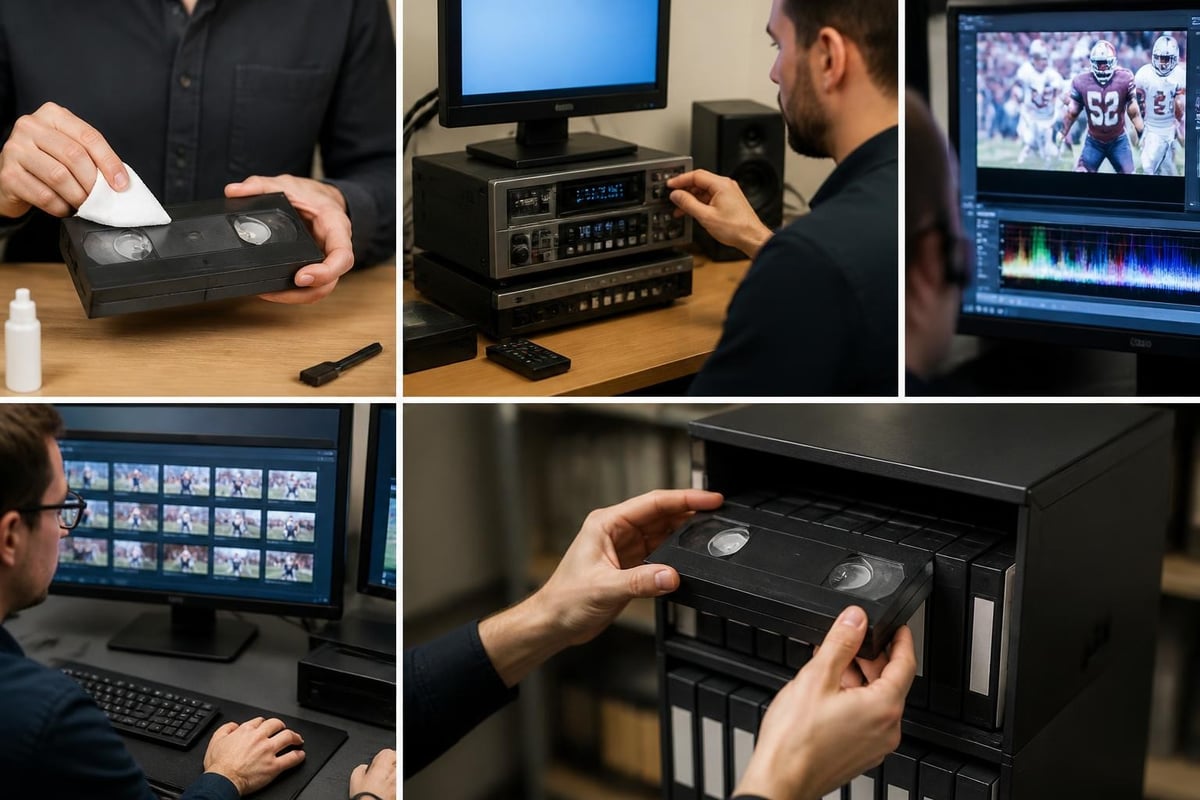
Pre-transfer inspection and preparation significantly impact digitization success rates. The Library of Congress digitization guidance outlines systematic approaches for assessing tape condition and preparing materials for playback. Visual inspection identifies obvious damage, mold growth, or mechanical problems before attempting playback.
Step-by-Step Preparation Protocol
Professional preparation follows a methodical sequence to minimize risk:
- Environmental acclimation: Allow tapes to reach room temperature over 24 hours
- Visual assessment: Inspect cassette shell, windows, and internal components
- Mechanical testing: Verify reels spin freely and cassette doors operate smoothly
- Cleaning: Remove dust, debris, and surface contamination from cassette exterior
- Test playback: Brief evaluation to assess tape condition and playback quality
Tapes showing signs of sticky shed syndrome require baking treatment before playback attempts. This controlled heating process temporarily restores tape playability by driving moisture from the binder layer. Professional baking ovens maintain precise temperature control between 120-135°F for 4-8 hours, though treatment effectiveness varies by tape formulation and degradation severity.
Digitization Standards and Quality Benchmarks
Establishing appropriate capture standards balances file size considerations against preservation requirements. The National Archives video storage recommendations provide federal-level guidance on digitization specifications for long-term preservation. Lossless or minimally compressed codecs preserve maximum information from deteriorating source material.
Professional digitization specifications for VHS tape typically include:
- Resolution: 720×480 (NTSC) or 720×576 (PAL) matching source format
- Frame rate: 29.97 fps (NTSC) or 25 fps (PAL) preserving original timing
- Codec: FFV1, ProRes, or uncompressed depending on archive requirements
- Color space: 4:2:2 sampling maintaining chroma information
- Audio: Uncompressed PCM at 48kHz, 16-bit or higher
Time base correction becomes essential when capturing from VHS tape due to inherent timing instabilities in the format. Professional equipment includes built-in TBC circuits that stabilize the signal, though external processors provide superior results for challenging source material.
| Quality Factor | Consumer Capture | Professional Capture | Archival Standard |
|---|---|---|---|
| Video Bitrate | 5-8 Mbps | 50-100 Mbps | 100-200+ Mbps |
| Color Sampling | 4:2:0 | 4:2:2 | 4:2:2 or 4:4:4 |
| Processing | Automatic | Adjustable | Minimally processed |
Troubleshooting Common Playback Issues
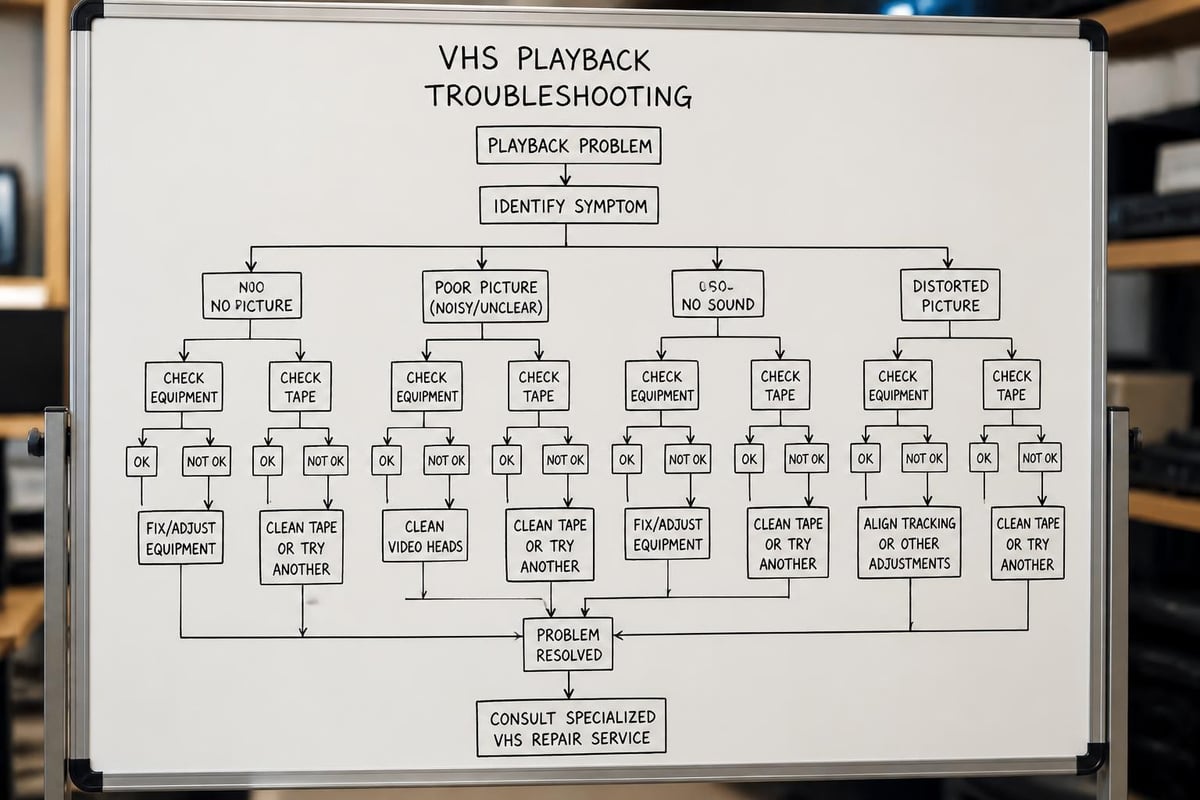
VHS tape playback problems stem from mechanical failures, signal degradation, or equipment malfunctions. Systematic troubleshooting isolates the root cause and determines whether issues originate from the tape, playback equipment, or capture chain. Testing known-good reference tapes on suspect equipment separates deck problems from media problems.
Diagnostic Approaches for Problem Tapes
When encountering playback difficulties, professional operators follow structured diagnostic procedures:
- Tracking errors: Adjust tracking control, clean video heads, verify tape tension
- No video signal: Check video head drum rotation, inspect tape path, verify connections
- Audio dropout: Clean audio heads, check linear track alignment, test alternative inputs
- Intermittent playback: Inspect pressure pad, verify cassette shell integrity, check pinch roller
- Color problems: Calibrate color processing, verify playback standard (NTSC/PAL), check comb filter
The British Film Institute's videotape preservation resources document institutional approaches to large-scale VHS tape digitization projects. Their methodologies emphasize documentation of playback issues, metadata capture, and decision frameworks for tapes requiring specialized treatment or equipment.
Business Considerations for Digitization Services
Operating a professional VHS tape transfer service requires balancing equipment investment against project volume and pricing structures. Purchasing used professional decks involves significant upfront costs plus ongoing maintenance expenses, while rental arrangements provide flexibility without capital commitment. Professional VCR rental options enable shops to access maintained equipment with support services included.
Equipment Acquisition Strategies
Different business models suit different operational scales:
Purchase considerations: Suitable for established shops with consistent volume, technical expertise for maintenance, and capital for parts inventory. Depreciation and obsolescence risk increase as equipment ages and parts availability declines.
Rental considerations: Ideal for variable workloads, seasonal businesses, or shops testing new service offerings. Monthly costs remain predictable, equipment failures become the rental provider's responsibility, and upgrades to different models occur without selling existing inventory.
Hybrid approaches: Maintain core equipment through ownership while renting specialized or backup units during peak periods. This strategy balances cost control with capacity flexibility.
The repair infrastructure for VHS equipment continues shrinking as technicians retire and parts suppliers exit the market. VCR repair services with diagnostic fees starting at $45 provide essential support for shops lacking in-house technical capabilities. Establishing relationships with qualified repair providers prevents extended downtime when equipment failures occur.
Format Variations and Compatibility Issues
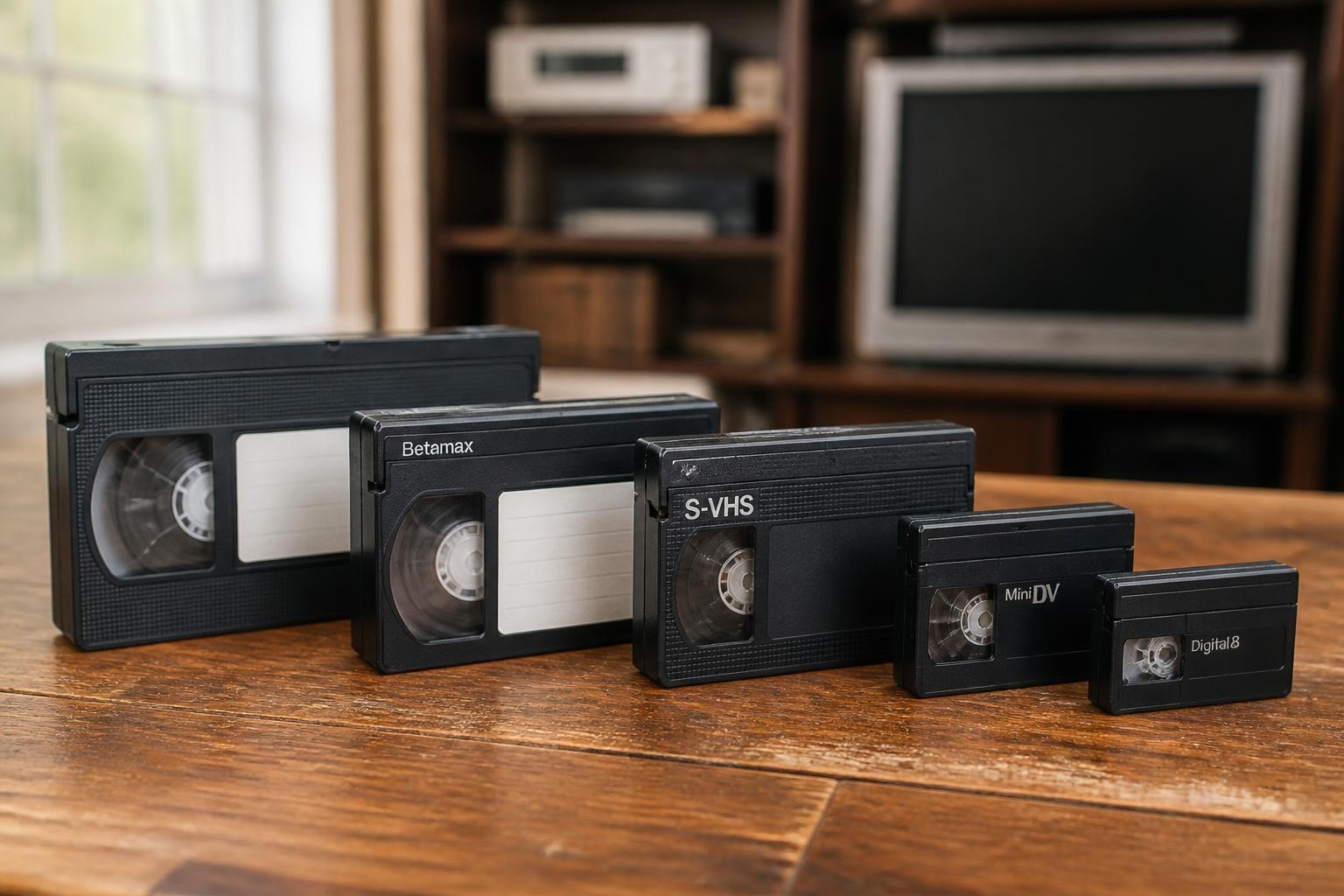
VHS tape encompasses several technical variations that affect playback requirements and quality expectations. Standard VHS provides approximately 240 lines of horizontal resolution, while S-VHS improves this to roughly 400 lines through improved recording parameters and tape formulations. Professional digitization equipment must accommodate both formats plus regional variations between NTSC and PAL standards.
Format compatibility requirements for comprehensive VHS services:
- Standard VHS (NTSC and PAL variants)
- S-VHS with Y/C separated output capability
- VHS-C (compact cassette requiring mechanical adapter)
- Long-play recording speeds (SP, LP, EP/SLP)
- Copy-protected commercial releases
Some tapes combine multiple recording speeds within a single cassette, requiring equipment that automatically adjusts to changing tape speed. Professional decks handle these transitions more reliably than consumer units, preventing glitches during speed changes.
Long-Term Storage After Digitization
Successfully digitizing VHS tape represents only the first step in preservation. Digital files require systematic storage strategies, backup procedures, and migration planning to ensure long-term accessibility. The Library of Congress preservation resources outline comprehensive approaches to digital asset management for moving-image content.
Digital Preservation Best Practices
Professional digitization services implement multiple safeguards:
- Redundant storage: Maintain at least three copies on different media types
- Geographic distribution: Store copies in separate physical locations
- Format standardization: Use well-documented, non-proprietary codecs
- Metadata preservation: Capture technical details, provenance, and content description
- Regular verification: Schedule integrity checks to detect file corruption
File formats and storage media continue evolving, requiring periodic migration to current technologies. Planning for these transitions from the outset prevents emergency situations when older formats become unreadable. Cloud storage services offer geographic redundancy and automated backup, though costs scale with collection size and bandwidth requirements.
Professional Services and Technical Support
Digitization businesses benefit from partnerships with specialized equipment providers who understand the technical and business challenges of videotape transfer services. Access to professional VHS playback equipment maintained by experienced technicians reduces the burden of supporting aging technology while ensuring consistent quality across projects.
Technical support becomes especially valuable when encountering unusual tape conditions or rare format variations. Experienced providers offer consultation on proper handling procedures, equipment settings optimization, and troubleshooting approaches for challenging source material. This expertise proves particularly important for high-value projects where a single playback attempt may represent the last opportunity to recover deteriorating content.
Preserving VHS tape content requires specialized equipment, proper handling procedures, and systematic digitization workflows that balance quality requirements against practical constraints. Whether operating a full-scale digitization facility or managing occasional transfer projects, access to properly maintained professional playback equipment determines success rates and final quality. VCR Supply provides rental and repair services for professional videotape decks including VHS and S-VHS formats, offering flexible monthly rental starting at $99 and comprehensive maintenance support to keep digitization operations running smoothly.