Video Recorder Tape: Formats, Maintenance & Preservation
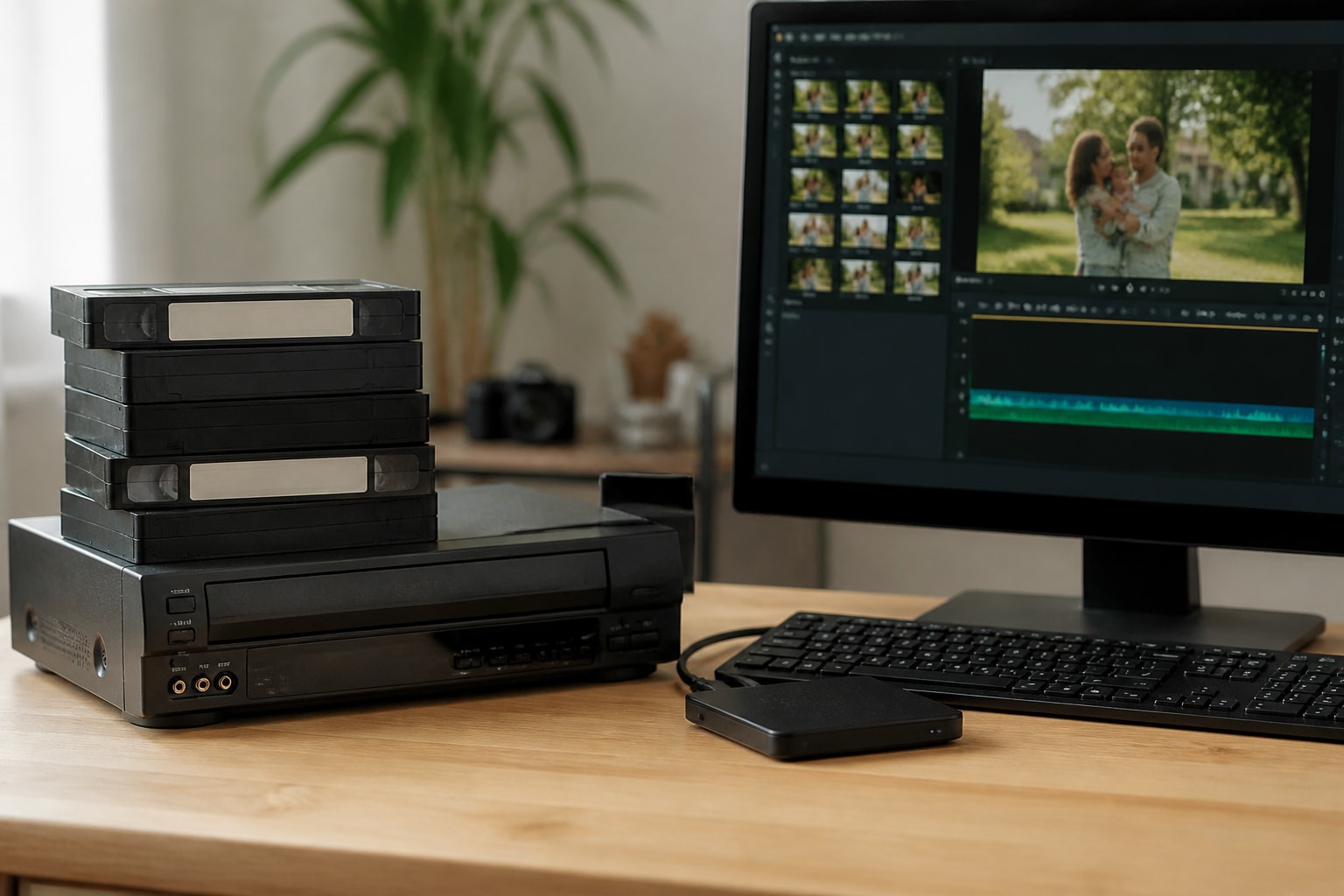
Video recorder tape revolutionized how we captured, stored, and shared moving images for nearly half a century. From professional broadcast studios to home movie collections, magnetic tape formats became the dominant medium for video recording between the 1970s and early 2000s. Today, digitization professionals and archivists work to preserve these tapes before their magnetic media degrades beyond recovery. Understanding the technical characteristics, proper handling, and preservation requirements of video recorder tape is essential for anyone involved in video transfer services, archival work, or media preservation.
Understanding Video Recorder Tape Technology
Magnetic tape technology represents one of the most successful information storage methods ever developed. Video recorder tape consists of a flexible polyester base coated with ferromagnetic particles suspended in a binder layer. When a recording head applies a magnetic field, these particles align to encode video and audio signals that can be read back by playback heads.
The fundamental challenge of video recording is bandwidth. Video signals contain far more information than audio, requiring engineers to develop sophisticated recording methods. The rotating-head helical-scan design became the industry standard, allowing much higher writing speeds and data density than stationary-head systems. This innovation made consumer and professional video recording practical.
Physical Construction and Materials
Video recorder tape construction varies by format, but most share common elements:
- Base film: Typically polyester (PET) ranging from 10-25 microns thick
- Magnetic layer: Iron oxide, chromium dioxide, or metal particles in polymer binder
- Back coating: Carbon-based layer to reduce static and improve transport
- Protective overcoat: Thin layer to minimize head wear and tape damage
The National Archives guide to identifying video formats provides comprehensive details on distinguishing physical characteristics across professional and consumer formats.
Professional formats like Betacam SP and Digital-S used metal particle formulations for superior signal quality and durability. Consumer formats such as VHS and Video8 typically employed iron oxide or chromium dioxide coatings optimized for cost-effectiveness rather than archival longevity.

Common Video Recorder Tape Formats
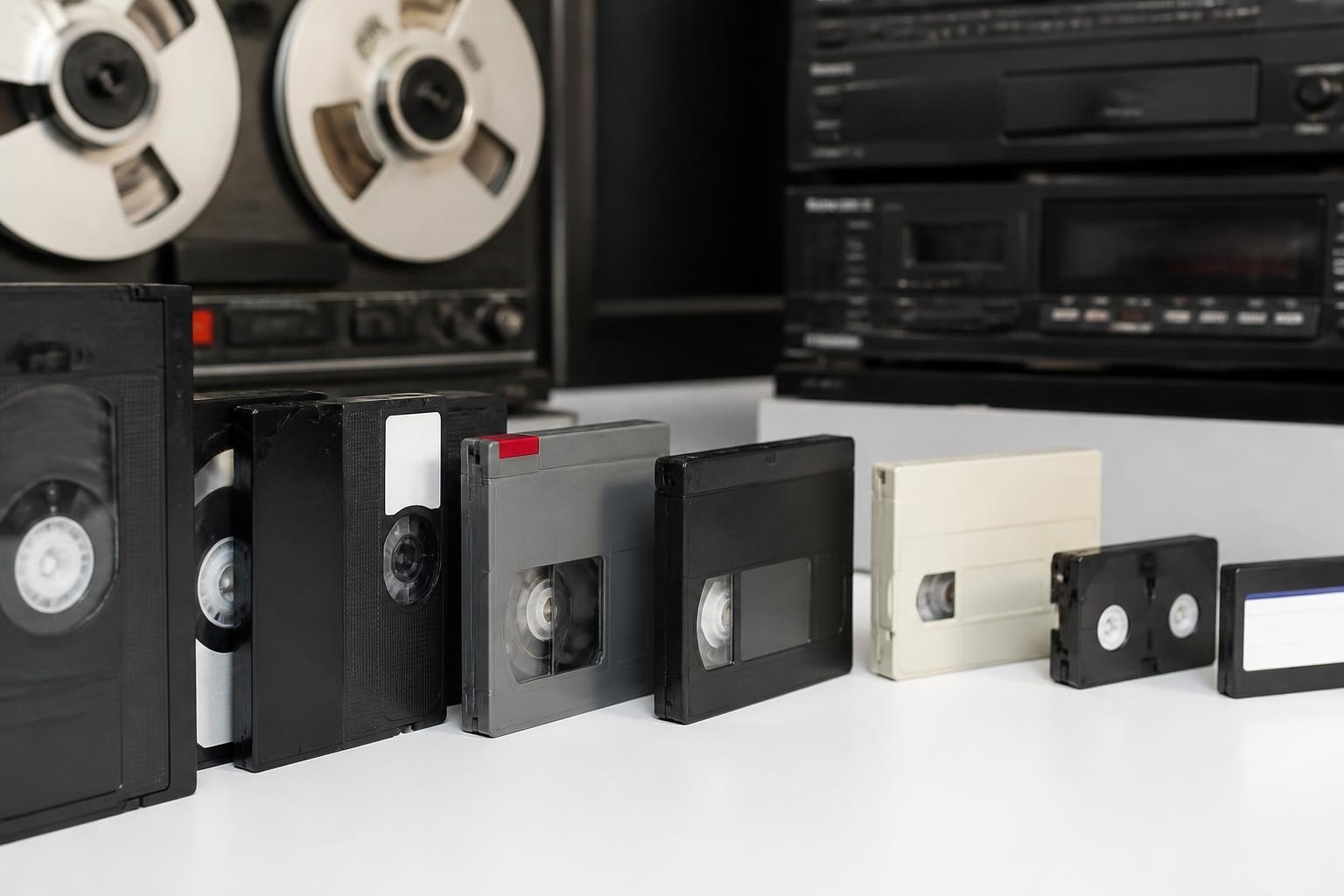
The videotape landscape includes dozens of formats developed for different markets and applications. Understanding these distinctions helps digitization professionals select appropriate playback equipment and transfer strategies.
Consumer Formats
VHS (Video Home System) dominated the consumer market from 1977 through the early 2000s. VHS cassettes use half-inch tape in a large shell with approximately 246 meters of tape for a T-120 cassette. Despite relatively low resolution (approximately 240 horizontal lines), VHS became the de facto standard for home video recording and movie rentals.
Betamax, Sony's competing consumer format, offered superior image quality in a more compact cassette. Though technically superior, Betamax lost the format war due to shorter recording times and limited movie availability. The VHS and Betamax comparison reveals how market forces rather than technical merit determined format success.
Video8, Hi8, and Digital8 represented Sony's compact camcorder formats. These 8mm tape formats progressed from analog (Video8) through improved analog (Hi8) to digital recording (Digital8), maintaining backwards compatibility while improving quality.
Professional and Prosumer Formats
| Format | Tape Width | Recording Method | Primary Application |
|---|---|---|---|
| Betacam SP | ½ inch | Component analog | Broadcast production |
| S-VHS | ½ inch | Y/C separation | Industrial/prosumer |
| MiniDV | ¼ inch | Digital DV compression | Professional/consumer camcorders |
| U-matic | ¾ inch | Composite analog | Broadcast/industrial |
| DVCAM | ¼ inch | Digital DV (faster speed) | Professional production |
Professional formats prioritized signal quality, durability, and editability. Betacam SP became the broadcast standard for news gathering and production throughout the 1990s. These tapes used metal particle formulations and component recording to deliver broadcast-quality images.
S-VHS bridged consumer and professional markets, offering improved resolution through Y/C (luminance/chrominance) separation while maintaining compatibility with VHS playback equipment. Industrial users and serious videographers adopted S-VHS for training videos, event recording, and low-budget production.
Tape Degradation and Preservation Challenges
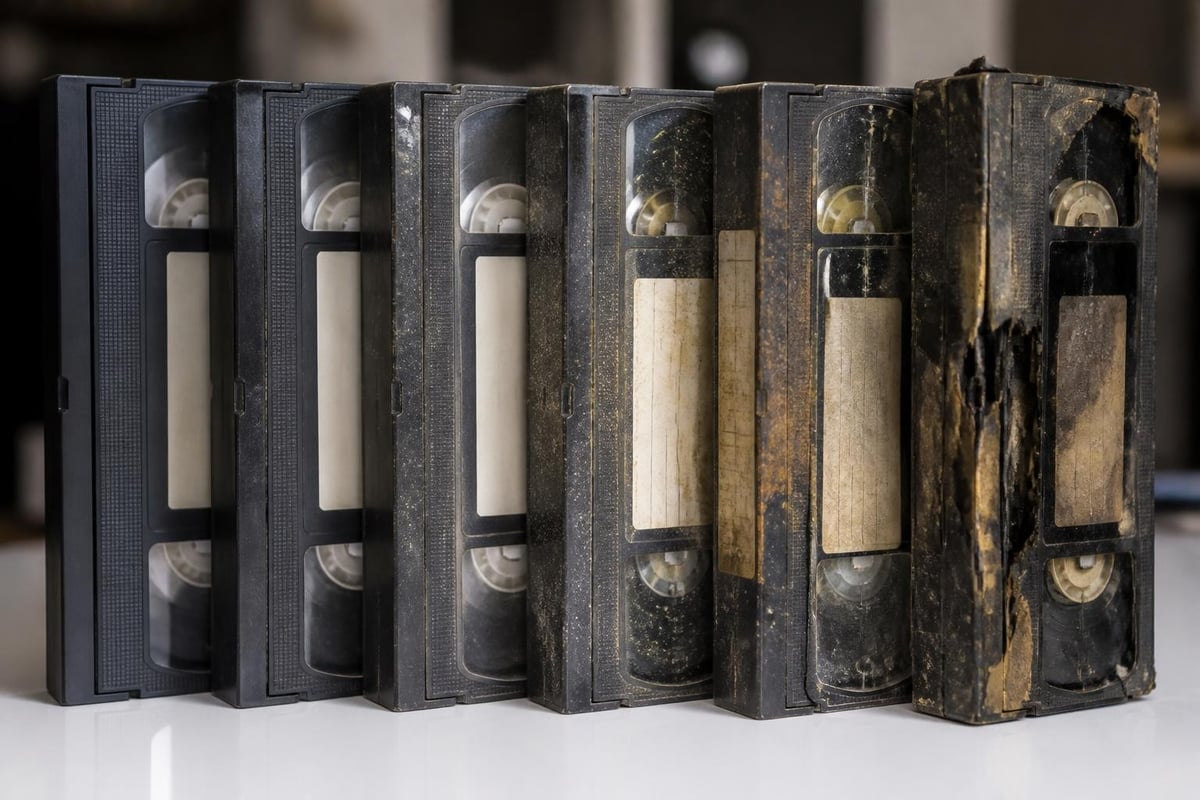
Video recorder tape is not a permanent storage medium. Chemical and physical degradation processes threaten every tape in existence, making timely digitization critical for content preservation.
Chemical Degradation Mechanisms
Sticky-shed syndrome affects many tapes manufactured during the 1970s and 1980s. Hydrolysis breaks down polyurethane binder, causing the magnetic coating to become sticky and shed particles. The Library of Congress research on sticky-shed syndrome documents this phenomenon extensively, noting that temporary baking at controlled temperatures can restore playability for one-time transfers.
Binder deterioration occurs through multiple pathways:
- Hydrolysis from moisture absorption
- Oxidation from environmental exposure
- Plasticizer migration causing brittleness
- Cross-linking changes in polymer structure
Temperature and humidity cycles accelerate these chemical processes. Tapes stored in attics, basements, or other uncontrolled environments deteriorate much faster than those maintained in stable, cool, dry conditions.
Physical Degradation
Repeated playback causes mechanical wear on both tape and playback equipment. The tape surface suffers abrasion from contact with rotating video heads, guide posts, and transport mechanisms. This wear gradually reduces signal strength and increases dropout errors.
Edge damage occurs when tapes are wound unevenly or subjected to impacts. Crushed edges prevent proper tape winding and cause tracking errors during playback. Professional deck maintenance and careful tape handling minimize these risks.
Print-through affects tapes stored for extended periods. Magnetic signals from adjacent tape layers interfere with each other, creating ghost images. Rewinding tapes before long-term storage helps mitigate this effect.
Digitization Best Practices for Video Recorder Tape
Professional digitization requires specialized equipment, technical knowledge, and quality control procedures. The Federal Agencies Digital Guidelines Initiative (FADGI) establishes technical standards for creating preservation-quality digital masters from analog video sources.
Equipment Requirements
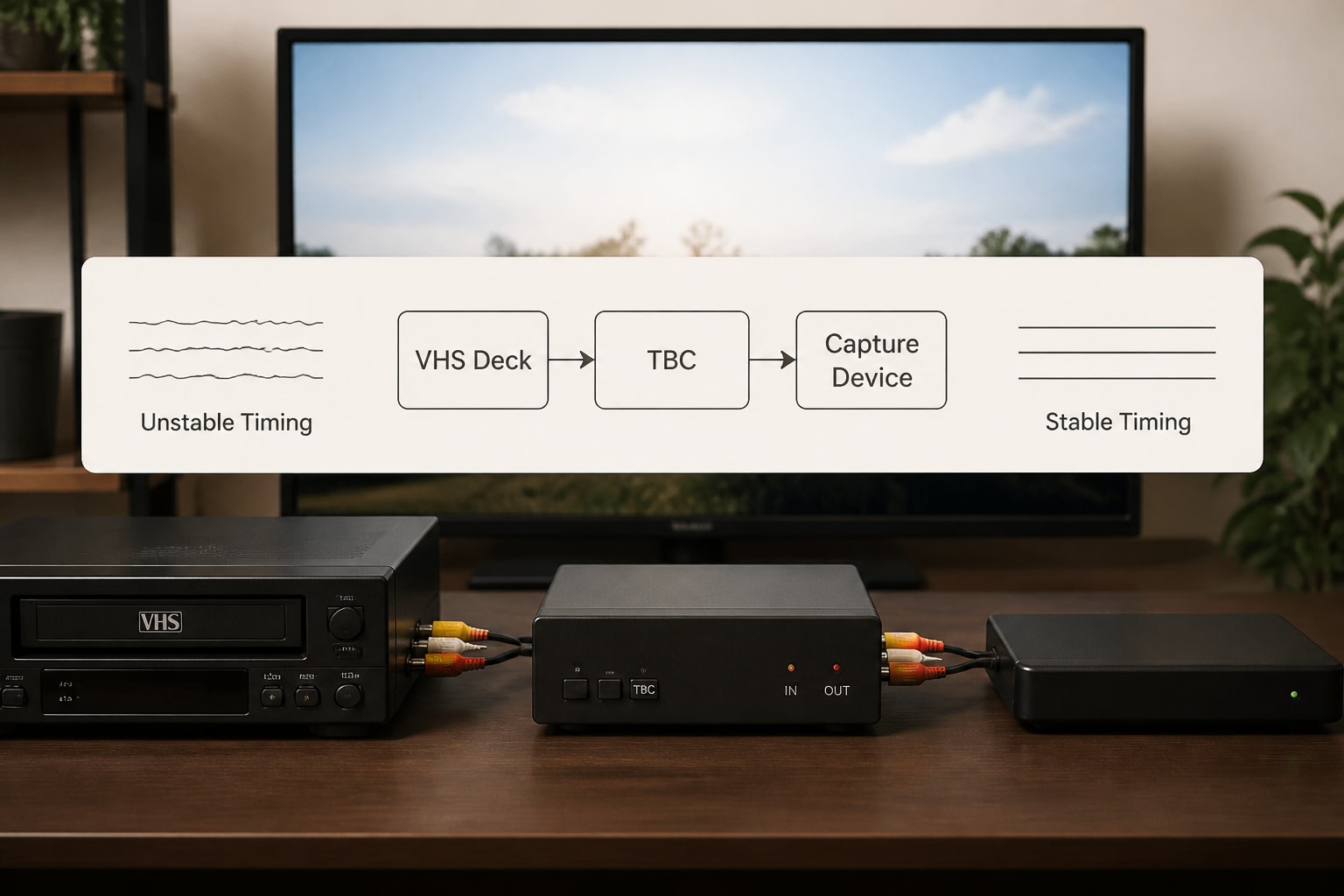
Proper playback equipment is essential for quality transfers. Using original-format professional decks ensures optimal signal recovery and minimizes tape damage during transfer. Consumer-grade equipment often lacks critical features like time-base correction, component outputs, and proper head alignment.
Format-specific considerations include:
- VHS and S-VHS: Professional decks with manual tracking adjustment and TBC
- Betamax: Working heads and proper alignment for older tapes
- MiniDV: IEEE 1394/FireWire interface for lossless digital transfer
- Digital8: Playback-compatible decks that support Hi8/Video8 backwards compatibility
- Professional formats: Properly maintained broadcast equipment with aligned heads
VCR Supply's rental inventory provides access to maintained professional decks when purchasing equipment isn't economically feasible for smaller digitization projects.
Signal Path and Capture Settings
The signal path from tape to digital file significantly impacts preservation quality. Component video outputs (Y/Pb/Pr) preserve more color information than composite connections. For digital formats like MiniDV, transferring via IEEE 1394 maintains the original DV codec without additional generation loss.
Recommended capture specifications:
- Resolution: 720×480 (NTSC) or 720×576 (PAL) minimum
- Frame rate: Native format rate (29.97 or 25 fps)
- Color space: 4:2:2 for professional work; 4:1:1 minimum for consumer
- Codec: Uncompressed or lossless compression for master files
- Audio: Uncompressed PCM at original sample rate
The Canadian Conservation Institute guidelines emphasize creating high-quality preservation masters first, then generating access copies in various formats as needed.
Quality Control and Assessment
Every transfer requires quality assessment to ensure acceptable results:
- Visual inspection for dropouts, noise, and tracking errors
- Audio level monitoring and synchronization verification
- Color and brightness comparison to source material
- Metadata documentation including format, condition, and equipment used
Professional digitization workflows include both automated and manual quality control steps. Automated tools detect dropout errors, audio glitches, and signal level problems. Manual review catches content-specific issues that automated systems miss.
Professional Equipment Maintenance and Repair
Reliable playback equipment is essential for successful video recorder tape digitization. Professional decks require regular maintenance to preserve optimal performance and prevent tape damage.
Preventive Maintenance Protocols
Cleaning procedures should occur after every 20-50 hours of use:
- Video head cleaning with appropriate solvents
- Capstan and pinch roller cleaning
- Tape path inspection and debris removal
- Threading mechanism lubrication
- Transport belt inspection and replacement
Alignment verification ensures proper tape contact and signal recovery. Video head azimuth, tape tension, and tracking alignment drift over time. Annual professional calibration maintains specifications within manufacturer tolerances.
Common Failure Modes
Professional decks experience predictable wear patterns:
| Component | Typical Lifespan | Symptoms When Worn |
|---|---|---|
| Video heads | 1000-2000 hours | Increased dropouts, weak signal |
| Capstan belts | 2000-3000 hours | Speed instability, wow/flutter |
| Mode switches | 5000-8000 cycles | Intermittent operation |
| Power supply capacitors | 10-15 years | Erratic behavior, failure to start |
Professional repair services diagnose and address these issues using format-specific expertise and genuine replacement parts. The technical complexity of formats like Betacam SP and Digital-S demands specialized knowledge beyond typical consumer electronics repair.

Format Identification and Technical Assessment
Digitization professionals frequently encounter unknown or mislabeled video recorder tape formats. Accurate identification ensures proper playback equipment selection and prevents tape damage from incompatible machines.
Visual Identification Techniques
Physical cassette characteristics provide initial identification clues:
- Cassette dimensions: Measure length, width, and thickness
- Window configuration: Observe tape visibility and hub exposure
- Shell markings: Check for format labels and manufacturer logos
- Tape width: Visible through windows or loading mechanism
The California Revealed AV Format Guide offers detailed dimensional specifications and photographs for dozens of video formats, serving as an invaluable field reference.
Technical Specification Resources
Professional standards organizations maintain comprehensive technical documentation. The SMPTE technical specifications library includes detailed engineering standards for broadcast and professional video formats. These documents specify track patterns, recording parameters, and signal characteristics essential for proper playback and assessment.
Format variants complicate identification. VHS-C, S-VHS-C, and VHS cassettes share similar shells but require different playback equipment. MiniDV, DVCAM, and HDV all use the same cassette size but employ different recording schemes. Testing with appropriate equipment confirms format identity when visual inspection proves inconclusive.
Business Considerations for Digitization Services
Operating a successful video digitization business requires balancing equipment investment, workflow efficiency, and quality standards. Understanding video recorder tape preservation needs helps position services effectively in the market.
Equipment Investment Strategies
Purchasing professional playback decks represents significant capital investment. New equipment is unavailable for discontinued formats, forcing reliance on used equipment markets. Prices for working professional decks continue rising as supply diminishes.
Rental vs. ownership analysis:
- Project-based work favors rental for format flexibility
- High-volume operations benefit from owned equipment
- Monthly rental starting at $99 provides access without capital outlay
- Maintenance contracts reduce unexpected downtime costs
Diversifying format capabilities expands potential client base. Supporting consumer formats (VHS, Video8) alongside professional formats (MiniDV, S-VHS) captures both personal and institutional preservation projects.
Market Trends and Opportunities
The recent VHS cultural resurgence documented by the Los Angeles Times reflects growing appreciation for analog media aesthetics and cultural preservation. This trend creates opportunities beyond simple format conversion.
Institutional clients including libraries, museums, and corporate archives require specialized handling and documentation. These projects demand higher technical standards but offer better margins than consumer work. Understanding technical recording principles helps communicate expertise to sophisticated clients.
Workflow Optimization
Efficient intake and assessment procedures maximize throughput:
- Visual format identification and condition assessment
- Playback equipment selection and setup
- Test playback and quality verification
- Full transfer with monitoring
- Quality control and file delivery
Batch processing similar formats reduces equipment switching and setup time. Scheduling maintenance during lower-demand periods prevents service interruptions during peak seasons.
Specialized Format Considerations
Certain video recorder tape formats present unique challenges requiring specialized knowledge and equipment.
Small Format Tapes
MiniDV cassettes contain extremely thin tape prone to edge damage and stretching. The digital recording format means even minor dropouts can cause visible artifacts or complete frame loss. Professional MiniDV decks with gentle transport mechanisms minimize damage during playback.
Digital8 provides an economical option for Hi8 and Video8 digitization since Digital8 camcorders support backwards playback compatibility. However, not all Digital8 equipment reads analog formats equally well. Testing playback quality before committing to transfer prevents rework.
Obsolete Professional Formats
U-matic tapes from the 1970s and 1980s often suffer from sticky-shed syndrome requiring baking treatment before playback. The three-quarter inch format was broadcast standard before Betacam, making these tapes historically significant despite technical obsolescence.
Betamax professional variants including Betacam, Betacam SP, and Digital Betacam use the same cassette shell but incompatible recording schemes. Attempting playback in wrong equipment damages tapes and equipment. Proper identification prevents costly mistakes.
Preserving video recorder tape content requires understanding format characteristics, degradation mechanisms, and proper digitization techniques. The window for successful transfer continues narrowing as tapes age and playback equipment becomes scarcer. Whether you operate a digitization service or manage archival collections, access to maintained professional playback equipment is essential. VCR Supply provides rental and repair services for professional videotape decks, offering flexible solutions that keep digitization projects moving forward without the burden of equipment ownership and maintenance overhead.