S VCR: Professional S-VHS Decks for Digitization
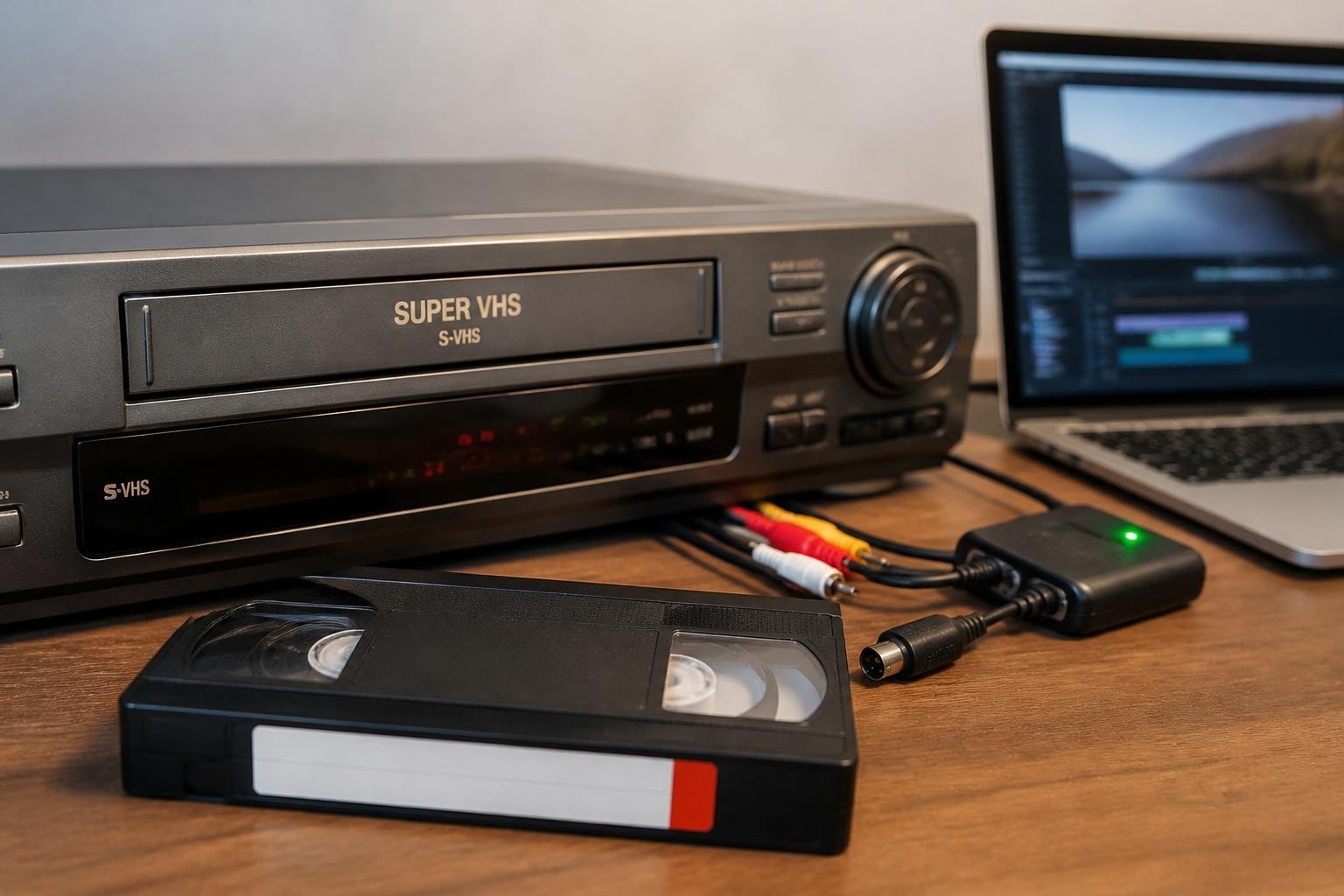
Professional video digitization requires specialized equipment capable of extracting the highest quality from legacy formats. The s vcr, commonly known as S-VHS (Super VHS), represents a significant advancement in consumer and professional videotape technology that continues to serve critical roles in preservation and archival workflows today. Unlike standard VHS, S-VHS delivers superior resolution and horizontal line count, making it an essential format for digitization professionals working with broadcast-quality source material from the 1980s and 1990s. Understanding the technical capabilities, maintenance requirements, and operational considerations of s vcr equipment enables digitization shops to deliver optimal results for clients preserving irreplaceable content.
Understanding S-VHS Technology and Its Professional Applications
The s vcr format emerged in 1987 as JVC's answer to growing demand for higher-quality home and professional video recording. JVC's S-VHS technology improved upon standard VHS by increasing luminance bandwidth from 3 MHz to 5 MHz, resulting in approximately 400 horizontal lines of resolution compared to VHS's 240 lines.
Key technical advantages include:
- Improved color reproduction through separated Y/C signals
- Enhanced detail capture for broadcast-quality footage
- Professional editing capabilities with time-base correction
- Compatibility with standard VHS playback (S-VHS ET models)
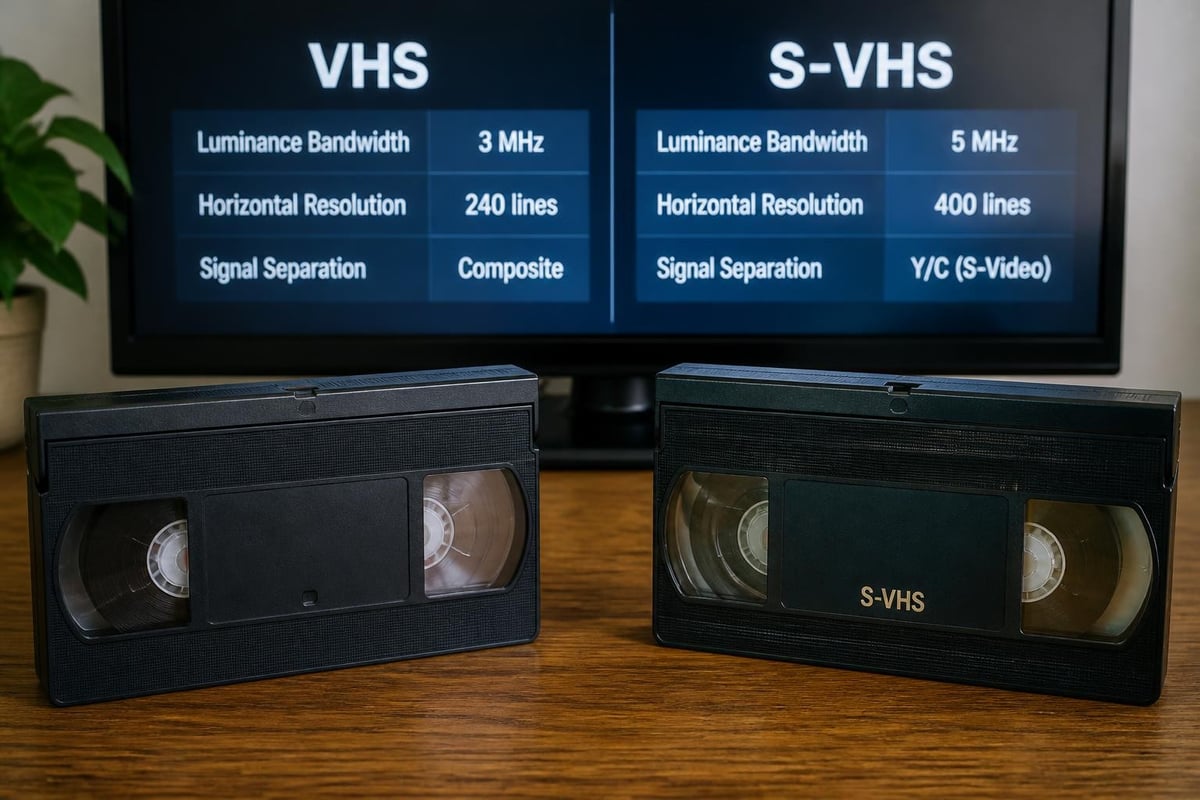
The format gained significant traction in professional video production, industrial training, and high-end consumer markets. Many corporate archives, educational institutions, and broadcast facilities accumulated extensive S-VHS libraries that now require specialized S-VHS deck rental solutions for proper digitization.
Professional-Grade S VCR Models Still in Demand
Several s vcr models remain highly sought after for their reliability and feature sets. Professional decks typically include manual tracking control, jog-shuttle transport, and calibrated playback heads that ensure optimal signal extraction from aging tapes.
| Deck Category | Key Features | Typical Applications |
|---|---|---|
| Broadcast/Industrial | TBC, frame-accurate editing, XLR audio | Professional digitization, archival transfer |
| Prosumer | Hi-Fi stereo, flying erase heads, S-Video output | Small studios, personal archives |
| Consumer High-End | S-VHS ET playback, basic editing functions | Home archive conversion |
The distinction matters significantly when planning digitization projects. Broadcast-quality s vcr equipment provides superior signal stability and time-base correction essential for commercial-grade transfers.
Maintenance and Repair Considerations for S VCR Equipment
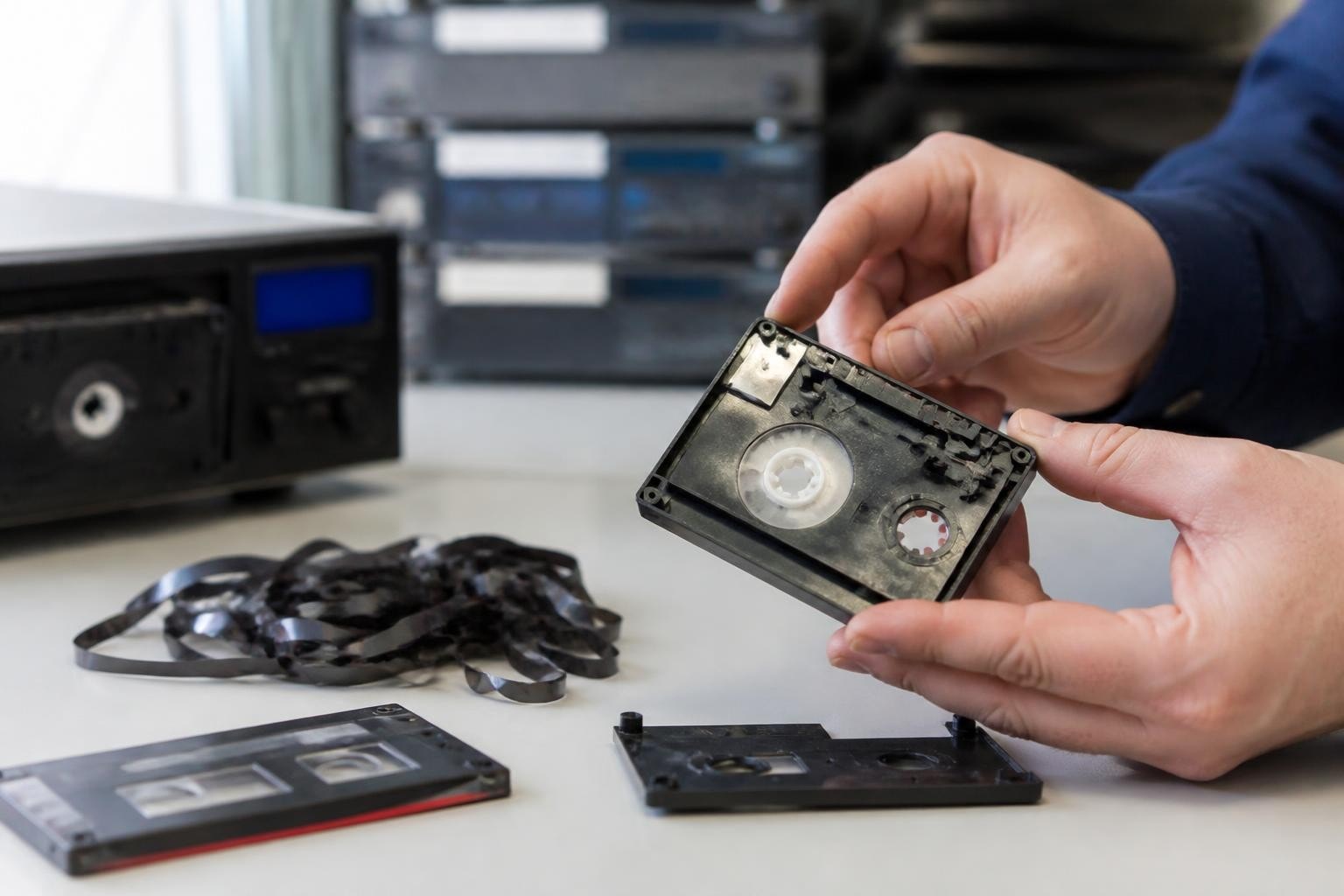
Aging S-VHS decks face predictable mechanical and electronic challenges that impact playback quality. The preservation of video recordings requires functioning equipment maintained to original specifications.
Common S VCR Failure Points
Digitization professionals encounter several recurring issues with s vcr equipment:
- Video head wear reducing high-frequency response and detail rendering
- Capstan and pinch roller degradation causing speed instabilities
- Mode switch failures preventing proper deck operation
- Power supply capacitor aging introducing noise and regulation problems
- Belt deterioration resulting in mechanical transport failures
Regular preventive maintenance extends equipment lifespan significantly. Professional VCR maintenance programs include cleaning cycles, alignment verification, and component replacement before failure occurs.
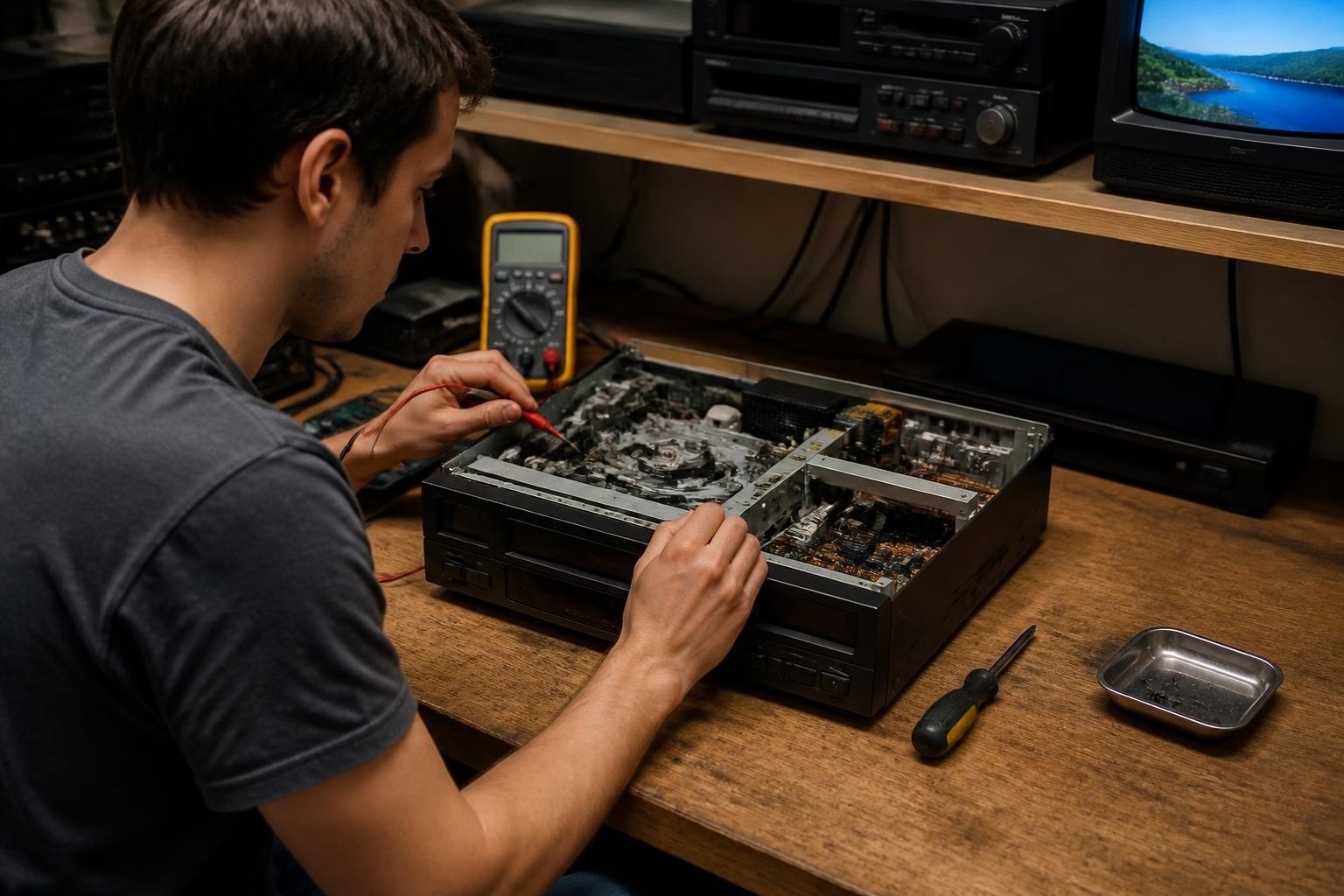
The complexity of s vcr repair has increased dramatically as parts availability declines. Specialized knowledge of video signal paths, servo systems, and mechanical adjustments becomes critical for maintaining operational fleets.
Professional Repair Versus Replacement Economics
Digitization shops face strategic decisions about equipment investment. A comprehensive VCR repair service evaluation should consider:
- Repair costs typically ranging from $150-$400 depending on component availability
- Replacement equipment scarcity driving prices for functional units higher
- Downtime impact on client commitments and revenue
- Long-term parts availability for specific models
Many facilities find that maintaining relationships with specialized repair providers while keeping backup units available provides optimal business continuity. The diagnostic fee structure allows cost-effective troubleshooting before committing to major repairs.
Optimizing S VCR Playback for Digital Capture
Extracting maximum quality from S-VHS source material requires understanding both the format's capabilities and its limitations. The National Archives provides guidance on proper playback techniques for preservation-quality digitization.
Signal Path Configuration
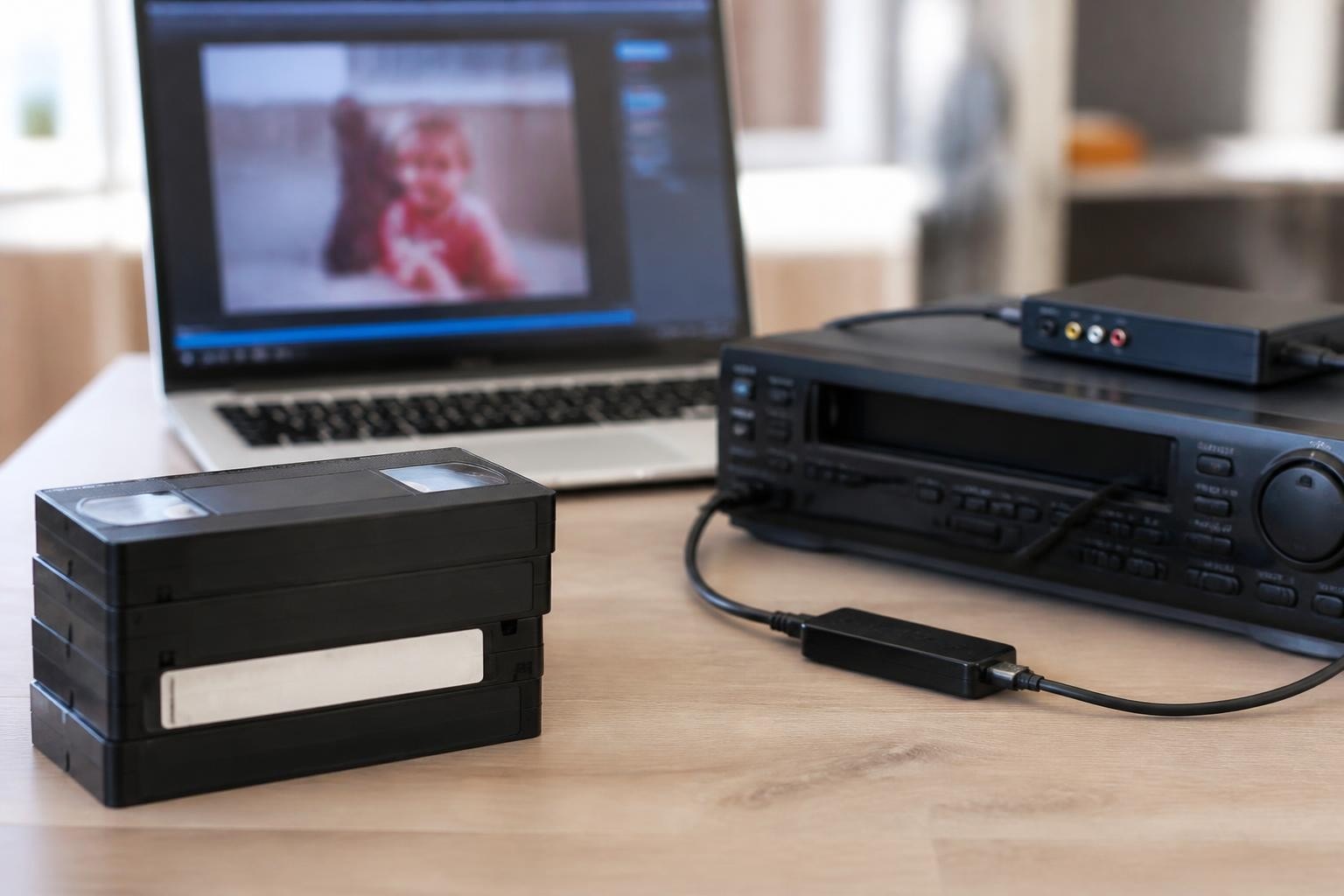
Professional s vcr digitization workflows utilize specific connection types and signal processing chains:
Preferred connection hierarchy:
- S-Video (Y/C separated) for luminance/chrominance separation
- Component video (when available on high-end decks)
- Composite video only as last resort
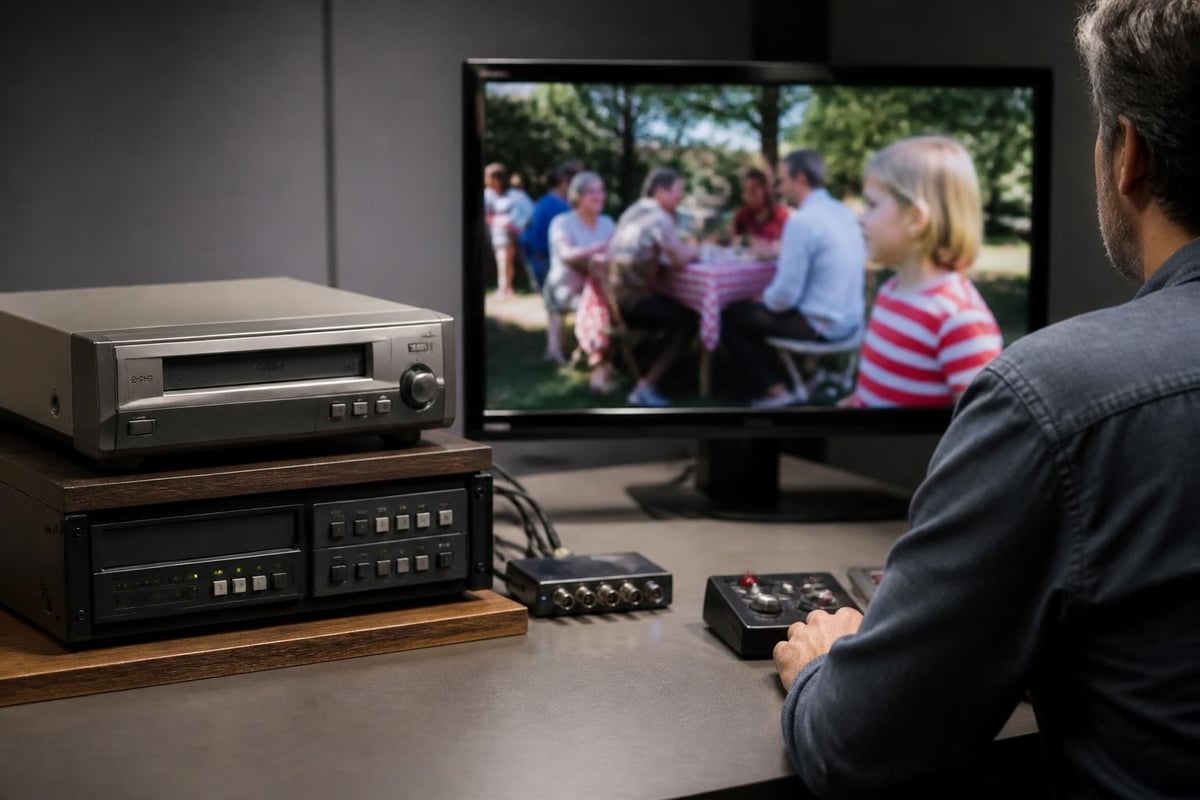
The s vcr format's separated luminance and chrominance signals provide significant advantages when properly captured. Technical specifications detail the signal structure and proper termination requirements.
Tracking and Alignment Procedures
Proper tracking adjustment proves critical for s vcr playback quality. Unlike digital formats with error correction, analog video quality directly reflects mechanical alignment precision.
Optimization process includes:
- Initial playback assessment with reference tapes
- Manual tracking adjustment for each source tape
- Audio azimuth verification for Hi-Fi tracks
- Video head switching point adjustment
- Output level calibration to capture hardware
Experienced operators recognize that each tape may require individual tracking optimization, particularly when source material originated on different recording decks.
Rental Solutions for Variable S VCR Workload
Many digitization facilities face fluctuating demand for S-VHS transfers, making equipment rental economically attractive. Professional deck rental provides flexibility without capital investment in aging technology.
When Rental Makes Strategic Sense
Project-based work patterns often favor rental arrangements:
| Scenario | Rental Advantage | Ownership Challenge |
|---|---|---|
| Seasonal volume spikes | Pay only during peak periods | Equipment idle during slow months |
| Client-specific projects | Match deck to tape format exactly | Maintaining diverse format library |
| Equipment backup needs | Temporary coverage during repairs | Capital tied up in redundant units |
| Market testing | Evaluate demand before investing | Risk of stranded assets |
The economics shift based on utilization rates. Facilities processing S-VHS content consistently may justify ownership, while occasional projects favor rental approaches.
Evaluating S VCR Rental Providers
Quality differences among rental providers significantly impact project outcomes. Professional digitization demands broadcast-grade equipment maintained to proper specifications.
Critical evaluation criteria:
- Equipment calibration and maintenance documentation
- Availability of specific models matching source material requirements
- Technical support during rental period
- Backup equipment access for time-sensitive projects
- Transparent pricing structures without hidden fees
Establishing relationships with specialized providers like those focusing on professional videotape formats ensures consistent quality and reliability.
Format Identification and Compatibility Challenges
The s vcr ecosystem includes several variants that impact playback compatibility and quality expectations. Proper format identification prevents equipment mismatches and quality disappointments.
S-VHS Variants and Their Implications
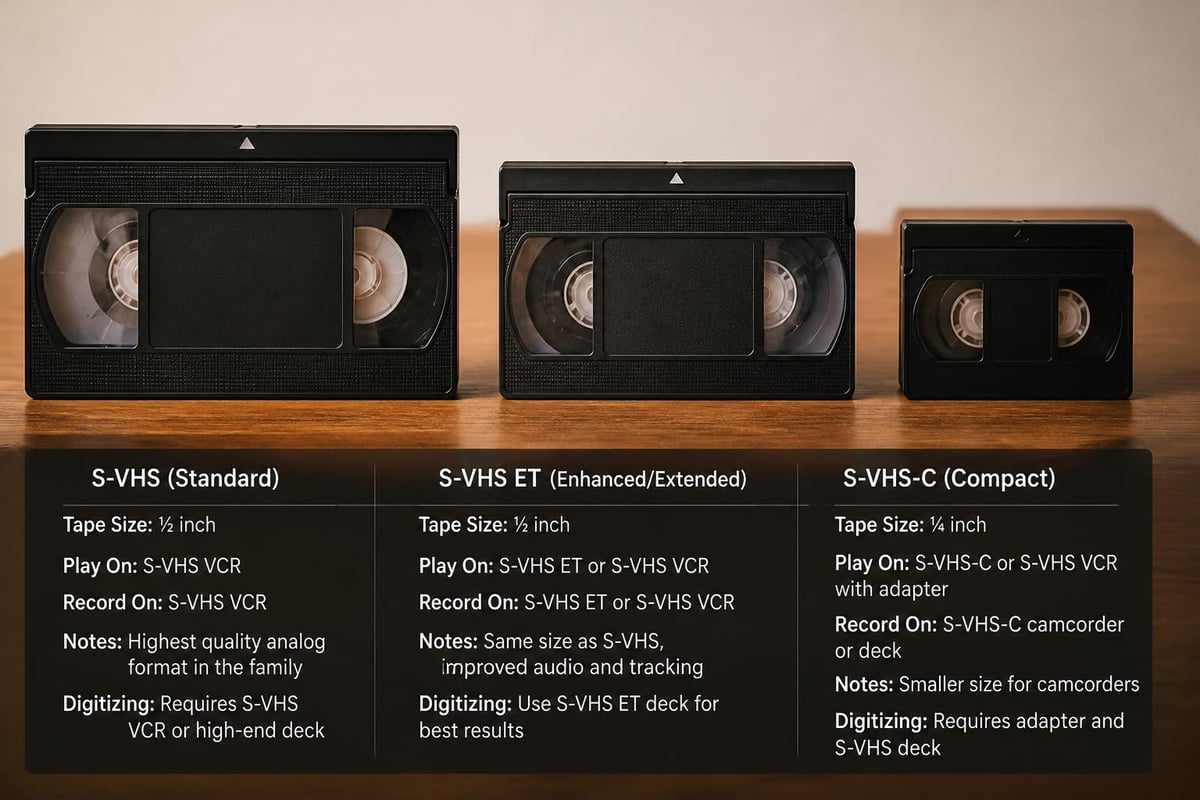
S-VHS Standard uses special high-grade tape formulations with different magnetic properties than VHS. Standard S-VHS decks cannot play these tapes in S-VHS mode without proper tape stock.
S-VHS ET (Extra Time) introduced by JVC allows S-VHS recording on standard VHS tape stock through modified recording parameters. This creates compatibility challenges when digitizing, as playback deck capabilities must match recording methods.
S-VHS-C represents the compact cassette variant used in camcorders, requiring adapter mechanisms or specialized compact playback decks for transfer work.
Understanding which variant a tape collection contains determines appropriate equipment selection. The Museum of Obsolete Media provides visual identification guides for distinguishing formats.
Cross-Format Playback Capabilities
Professional s vcr models typically include backward compatibility with standard VHS, but quality varies significantly. Some decks automatically detect format and switch playback parameters, while others require manual selection.
When planning digitization workflows involving mixed format collections, understanding these compatibility matrices prevents equipment bottlenecks. Many facilities maintain separate VHS-specific equipment alongside S-VHS decks for optimal results across format types.
Archival Standards and Best Practices for S VCR Content
Professional digitization follows established preservation standards ensuring long-term access and authenticity. The Library of Congress digital preservation resources outline workflows appropriate for personal and institutional collections.
Capture Specifications for Preservation-Quality Transfers
Archival s vcr digitization typically targets uncompressed or losslessly compressed digital files preserving maximum source quality:
Recommended capture parameters:
- Resolution: 720×480 (NTSC) or 720×576 (PAL) minimum
- Color space: 4:2:2 or 4:4:4 for preservation masters
- Bit depth: 10-bit uncompressed or lossless compression
- Frame rate: Native source rate without conversion
- Audio: Uncompressed PCM at 48kHz/24-bit
These specifications significantly exceed delivery requirements but preserve options for future format migrations and quality improvements through advancing restoration technologies.
Documentation and Metadata Requirements
Professional archival transfers include comprehensive documentation beyond the digital video file itself:
- Technical metadata (deck model, tracking settings, signal levels)
- Condition reports (tape degradation, dropout patterns, audio issues)
- Provenance information (recording date, original context, ownership)
- Transfer notes (decisions made, issues encountered, quality assessments)
- Equipment calibration records
The Association of Moving Image Archivists provides webinar training on documentation standards and equipment maintenance protocols essential for institutional-quality work.
Business Models for S VCR Digitization Services
Digitization service providers structure offerings around equipment capabilities and market positioning. Understanding the s vcr format's place in the broader analog video ecosystem informs strategic business decisions.
Service Tier Development
Professional operations typically develop tiered service offerings matching client needs and budget constraints:
| Service Level | S VCR Treatment | Target Market | Price Point |
|---|---|---|---|
| Economy | Basic capture, automated settings | Personal archives, home users | $15-30 per tape |
| Standard | Manual optimization, quality verification | Small businesses, families | $40-75 per tape |
| Premium | Broadcast specs, extensive documentation | Institutions, broadcasters | $100-200 per tape |
| Archival | Preservation masters, full metadata | Museums, archives, libraries | $200+ per tape |
The s vcr format typically commands premium pricing due to equipment scarcity and the superior quality of source material justifying preservation-grade treatment.
Equipment Investment Strategy
Capital allocation decisions significantly impact profitability and service capabilities. Facilities must balance equipment acquisition costs against market demand and competitive positioning.
Hybrid ownership-rental approaches allow strategic flexibility:
- Own primary workhorse decks for most common formats
- Rent specialized s vcr equipment for occasional projects
- Maintain repair relationships for quick turnaround
- Access backup equipment through rental during peak periods
This approach minimizes capital requirements while maintaining service breadth. Starting rental costs around $99 per month make project-based equipment access economically viable.
Technical Troubleshooting for Common S VCR Issues
Operators encounter predictable quality problems when working with S-VHS source material. Systematic troubleshooting methodologies identify root causes and appropriate remediation strategies.
Visual Quality Problems and Solutions
Symptom: Excessive noise or snow in playback
- Likely causes: Clogged video heads, tracking misalignment, weak RF signal
- Diagnostic steps: Clean heads, optimize tracking, verify tape condition
- When to seek repair: If cleaning and adjustment don't improve signal
Symptom: Color bleeding or smearing
- Likely causes: Chrominance circuit issues, S-Video cable problems, deck alignment
- Diagnostic steps: Test with known-good cable, verify deck color output with reference tape
- When to seek repair: Internal chroma processing failure indicated
Symptom: Image tearing or sync problems
- Likely causes: Servo instability, capstan speed issues, time-base errors
- Diagnostic steps: Check tape transport speed, verify sync output
- When to seek repair: Servo system requires professional adjustment
The historical development of VCR technology provides context for understanding these analog format challenges and why precise mechanical alignment matters critically.
Audio-Specific Troubleshooting
S-VHS decks typically offer both linear and Hi-Fi audio tracks, each with distinct failure modes:
Linear audio problems:
- Azimuth misalignment causing muffled sound
- Dirty audio heads reducing frequency response
- Level calibration errors creating volume inconsistencies
Hi-Fi audio problems:
- AFM carrier issues preventing Hi-Fi track recovery
- Switching noise between audio systems
- Dropout compensation failures
Professional s vcr repair addresses these issues through specialized test equipment and adjustment procedures beyond typical operator capabilities.
Future-Proofing S VCR Digitization Capabilities
The s vcr equipment pool continues shrinking as working decks fail and parts availability declines. Forward-thinking digitization operations develop contingency strategies ensuring continued service capabilities.
Parts Inventory and Cannibalization Strategy
Successful long-term s vcr maintenance often requires maintaining parts inventory:
- Video head assemblies (extremely limited availability)
- Transport belts and mechanical components
- Power supply capacitors and voltage regulators
- Control system integrated circuits
Some facilities purchase non-functional units specifically for parts harvesting, treating them as long-term insurance against future component unavailability.
Skills Development and Knowledge Preservation
Technical expertise in s vcr repair becomes increasingly rare as technicians retire. Organizations serving this market invest in:
- Documentation of repair procedures and adjustment techniques
- Cross-training staff on multiple equipment generations
- Building relationships with remaining specialist repair technicians
- Archiving service manuals and technical literature
The cultural significance of VCR technology extends beyond entertainment to encompass preservation of human knowledge and experience recorded on these formats.
Alternative Technology Evaluation
While s vcr equipment remains essential for optimal quality, emerging technologies may provide backup capabilities:
Software-based approaches using consumer-grade capture hardware and digital signal processing to enhance results from less-than-optimal playback equipment offer potential fallback options as professional deck availability declines.
Archive sharing networks among institutions allow access to properly maintained equipment for critical projects without individual facilities maintaining complete format coverage.
These strategies acknowledge the reality that s vcr equipment will eventually become unavailable, requiring creative solutions for continued access to S-VHS content.
The s vcr format represents a critical juncture in video technology history, delivering professional-quality results that remain relevant for digitization workflows today. Understanding equipment capabilities, maintenance requirements, and proper digitization techniques ensures optimal results when preserving this important content category. Whether your facility handles occasional S-VHS projects or maintains regular transfer services, access to properly maintained professional decks remains essential for quality outcomes. VCR Supply specializes in professional videotape deck rental and repair, offering flexible solutions starting at $99 per month alongside comprehensive repair services that keep digitization operations running smoothly without major capital investment in aging technology.