VCR for VHS: Professional Equipment & Digitization Guide
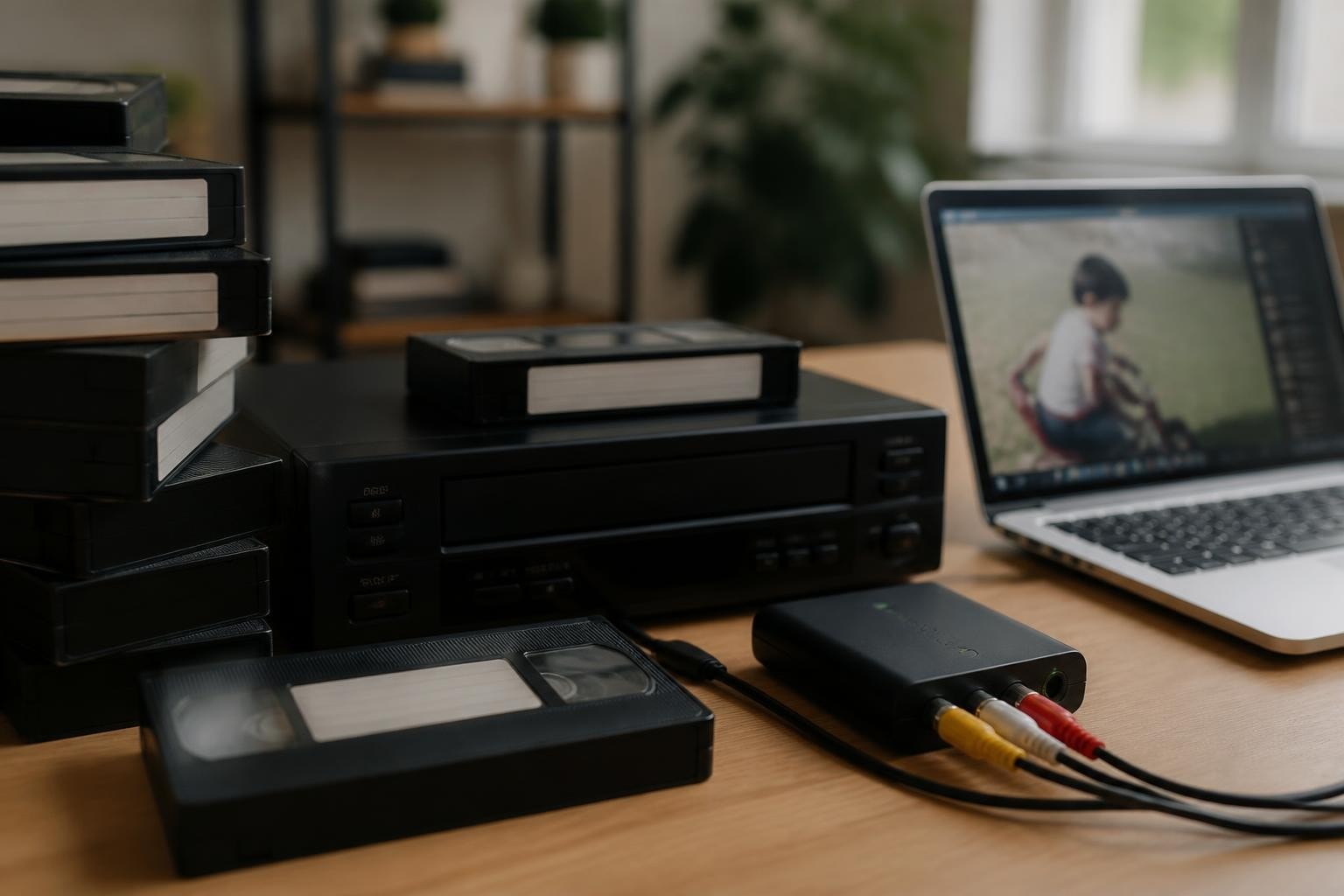
The videocassette recorder revolutionized home entertainment and professional video production for decades, with VHS emerging as the dominant consumer format. Today, millions of VHS tapes contain irreplaceable family memories, corporate archives, and historical footage that require proper playback equipment for preservation. Finding a reliable vcr for vhs playback has become increasingly challenging as manufacturing ceased in 2016, making professional-grade equipment and expert repair services essential for digitization businesses and archives working to save this content before magnetic tape deteriorates beyond recovery.
Understanding VCR Technology for VHS Playback
VCR technology specifically designed for VHS introduced helical scan recording, where video heads rotate diagonally across tape moving at relatively slow linear speeds. This innovation allowed VHS to store approximately 240 minutes of video on a single cassette in extended play mode, far exceeding earlier formats.
The mechanical complexity of a vcr for vhs involves precise head drum rotation, tape transport mechanisms, and servo control systems that maintain exact speeds. Professional VHS decks differ significantly from consumer models through enhanced tracking control, time-base correction, and superior video processing circuits that extract maximum quality from aging tapes.
Recording Modes and Quality Considerations
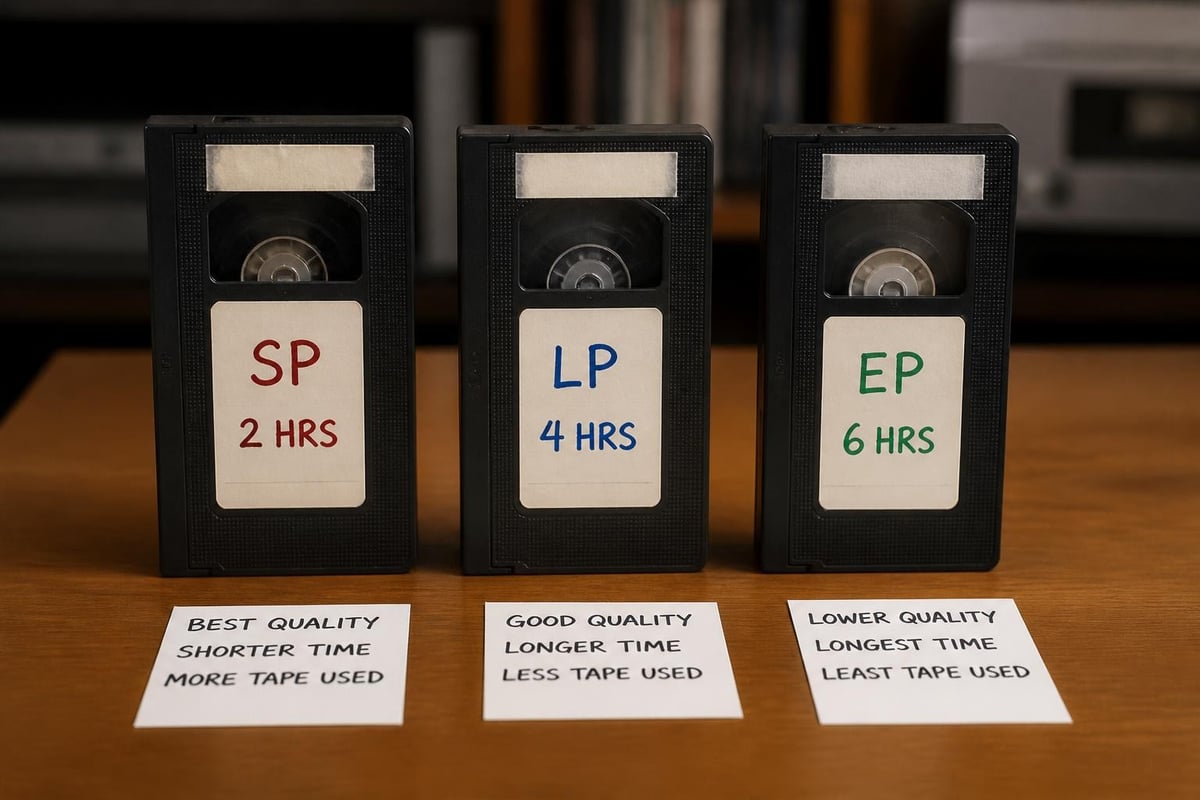
VHS equipment operates in three primary recording speeds:
- SP (Standard Play): 2-hour capacity, highest quality reproduction
- LP (Long Play): 4-hour capacity, reduced horizontal resolution
- EP/SLP (Extended/Super Long Play): 6-8 hour capacity, lowest quality
Quality degradation occurs in slower speeds because less tape area records each frame of video. Technical specifications from JVC engineering documents demonstrate how horizontal resolution drops from approximately 240 lines in SP mode to 230 lines in EP mode, with increased chroma noise and reduced signal-to-noise ratios.
Selecting Professional VCR Equipment for VHS Transfers
Choosing appropriate playback equipment requires understanding the difference between consumer-grade VCRs and professional decks. Digitization facilities processing client tapes cannot rely on aged consumer equipment that lacks essential features for archival-quality transfers.
Professional VHS decks include S-Video outputs that separate luminance and chrominance signals, preventing quality loss from composite video encoding. Time-base correction (TBC) built into higher-end units compensates for timing errors inherent in VHS playback, crucial when feeding digital capture equipment that requires stable sync signals.
Key Features for Professional Applications
| Feature | Consumer VCR | Professional VCR |
|---|---|---|
| S-Video Output | Sometimes | Standard |
| TBC (Time Base Correction) | Rare | Common |
| Manual Tracking Control | Basic | Precision |
| Front-Panel Inputs | No | Yes |
| Edit Controller Compatibility | No | Yes |
| Build Quality/Longevity | 2-3 years | 10+ years |
The University of British Columbia's VHS player buying guide emphasizes multi-standard playback capability for facilities handling international content, as NTSC, PAL, and SECAM formats require compatible equipment. Many professional S-VHS decks offer backward compatibility with standard VHS while providing enhanced features beneficial for transfer work.
Maintenance Requirements for VCR Equipment
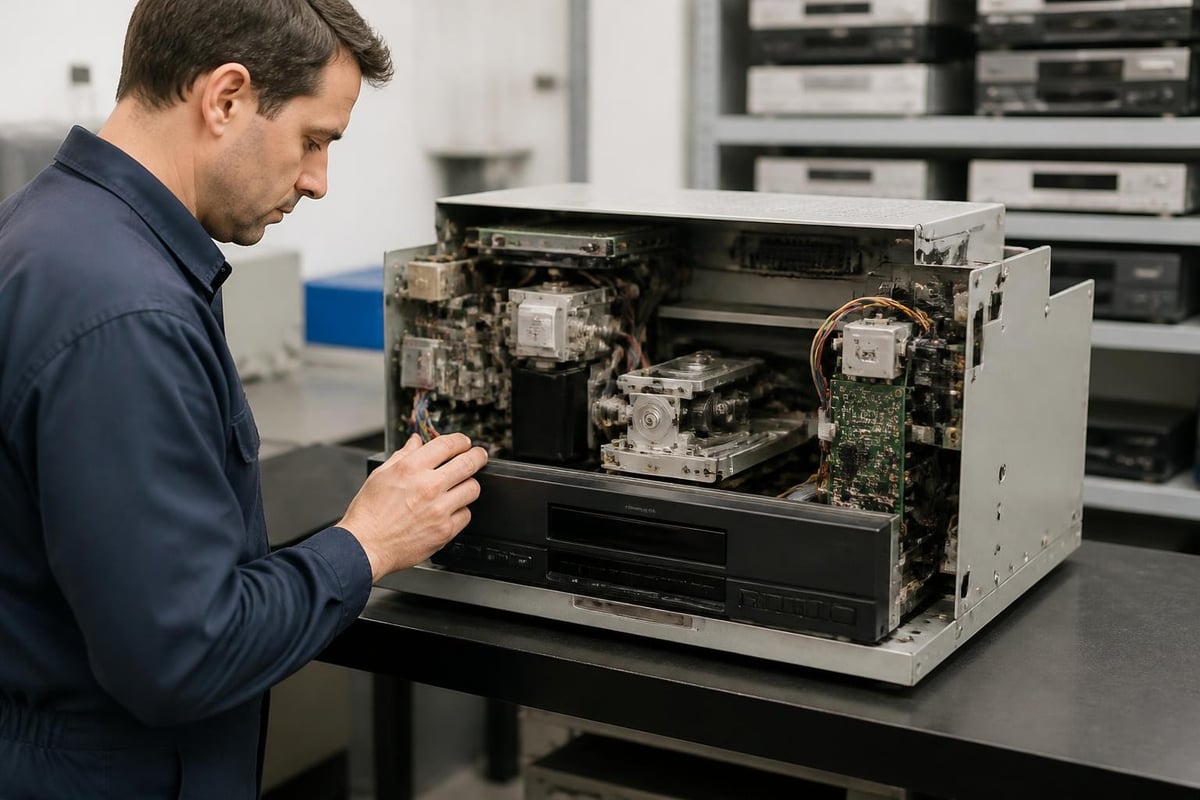
Regular maintenance extends equipment lifespan and ensures consistent playback quality across hundreds of tape transfers. A vcr for vhs in professional service requires attention to mechanical components that experience wear from continuous operation.
Critical Maintenance Tasks
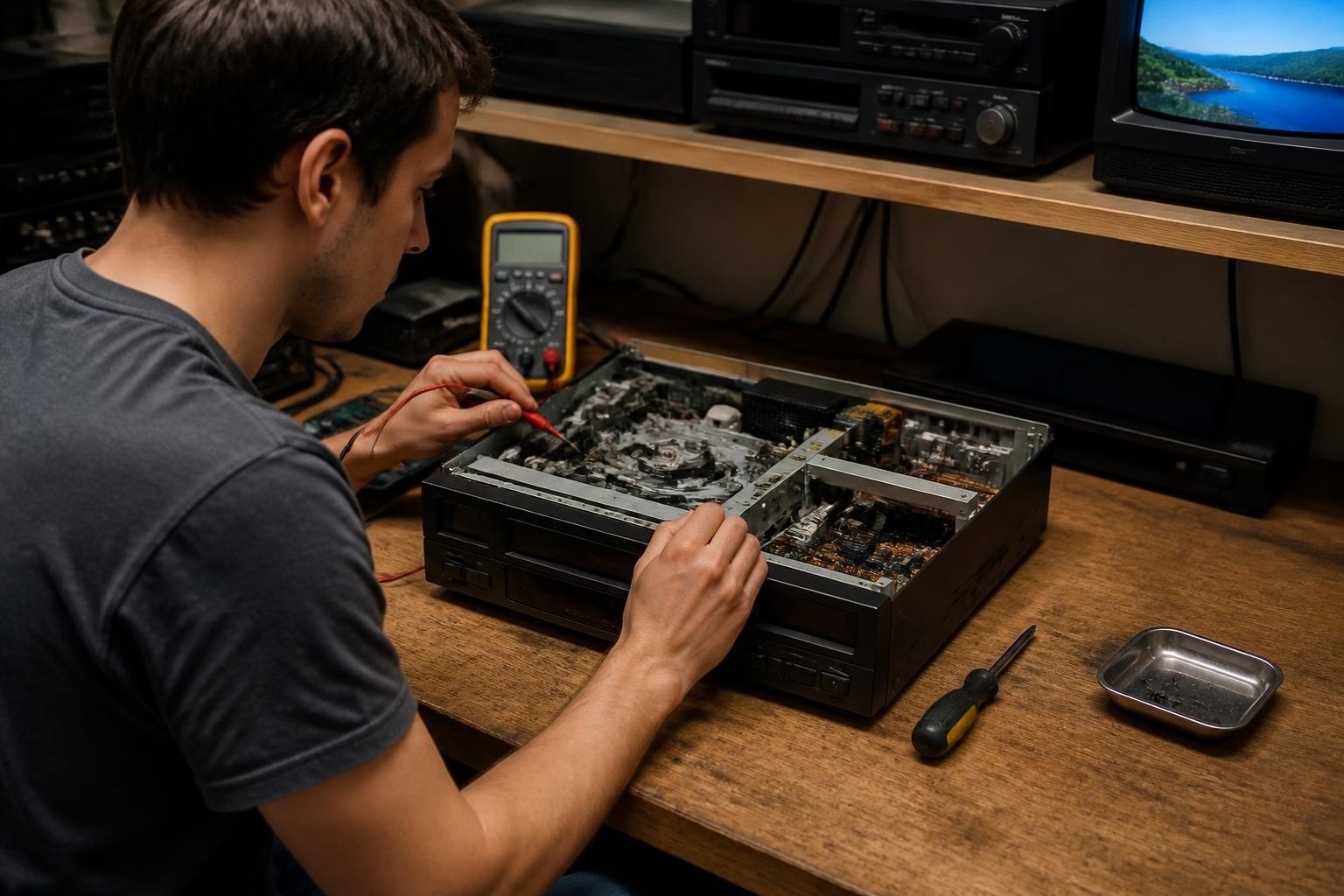
Head cleaning represents the most frequent maintenance requirement. Video heads accumulate oxide particles shed from magnetic tape, causing picture noise, dropouts, and tracking errors. iFixit maintenance guides provide detailed procedures for safe head cleaning using specialized cleaning cassettes or manual cleaning with isopropyl alcohol and chamois swabs.
Pinch roller and capstan replacement becomes necessary after approximately 2,000 hours of operation. These rubber components harden over time, causing speed variations and tape handling problems. Professional VCR maintenance includes:
- Quarterly video head inspection and cleaning
- Annual replacement of belts and rubber components
- Lubrication of mechanical assemblies every six months
- Calibration of tracking and servo systems annually
- Capacitor replacement in power supply circuits (typically 5-7 years)
Preventive VCR maintenance contracts reduce unexpected downtime for digitization businesses that depend on reliable equipment operation. Scheduled service catches developing problems before complete failure occurs, protecting revenue during peak transfer seasons.
VHS Digitization Workflow and Best Practices
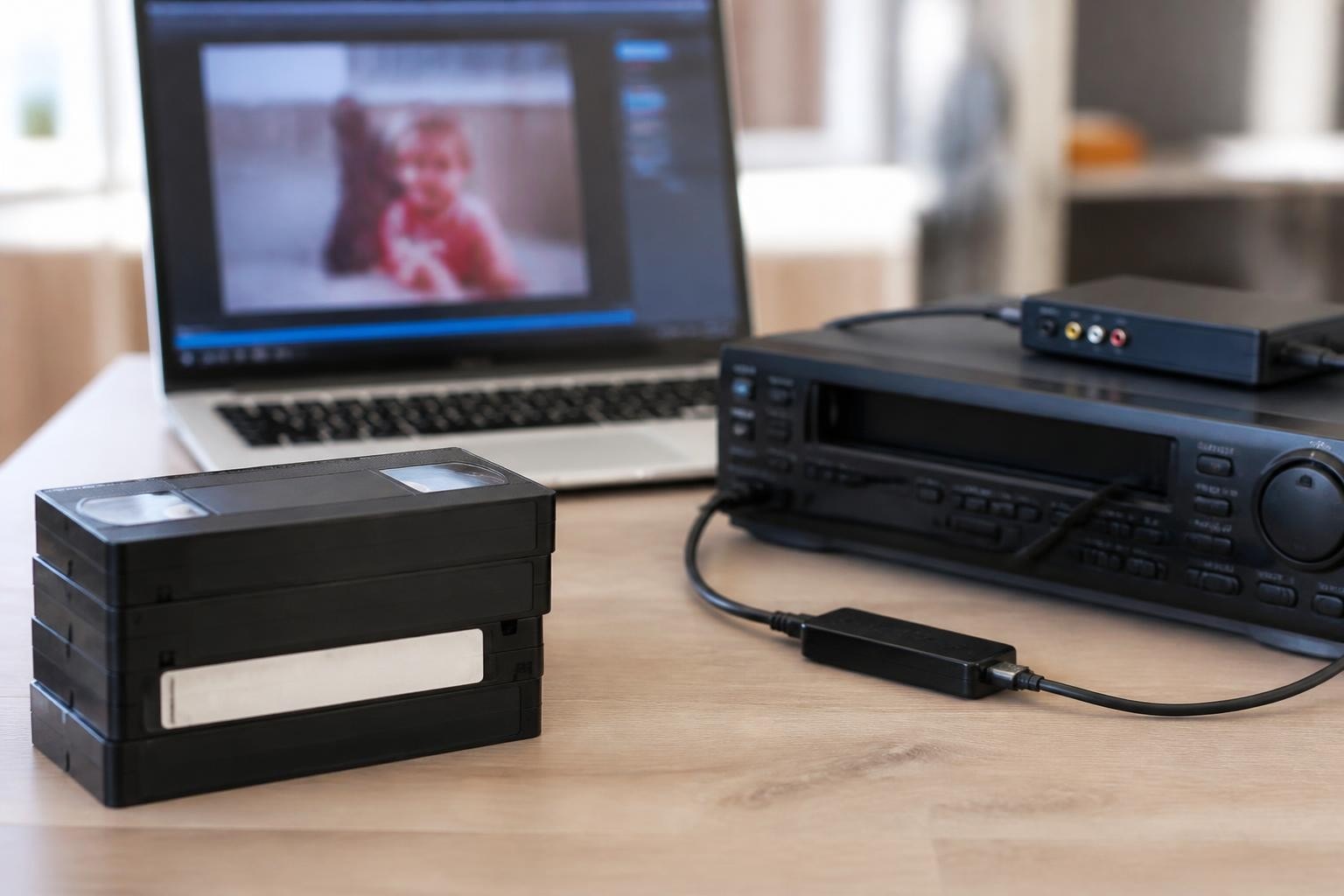
Professional digitization requires methodology beyond simply connecting a vcr for vhs to capture hardware. Archival standards developed by institutions like the Library of Congress establish quality benchmarks for preservation transfers.
The National Archives provides guidance on technical metadata documentation, format selection for digital masters, and quality control procedures. Their recommendations emphasize capturing at the highest quality the source format supports, creating preservation masters separate from access copies.
Professional Transfer Procedures
Initial tape inspection identifies physical damage, mold contamination, or deterioration requiring special handling. Humidity-controlled storage at 68°F and 30-40% relative humidity for 24 hours before playback allows tapes to acclimate, reducing potential mechanical stress.
Proper VCR setup involves:
- Calibrating tracking control for optimal head-to-tape contact
- Selecting appropriate output connections (S-Video preferred over composite)
- Configuring TBC settings when available
- Setting proper input levels in capture hardware
- Documenting tape condition and playback settings
Capture formats following Library of Congress preservation recommendations typically use uncompressed or lossless compression codecs at full resolution. For VHS, this means capturing 720×480 (NTSC) or 720×576 (PAL) at 29.97fps or 25fps respectively, with appropriate aspect ratio flags.
Troubleshooting Common VCR Playback Issues
Even well-maintained equipment encounters playback challenges with aging VHS tapes. Understanding common problems enables digitization technicians to achieve optimal results from deteriorated source material.
Tracking errors manifest as horizontal noise bands across the picture, indicating misalignment between playback heads and recorded tracks. Manual tracking adjustment compensates for dimensional changes in aged tape or variations in recording equipment. Professional S-VHS decks like those available through S-VHS deck rental services offer precise tracking controls unavailable in consumer equipment.
Diagnostic Approaches for Problem Tapes
| Symptom | Likely Cause | Solution |
|---|---|---|
| Horizontal noise bands | Tracking misalignment | Adjust tracking control |
| Picture dropouts | Dirty heads or damaged tape | Clean heads; inspect tape |
| Audio distortion | Worn capstan or speed variation | Service capstan/pinch roller |
| No color | Incorrect format/standard | Verify NTSC/PAL compatibility |
| Jittery picture | Timing errors or weak servo | Use external TBC |
Tape damage including creases, edge damage, or stretched sections requires careful handling. Playing damaged tapes risks further deterioration and potential damage to playback heads. Professional VCR repair services can assess whether specialized equipment or techniques might recover content from severely compromised tapes.
Legal and Copyright Considerations for VHS Content
Digitization businesses must navigate copyright law when transferring client tapes. While creating backup copies of personal recordings generally falls under fair use, commercial content presents legal complexities requiring careful evaluation.
The U.S. Copyright Office fair use resources outline four factors courts consider: purpose and character of use, nature of the copyrighted work, amount used, and effect on the market. Personal preservation of family videos differs legally from copying commercial films or television recordings.
Professional Service Guidelines
Documentary evidence protects digitization services from liability. Requiring clients to certify ownership rights or lawful possession of content creates appropriate legal distance. Many professional facilities include language in service agreements stating that clients assume responsibility for copyright compliance.
Commercial content recorded from broadcast television occupies a gray area. Time-shifting for personal viewing received court approval in the landmark Sony Betamax case, but permanent archiving and format conversion raise additional questions. Professional services should consult legal counsel when establishing policies around potentially copyrighted material.
Educational and archival institutions benefit from specific exemptions under Section 108 of the Copyright Act, allowing preservation copying under defined circumstances. These provisions don't extend to commercial digitization services, highlighting the importance of understanding applicable law in your jurisdiction.
Sourcing VCR Equipment in 2026
With VCR manufacturing ceased for a decade, sourcing reliable playback equipment requires strategic approaches. The secondary market offers various options, but quality varies dramatically based on equipment history and maintenance.
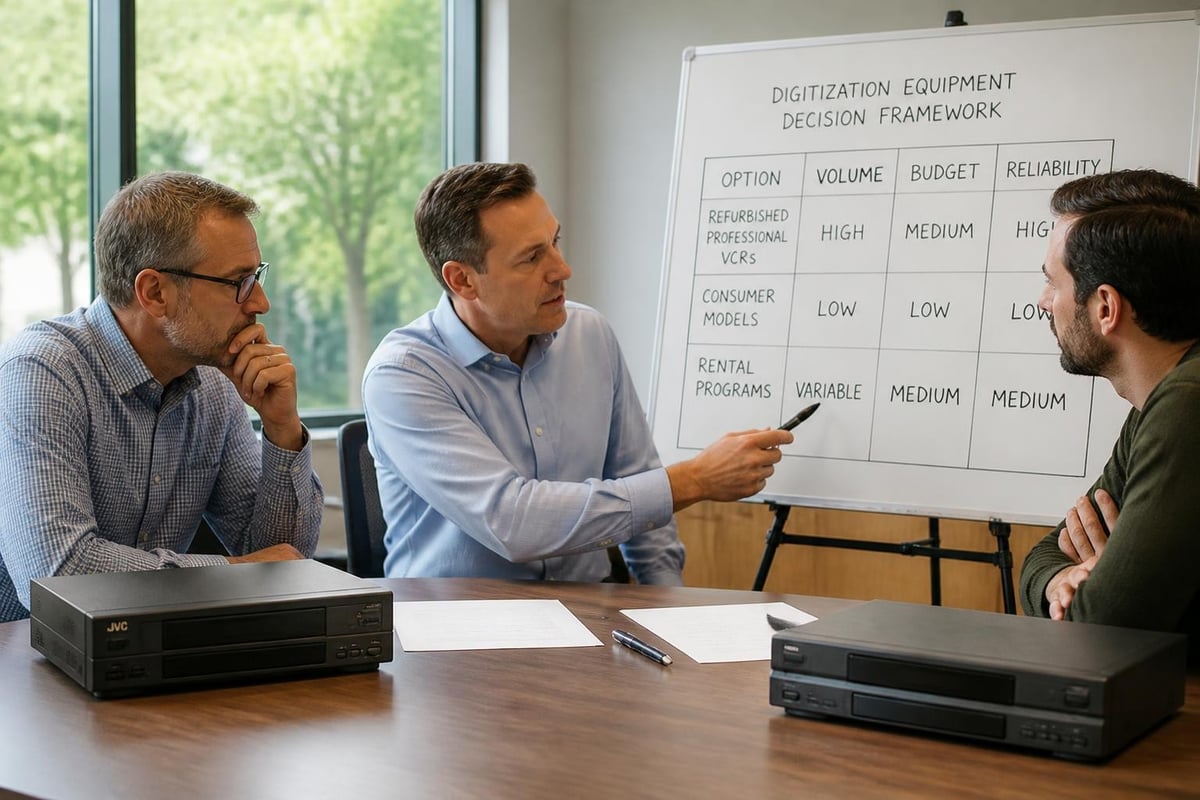
Refurbished professional decks from specialist suppliers provide the most reliable path to quality equipment. Unlike untested used units, refurbished VCR equipment undergoes systematic restoration including belt replacement, capacitor renewal, head replacement when necessary, and full calibration to manufacturer specifications.
Equipment Sourcing Strategies
Rental programs offer alternatives to purchasing for facilities with variable workload. Starting at $99 monthly, VCR rental services provide maintained equipment without capital investment, particularly valuable for businesses testing demand or handling seasonal peaks in transfer requests.
Businesses should prioritize:
- Professional S-VHS decks with VHS playback compatibility
- Service history documentation showing maintenance records
- Warranty coverage or service agreement availability
- Parts availability for ongoing maintenance
- Technical support from knowledgeable suppliers
Consumer-grade VCRs from online marketplaces rarely provide reliable service in professional environments. Unknown operating hours, lack of maintenance history, and deteriorated internal components lead to frequent failures and inconsistent playback quality that damages client relationships.
VHS Format Variations and Compatibility
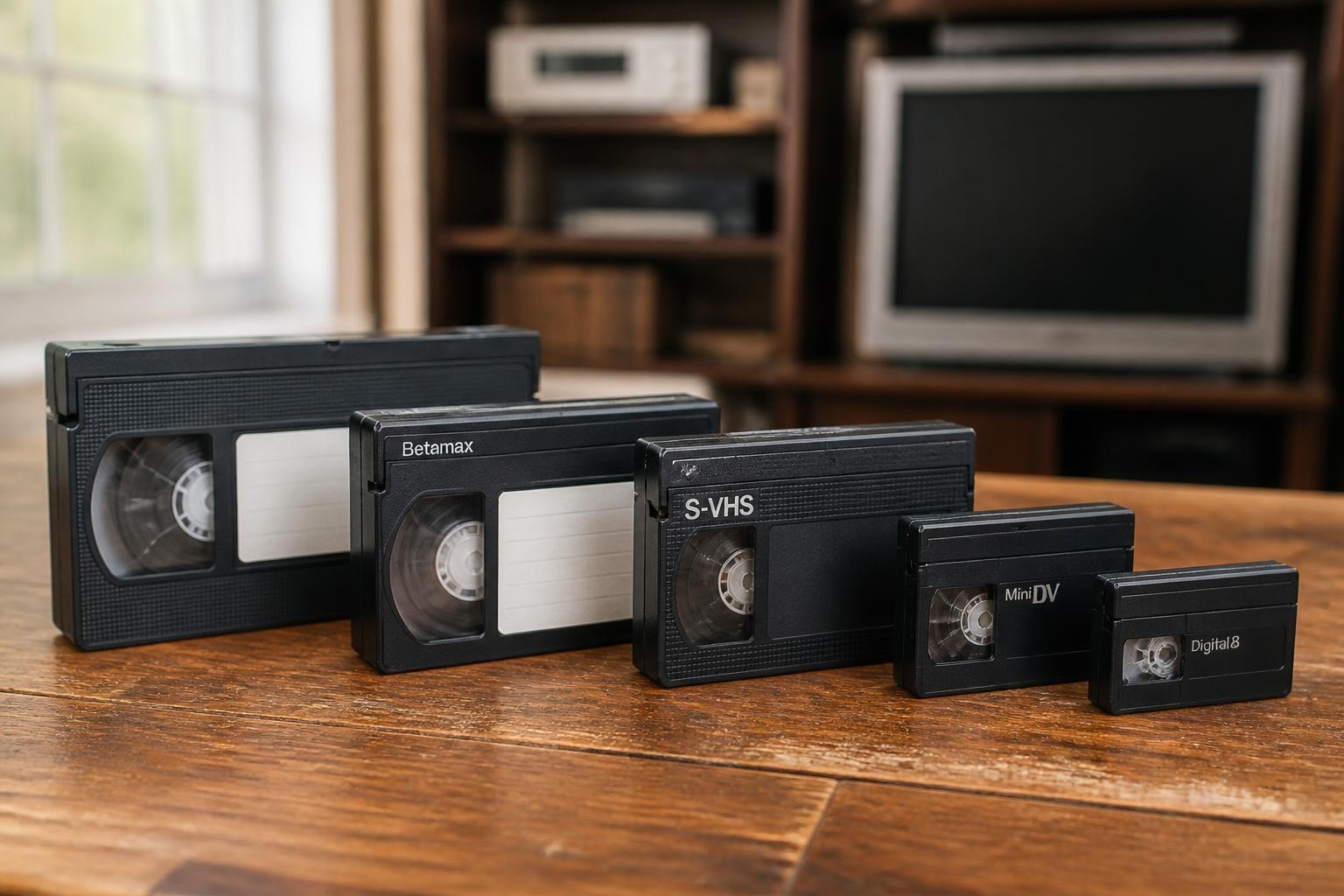
Standard VHS represents only one variant in a family of related formats. Professional digitization facilities encounter S-VHS, VHS-C, D-VHS, and regional variations requiring compatible playback equipment.
S-VHS (Super VHS) delivers significantly improved resolution through higher bandwidth recording and improved tape formulation. While S-VHS decks play standard VHS tapes, the reverse isn't true. Facilities handling unknown tape collections benefit from S-VHS capability to avoid turning away work or producing suboptimal transfers from high-quality source material.
Format Compatibility Matrix
VHS-C used the same tape and recording method as full-size VHS but in a compact cassette popular in camcorders. Adapters allow playback in standard VCRs, though dedicated VHS-C equipment provides optimal results. The compact format's mechanical differences sometimes cause tracking problems in adapted playback.
Regional variations between NTSC (North America, Japan), PAL (Europe, Australia), and SECAM (France, Russia) require multi-standard equipment for facilities serving diverse client bases. Converting between standards during digitization requires specialized transcoders or software processing, with potential quality loss from standard conversion.
Professional facilities often maintain multiple format-specific decks:
- Standard VHS (NTSC and PAL versions)
- S-VHS with down-conversion capability
- VHS-C playback equipment
- Betamax decks for competing format support
- MiniDV players for later-generation formats
This multi-format capability prevents turning away business and ensures optimal playback for each tape type's specific characteristics.
Building a VCR Service Infrastructure
Digitization businesses require more than playback equipment alone. A complete infrastructure supports reliable, efficient operations that scale with business growth.
Backup equipment prevents revenue loss during primary deck failures. Maintaining at least two functional VCRs for your primary format ensures continued operations during repair periods. VCR repair services typically require 1-2 weeks for diagnosis and parts procurement, representing significant downtime without backup equipment.
Supporting Infrastructure Components
Technical infrastructure includes:
- Capture hardware with appropriate input options (composite, S-Video, component)
- External time-base correctors for problem tapes exceeding internal TBC capability
- Signal distribution for simultaneous recording and monitoring
- Quality control monitors calibrated for accurate color and brightness assessment
- Archival storage following preservation standards for master files
Workflow management systems track tape inventory, capture settings, quality control notes, and client information. Even small operations benefit from systematic documentation preventing mix-ups and enabling consistent results across multiple technicians.
Diagnostic tools including waveform monitors, vectorscopes, and oscilloscopes enable advanced troubleshooting. While not necessary for basic operations, these tools help experienced technicians optimize playback from challenging tapes and verify signal quality during complex transfers.
Professional Development and Technical Knowledge
Operating a vcr for vhs professionally requires understanding that extends beyond basic playback operation. Technical knowledge about video signals, analog recording principles, and tape characteristics separates mediocre transfers from archival-quality work.
SMPTE Journal technical papers provide deep technical knowledge about recording systems and signal processing. While highly technical, this engineering perspective helps troubleshoot unusual problems and understand equipment behavior during challenging transfers.
Continuing Education Resources
Industry associations, archival organizations, and technical forums provide ongoing education opportunities. Understanding developments in digital preservation, emerging codec standards, and archival best practices ensures transfers remain relevant as technology evolves.
Hands-on experience proves invaluable. Each tape presents unique challenges teaching lessons about tape deterioration, recording variations, and equipment quirks. Documenting problem cases and solutions builds institutional knowledge protecting against employee turnover and improving training for new technicians.
Networking with other professionals through industry groups facilitates knowledge sharing. Many preservation challenges have been solved elsewhere, and collaborative problem-solving accelerates learning while building referral relationships for specialized work beyond your capabilities.
Economic Considerations for VCR-Based Services
Financial planning for VCR-dependent businesses must account for equipment scarcity, maintenance costs, and market dynamics. Unlike modern digital equipment with predictable replacement cycles, VCR economics involve unique factors.
Equipment acquisition costs vary dramatically based on condition and features. Professional S-VHS decks in excellent condition command premium prices reflecting scarcity and restoration investment. Budget $500-2000 for quality refurbished units versus $1500-4000 for rare, low-hours professional equipment.
Cost Structure Analysis
| Expense Category | Initial Investment | Annual Ongoing |
|---|---|---|
| Primary VCR (refurbished) | $800-1500 | $200-400 (maintenance) |
| Backup VCR | $500-1000 | $150-300 |
| Repair fund/contingency | - | $300-500 |
| Cleaning supplies | $100 | $150 |
| Replacement parts inventory | $200-300 | $100-200 |
Maintenance costs increase as equipment ages, even with excellent care. Setting aside repair reserves prevents unexpected expenses from disrupting cash flow. The $45 diagnostic fee typical of professional services represents minimum cost for simple repairs, with complex rebuilds reaching several hundred dollars.
Revenue potential depends on local market conditions and service positioning. VHS transfer pricing ranges from $15-40 per tape depending on length, output format, and enhancement services. Monthly rental fees starting at $99 provide predictable revenue for facilities with consistent but limited volume.
Professional VCR equipment remains essential for preserving the billions of VHS tapes containing irreplaceable content, but securing reliable playback equipment and expert maintenance grows increasingly challenging. Whether you operate a digitization business, archive, or production facility, having access to well-maintained professional decks ensures you can deliver quality results to clients preserving their legacy content. VCR Supply specializes in professional videotape deck rental and repair services, offering flexible monthly rental programs starting at $99 and comprehensive repair services with quick turnaround to keep your preservation workflow running smoothly.