VHS Mini Tapes: Professional Guide for 2026

The compact videocassette format known as VHS-C revolutionized consumer video recording in the late 1980s, offering the same image quality as standard VHS in a dramatically smaller form factor. These vhs mini tapes became the backbone of portable camcorder technology for over a decade, capturing countless hours of irreplaceable family memories, professional field footage, and documentary content. Today, as digitization shops and archival facilities work to preserve aging analog media, understanding the technical characteristics and proper handling of VHS-C tapes remains essential for maintaining content integrity and ensuring successful transfers. The format's widespread consumer adoption means these cassettes continue arriving at transfer facilities daily, each requiring specialized equipment and knowledge to process correctly.
Understanding VHS-C Format Architecture
VHS-C, or VHS-Compact, emerged in 1982 as JVC's answer to the growing demand for portable video recording. The format uses identical tape stock and recording specifications as standard VHS, maintaining full compatibility through the use of motorized adapters that allow vhs mini tapes to play in standard VHS decks.
The physical cassette measures approximately 92mm × 59mm × 23mm, roughly one-third the size of a full-size VHS cassette. This compact design enabled manufacturers to create lightweight camcorders that consumers could actually hold steady during recording, unlike the shoulder-mounted units required for full-size cassettes.
Technical Specifications and Recording Parameters
VHS-C cassettes typically contain 20 to 40 meters of tape, depending on the tape grade and recording speed. At standard play (SP) speed, a TC-20 cassette records 20 minutes, while TC-30 and TC-40 variants extend runtime to 30 and 40 minutes respectively. Long play (LP) mode doubles these durations but at reduced quality.
Key technical parameters include:
- Tape width: 12.65mm (½ inch)
- Recording speed (SP): 23.39 mm/s
- Video tracks: Two helical scan tracks per frame
- Audio tracks: Linear mono or Hi-Fi stereo
- Luminance bandwidth: Approximately 3 MHz
The technical evolution of VHS systems demonstrates how engineers balanced recording quality with compact design constraints, creating a remarkably robust format for consumer use.

Equipment Requirements for VHS-C Playback
Playing vhs mini tapes professionally requires either dedicated VHS-C playback decks or standard VHS machines equipped with motorized cassette adapters. Each approach offers distinct advantages for different workflow scenarios.
Motorized Adapter Systems
The C-P6U and similar motorized adapters remain the most common solution for VHS-C playback. These battery-powered devices accept a VHS-C cassette and mechanically extend the tape path to match full-size VHS dimensions. The adapter's internal gears synchronize with the host deck's take-up mechanism, ensuring proper tape tension throughout playback.
Quality adapters feature:
- Spring-loaded cassette retention
- Automatic tape slack take-up
- Eject lock prevention
- Low-battery indicators
- Replaceable drive belts
Professional transfer facilities should maintain multiple adapters in rotation, as the mechanical components experience wear with heavy use. Regular cleaning and belt replacement extend adapter lifespan significantly.
Dedicated VHS-C Decks
Standalone VHS-C playback decks eliminate adapter-related variables, offering more reliable performance for high-volume digitization. Models like the JVC SR-VS30U provide professional features including:
| Feature | Benefit |
|---|---|
| Direct cassette loading | No adapter wear or alignment issues |
| Frame-accurate controls | Precise capture timing |
| S-Video output | Enhanced signal quality |
| Built-in TBC | Reduced dropout artifacts |
For facilities processing dozens of tapes weekly, investing in dedicated equipment through professional deck rental services proves more cost-effective than relying solely on consumer-grade adapters.
Digitization Workflows for VHS-C Content
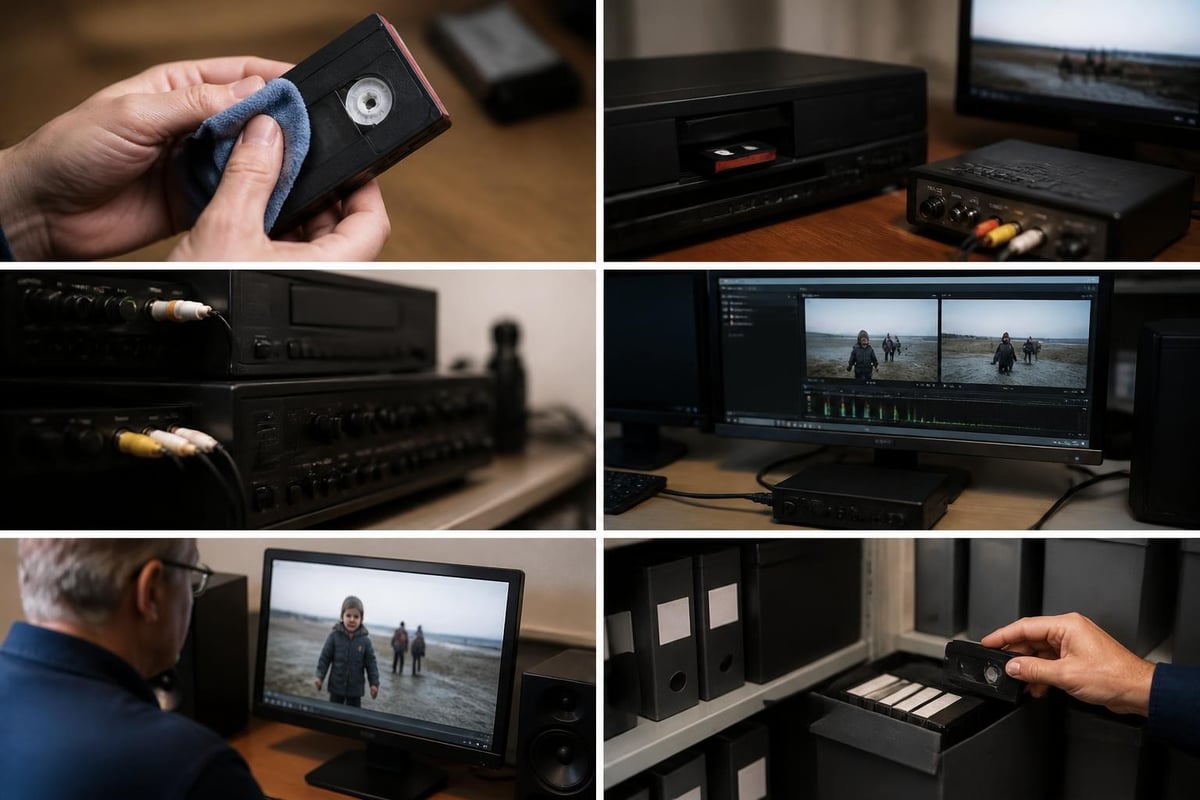
Establishing standardized workflows ensures consistent quality across VHS-C digitization projects while minimizing tape handling risks. Professional facilities typically implement multi-stage processes that account for tape condition variability.
Pre-Transfer Assessment Protocol
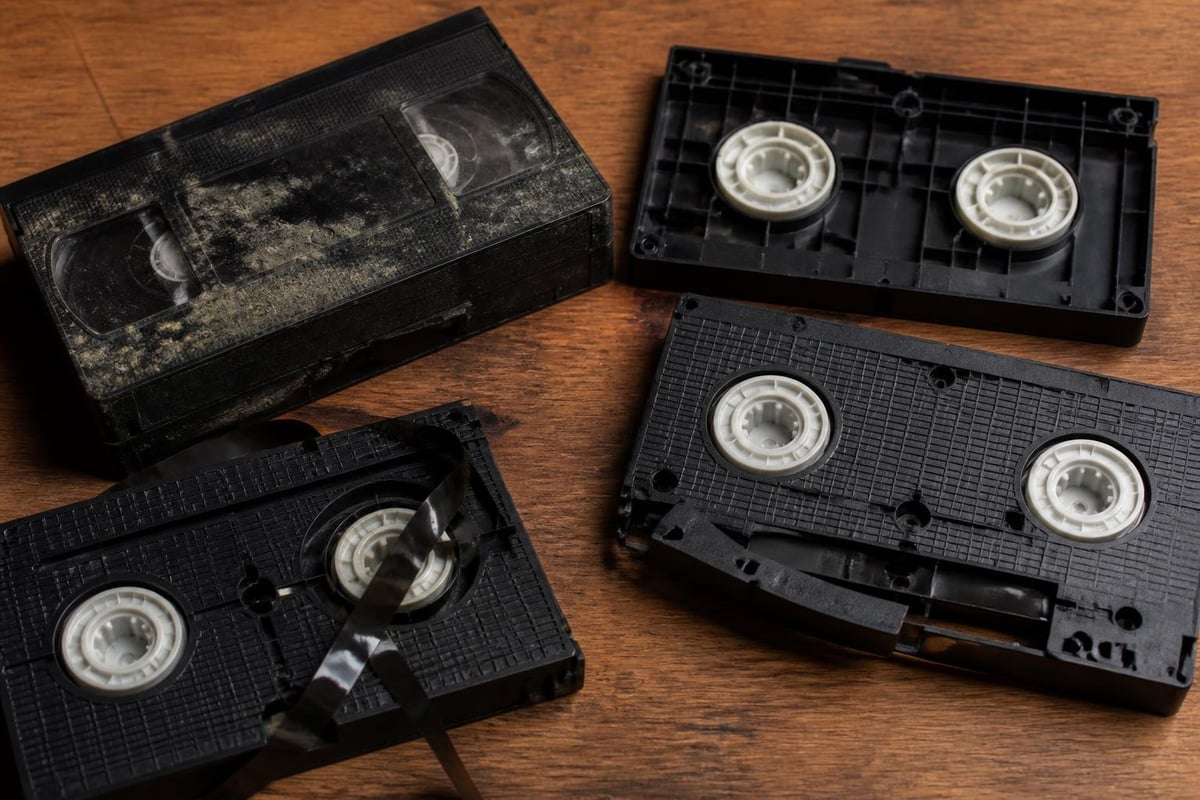
Every vhs mini tape should undergo visual inspection before playback. Examine the cassette shell for cracks, warping, or discoloration. Open the cassette (if possible) to check for:
- Tape pack tightness and uniformity
- Visible mold or fungal growth
- Tape edge damage or creasing
- Foreign debris in the tape path
The Library of Congress preservation guidelines provide detailed inspection protocols applicable to VHS-C and other magnetic media formats.
Tapes showing mold contamination require isolation and specialized cleaning before playback. Never insert contaminated cassettes into decks, as mold spores can transfer to heads and contaminate subsequent tapes.
Capture Settings and Signal Chain
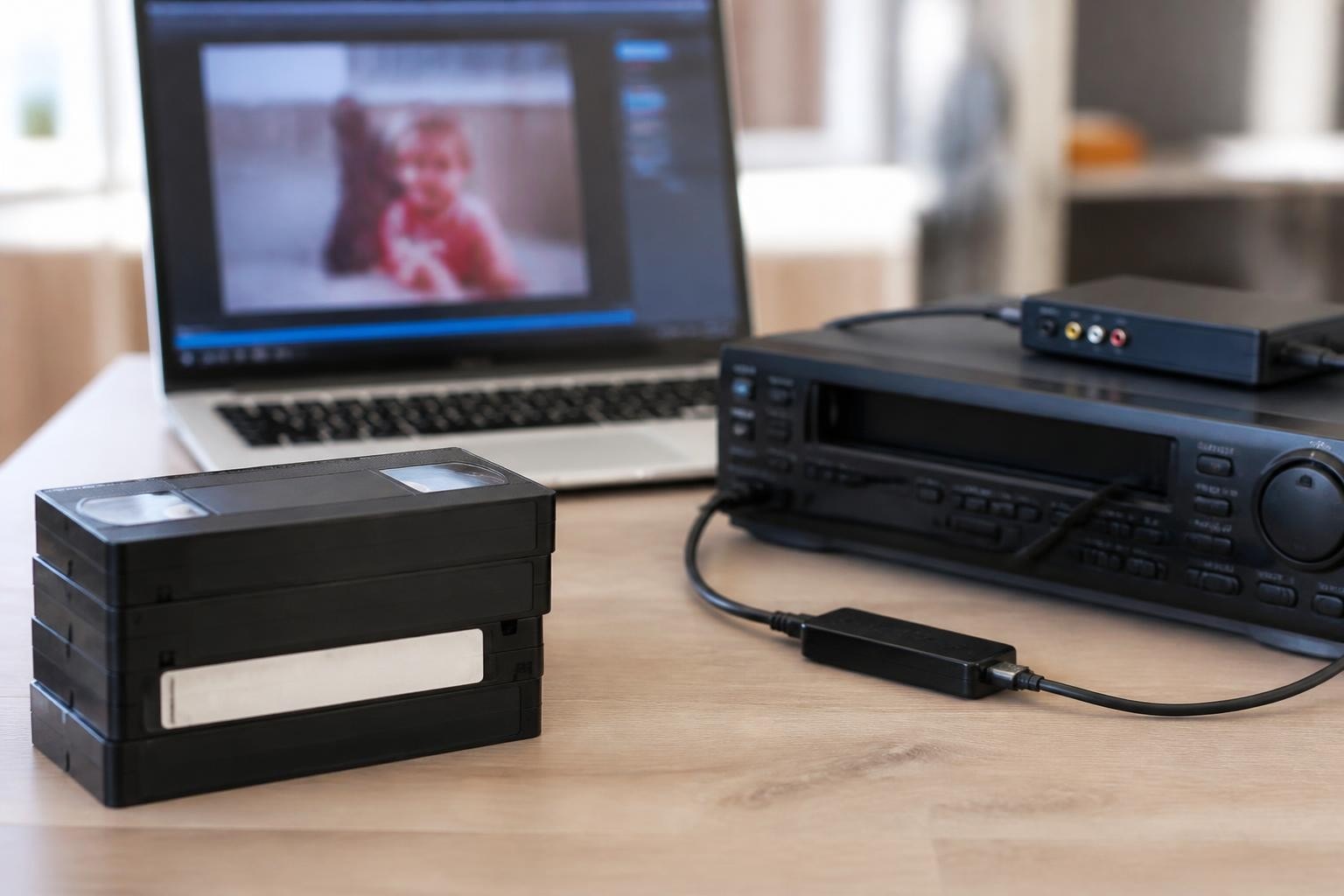
Optimal VHS-C digitization requires careful signal chain configuration to preserve maximum source quality while accounting for format limitations. A professional capture setup includes:
- Playback deck with S-Video output (when available)
- External time base corrector (for tapes with severe timing errors)
- Proc amp (for color and level adjustment)
- Capture interface (supporting at least 720×480 resolution)
- Monitoring display (for real-time quality verification)
Most VHS-C content should be captured at 720×480 (NTSC) or 720×576 (PAL) resolution using either lossless codecs or high-quality intermediate formats. The IASA guidelines for video preservation recommend uncompressed or mathematically lossless compression for archival masters.
Handling Playback Issues
VHS-C tapes frequently exhibit age-related playback problems requiring intervention. Common issues include:
Tracking errors: Adjust the host deck's tracking control while monitoring the playback image. Digital noise bands or picture tearing indicate tracking misalignment.
Dropout compensation: Modern capture cards often include dropout compensation algorithms, but severe cases may require multiple playback passes to generate composite frames with minimal artifacts.
Audio sync drift: VHS-C audio and video occasionally drift out of synchronization, particularly on tapes recorded in LP mode. Time base correctors with audio delay adjustment resolve most sync issues.
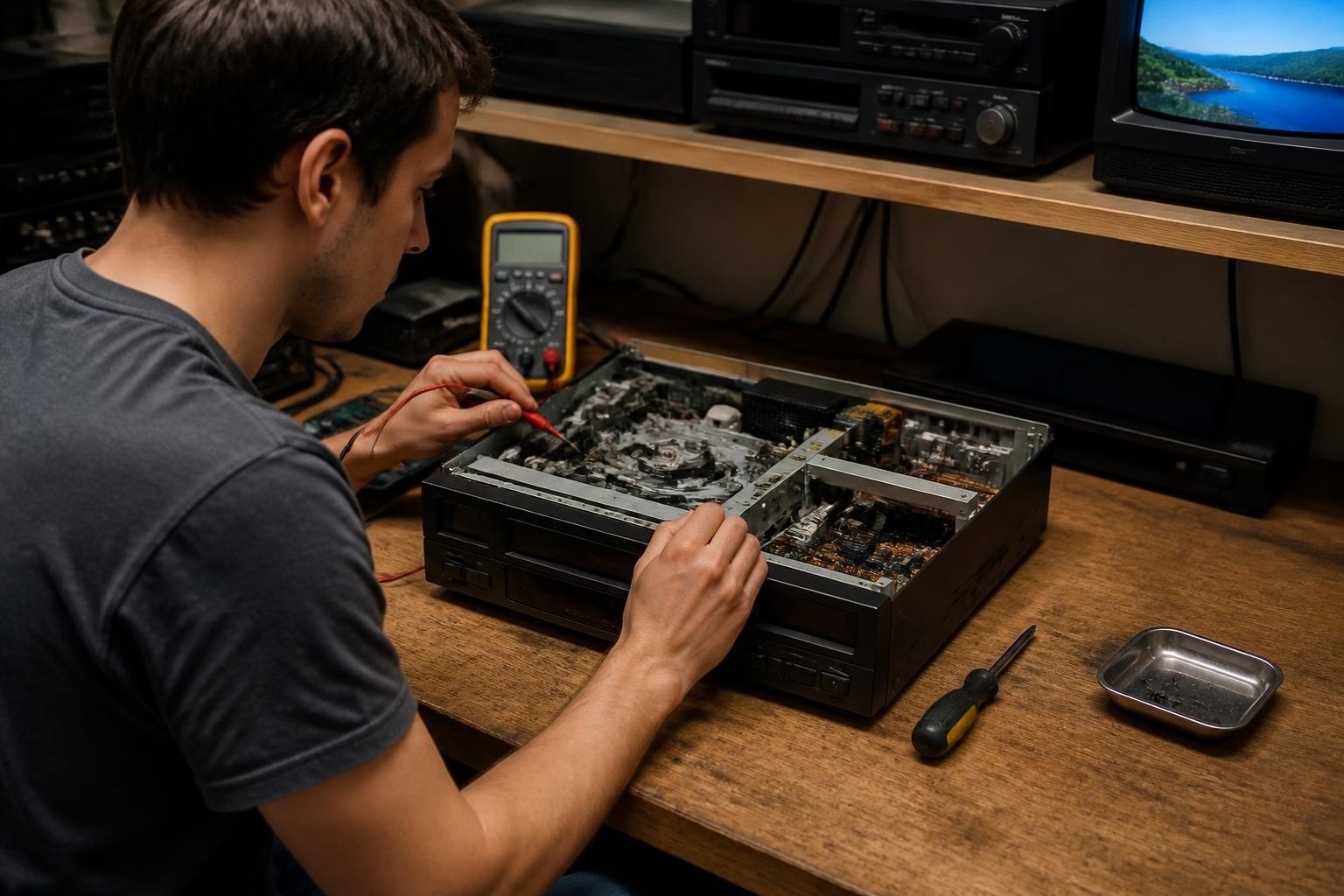
When equipment problems arise during high-volume projects, having access to professional VCR repair services minimizes downtime and maintains production schedules.
Preservation Challenges Specific to VHS-C
The compact cassette design that made VHS-C practical for camcorders also introduces unique preservation challenges. Understanding these format-specific issues helps facilities develop appropriate handling protocols.
Binder Degradation and Sticky Shed Syndrome
Like all magnetic tape formats, vhs mini tapes suffer from hydrolysis-induced binder breakdown. The polyester-urethane binder holding magnetic particles to the tape substrate absorbs atmospheric moisture over time, causing the tape surface to become tacky or shed particles during playback.
VHS-C tapes appear particularly susceptible to sticky shed syndrome due to:
- Higher surface-area-to-volume ratio (more edge exposure)
- Consumer-grade storage conditions (temperature and humidity fluctuations)
- Thinner base film in some cassette grades (increased moisture penetration)
Baking treatment at 125-130°F for 4-8 hours temporarily reverses hydrolysis effects, allowing one-time playback for transfer. The BFI's videotape preservation guidance details baking protocols and safety considerations for various tape formulations.
Mechanical Failures in Compact Cassettes
The VHS-C cassette's spring-loaded mechanisms and smaller components prove more failure-prone than full-size cassettes. Common mechanical issues include:
- Broken or weakened hub lock springs
- Detached or misaligned tape guides
- Warped cassette shells from heat exposure
- Stripped gear teeth in cassette transport
Many mechanical failures can be addressed through cassette shell replacement. Carefully transfer the tape reels and internal components to a donor shell with functional mechanisms. This procedure requires steady hands and proper tools but salvages otherwise unplayable content.
VHS-C Variants and Special Cases
Several VHS-C derivatives and special-purpose variants require recognition to ensure proper handling and equipment selection.
S-VHS-C Format
S-VHS-C (Super VHS-Compact) offers substantially improved resolution through higher bandwidth recording. These vhs mini tapes require S-VHS playback decks or adapters for optimal playback, though they play back (at reduced quality) on standard VHS equipment.
S-VHS-C specifications include:
| Parameter | Standard VHS-C | S-VHS-C |
|---|---|---|
| Luminance bandwidth | ~3 MHz | ~5.4 MHz |
| Horizontal resolution | ~240 lines | ~400 lines |
| Tape formulation | Standard oxide | High-grade metal or evaporated metal |
| Recording current | Standard | Higher bias |
Professional facilities handling S-VHS-C material benefit from S-VHS deck rental options that preserve the format's enhanced quality through the transfer process.
Pre-recorded VHS-C Tapes
While rare, some commercial content was released on pre-recorded VHS-C cassettes in specific markets. These tapes may feature copy protection schemes (Macrovision) that interfere with straightforward digitization. Time base correctors with built-in Macrovision removal handle most commercial tape transfers, though digitization specialists should verify local regulations regarding copy protection circumvention.
Batch Processing Considerations
High-volume facilities processing dozens or hundreds of vhs mini tapes monthly require systems that balance throughput with quality assurance. Developing efficient batch workflows prevents bottlenecks while maintaining capture standards.
Tape Categorization and Triage
Sort incoming VHS-C tapes into condition categories before processing:
- Category A: Excellent condition, standard processing
- Category B: Minor issues (tracking errors, slight mold), enhanced monitoring
- Category C: Significant problems (sticky shed, mechanical failure), requires pre-treatment
- Category D: Severe damage, specialized intervention or may be unrecoverable
This triage system allows scheduling predictable work blocks and prevents problematic tapes from disrupting routine processing queues.
Equipment Rotation and Maintenance
Continuous playback stresses deck mechanisms and accelerates head wear. Professional facilities should implement equipment rotation schedules that distribute operating hours across multiple units. The Association of Moving Image Archivists resources include recommended maintenance intervals for various deck models.
Regular maintenance tasks include:
- Head cleaning (every 10-20 hours of use)
- Pinch roller inspection and cleaning
- Capstan cleaning and demagnetization
- Transport mechanism lubrication
- Belt tension verification
Facilities without in-house technical expertise benefit from preventive maintenance contracts that schedule regular service intervals and reduce unexpected downtime.
Storage and Archive Protocols
Proper storage significantly extends VHS-C tape lifespan and improves long-term playback success rates. Implementing archival-quality storage requires attention to environmental factors and physical protection.
Environmental Controls
Magnetic tape longevity depends heavily on storage temperature and relative humidity. The technical bulletin on VHS digitization recommends:
Temperature: 60-70°F (15-21°C)
Relative humidity: 30-40% RH
Light exposure: Minimal (darkness preferred)
Air quality: Low particulate, filtered if possible
Avoid storage locations subject to temperature fluctuations, such as attics, basements, or uninsulated structures. Even brief exposure to temperatures above 90°F accelerates binder degradation and can permanently damage vhs mini tapes.
Physical Storage Methods
Store VHS-C cassettes vertically (on edge) in archival-quality boxes or cases that provide structural support without pressure. Never stack cassettes horizontally in tall piles, as the weight compresses lower cassettes and can deform shells.
Label each cassette with archival-grade markers or adhesive labels. Avoid rubber cement-based labels that deteriorate and leave adhesive residue. Record essential metadata including:
- Recording date (if known)
- Content description
- Tape grade (TC-20, TC-30, etc.)
- Format variant (VHS-C, S-VHS-C)
- Condition assessment results
Professional Equipment Sourcing Strategies
Acquiring reliable VHS-C playback equipment grows increasingly challenging as manufacturers discontinue production and serviceable units become scarce. Professional facilities require sourcing strategies that ensure equipment availability without excessive capital investment.
Rental Versus Purchase Analysis
For facilities with variable VHS-C volume, equipment rental provides flexibility without long-term commitment. Starting at $99 monthly, professional deck rental programs include maintenance coverage and equipment replacement if units fail.
Purchase makes sense when:
- Monthly processing volume exceeds 50+ tapes
- In-house technical staff can perform routine maintenance
- Capital budget allows for backup unit acquisition
- Long-term archival projects span multiple years
Rental proves advantageous for:
- Project-based work with defined timelines
- Testing workflow configurations before major investment
- Facilities lacking technical maintenance capabilities
- Organizations requiring equipment diversity for format coverage
Sourcing Adapter Hardware
Quality motorized VHS-C adapters remain available through specialty suppliers, though prices have increased as production ceased. Purchasing multiple units ensures continuous operation even when adapters require service or battery replacement.
Inspect used adapters carefully before purchase. Test eject mechanisms, verify smooth tape transport, and check for gear wear or cracked housings. Many adapter failures stem from weak batteries rather than mechanical issues, so test with fresh cells before concluding an adapter is defective.
Integration with Modern Digitization Infrastructure
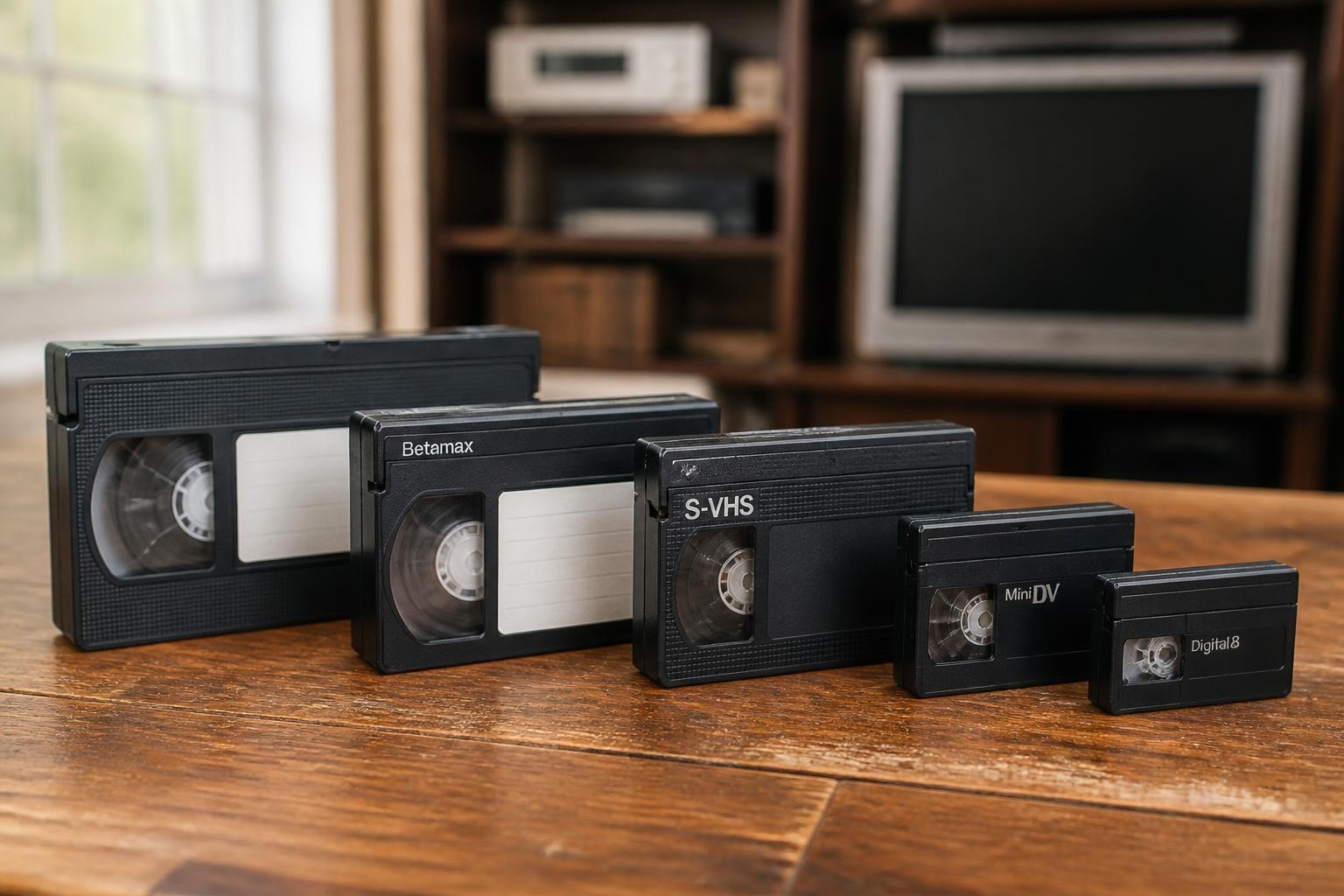
Contemporary digitization facilities integrate VHS-C workflows with broader tape transfer operations covering multiple professional formats including MiniDV, Digital8, and Betamax. Efficient integration maximizes equipment utilization and staff productivity.
Workflow Management Systems
Database-driven workflow tracking ensures no tapes are lost or processing steps skipped. Essential tracking fields for vhs mini tapes include:
- Client information and contact details
- Intake date and condition assessment
- Assigned operator and processing date
- Capture settings and file naming convention
- Quality control review status
- Delivery format and transfer method
Modern facilities employ barcode or RFID tagging to track physical tapes through multi-stage workflows, reducing manual logging errors and improving project timeline visibility.
Quality Control Standards
Establish measurable quality benchmarks for VHS-C transfers. Typical metrics include:
Technical parameters:
- Minimum acceptable signal-to-noise ratio
- Maximum dropout duration per minute
- Color accuracy verification against test patterns
- Audio level consistency
Procedural checks:
- File format compliance (codec, wrapper, metadata)
- Filename accuracy and completeness
- Backup verification (checksum validation)
- Client deliverable assembly
Automated quality control tools can scan captured files for technical defects, flagging problematic transfers for operator review before final delivery.
Format Obsolescence and Future-Proofing
As VHS-C equipment ages and replacement parts become unavailable, facilities must plan for eventual format obsolescence while maintaining current capability. Strategic planning balances immediate operational needs with long-term preservation goals.
Equipment Lifecycle Planning
Track critical equipment metrics to anticipate replacement needs:
- Operating hours and maintenance history
- Parts availability and lead times
- Manufacturer support status
- Performance degradation indicators
When serviceable equipment becomes scarce, consider stockpiling critical spare components including:
- Video heads (most wear-prone component)
- Drive belts and rubber parts
- Power supply capacitors
- Loading mechanism assemblies
Professional repair facilities specializing in vintage video equipment can rebuild decks using donor units, extending operational lifespan beyond original manufacturer expectations.
Migration Priority Assessment
Not all vhs mini tapes warrant immediate transfer. Develop prioritization criteria based on:
- Content uniqueness: Irreplaceable personal or historical recordings
- Physical condition: Tapes showing active deterioration
- Access demand: Frequently requested material
- Rights status: Content the organization owns or can legally preserve
High-priority materials receive immediate attention with premium processing workflows, while stable, low-demand content can wait for batch processing opportunities.
Understanding VHS-C technical requirements, preservation challenges, and professional handling protocols ensures successful transfer of this historically significant format. Whether processing family archives or commercial collections, proper equipment selection and standardized workflows preserve content quality while managing costs effectively. When your facility needs reliable playback equipment for VHS-C and other professional videotape formats, VCR Supply provides rental options starting at $99 monthly, comprehensive repair services with $45 diagnostics, and maintenance contracts designed to keep digitization projects on schedule with minimal equipment downtime.