Video Recorder Repairs: Professional Service Guide 2026
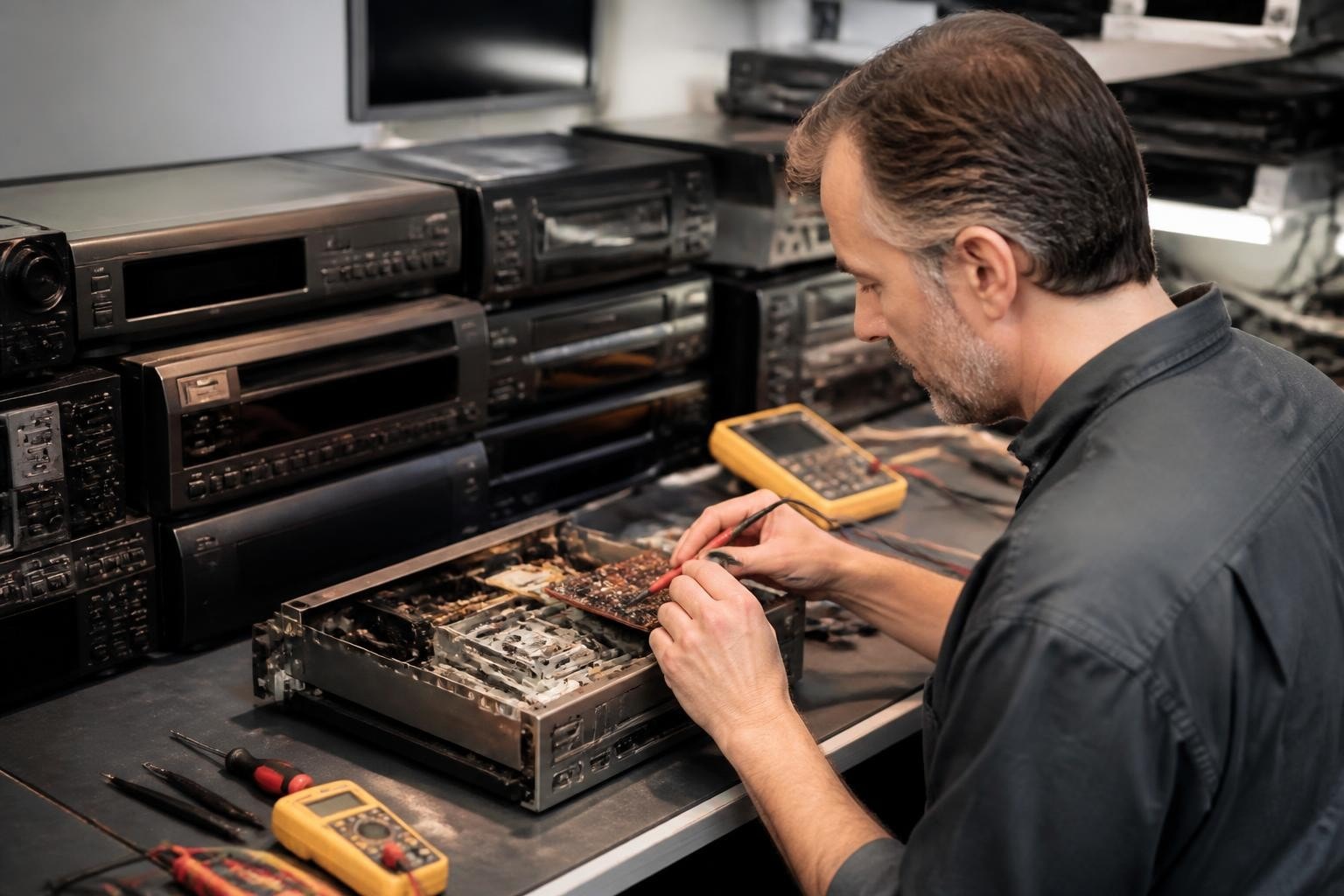
Professional video recorder repairs remain essential for digitization facilities, media archivists, and studios working with legacy formats in 2026. Despite the digital era, thousands of organizations still depend on functioning videotape decks to transfer irreplaceable content from MiniDV, S-VHS, Digital8, Betamax, and other analog formats. Understanding when equipment needs service, what constitutes cost-effective repair, and how to maintain professional decks extends their lifespan and ensures successful digitization projects. This comprehensive guide examines the technical, financial, and practical considerations of keeping professional videotape equipment operational.
Understanding When Video Recorders Need Repair
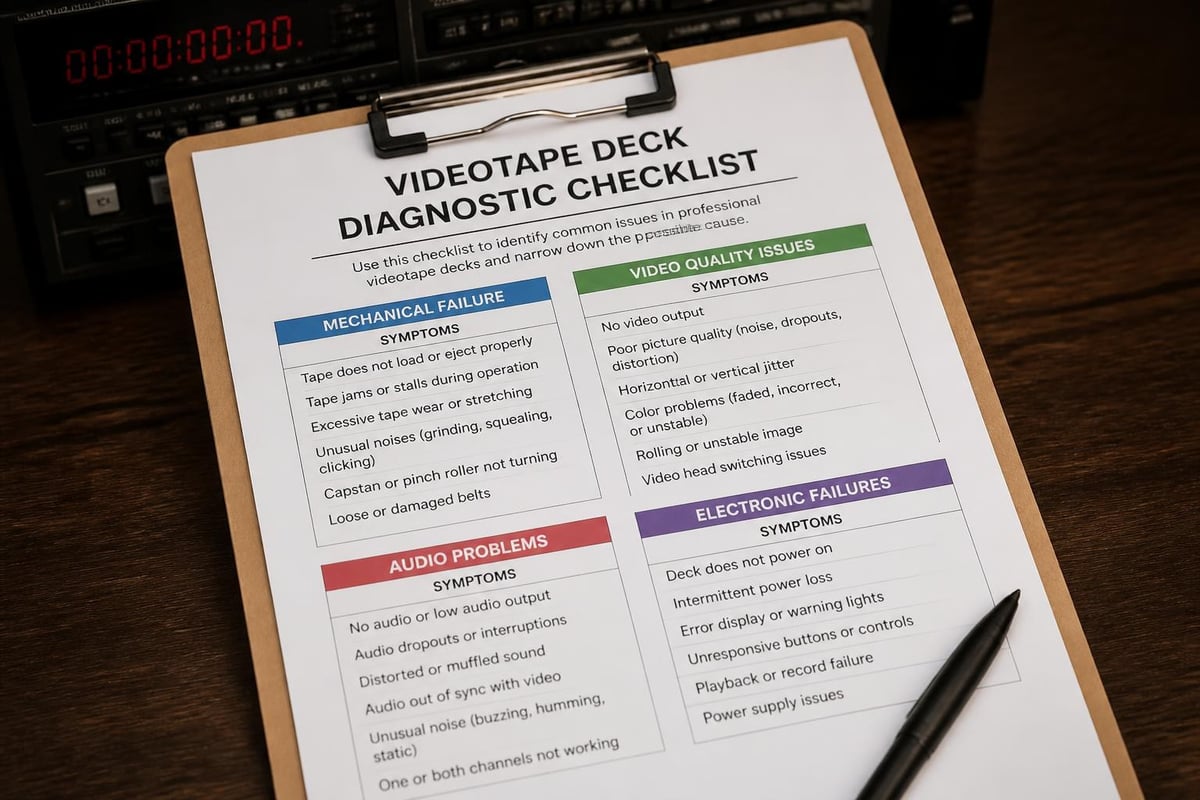
Professional videotape decks display specific symptoms when components begin failing. Recognizing these warning signs early prevents tape damage and costly emergency repairs.
Common Failure Indicators
Mechanical symptoms typically manifest first. Tapes that refuse to eject, sluggish transport mechanisms, or grinding noises during operation signal worn drive belts, failing motors, or misaligned guides. Video quality degradation-including tracking errors, dropout patterns, or color shifts-points to dirty or worn video heads. Audio issues such as muffled playback, channel dropout, or speed variations indicate separate audio head problems or capstan wear.
Professional decks also fail electronically. Power supply issues, intermittent operation, or complete failure to power on require immediate attention. Control panel malfunctions, unresponsive buttons, or erratic menu behavior suggest circuit board problems that demand specialized video recorder repairs.
Environmental Damage Assessment
Operating conditions significantly impact deck longevity. Facilities running equipment continuously for digitizing VCR tapes accumulate wear faster than occasional-use scenarios. Dust, humidity, and temperature fluctuations accelerate component degradation.
The Library of Congress provides detailed care recommendations for audiovisual equipment, emphasizing proper storage conditions and handling practices that prevent premature failure. High-volume digitization shops should follow these institutional standards to minimize repair frequency.
| Environmental Factor | Optimal Range | Impact When Exceeded |
|---|---|---|
| Temperature | 65-70°F | Belt stretching, lubricant breakdown |
| Humidity | 30-50% RH | Corrosion, tape adhesion, mold growth |
| Dust exposure | Minimal | Head clogging, mechanism jamming |
| Operating hours/day | <8 continuous | Accelerated motor and belt wear |
Diagnostic Process for Professional Decks
Systematic diagnostics identify repair scope and prevent unnecessary component replacement. Professional video recorder repairs begin with methodical testing.
Initial Assessment Steps
- Visual inspection examines belt condition, circuit board capacitors for bulging or leakage, and mechanical alignment
- Power-on testing verifies all voltages, indicator lights, and control responsiveness
- Mechanical function check tests loading, transport, and ejection cycles without tape
- Head condition evaluation uses cleaning tape first, then visual inspection with magnification
- Test tape playback employs known-good reference tapes to isolate video and audio issues
Many facilities maintain diagnostic fees around $45 to cover this evaluation time. VCR Supply's repair services follow this tiered approach, providing detailed findings before proceeding with repairs.
Format-Specific Considerations
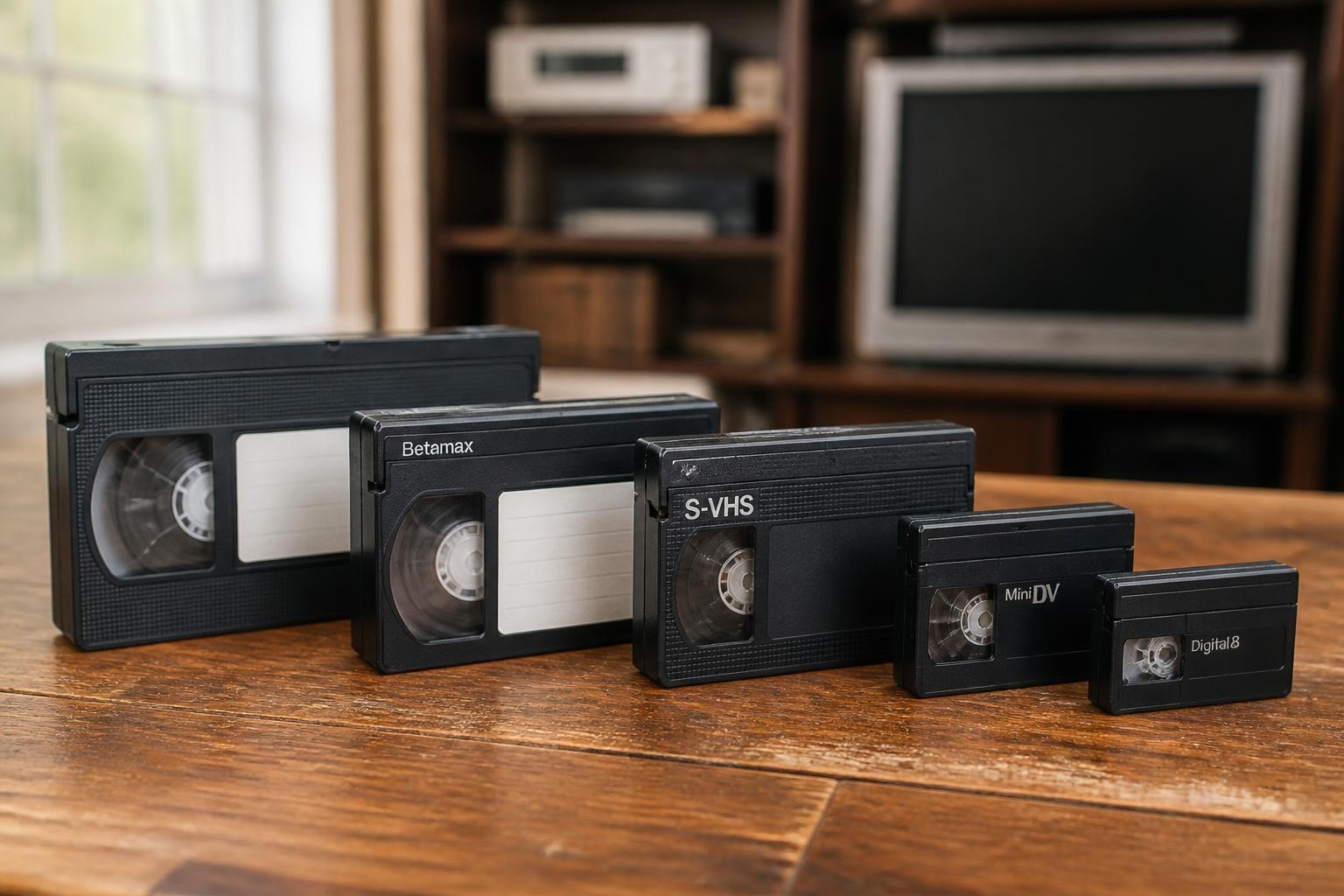
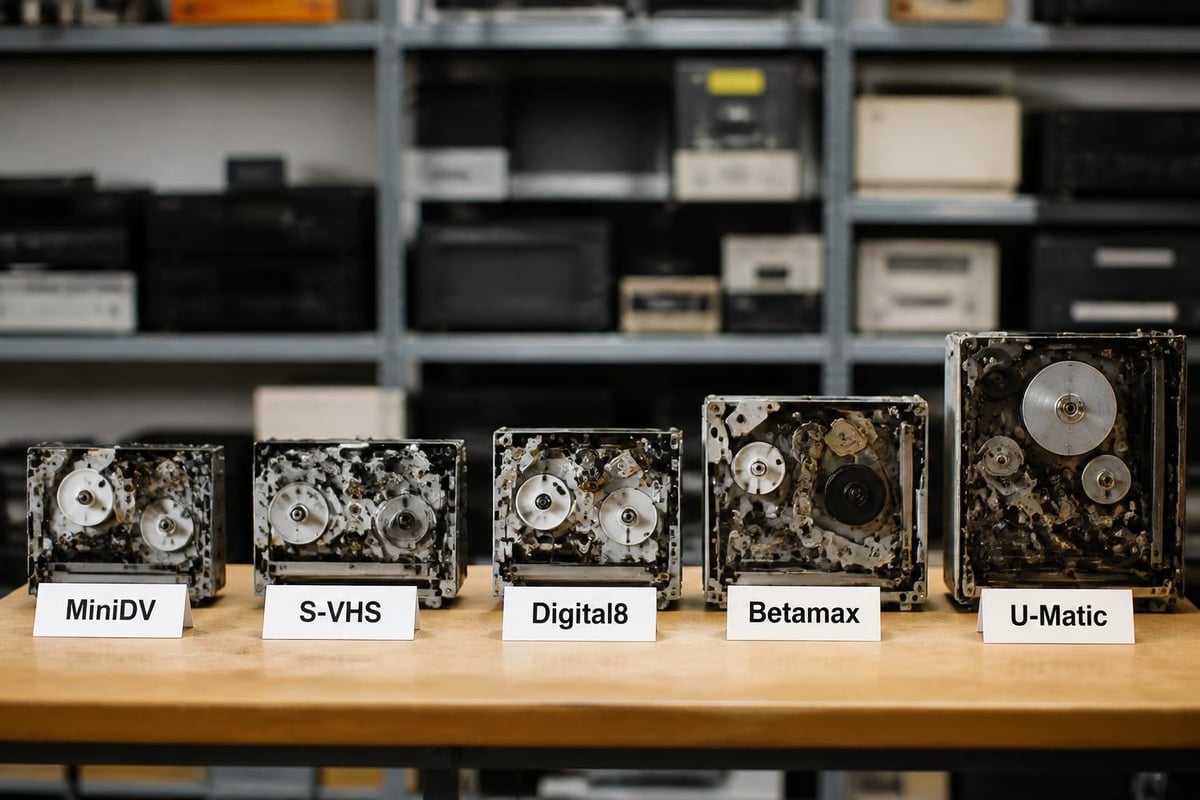
Different videotape formats present unique challenges. MiniDV decks feature precision drum assemblies that rarely need replacement but require exact alignment. S-VHS equipment uses higher-quality heads more resistant to wear but demands stricter tracking tolerances. Digital8 players share DV mechanics but must maintain compatibility with analog Hi8 tapes. Betamax machines require format-specific parts increasingly difficult to source.
The U.S. National Archives offers guidance on playback considerations for various formats, helping facilities prioritize which machines justify repair investment versus replacement.
Cost Analysis: Repair vs. Replacement Decisions
Financial analysis determines whether video recorder repairs make business sense. Professional decks command premium prices new, making repair economics favorable in many scenarios.
Repair Cost Breakdown
Labor charges typically range from $85-$150 per hour depending on technician expertise and regional markets. Simple repairs like belt replacement require 1-2 hours, while complete mechanism overhauls demand 4-6 hours. Parts costs vary dramatically-drive belts cost $15-$40, while video drum assemblies run $300-$800 for professional formats.
Common repair scenarios include:
- Belt replacement (all transport belts): $125-$250 total
- Video head cleaning (professional service): $75-$125
- Power supply rebuild (capacitor replacement): $150-$300
- Complete mechanism service (clean, lubricate, align): $350-$600
- Control board repair (component-level): $200-$500
Replacement Cost Comparison
| Equipment Type | Used Market Price | New Equivalent | Repair Break-Even |
|---|---|---|---|
| MiniDV deck (prosumer) | $300-$600 | Unavailable | $250 |
| S-VHS deck (professional) | $500-$1,200 | Unavailable | $400 |
| Digital8 player | $200-$400 | Unavailable | $150 |
| Betamax deck | $150-$500 | Unavailable | $200 |
With most professional decks no longer manufactured, repair remains the only option. Even expensive repairs prove cost-effective compared to used equipment scarcity and reliability concerns.

DIY Maintenance vs. Professional Service
Some video recorder repairs suit in-house capability while others demand professional expertise. Understanding this distinction prevents equipment damage and safety hazards.
Safe DIY Procedures
Head cleaning represents the most common user-serviceable maintenance. The iFixit VCR head-cleaning guide provides step-by-step procedures for safely accessing and cleaning video heads with isopropyl alcohol and lint-free swabs. This preventive maintenance extends head life and improves playback quality.
Belt inspection and replacement suits moderately skilled operators. Rubber drive belts degrade predictably, becoming stretched, cracked, or sticky. Replacement requires disassembly but involves no electrical components. The iFixit maintenance reference outlines proper procedures and safety precautions.
External cleaning and ventilation maintenance prevents many failures. Regular exterior cleaning, fan filter replacement, and ensuring adequate ventilation reduces thermal stress and dust accumulation.
When Professional Service Becomes Necessary
Complex video recorder repairs require specialized tools, knowledge, and experience. Head drum alignment demands oscilloscopes and test equipment most facilities don't possess. Circuit board component-level repair requires electronic troubleshooting skills and schematic access. Mechanical timing adjustments need precise measurement tools and format-specific specifications.
Professional VCR maintenance contracts provide scheduled service preventing catastrophic failures. Regular professional servicing every 500-1000 operating hours maintains optimal performance for high-volume digitization operations.
Finding Service Documentation and Parts
Successful video recorder repairs depend on accessing proper service manuals and sourcing replacement components.
Service Manual Resources
Manufacturer service manuals contain schematics, adjustment procedures, and parts lists essential for proper repair. The Internet Archive hosts extensive collections of service manuals for Sony, JVC, Panasonic, and other manufacturers. These PDF documents provide authoritative technical specifications unavailable elsewhere.
Professional technicians also reference manufacturer technical bulletins addressing known issues and recommended fixes for specific models. SMPTE resources provide industry standards for professional broadcast equipment maintenance and repair practices.
Parts Sourcing Strategies
- OEM stock: Manufacturers discontinued most parts, but some authorized service centers maintain inventory
- Electronics suppliers: Generic components like capacitors, transistors, and voltage regulators remain available
- Salvage decks: Non-functional units provide mechanical parts, specialized components, and assemblies
- Aftermarket vendors: Specialized suppliers stock common wear items like belts, idlers, and pinch rollers
- 3D printing: Custom fabricated parts replace unavailable plastic components and mechanical pieces
Format-Specific Repair Considerations
Different videotape formats present unique maintenance and repair challenges based on their mechanical design and tape characteristics.
MiniDV and Digital Tape Formats
MiniDV equipment uses compact mechanisms with precisely aligned rotating drums. Video recorder repairs for DV formats focus on drum assembly condition, tape path alignment, and firewire interface functionality. These decks rarely need head replacement but suffer from worn loading mechanisms and capstan motor failures.
DV tape stock itself contributes to maintenance needs. The thin metal-particle tape formulation creates more head wear than VHS but less than older formats. Regular cleaning every 100-200 hours prevents dropout accumulation.
Analog Formats: VHS and S-VHS
Standard VHS mechanisms tolerate more wear before failing completely. S-VHS decks demand higher standards-tracking must remain precise for the higher-resolution format. Video recorder repairs typically address stretched belts, worn mode switches, and dirty heads. Professional S-VHS machines feature metal tape paths and higher-grade components lasting longer than consumer equipment.
Legacy Professional Formats
Betamax, U-Matic, and Betacam formats require specialized knowledge. The British Film Institute's videotape overview describes format differences and archival challenges unique to each type. These professional formats used superior components but now face severe parts scarcity.
Preventive Maintenance Programs
Structured maintenance schedules prevent failures and extend equipment lifespan far beyond typical operating expectations.
Scheduled Service Intervals
| Maintenance Task | Frequency | Impact |
|---|---|---|
| Head cleaning (professional) | Every 200 hours | Prevents video quality degradation |
| Belt inspection | Every 500 hours | Catches wear before failure |
| Complete mechanism service | Every 1,000 hours | Maintains optimal performance |
| Alignment verification | Annually | Ensures format compliance |
| Capacitor assessment | Every 3-5 years | Prevents power supply failure |
High-volume digitization facilities benefit most from preventive approaches. VCR maintenance programs reduce downtime by addressing wear before catastrophic failure occurs.
Documentation and Record Keeping
Tracking maintenance history guides future decisions. Recording operating hours, service dates, parts replaced, and performance metrics identifies patterns predicting failure. This data determines optimal service intervals for specific equipment and operating conditions.
Professional facilities maintain equipment logs including:
- Operating hours since last service and lifetime total
- Tape count processed since cleaning or alignment
- Quality metrics from test tape playback
- Environmental data temperature and humidity logs
- Failure history component replacements and issues encountered
Digitization Quality and Equipment Condition
Equipment condition directly impacts digitization outcomes. Understanding this relationship helps facilities balance repair investment against output quality requirements.
Playback Quality Factors
Video recorder repairs improve specific quality parameters. Clean, aligned heads reduce dropout rates and improve signal-to-noise ratio. Proper tape tension and speed control ensure correct audio pitch and video geometry. Stable power supplies prevent interference patterns and color shifts.
Research on digitization and restoration techniques demonstrates that equipment condition affects achievable quality even with post-processing. Starting with optimal playback reduces restoration workload and preserves more original information.
Quality Assurance Testing
Professional facilities implement testing protocols verifying equipment performance meets standards. Test tape playback, waveform monitoring, and dropout counting provide objective measurements. Equipment failing to meet specifications undergoes video recorder repairs before returning to production use.
Rental vs. Ownership for Repair Management
Facilities managing equipment fleets choose between owning maintained decks or renting professionally serviced units.
Ownership Model Considerations
Benefits include unlimited usage, no monthly costs, and complete control over maintenance scheduling. Challenges involve repair responsibility, parts sourcing, downtime management, and technical expertise requirements.
Rental Model Advantages
Professional VCR rental services starting at $99 monthly provide maintained equipment with support included. Rental eliminates repair cost unpredictability, provides backup equipment during failures, and transfers maintenance responsibility to the supplier. Facilities scale capacity without capital investment or long-term repair obligations.
For occasional digitization needs, rental proves more economical than ownership and repair management. High-volume operations may prefer ownership despite repair responsibilities.
Specialized Tools and Test Equipment
Professional video recorder repairs require specific tools beyond general electronics equipment.
Essential Repair Tools
- Oscilloscope: Verifies video signal amplitude, sync levels, and waveform quality
- Multimeter: Tests voltages, continuity, and component values
- Alignment tools: Non-metallic hex keys and screwdrivers prevent damage to magnetic components
- Head cleaning supplies: 99% isopropyl alcohol, lint-free swabs, and chamois sticks
- Test tapes: Known-good reference tapes for each format verify playback quality
Advanced diagnostics employ vectorscopes for color accuracy, audio analyzers for frequency response testing, and time-base correctors for evaluating signal stability.
Calibration Standards
Professional repair follows manufacturer specifications for alignment and adjustment. Parameters include:
- Video head protrusion: Measured in micrometers, critical for proper tape contact
- Back tension: Specified in grams, ensures proper tape pack and prevents stretching
- Audio bias: Set to manufacturer specs for optimal frequency response
- Tape speed: Verified against crystal standards for correct playback timing
Managing Multi-Format Equipment Fleets
Digitization facilities supporting multiple formats face complex repair management challenges requiring strategic planning.
Format Priority Assessment
Not all formats justify equal repair investment. Facilities prioritize based on:
- Client demand volume for each format determines repair budget allocation
- Tape condition risk where fragile tapes need best-maintained equipment
- Equipment availability with scarce decks receiving preferential maintenance
- Revenue per format guides investment in professional versus consumer gear
Cross-Format Repair Efficiency
Some skills and tools apply across formats. Belt replacement techniques transfer between machines. Power supply repair knowledge applies universally. Head cleaning procedures share common elements despite format differences.
Facilities supporting multiple videotape formats benefit from standardizing on specific equipment brands where possible, enabling parts sharing and concentrated repair expertise.
Training and Knowledge Transfer
Technical expertise for video recorder repairs becomes scarcer as experienced technicians retire. Facilities must address knowledge preservation.
Building Internal Capability
Documentation of successful repairs, common issues, and solutions creates institutional knowledge. Mentorship programs pair experienced technicians with newer staff before expertise disappears. Manufacturer training materials, though dated, provide foundational understanding of equipment design and maintenance philosophy.
External Expertise Access
Specialized repair service providers offer knowledge and capability most facilities cannot develop internally. These specialists maintain parts inventory, test equipment, and cross-format experience impossible for single-facility operations to duplicate.
Future-Proofing Digitization Operations
Strategic planning addresses the reality that video recorder repairs will become progressively more difficult.
Long-Term Equipment Strategy
Facilities face finite equipment lifespans as parts become unavailable and expertise disappears. Planning includes:
- Stockpiling critical spares while available
- Establishing vendor relationships with remaining repair specialists
- Prioritizing projects to complete highest-value digitization first
- Developing migration plans for when specific formats become unserviceable
The equipment rental model shifts these risks to specialized providers maintaining larger parts inventories and repair capabilities.
Alternative Technology Evaluation
Some newer technologies offer potential workarounds for failing equipment. Software-based TBC correction handles unstable signals. Digital enhancement reduces visible artifacts from imperfect playback. These solutions complement but cannot replace properly functioning decks.
Professional video recorder repairs remain both technically feasible and economically justified for facilities managing legacy videotape digitization in 2026. Understanding diagnostic procedures, cost considerations, and maintenance best practices extends equipment lifespan while maintaining output quality. Whether managing an owned equipment fleet or evaluating service options, choosing the right approach to repairs and maintenance ensures project success and protects irreplaceable content. VCR Supply provides both rental and repair solutions for professional videotape decks, offering maintained equipment from $99 monthly or diagnostic and repair services starting at $45, plus maintenance contracts that minimize downtime for digitization facilities.