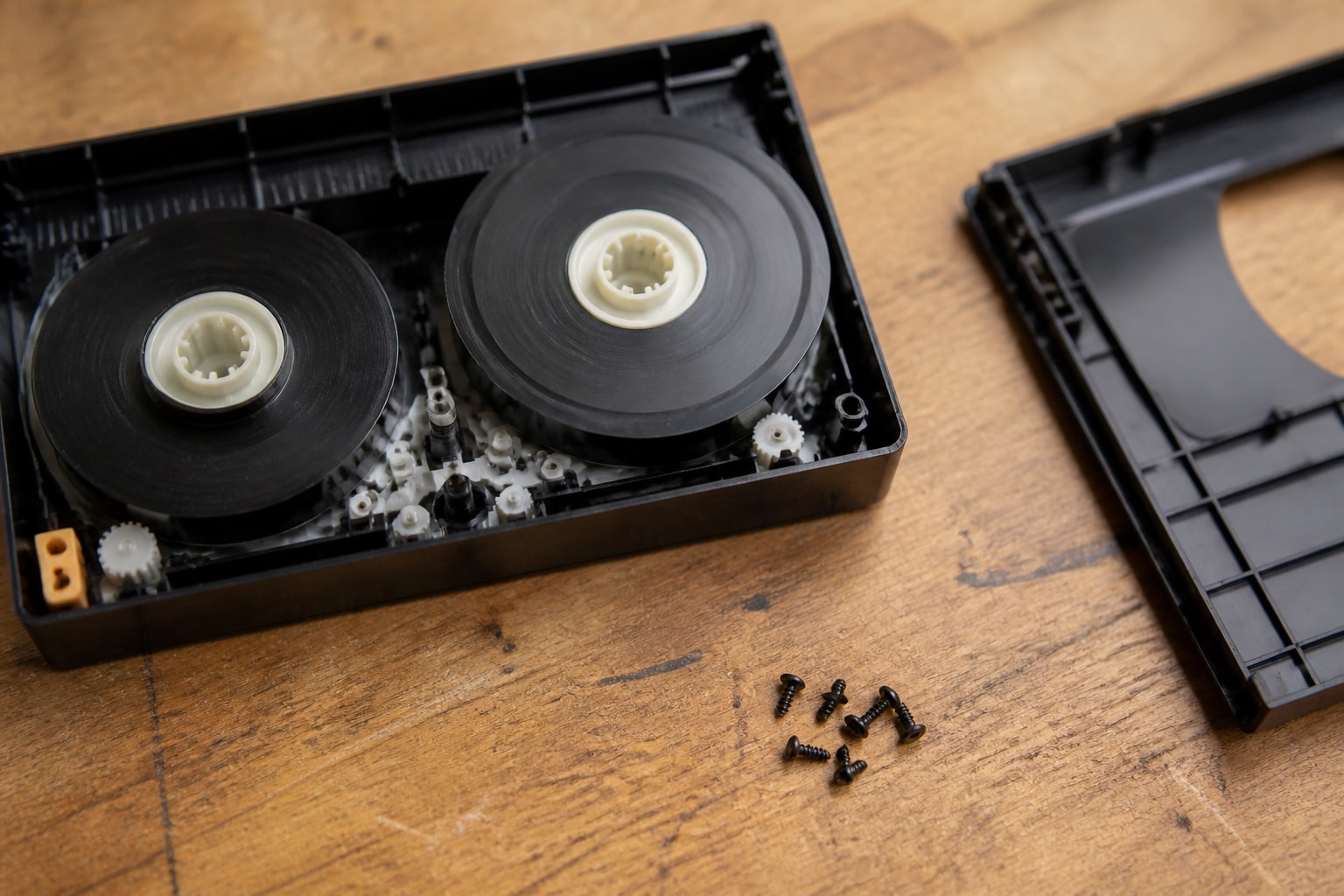
VHS Tape Repair Guide: Fix Stuck or Damaged Tapes
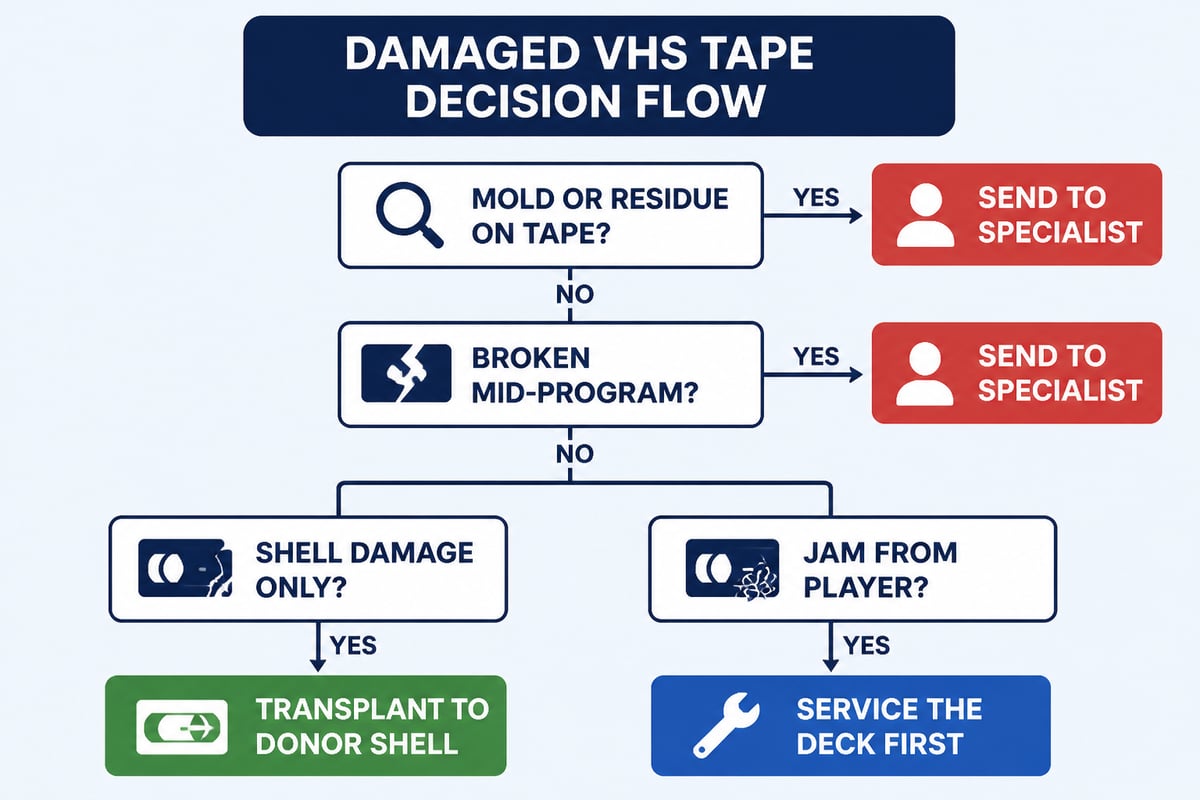
Yes, most old VHS tapes can be repaired when the damage is mechanical, such as a loose reel, a cracked shell, or a tape that has come off its path. Tapes with mold, sticky binder, or a snapped ribbon need more care, and in some cases a specialist. The right fix depends on a correct diagnosis, and the wrong one can destroy the recording and the player in the same afternoon.
This guide covers the common failure types, a safe sequence for home repair, and the point at which a tape should be handed to someone with the right equipment. It also explains why the deck used for playback matters as much as the cassette itself.
What Goes Wrong With VHS Tapes
VHS tapes fail in a handful of predictable ways, and each one calls for a different response. Identifying the symptom first prevents the most common mistake: forcing a damaged tape through a player.
- Tape jammed or eaten by the player. Ribbon is wrapped around the head drum or capstan, usually from a worn pinch roller or a loose tape pack.
- Snapped or broken tape. The ribbon has separated, often near the leader or at a crease from earlier jamming.
- Loose or slack tape pack. The cassette reels will not turn evenly, and the tape may spill out when the door opens.
- Cracked or broken shell. Screws are stripped, the flap is missing, or the case has split after a drop.
- Mold or mildew. White, gray, or fuzzy growth appears on the tape edge or inside the shell.
- Sticky shed syndrome. The binder that holds the magnetic layer deteriorates, and the tape squeals or gums up the heads. The National Archives explains videotape construction and how binder deterioration can make a tape sticky or difficult to play.
- Dropouts, noise, or tracking problems. These are often the player's fault rather than the tape's.
That last item matters. Many tapes sent for repair are healthy and were simply played on a worn consumer VCR. A deck with a dirty head or misaligned tape path can mimic tape damage, which is why the machine deserves scrutiny before the cassette is opened.
Can Old VHS Tapes Be Repaired?
Old VHS tapes can usually be repaired if the magnetic ribbon itself is intact and the problem is the cassette housing, tape path, or a clean break. Damage to the binder or to the magnetic layer is far harder to reverse.
A rough guide to what is realistic:
| Problem | Repairable? | Typical approach |
|---|---|---|
| Cracked shell | Yes | Transplant the tape into a donor shell |
| Loose tape pack | Yes | Gently tighten the reels by hand |
| Clean break in the tape | Often | Specialist splice or shell transplant |
| Surface mold | Sometimes | Specialist cleaning before any playback |
| Sticky shed | Sometimes | Specialist treatment, then immediate transfer |
| Heavily creased or stretched tape | Rarely | Transfer what can be recovered |
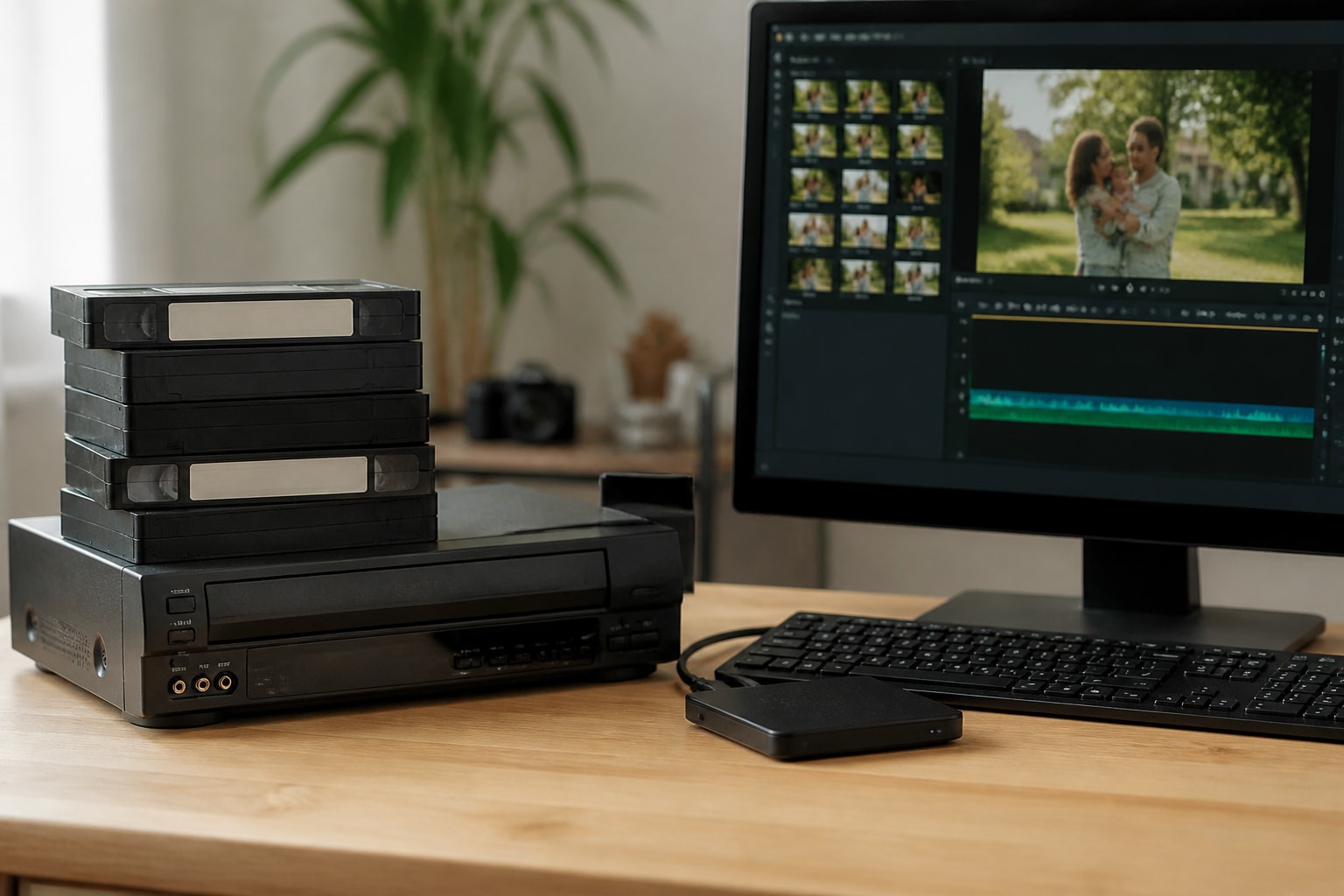
The goal of any repair should be to get the tape stable enough for one clean transfer to a digital file. The National Archives recommends reformatting videotapes older than five years and prioritizing deteriorating tapes with important content. Repair, in other words, is a bridge to digitization, not a permanent fix for a physical tape.
How to Repair a Broken VHS Video Tape
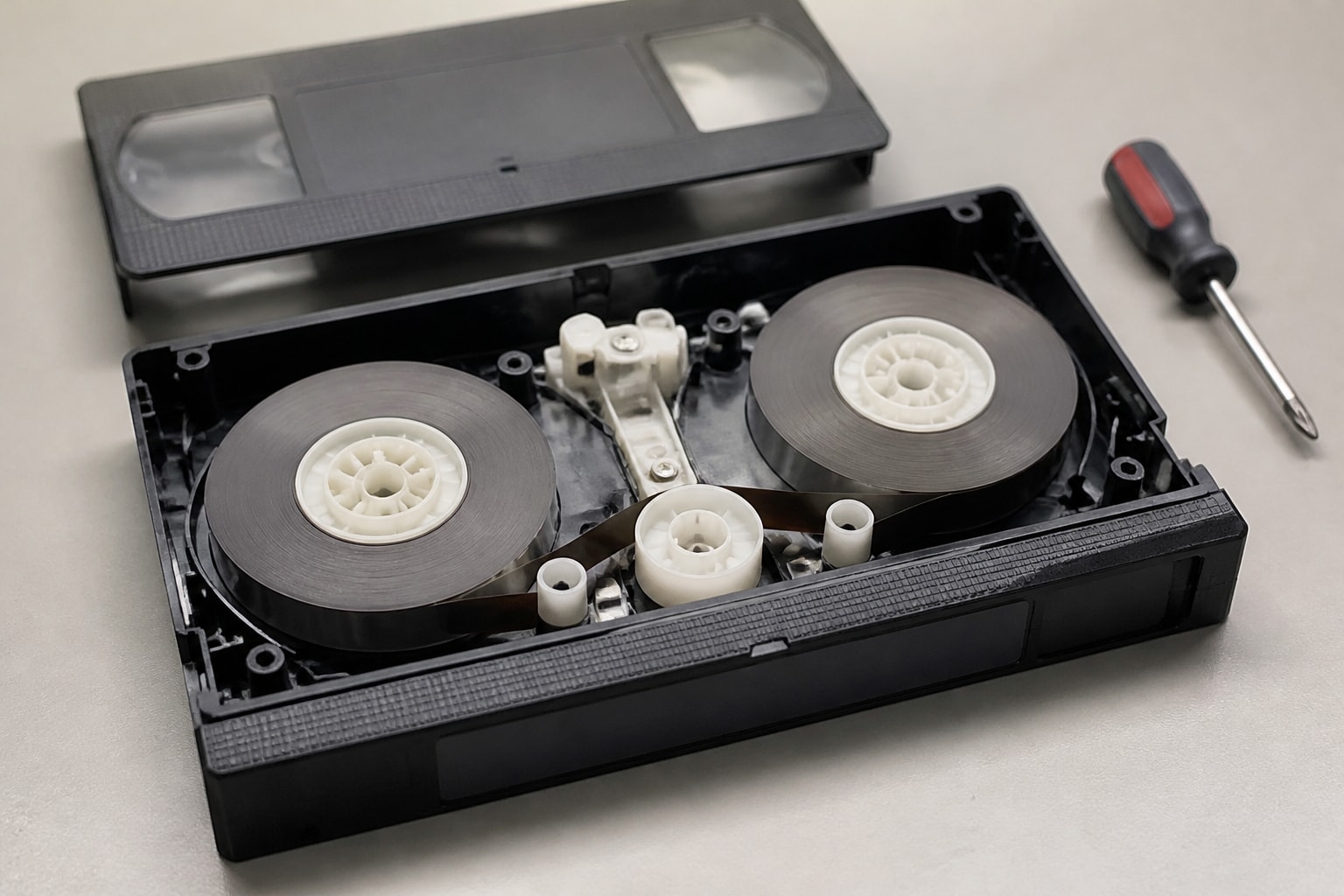
To repair a broken VHS video tape, open the cassette shell, locate both ends of the ribbon, and reattach them or move the tape pack into a working shell. This is the entire basis of most home vhs tape repair, and it is manageable when the break is near the leader and the tape is clean.
One caution comes first. The National Archives advises that splicing tape should never be used, and broken magnetic tape should not be spliced without appropriate training. Consumer adhesive tape leaves residue that can foul a playback head. If the recording matters, skip to the specialist section below. If the tape is a low-value copy of a commercial movie, the steps below are a reasonable place to practice.
Step-by-step cassette repair
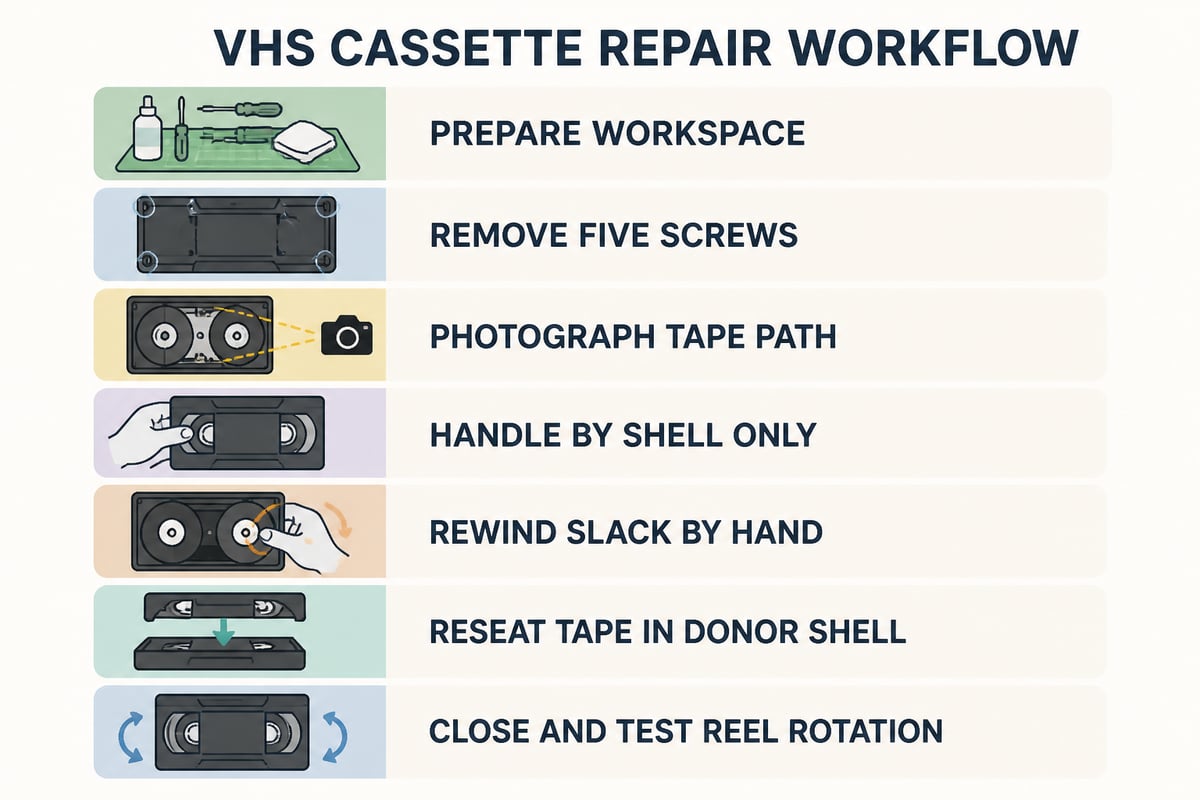
- Prepare a clean, flat workspace. Use good light and a small Phillips screwdriver. Keep the cassette away from magnets and dust.
- Remove the screws. Most VHS shells have five screws on the underside. Set the cassette face up and lift the top half carefully, keeping both reels in place.
- Photograph the tape path. A quick image shows how the ribbon threads around the posts and guides, which saves guesswork on reassembly.
- Handle the tape by its edges and the outer shell only. Handle the cassette only by its outer shell, and avoid touching the tape surface or the edge of the tape pack, since skin oils and pressure leave marks.
- Rewind loose slack by hand. Insert a pencil or fingertip into a reel hub and turn it slowly until the tape sits snug.
- Reseat or reattach the ribbon. For a leader break, the usual repair is to move the tape pack into a donor shell with an intact leader. Do not overlap and tape the ends together.
- Close the shell and replace the screws evenly. Do not overtighten, and confirm both reels turn freely before inserting the tape in any machine.
For more on shell-level fixes and what typically needs a donor cassette, the VHS cassette repair article from VCR Supply goes through common cases in more detail.
Freeing a Tape Stuck in the VCR
A tape stuck in the VCR should be freed with the power off and the least possible force, because pulling it out against a spinning mechanism can snap the ribbon. Resist the urge to pry the door open.
Try this sequence:
- Unplug the machine and wait a few minutes. Some decks release the cassette more easily once the loading motor has stopped.
- Plug it back in and press Eject once. Many jams clear when the mechanism completes its unload cycle.
- Check for visible tape spill. If loops are caught in the mechanism, do not keep pressing buttons.
- Open the top or front panel only if you are comfortable doing so, and turn the loading gear by hand in the unload direction, as shown in the deck's service documentation.
- Cut the ribbon only as a last resort, and only after photographing the tape's position, so the cassette can be recovered afterward.
If the tape still will not release, stop. A deck that ate one tape will often eat the next, and the cause is worth fixing. A worn loading belt, a hardened pinch roller, or a failing sensor needs bench attention, which is where professional VCR repair comes in.
Mold, Sticky Shed, and Other Tapes You Should Not Play
If a tape has visible mold, dust, debris, or a sticky binder, do not play it. The National Archives states that if a tape is visibly dusty, dirty, or has debris, it should not be played before seeking guidance from a preservation specialist. The Library of Congress gives similar advice, noting that playing damaged tape can further damage both the media and the playback equipment.
That second point is easy to underestimate. Mold spores spread into a deck, and sticky binder coats the heads and guides with residue. The next tape played on that machine suffers for it. Shops that digitize customer media for a living treat a contaminated tape as a quarantine item for exactly this reason.
Warning signs to watch for:
- A white or powdery film on the tape edge or shell interior
- A musty or vinegar-like odor
- Squealing, chirping, or stopping partway through playback
- Gummy residue on the pinch roller or guide posts
- Tape that sticks to itself or drags on the reels
Tapes with these symptoms need professional cleaning, and sticky tapes sometimes receive a short window of stability after treatment, which should be used to make a single clean transfer.

When VHS Tape Repair Needs a Specialist
A specialist is the right call when the recording is irreplaceable, the tape is snapped mid-program, or any contamination is present. Wedding footage, family archives, legal depositions, and broadcast material all fall into this group.
Several signs suggest a repair is beyond a home attempt:
- The ribbon is broken in the middle of the program rather than at the leader
- The tape shows mold, residue, or heavy creasing
- The tape is a smaller format, such as VHS-C, which has an adapter and a more delicate path (see this note on repairing VHS-C tape)
- Earlier playback attempts produced squealing or shedding
- The deck itself has a tracking or head problem that has not been diagnosed
Professional deck condition matters as much as the tape. A properly aligned S-VHS or VHS deck with clean heads and a correct tape path treats a fragile cassette far more gently than a worn consumer unit. Digitization shops that handle damaged media often keep a pool of professional decks for this purpose, and many rent rather than buy. VCR Supply offers professional VCR and videotape deck repair, including bench diagnosis and mechanical and electronic work on customer-owned decks, which helps keep a transfer station running reliably.
How Much Does VCR Repair Cost?
The cost of VCR repair varies with the fault, the model, and the shop, so a fixed figure would be misleading. Most repair shops charge a diagnostic or bench fee before quoting the work, and parts such as belts, rollers, and heads are usually priced separately.
Two comparisons are worth making before paying for any repair. First, a consumer VCR with a failing mechanism may cost more to fix than the unit is worth, particularly if the goal is a one-off transfer of a few tapes. Second, a professional S-VHS or VHS deck has real value in a digitization workflow, which makes repair or rental more sensible than replacement.
For current pricing on professional deck repair, contact VCR Supply directly through its VCR repair page rather than relying on a general estimate. A short written quote before work begins is standard practice and worth requesting.
Preventing VHS Damage Before It Starts
Most VHS damage is preventable with proper storage and handling. The National Archives recommends keeping video recordings at 55 to 70°F and 30 to 55% relative humidity, and avoiding attics and garages with unregulated climates. For long-term magnetic tape storage it suggests 50 to 65°F and 30 to 40% relative humidity, noting that humidity above 65% can contribute to mold growth.
Good habits to build:
- Store tapes vertically in their cases, not stacked flat. The same National Archives guidance says tapes should not be left inside a VCR when not in use.
- Rewind tapes fully before storing, so tension is even across the pack.
- Keep tapes away from magnets, speakers, and electronics.
- Handle by the shell, never by the exposed ribbon.
- Label with a soft pen on the case, not with heavy adhesive on the shell.
- Limit playback of valuable tapes. Repeated playback carries a risk of damage, so valuable tapes should be played as few times as possible, and preservation copies should be made.
Digitizing sooner rather than later is the strongest form of prevention. Once a tape has been transferred cleanly, the original becomes a backup rather than the only copy.
What VHS Tape Sold for $75,000?
Very high prices for vintage VHS, sometimes in the tens of thousands, are typically reported for rare, sealed, professionally graded releases, not for ordinary tapes. Such results say nothing about the typical home-recorded cassette.
For most readers, the real value of a tape is the footage on it, which is why careful repair and transfer matter more than the cassette's resale worth.
FAQ
Can I use regular tape to fix a snapped VHS tape?
No. Adhesive tape leaves residue on the heads and can ruin the playback pass. The National Archives advises against splicing magnetic tape without training and recommends consulting an audio-video preservation specialist.
Is it safe to clean a moldy VHS tape myself?
It is not recommended. Playing or wiping a moldy tape can spread spores into the deck and damage the media. A specialist can clean the tape under controlled conditions before any transfer.
Should I repair the tape or just digitize it?
Repair only as far as needed to make a safe transfer, then digitize. The original is a deteriorating format, and a clean digital copy protects the content far better than a patched cassette.
Start by sorting your tapes into three groups: healthy, mechanically damaged, and contaminated, and transfer the healthy ones first. If a deck is jamming, squealing, or eating tapes, get it checked before it harms more recordings. Professional VCR and videotape deck repair from VCR Supply covers bench diagnosis and mechanical and electronic service on customer-owned decks, and rentals of professional decks are available for digitization shops that want dependable equipment without the repair backlog.