How to Identify VHS Cassette Tape Types
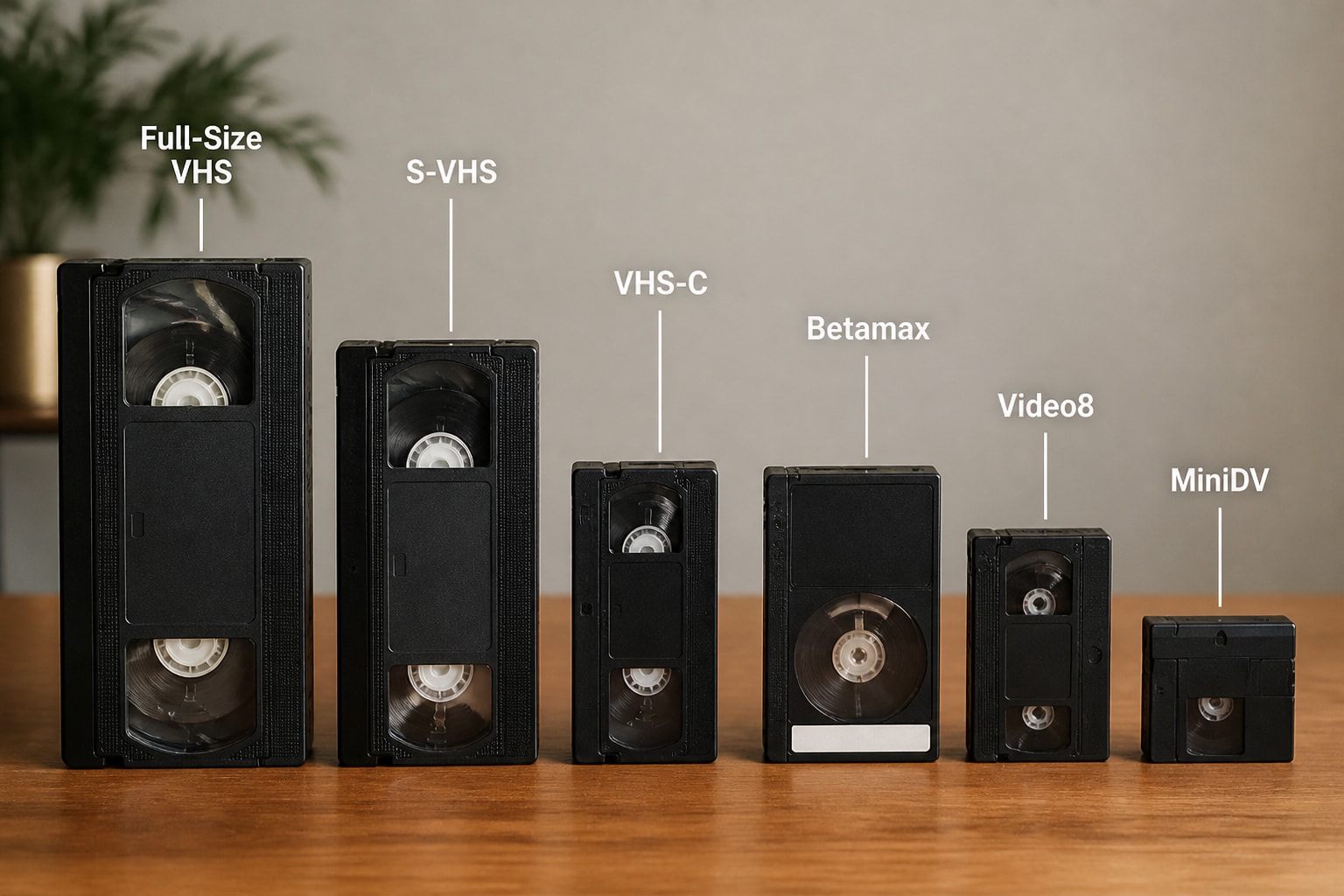
A VHS cassette tape is a half-inch-wide analog videotape in a plastic shell measuring about 7.5 by 4 by 1 inches, and you identify its type by checking the shell size, the logos on the label, and the tape width visible through the window. Many other formats look similar at a glance, so a quick physical check prevents you from loading a tape into the wrong deck.
Correct identification matters for digitization shops and home archivists alike. Each format needs a compatible deck, and forcing the wrong cassette into a machine can damage both the tape and the transport. The sections below walk through the formats you are most likely to find in a box of old media.
What Is a VHS Cassette Tape and How Does It Work?
A VHS cassette tape stores video as an analog signal on half-inch magnetic tape, which a VCR reads using spinning heads on a rotating drum. The format, short for Video Home System, reached consumers in the late 1970s and dominated home video through the 1980s and 1990s.
The tape is analog, not digital. The picture and sound are recorded as continuous magnetic variations, which is why VHS quality degrades with each generation of copying and why resolution is limited to roughly 240 lines for standard VHS.
The U.S. National Archives notes that VHS and S-VHS are distinct common videotape formats, and that magnetic tapes were made with varied binders, substrates, and oxide formulations. That variation explains why two tapes that look identical can behave very differently on playback.
For a deeper look at how the format compares with its main rival, see this overview of VHS and Betamax.
Is a Cassette Tape the Same as a VHS Tape?
No. An audio cassette tape and a VHS tape are different formats that share a basic idea, magnetic tape wound on two reels inside a plastic shell. An audio cassette uses tape roughly one-eighth of an inch wide and fits in your palm, while a VHS cassette uses half-inch tape in a shell about the size of a paperback book.
The two cannot be played in each other's machines. Audio cassettes record sound only, while VHS carries both video and audio, and the recording methods differ. When people search for a "cassette tape" they are often looking for one or the other, so confirm which you have before buying equipment.
How to Tell a VHS Cassette Tape from Other Videotape Formats
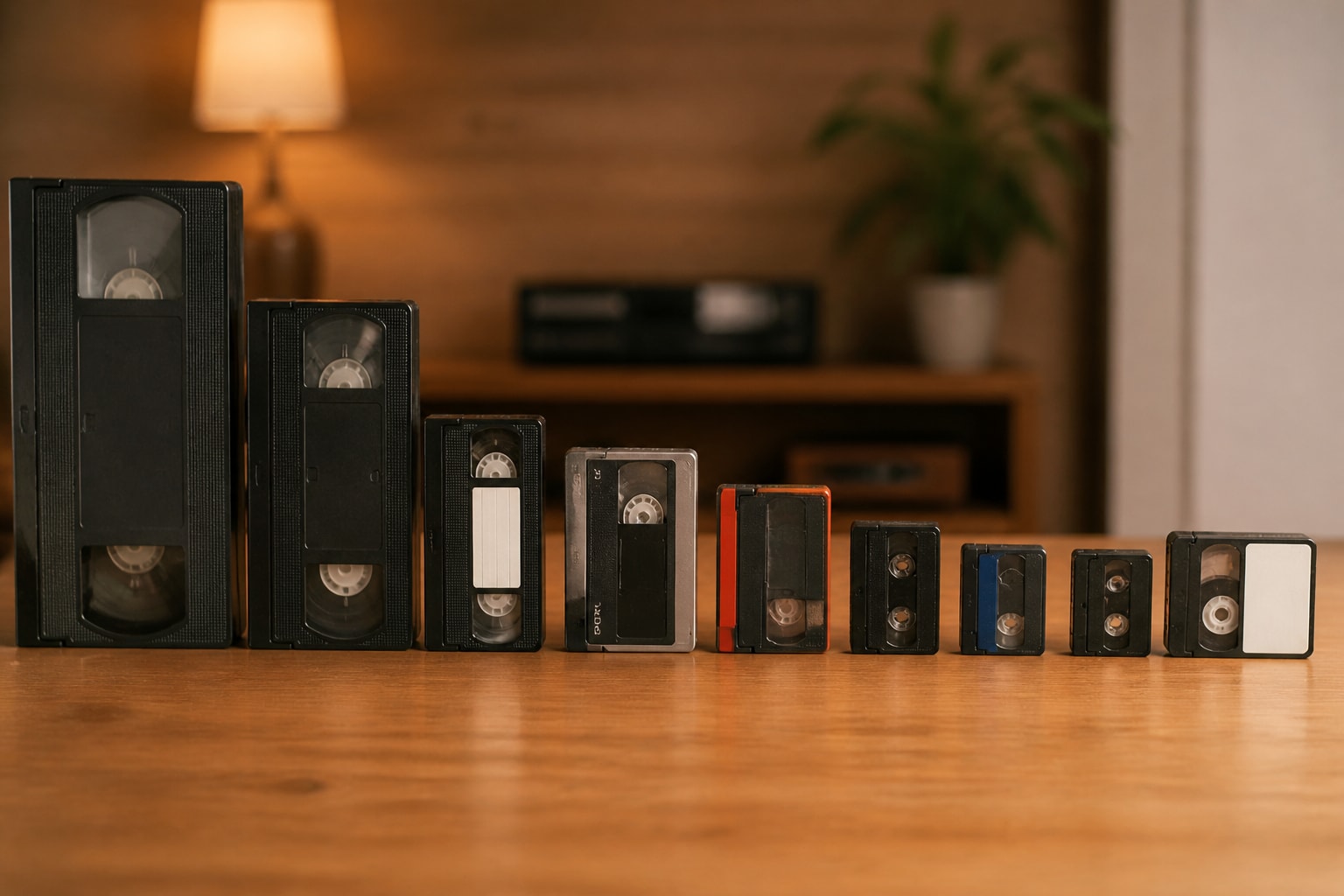
You can separate the common formats with three checks: shell dimensions, tape width, and printed logos. Start with size, because it eliminates most confusion in seconds.
- Measure or compare the shell. A full-size VHS shell is about 7.5 inches wide. A shell closer to 4 inches wide is likely VHS-C, Video8, Hi8, Digital8, or MiniDV.
- Check the tape width through the window. Half-inch tape points to VHS, S-VHS, or Betamax. Narrow 8mm tape points to the Video8 family. A very small cassette with 6.35mm tape is MiniDV.
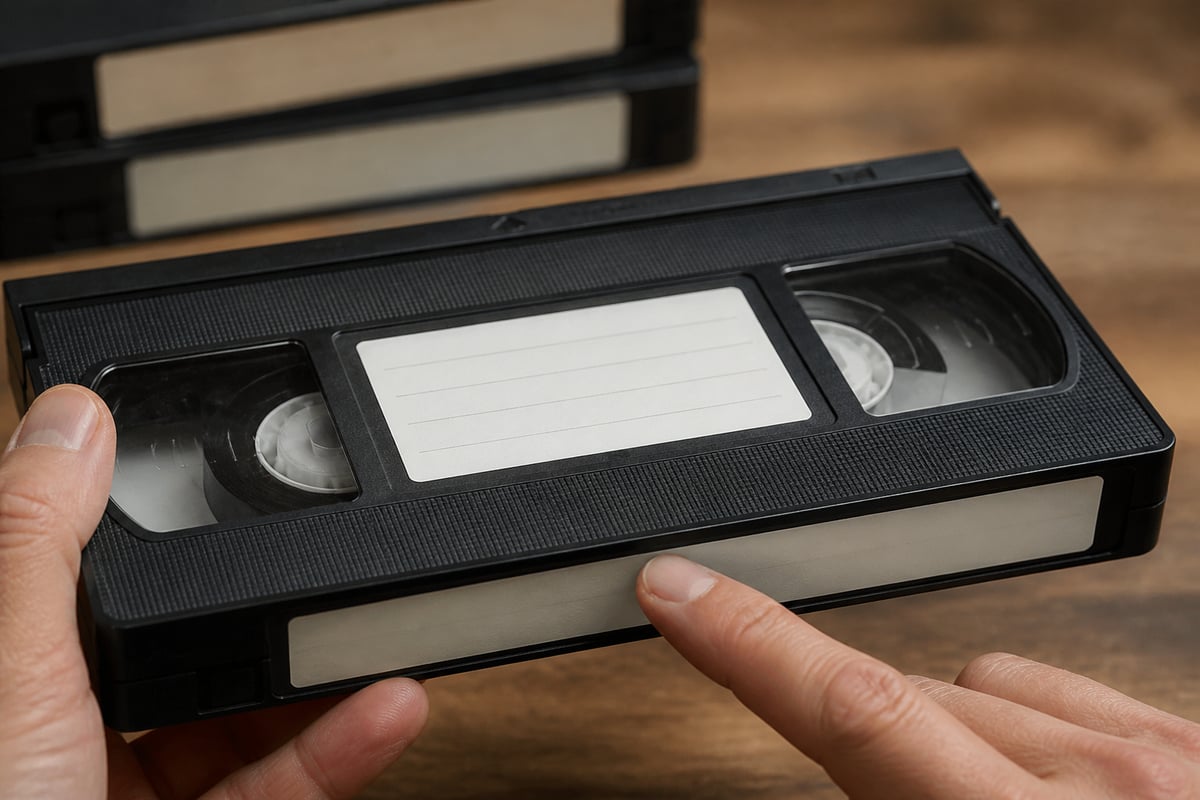
- Read the label and spine. Manufacturers print the format name, often with a logo, on the front and spine. Look for "VHS," "S-VHS," "VHS-C," "Hi8," "Digital8," or "miniDV."
- Look at the record-protection tabs. VHS shells have a removable tab on the lower edge. Formats differ in tab position and style.
- Check for a cassette adapter. A VHS-C tape may arrive snapped into a full-size adapter shell that makes it look like standard VHS.
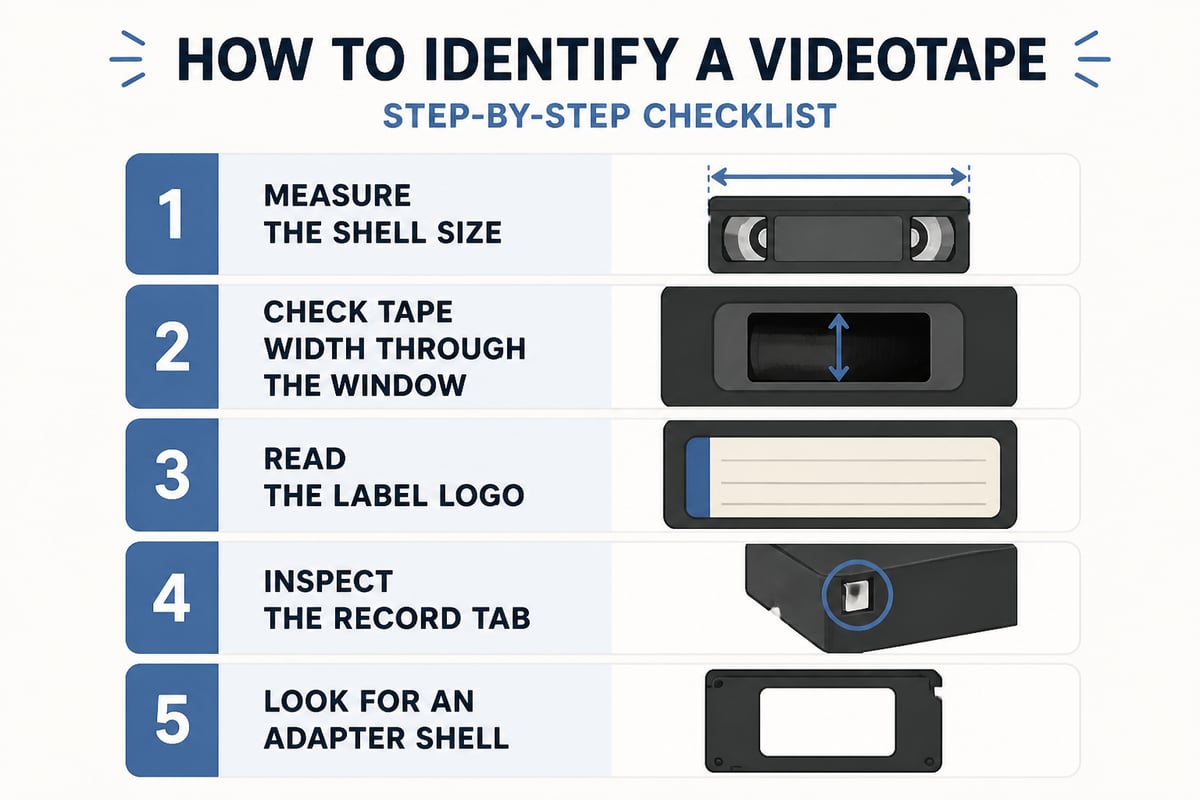
If you are still unsure, compare the cassette against the format table below.
| Format | Shell size (approx.) | Tape width | Signal |
|---|---|---|---|
| VHS | 7.5 x 4 inches | 1/2 inch | Analog |
| S-VHS | 7.5 x 4 inches | 1/2 inch | Analog |
| VHS-C | 3.7 x 2.3 inches | 1/2 inch | Analog |
| Betamax | 6 x 4 inches | 1/2 inch | Analog |
| Video8 / Hi8 | 3.7 x 2.4 inches | 8mm | Analog |
| Digital8 | 3.7 x 2.4 inches | 8mm | Digital |
| MiniDV | 2.5 x 2 inches | 6.35mm | Digital |
How Do You Tell S-VHS from Standard VHS?
An S-VHS cassette carries an "S-VHS" logo on the label and usually a distinct shell marking, while a standard VHS cassette shows only the VHS logo. The two are the same size, which is why they are so often mistaken for each other.
S-VHS, or Super VHS, records at higher resolution, around 400 lines, using higher-coercivity tape. Look for these cues:
- The S-VHS logo printed on the front label and spine
- A small notch or hole in the shell, which lets an S-VHS deck detect the tape type
- Text such as "Super VHS" or "High Grade" on professional stock
A standard VHS deck can play an S-VHS recording only if the deck supports it. Many S-VHS decks play standard VHS tapes, but the reverse is rarely true. Digitization shops that handle mixed archives usually keep a dedicated unit on hand, and a Super VHS VCR is the right tool for that job. Our guide on VHS versus S-VHS covers the playback differences in more detail, and VCR Supply offers S-VHS deck rentals for shops that need one without buying outright.
What Is a VHS-C Cassette and How Do You Recognize One?
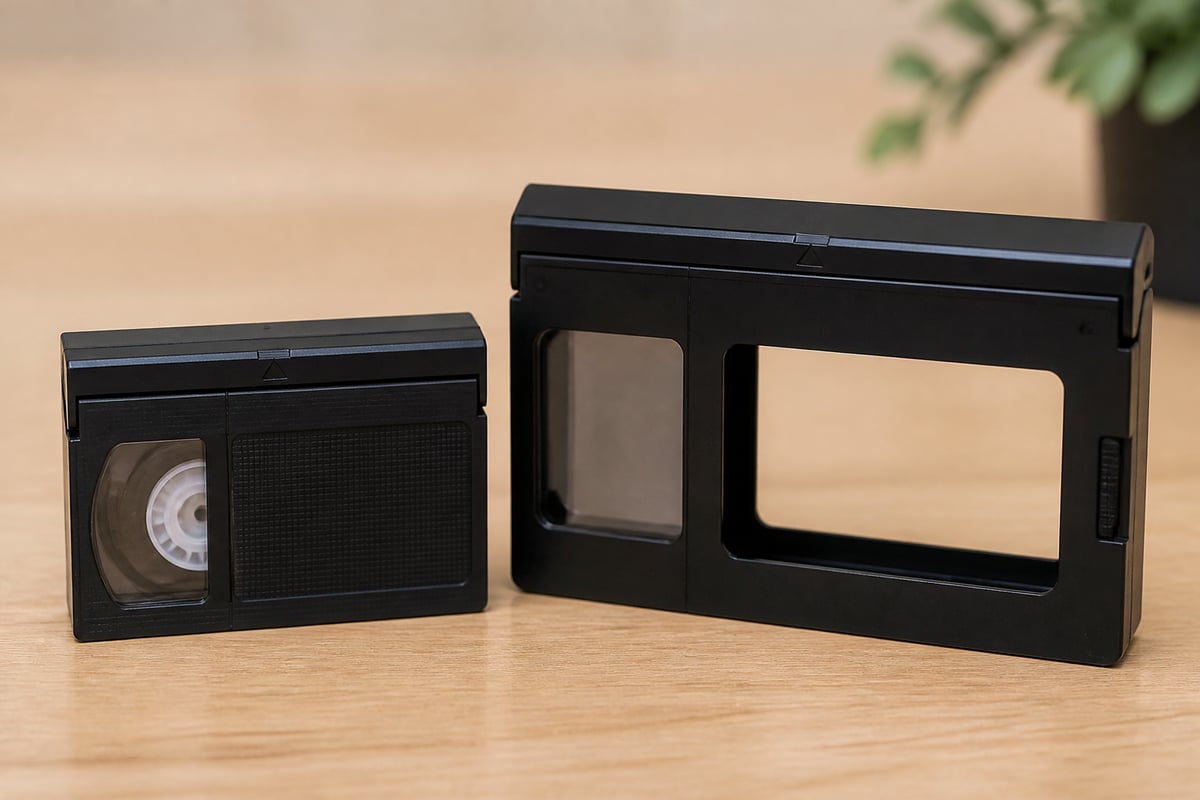
A VHS-C cassette is a compact version of VHS, about the size of a small box of matches, designed for camcorders. It holds the same half-inch tape in a much smaller shell, which is why it can be played in a standard VCR only through an adapter.
You will typically find VHS-C tapes in a family video collection from the late 1980s through the 1990s. Recognition is straightforward:
- A small shell labeled "VHS-C" or "Compact VHS"
- A visible gear mechanism on one side that works with the adapter
- Often stored with a clamshell adapter that resembles a full-size cassette
Handle these carefully. The small shell and spring-loaded tape path make VHS-C more prone to jams, and a damaged cassette sometimes requires a transplant into a new shell. Our walkthrough on how to repair a VHS-C tape explains the process.
Which Look-Alike Formats Get Confused with VHS?
Betamax, Video8, Hi8, Digital8, and MiniDV are the formats most often mixed up with a VHS cassette tape, and each requires its own playback deck. Telling them apart prevents wasted time at the bench.
Betamax
Betamax cassettes use half-inch tape like VHS but in a slightly smaller shell, about 6 by 4 inches. The label reads "Betamax" or "Beta," and the cassette is noticeably shorter than a VHS tape. Betamax is not compatible with VHS decks, so it needs a dedicated machine.
Video8, Hi8, and Digital8
These cassettes use 8mm tape in a shell roughly the size of an audio cassette. The labels distinguish them: Video8 and Hi8 are analog, while Digital8 records a digital signal on the same Hi8-style tape. A Digital8 camcorder can often play older analog 8mm tapes, which makes it a useful transfer tool.
MiniDV
MiniDV is the smallest of the group, a digital format on 6.35mm tape in a shell about 2.5 inches wide. If your cassette is truly tiny and labeled "miniDV," you are not dealing with VHS at all.
How to Read the Label and Shell Markings on a VHS Cassette
The printed markings on a cassette reveal the format, recording length, and sometimes the tape grade. Understanding them saves you from guessing when the format is not obvious.
Common markings include:
- T-120, T-160, or similar codes. The number indicates the length in minutes of recording time at standard speed, so T-120 holds roughly two hours at SP.
- SP, LP, EP, or SLP. These are recording speeds. SP gives the best quality, while EP and SLP squeeze in more time at lower quality.
- Brand and grade names. Premium grades such as HiFi or "High Grade" often indicate better oxide formulations.
- Pre-recorded labels. Commercial releases have printed cases and often a different shell finish from blank stock.
Speed matters when you transfer. A tape recorded at EP will play correctly on most decks, but the picture will look softer. If the original recording seems unusually long for the label, check whether it was recorded at a slower speed.
Did VHS Tapes Exist in the 70s?
Yes. JVC introduced VHS in Japan in 1976 and in the United States in 1977, so the format did exist in the 1970s, though early adoption was limited and the VHS cassette tape did not reach mass-market popularity until the early 1980s.
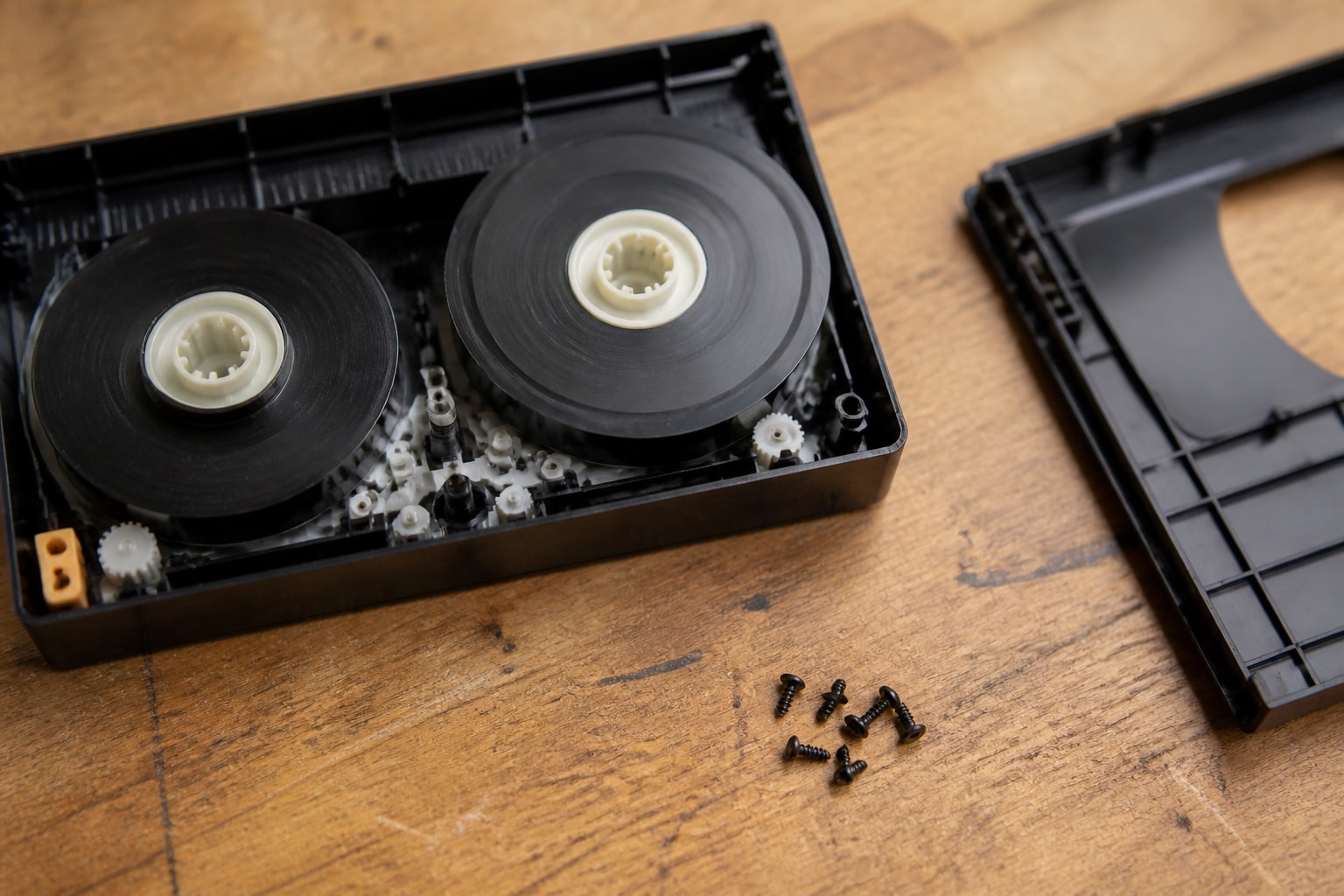
Tapes from this period tend to be rarer and more fragile. The earliest consumer releases and recordings often show their age through shedding oxide, brittle shells, and stiff tape. If you find a 1970s-era cassette, treat it as a priority for careful handling and professional transfer.
How Long Do VHS Tapes Last?
A VHS tape can remain playable for many years, depending on storage and use, though the tape itself will eventually deteriorate. The U.S. National Archives states that magnetic tapes stored under archival conditions generally last about 10 to 50 years before showing decay that makes them difficult to handle, and that storage conditions and handling affect lifespan.
Because most consumer VHS recordings are now 25 to 40 years old, many are already at risk. The National Archives recommends reformatting videotapes older than five years, prioritizing deteriorating tapes with important content. Common signs of decay include:
- Sticky-shed syndrome, where the binder absorbs moisture and gums up heads
- Visible mold or a white powdery residue on the tape edge
- Warped or cracked shells
- Dropouts, rolling pictures, and audio warble on playback
Do not play a visibly dirty or debris-covered tape without preservation guidance, since that can contaminate the heads and ruin a deck.
How Should You Store VHS Cassette Tapes Once You Identify Them?
Store identified tapes upright, in a cool and stable environment, and away from magnets. These conditions slow deterioration while you plan a transfer.
The National Archives gives specific targets:
- Humidity: keep magnetic tape at 30 to 40% relative humidity, since humidity above 65% can encourage mold growth.
- Temperature: hold the range at 50 to 65°F, and do not freeze the tape, since the National Archives advises against freezing it.
- Orientation: store cassettes vertically on edge, not flat.
- Magnetic fields: keep them away from loudspeakers and other strong magnetic sources.
Label each cassette with its format after you identify it, using a removable note on the case rather than writing on the tape shell.
Why Identification Leads to Digitization
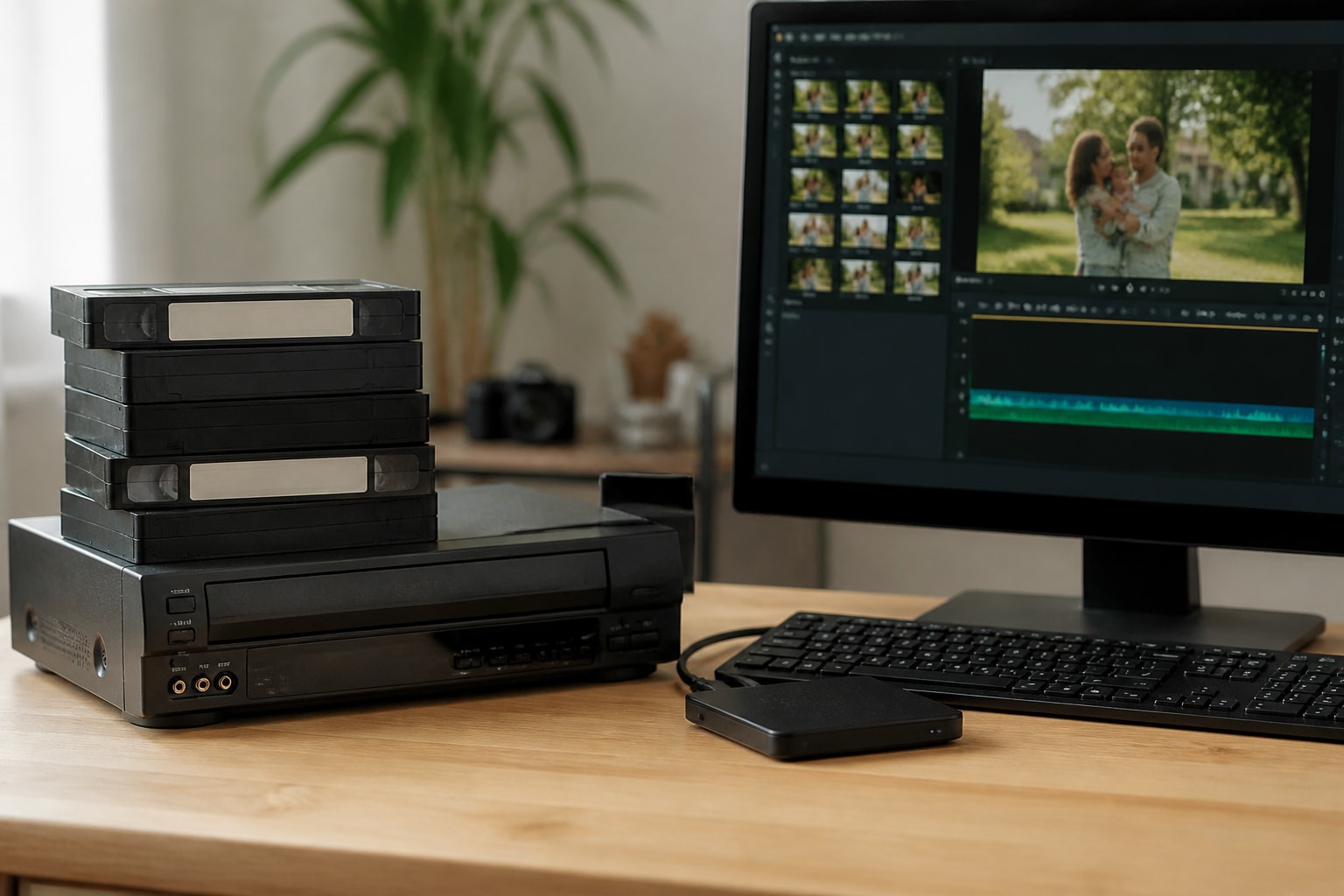
Identifying the format is the first step before transferring content, because every format requires a working, correctly matched deck. The Library of Congress explains that preservation of personal audiovisual collections must include conversion and maintenance in a current digital format because playback machines eventually become obsolete.
Preservation copies and convenient access copies serve different purposes, which matters when you decide how much quality to capture.
Use only playback equipment appropriate for the format and in good working condition. A worn drum or dirty heads can damage a fragile tape in a single pass, which is why many digitization shops rely on rented and serviced professional decks rather than aging consumer units.
FAQ
Is VHS tape analog or digital?
VHS is an analog format. It records the video and audio signal as continuous magnetic patterns on the tape rather than as digital data. Formats such as MiniDV and Digital8 are digital, while VHS, S-VHS, VHS-C, Betamax, Video8, and Hi8 are analog.
Can I play a VHS-C tape in a regular VCR?
Yes, but only through a VHS-C adapter cassette. The adapter carries the small cassette through the VCR's transport so the full-size deck can read it. Without the adapter, the compact shell will not load correctly.
How can I tell if my tape has mold?
Mold appears as white, gray, or fuzzy spots on the tape edges, the reels, or inside the shell. A musty smell is another sign. Stop handling the tape and seek guidance before playback, since moldy tape can spread contamination to a deck.
Start by sorting your cassettes into piles by format using the shell size and label checks above, then note which ones need a specialty deck such as S-VHS or Betamax. If your shop handles a mixed archive, VCR Supply rents and repairs professional videotape decks, including MiniDV, S-VHS, Digital8, and Betamax, with rentals starting at $99 per month and repairs beginning with a $45 diagnostic fee. Maintenance contracts are also available to reduce equipment downtime during large transfer projects. Visit VCR Supply to find the right deck for your formats.