VHS VCR Guide: Repair, Rent, or Maintain Your Deck
A VHS VCR is the deck that plays and records VHS tapes, and for digitization work the decision usually comes down to three options: repair the deck you own, rent a tested unit, or put it on a maintenance schedule. A VCR is the machine and VHS is the tape format it reads, so a working deck is the only way to get the signal off a cassette. Consumer decks are no longer manufactured in volume, which makes the condition of every remaining deck a business concern for any shop that transfers tape.
This guide explains the terminology, the common failure points, and how to choose between repairing, renting, and maintaining equipment.
Is a VCR the Same as a VHS Player?
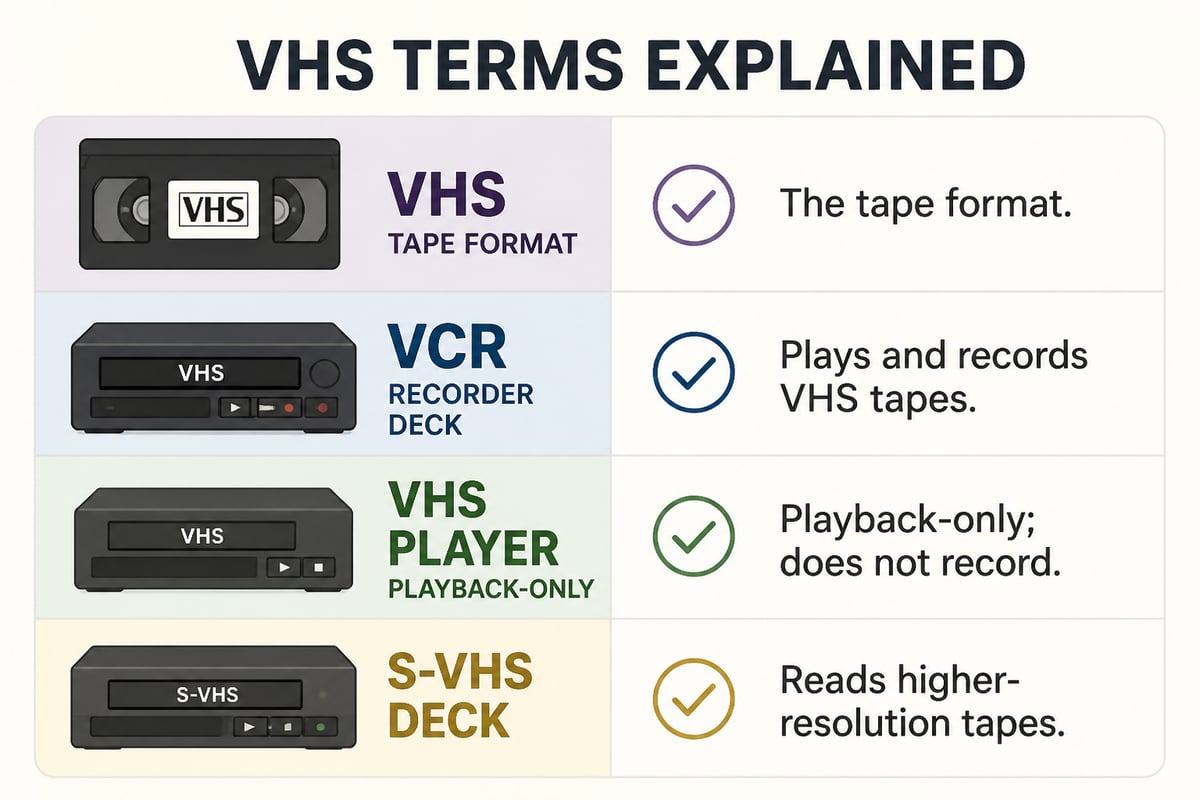
A VCR and a VHS player are close but not identical: "VCR" stands for videocassette recorder, a deck that can record and play, while "VHS player" describes a deck that only plays back. VHS, short for Video Home System, is the tape format itself, introduced by JVC in the 1970s.
In everyday use the terms are interchangeable, and most decks sold for home use were full recorders. The distinction matters in three practical ways:
- Recording capability: A playback-only unit cannot write signal to tape, which is rarely a concern for transfer work.
- Format support: Some decks read only standard VHS, while others also read S-VHS, a higher-resolution format with a different cassette detection system. Our overview of S-VHS and VHS differences covers the signal differences.
- Tape size: VHS-C compact cassettes need an adapter shell in a full-size deck.
If you want a deeper look at the terminology, the article on VHS and VCR walks through how the two terms developed.
How a VHS VCR Reads a Tape
A VHS VCR reads a tape by pulling the magnetic tape out of the cassette, wrapping it around a spinning head drum, and sensing the recorded signal through video heads while a capstan and pinch roller move the tape at a constant speed.
Understanding this path explains most failures. The key mechanical parts include:
- Video head drum: A rotating cylinder carrying the heads that read the helical-scan video tracks.
- Capstan and pinch roller: Together they pull the tape at a precise speed. A worn pinch roller causes speed drift and audio warble.
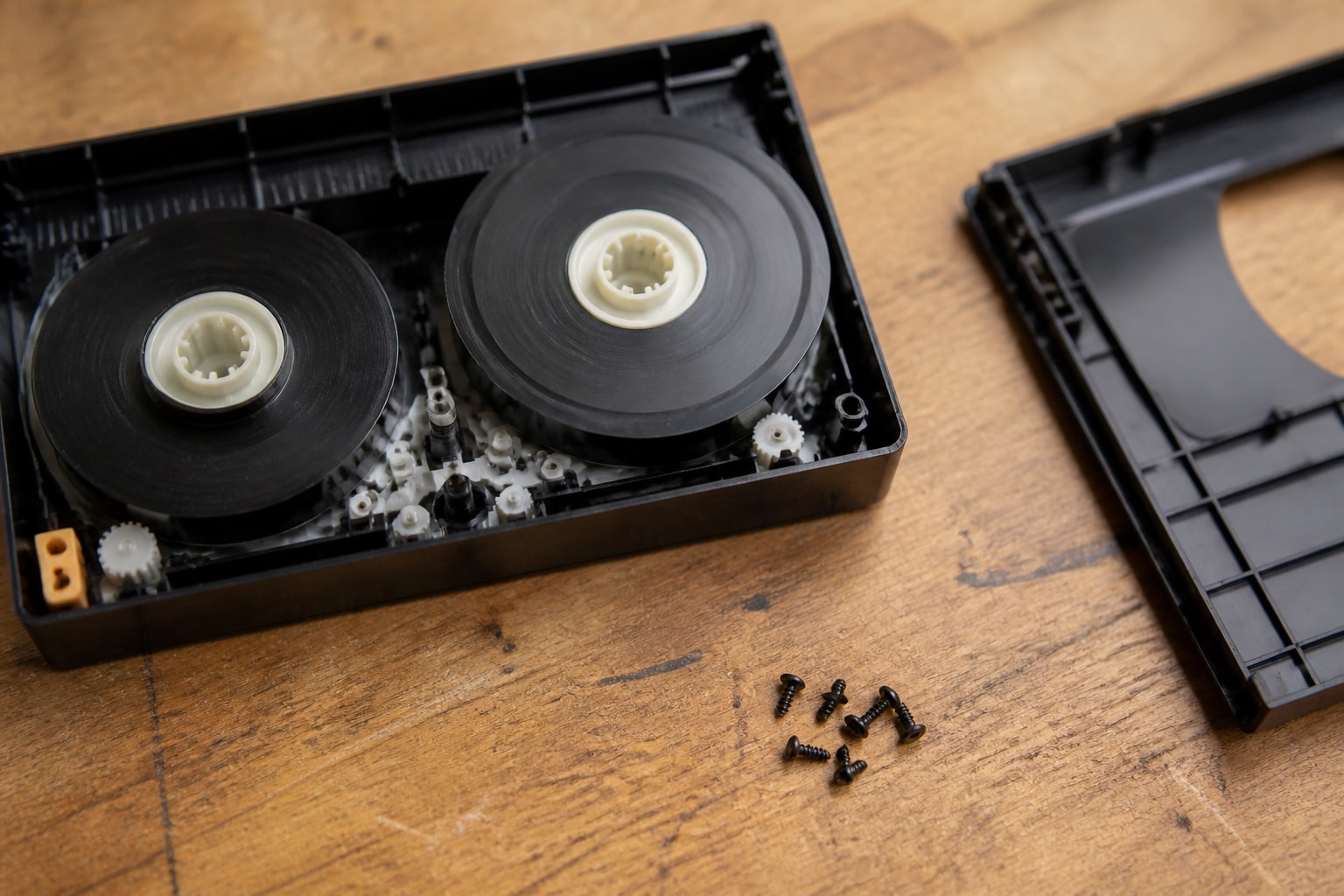
- Loading mechanism: Motors, gears, and guide posts that thread the tape from the cassette. Brittle or broken plastic gears are a frequent cause of decks that eject tapes or refuse to load.
- Belts and idler wheels: Rubber components that harden, stretch, or turn gummy over decades.
- Tape guides and audio/control head: Surfaces that collect oxide shed from tapes and misalign when bumped.
Because these parts wear with every transfer, a deck used daily in a digitization shop ages faster than any home unit ever did.
What Replaced VHS Tapes?
DVD replaced VHS tapes as the dominant consumer video format in the early 2000s, followed by Blu-ray, digital downloads, and streaming. Camcorder formats followed their own path from VHS-C and 8mm to MiniDV, Digital8, and eventually memory cards and phones.
For anyone holding tape archives, this timeline matters. Magnetic tape degrades through binder breakdown, mold, and head-clog residue, and the number of working decks keeps shrinking. The practical answer is to move content into files while a reliable playback chain still exists. For shops that handle this work, the article on a machine to transfer VHS to DVD describes the playback side of that chain.
Does a VCR Still Exist?
Yes, VCRs still exist, but mostly as used, refurbished, or professionally serviced units rather than new production. Consumer manufacturing wound down in the 2010s, so working supply comes from secondhand markets, estate sales, and repair shops.
Higher-end professional decks, including S-VHS machines with built-in time base correction, are the units digitization shops prefer because they produce steadier signal from imperfect tapes. A time base corrector stabilizes the timing errors common on aged tape, and the explanation of TBC and VHS shows why it matters for transfer quality.
Used decks vary widely. A unit that powers on and plays a test tape may still have worn heads or a failing capstan motor that only shows up under extended use. That uncertainty is why many shops treat deck sourcing as a risk to manage instead of a one-time purchase.
Common Problems in a VHS VCR and What They Mean
Most VHS VCR faults trace back to a short list of causes, and recognizing the symptom narrows the repair quickly.
| Symptom | Likely cause | Typical action |
|---|---|---|
| Tape will not load or ejects immediately | Broken loading gears or worn belt | Mechanical repair |
| Snowy or noisy picture | Dirty or worn video heads | Head cleaning or replacement |
| Tracking never locks | Misaligned tape path or worn guides | Alignment service |
| Audio warble or speed drift | Worn pinch roller or capstan issue | Roller replacement |
| Tape chewed or creased | Tape path contamination or tension fault | Service before further use |
| No power or no display | Power supply or capacitor failure | Electronic repair |
A 2025 troubleshooting guide from RepairSpotter advises unplugging a VCR before cleaning or repair and consulting the unit's manual for model-specific instructions. That is sound baseline practice. Capacitors in the power section can hold charge, and internal access without the manual risks bending mechanisms that are tuned to tight tolerances.
For more fault-finding detail, see our notes on fixing common VHS problems and how to repair a VHS player.
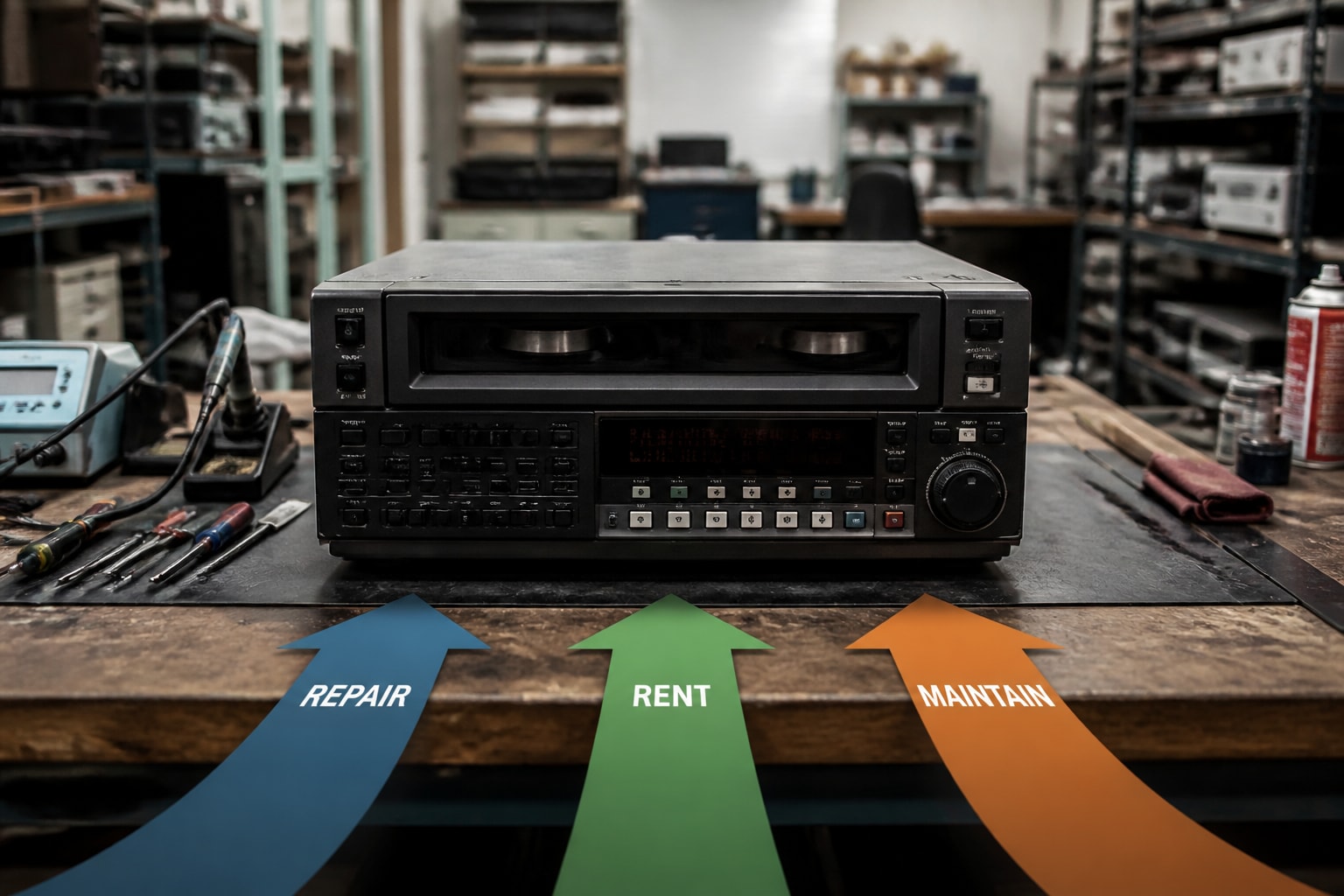
Should You Repair, Rent, or Maintain Your Deck?
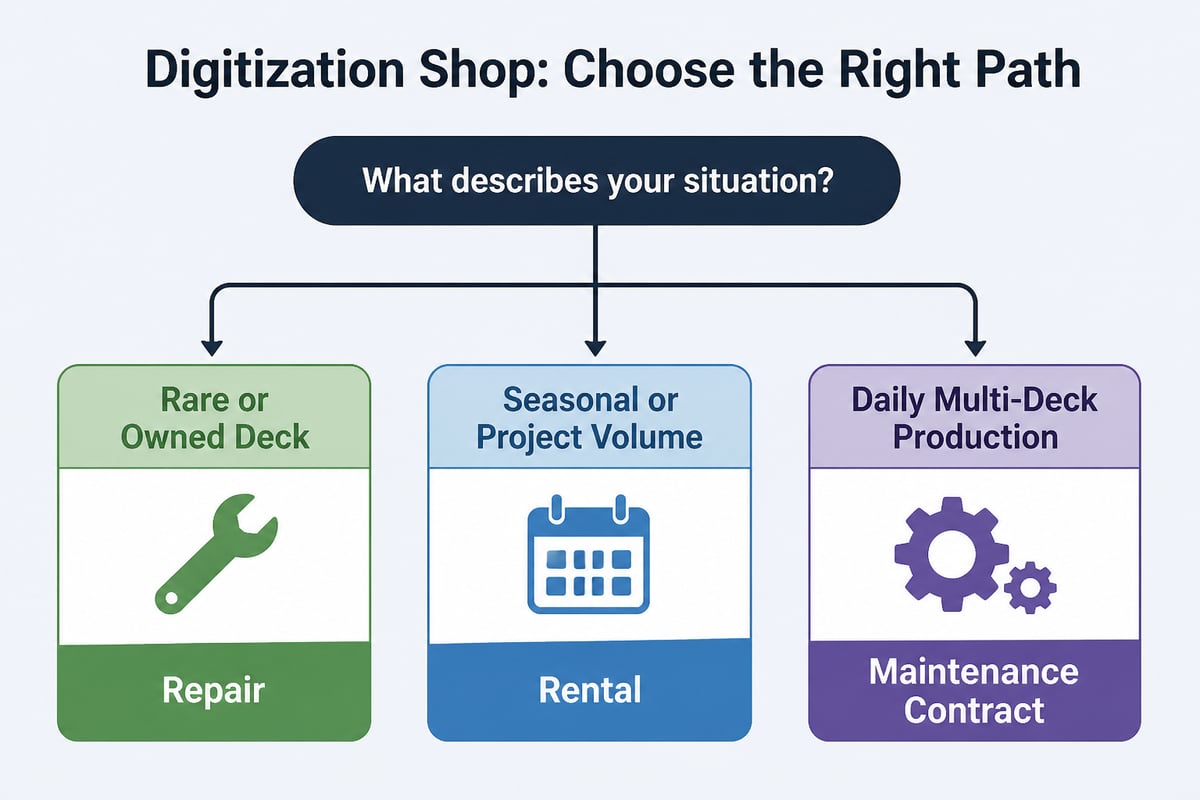
The right choice depends on how often you transfer tape, how critical turnaround is, and whether your deck is a model worth keeping. Each path suits a different shop profile.
When to Repair
Repair makes sense when you own a deck that is hard to replace, such as a professional S-VHS or a particular model your workflow is built around. Bench diagnosis separates a fixable mechanical fault from a unit not worth further investment. VCR Supply's professional VCR and videotape deck repair covers bench diagnosis, preventive service, and mechanical and electronic repair of customer-owned professional decks. Repair is the better value when the failure is a belt, roller, or gear rather than a failed head drum.
When to Rent
Renting suits seasonal volume, a one-off archive project, or a shop that needs a backup deck without tying up capital. Rental decks are tested before they ship, which removes the sourcing gamble described earlier. VCR Supply offers rental services for professional decks. For terms and available formats, check the VCR rental page or the S-VHS deck rental listing, or contact VCR Supply directly.
When to Maintain
A maintenance contract fits shops where a stopped deck means missed deadlines. Scheduled service catches belt hardening and head wear before they interrupt a job, and it reduces unplanned downtime. A shop running several decks daily usually gets more value from planned service than from emergency repairs.
Routine Care That Extends a Deck's Life
Routine care keeps a VHS VCR reliable between professional services, and most of it takes a few minutes per session.
- Inspect every tape first. Check for mold, a cracked shell, or loose tape before inserting it. A damaged cassette can contaminate the tape path and head drum.
- Let tapes acclimate. Tapes stored in cold or humid conditions should reach room temperature before playback.
- Clean the tape path on a schedule. Use only the cleaning methods the manufacturer recommends. Wet-type head cleaning tapes used too often can abrade heads.
- Log head hours. Video heads wear predictably, and a usage log helps you service them before picture quality drops.
- Avoid forcing a stuck cassette. Pulling on a jammed tape can bend the loading mechanism and turn a simple repair into a major one.
- Keep decks dust-free and level. Dust settles on the heads and rollers, and a tilted deck stresses the transport.
Tape condition affects deck condition, since shedding oxide builds up on heads and guides. Our reference on VHS tape handling and repair covers cassette-level problems separately from deck problems.
Building a Reliable Digitization Chain Around a VCR
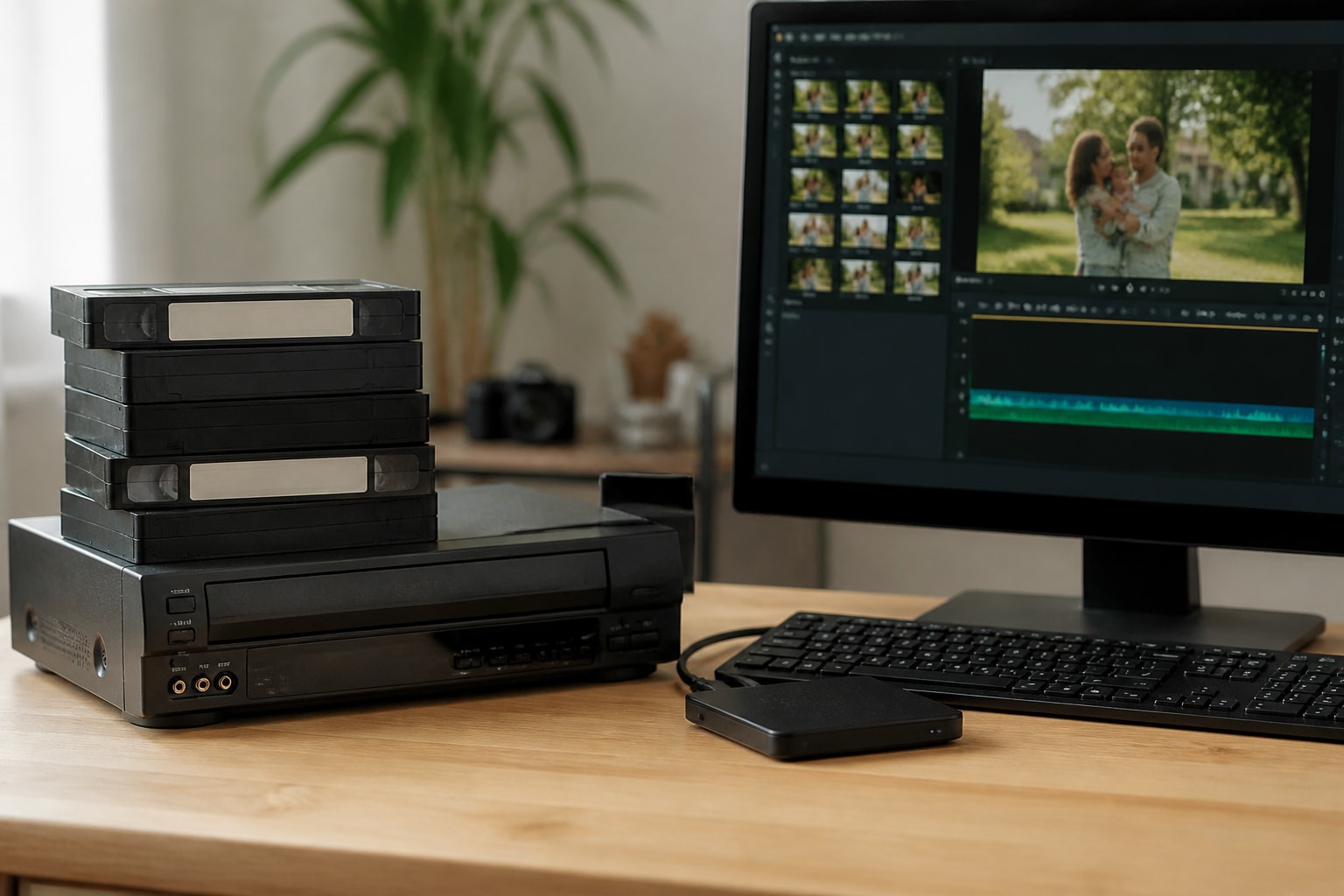
A dependable digitization chain pairs a well-serviced deck with a time base corrector, clean cabling, and a capture workflow that protects the resulting files. The deck is only the first link.
The U.S. National Archives recommends creating both a high-quality preservation copy and an easy-to-play access copy when digitizing video, and gives a VHS-to-DVD or MP4 file as an example of an access copy. The same guidance says preservation copies should use high-resolution, high-bitrate, minimally compressed, open or non-proprietary formats, and it recommends making a second backup copy of delivered files. For a shop, that translates into a few standing rules:
- Capture the preservation master first, at the highest quality your workflow supports.
- Derive smaller access files for clients from that master instead of re-capturing the tape.
- Store at least two copies of every delivered file.
- Capture each tape once if possible, because every pass stresses an aging cassette.
That last point is where deck condition and archival quality meet. A deck with worn heads or unstable tape tension can force repeat passes, and each pass adds wear to a tape that may be irreplaceable. Servicing the deck before a large batch is cheaper than losing a master tape to a mechanical fault.
Shops that also handle other tape types should plan the chain for each format. Betamax, MiniDV, and Digital8 each need their own decks, and our guides to Betamax and VHS and the MiniDV tape deck explain how those chains differ.
FAQ
Does anyone still buy VHS?
Yes, collectors, film enthusiasts, and people with family archives still buy VHS tapes and decks, usually on the secondhand market. For digitization shops, the more relevant demand is from clients who need old home recordings converted to files.
Can a VCR work without a VHS tape inside?
A VCR will power on, display its menus, and route an incoming signal without a tape, but it cannot play or record anything until a cassette is inserted. Running the transport without a tape is not harmful, though some decks will not engage the loading mechanism at all.
How long does a VHS VCR last?
Lifespan depends heavily on use and storage, and no manufacturer-wide figure applies to every model. Rubber belts and rollers tend to degrade with age even in unused decks, which is why older units often need service before they perform reliably.
Start by testing your current deck with a tape you can afford to lose, and note any tracking drift, noise, or loading hesitation before a client job depends on it. If the deck needs work, VCR Supply's professional VCR and videotape deck repair offers bench diagnosis, and rental decks are available for projects where you need a tested unit fast. Maintenance contracts are also available to reduce downtime across a busy deck lineup.