VHS Repair Near Me: Professional Tape & Deck Restoration
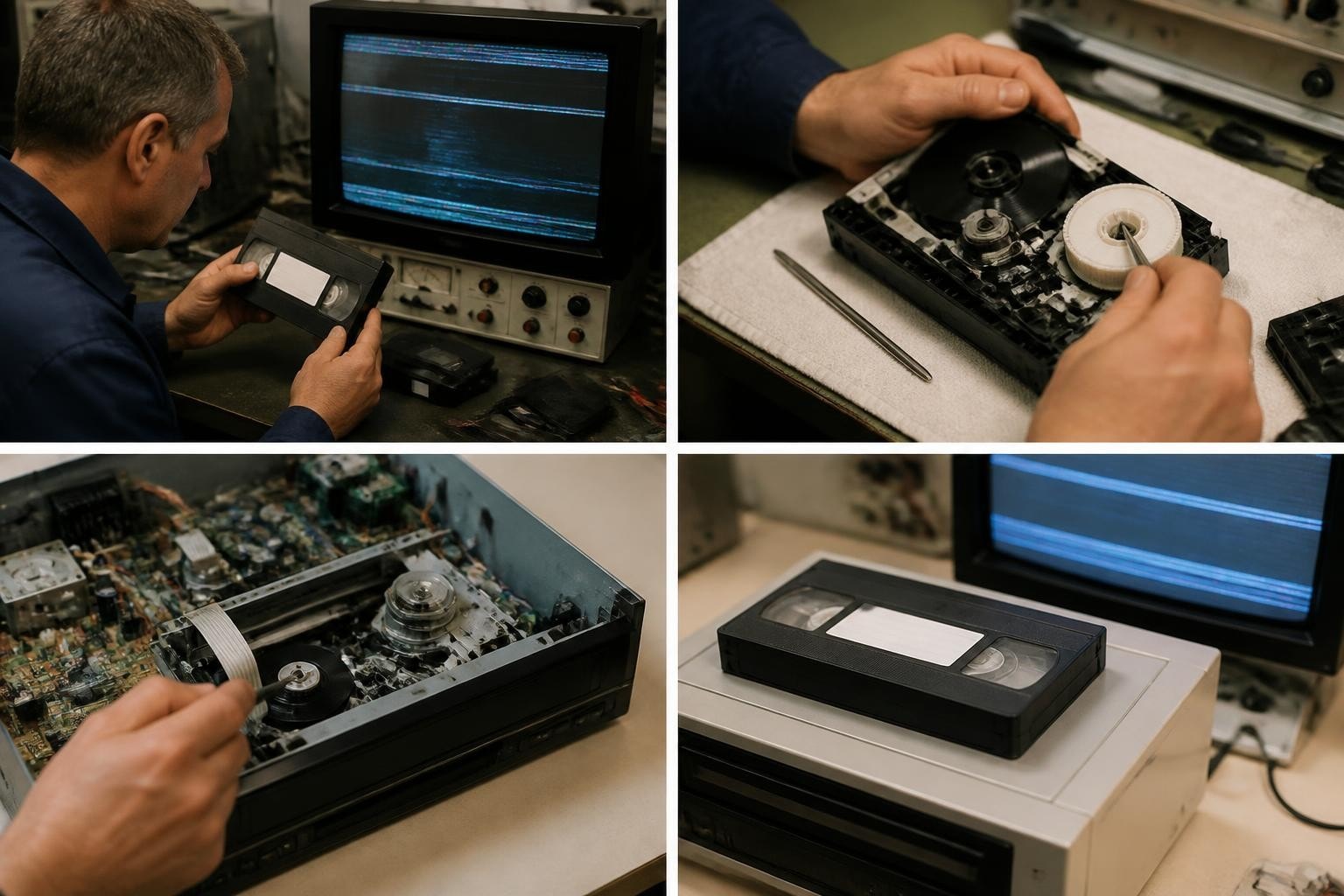
When you search for "vhs repair near me," you're likely facing one of two scenarios: either a precious VHS tape is damaged and unplayable, or your professional videotape deck has stopped functioning properly. Both situations require specialized knowledge and often professional intervention to preserve irreplaceable content or restore critical digitization equipment. As we move deeper into 2026, the pool of qualified technicians continues to shrink, making it essential to understand when DIY fixes are appropriate versus when professional repair services are necessary. This guide explores the landscape of VHS repair services, common issues affecting both tapes and playback equipment, and how to make informed decisions about restoration work.
Understanding VHS Tape Damage and Deck Failures
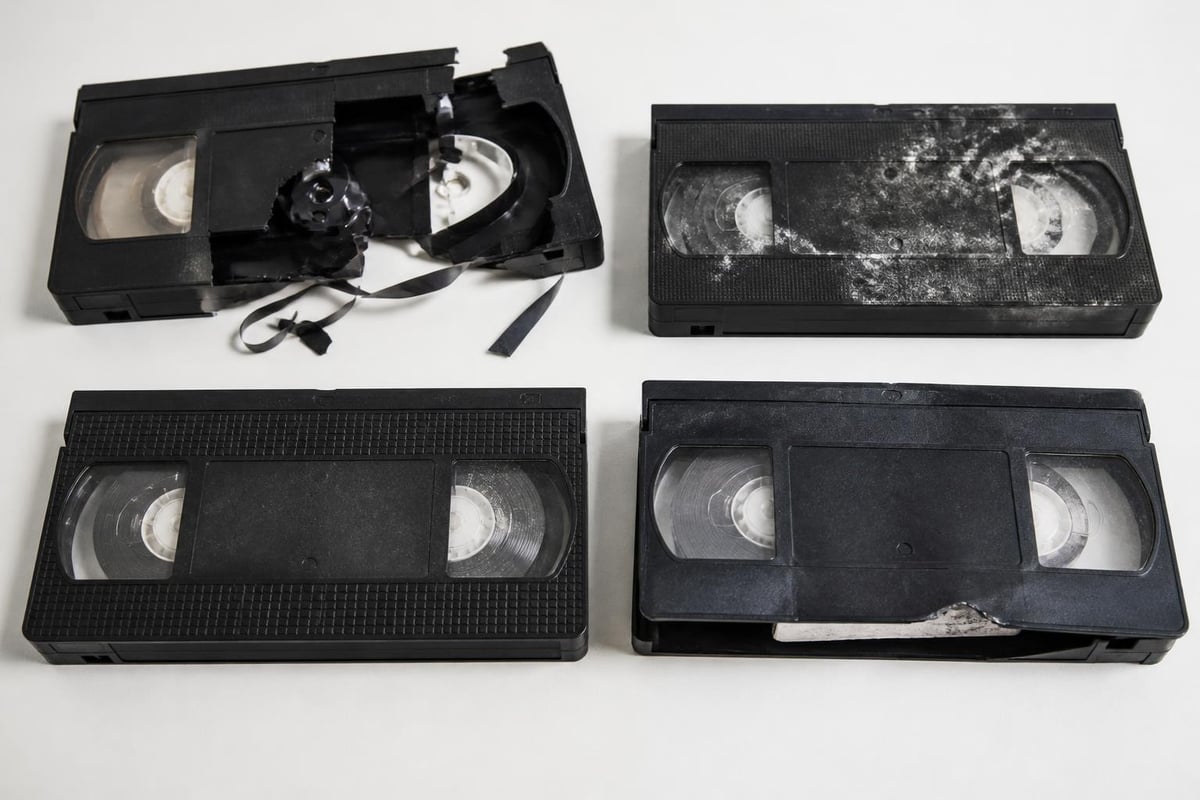
VHS technology, though obsolete for consumer recording, remains critical for digitization operations and archival preservation. Tape damage manifests in several ways: physical breaks, mold contamination, sticky-shed syndrome, and edge damage from improper storage. Meanwhile, deck failures typically involve worn capstan rollers, broken belts, misaligned heads, or electronic control failures.
The challenge in 2026 is distinguishing between problems you can address yourself and those requiring professional intervention. A simple broken tape splice might be repairable at home, but mold remediation or head alignment demands specialized tools and clean-room conditions.
Common VHS Tape Problems
When evaluating tape damage, you'll encounter these frequent issues:
- Physical breaks and splices that prevent playback
- Mold and fungal growth from humid storage conditions
- Sticky-shed syndrome causing tape to adhere to itself
- Edge damage from improper winding or storage
- Magnetic signal degradation from age and environmental factors
Each problem has different repair requirements. The Canadian Conservation Institute provides detailed technical guidance on cleaning and repair workflows, including when "baking" tape is appropriate and when professional services are mandatory.
Professional Deck Maintenance Requirements
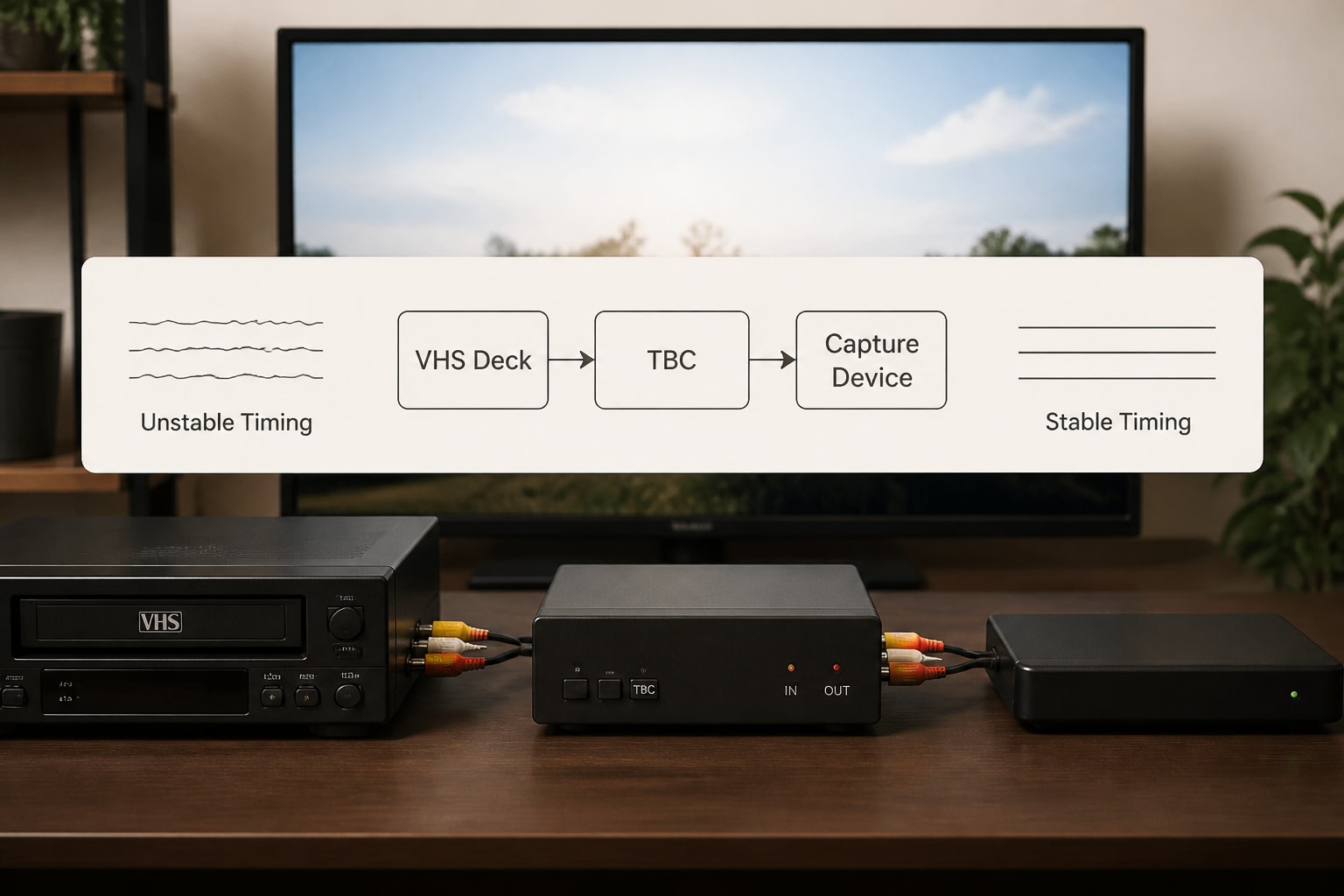
For digitization operations, deck reliability is paramount. Professional-grade equipment like S-VHS decks, Digital8 camcorders, and Betamax machines require regular maintenance to prevent costly downtime. Understanding these formats through resources like the VHS format specifications helps identify when performance degradation signals imminent failure.
| Component | Typical Lifespan | Failure Symptoms | Repair Complexity |
|---|---|---|---|
| Video heads | 1,500-3,000 hours | Snow, tracking issues, no picture | High - requires alignment |
| Drive belts | 3-5 years | Won't play, slow speed, eating tape | Medium - mechanical skill needed |
| Capstan/pinch roller | 2,000-4,000 hours | Speed variations, poor audio | Medium - alignment critical |
| Electronic components | 10-20 years | Intermittent operation, dead unit | High - circuit-level diagnosis |
The Association of Moving Image Archivists legacy equipment webinars offer technician-level insights into common failure modes and community-vetted maintenance practices.
When to Search "VHS Repair Near Me"
Not every problem requires professional help, but certain situations absolutely demand expert intervention. Knowing when to seek "vhs repair near me" services saves both time and potentially irreplaceable content.
Critical Situations Requiring Professional Help
Immediate professional repair is necessary when:
- Mold contamination covers more than 10% of the tape surface
- Sticky-shed syndrome persists after controlled baking attempts
- Deck alignment issues cause tracking problems across multiple tapes
- Electronic failures prevent deck power-up or basic functions
- Archival-grade content requires certified restoration
For digitization businesses, downtime directly impacts revenue. A professional maintenance contract ensures rapid response times and preventive care that extends equipment life. The $45 diagnostic fee model common in 2026 allows cost-effective triage before committing to full repairs.
DIY Repairs That Make Sense
Some repairs are appropriate for trained operators with proper tools:
- Simple tape splicing using archival splicing tape
- External cleaning of deck components and tape paths
- Belt replacement on consumer-grade equipment with service manuals
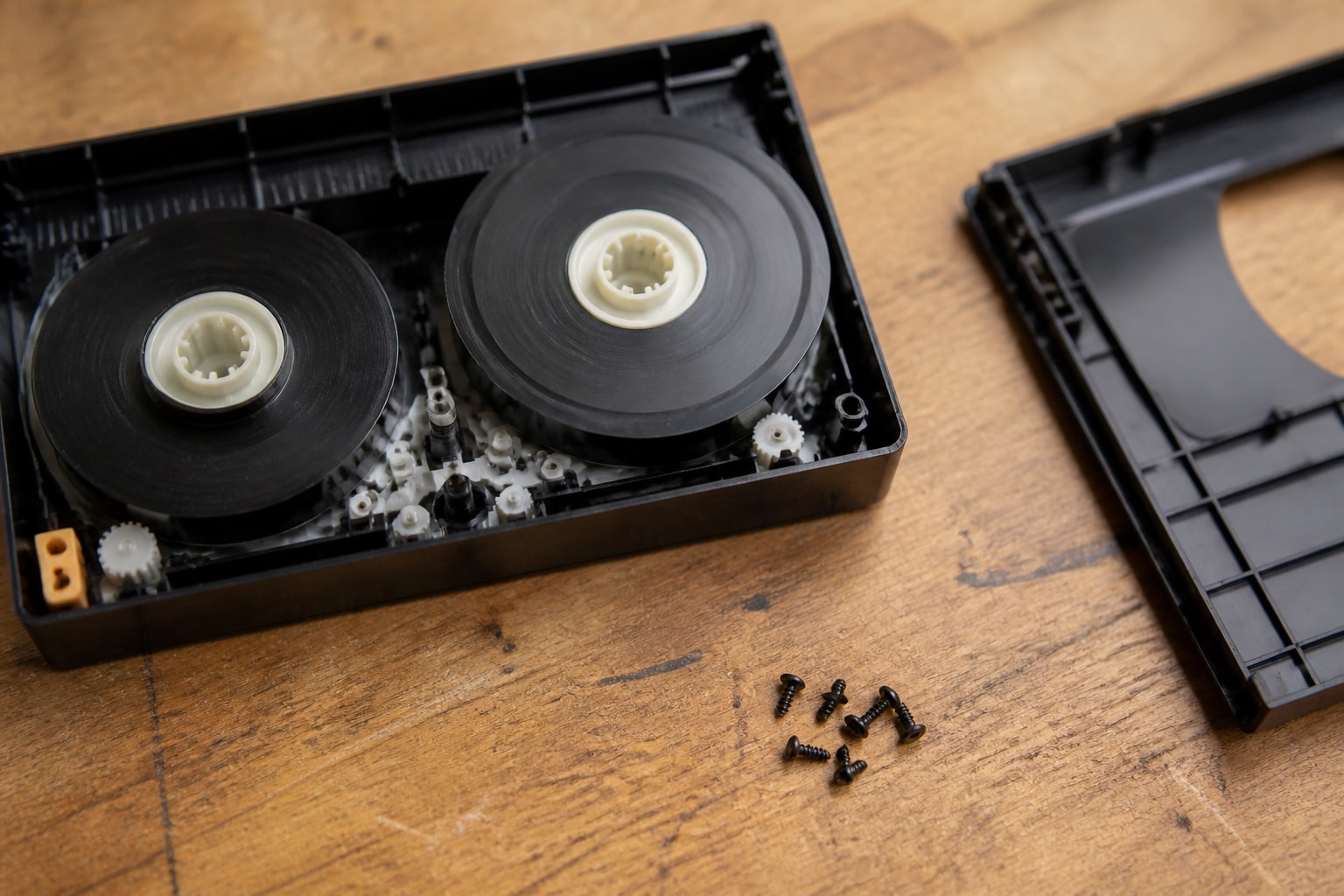
- Basic cassette shell repairs for undamaged tape
The University of Illinois preservation guidance helps readers assess when DIY approaches are safe versus when professional conservators should handle precious materials.
Evaluating Local VHS Repair Services
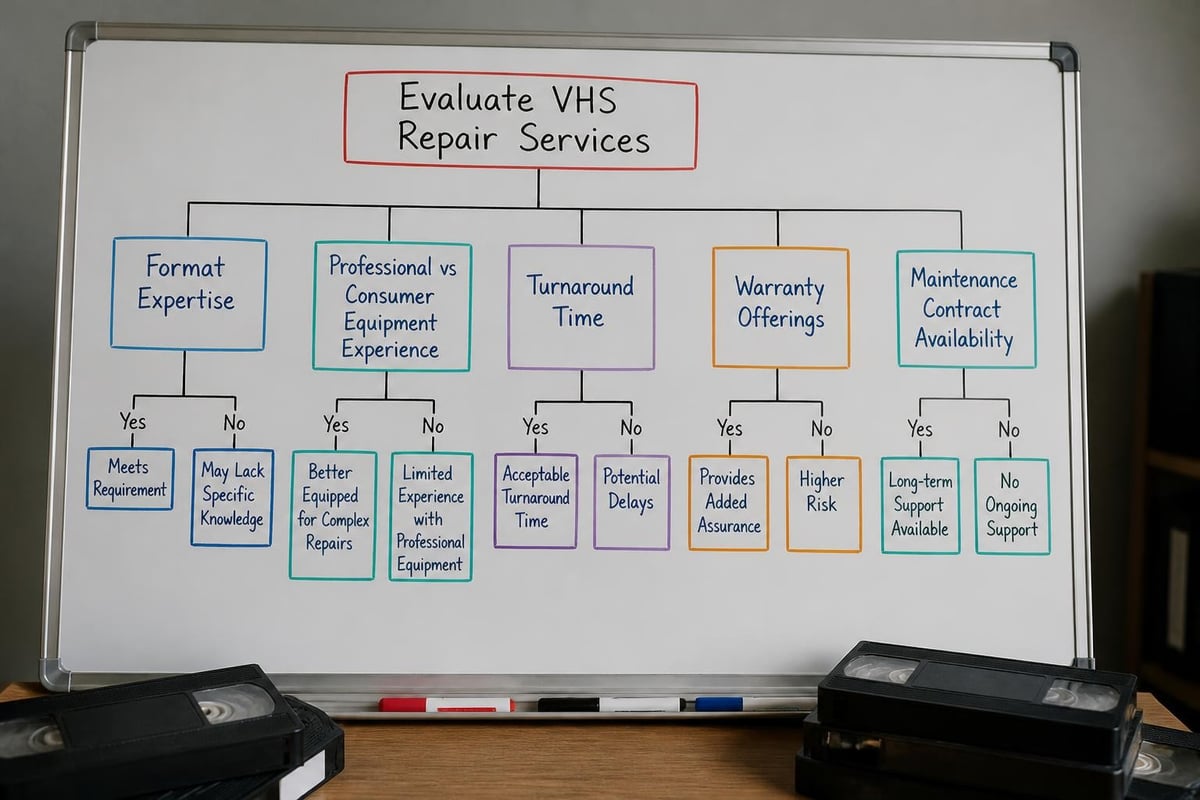
Finding qualified VHS repair services in 2026 requires careful vetting. The technician population has diminished significantly, and not all services possess the specialized knowledge needed for professional-grade equipment.
Questions to Ask Potential Repair Providers
Before committing to any service, establish their capabilities:
- What specific formats do you repair (VHS, S-VHS, Digital8, Betamax)?
- Do you work on professional decks or only consumer equipment?
- What is your diagnostic fee structure?
- Do you offer maintenance contracts for commercial operations?
- Can you provide references from digitization businesses?
For businesses running S-VHS deck rentals or similar professional operations, finding a repair partner with broadcast-grade experience is essential. Consumer VCR repair skills don't necessarily translate to professional deck maintenance.
Understanding Repair Costs and Timelines
Typical 2026 repair pricing structures:
| Service Type | Price Range | Turnaround Time | Notes |
|---|---|---|---|
| Diagnostic fee | $45-$75 | 3-5 business days | Often credited toward repair |
| Tape cleaning/repair | $25-$150 per tape | 1-2 weeks | Varies by damage severity |
| Deck belt replacement | $150-$300 | 1 week | Plus parts |
| Head replacement/alignment | $400-$800 | 2-3 weeks | Format-dependent |
| Full deck refurbishment | $600-$1,500 | 3-4 weeks | Professional decks only |
These ranges reflect the scarcity of qualified technicians and specialized parts in 2026. For operations dependent on continuous digitization capacity, the economics often favor preventive maintenance over reactive repairs.
Professional Deck Rental as an Alternative
When searching "vhs repair near me" yields limited options or extended turnaround times, rental services provide immediate continuity for digitization operations. This model has grown significantly since 2024 as repair services have become scarcer.
Rental Benefits for Digitization Operations
Professional deck rental addresses several business challenges:
- Zero downtime during repair periods
- Access to maintained equipment without capital investment
- Format flexibility for varied client projects
- Predictable monthly costs versus unpredictable repair expenses
Starting at $99 per month, professional deck rentals offer calibrated, maintained equipment with support infrastructure. This model particularly benefits shops handling multiple formats like MiniDV, Digital8, and Betamax that each require format-specific playback equipment.
When Rental Makes More Sense Than Repair
Consider rental over repair when:
- Repair estimates exceed 40% of replacement value
- Turnaround time would disrupt client commitments
- You need temporary capacity for format variety
- Equipment age suggests multiple future failures
The National Archives equipment maintenance policies emphasize lifecycle planning for machine-readable holdings, suggesting institutions budget for both repair and rental scenarios.
Tape Repair Versus Deck Repair Decisions
Understanding whether your "vhs repair near me" search should focus on tape restoration or deck service requires diagnostic clarity. These are fundamentally different specializations, and many providers excel at one but not both.
Tape Restoration Services
Specialized tape repair labs focus on physical media restoration. Their core services include:
- Mold remediation in controlled environments
- Splicing and leader replacement with archival materials
- Shell replacement for damaged cassettes
- Sticky-shed treatment through controlled baking
- Transfer to new stock when original is severely compromised
VHS cassette repair often involves meticulous hand work that simply cannot be rushed. Labs with proper clean rooms and environmental controls charge premium rates but deliver archival-quality results essential for irreplaceable content.
Deck Repair and Calibration
Deck repair requires different expertise: electromechanical troubleshooting and alignment.
Professional deck technicians perform:
- Diagnostic testing to isolate mechanical versus electronic failures
- Component replacement using increasingly scarce parts
- Head alignment to manufacturer specifications
- Calibration for optimal playback quality
- Performance verification with test tapes
The British Library preservation guidance emphasizes equipment calibration standards for field digitization projects, noting that poorly maintained playback equipment can introduce artifacts worse than the original degradation.
Preventing Future Repair Needs
While searching "vhs repair near me" addresses immediate problems, strategic prevention reduces long-term repair frequency and costs. Both tape preservation and deck maintenance benefit from proactive approaches.
Tape Storage Best Practices
Proper storage prevents 80% of tape damage issues:
- Temperature control: 65-70°F with minimal fluctuation
- Humidity management: 30-40% relative humidity
- Vertical storage to prevent edge damage
- Archival cases replacing deteriorating original shells
- Regular inspection to catch mold early
The Preservation Week resources provide format-specific guidance for both institutions and small businesses handling legacy media.
Equipment Maintenance Schedules
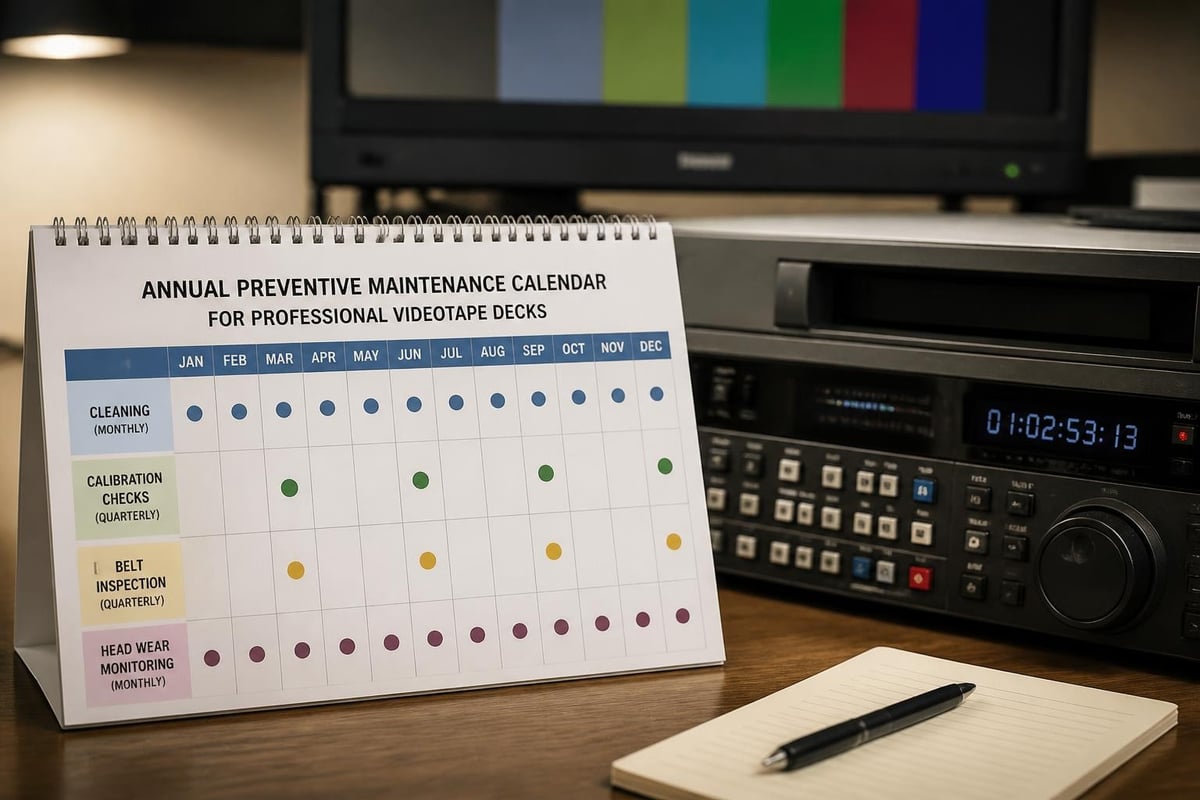
For digitization operations, maintenance contracts typically include:
| Maintenance Activity | Frequency | Purpose |
|---|---|---|
| Head cleaning | After every 10 hours | Prevent tracking issues |
| Tape path inspection | Weekly | Catch wear before failure |
| Belt tension check | Monthly | Prevent transport problems |
| Full calibration | Quarterly | Maintain output quality |
| Component replacement | As needed | Prevent catastrophic failure |
Professional VCR repair services often bundle diagnostic fees into maintenance contracts, making preventive care more economical than emergency repairs. This model has become standard for businesses operating MiniDV deck rentals and similar professional equipment.
The Economics of Repair Versus Replacement
In 2026, every "vhs repair near me" search must be evaluated against replacement economics. The decision matrix has shifted dramatically as both repair services and replacement equipment have become scarcer.
Calculating Total Cost of Ownership
Repair-versus-replace analysis should include:
- Current repair estimate versus used equipment cost
- Expected lifespan after repair (typically 1-3 years for aging decks)
- Availability of future repair services and parts
- Downtime costs during repair period
- Quality requirements for your specific applications
For a digitization business handling client work, a $600 repair on a deck worth $400 used might still make sense if parts availability is uncertain and the repaired unit meets quality standards. Conversely, a $200 repair on consumer equipment often fails the economic test.
Equipment Lifecycle Planning
Smart operators maintain redundancy through strategic approaches:
- Primary equipment maintained through professional contracts
- Backup decks for continuity during repair periods
- Rental relationships for format variety and emergency capacity
- Parts inventory for common consumables on critical equipment
This multi-layered approach, detailed in resources about VCR repair services, ensures client commitments are met regardless of individual equipment failures.
Finding Specialized Format Repair Services
Not all VHS repair is created equal. Professional formats like S-VHS, along with related formats such as Hi8 and Digital8, require technicians with specific expertise often different from consumer VHS repair knowledge.
Format-Specific Repair Considerations
S-VHS and professional formats demand:
- Higher precision head alignment tolerances
- Understanding of professional audio tracks
- Calibration to broadcast standards
- Access to professional-grade test equipment
Similarly, Digital8 tape playback involves digital signal processing that consumer-focused repair shops may not understand. When searching for "vhs repair near me" with professional format needs, specifically ask about format expertise.
Cross-Format Compatibility Issues
Many digitization operations handle multiple formats, creating complex repair scenarios:
- Hi8/Digital8 compatibility in dual-format Sony decks
- VHS/S-VHS playback in S-VHS equipment
- Betamax variants requiring different head configurations
Understanding these relationships through resources like Betamax video format specifications helps communicate repair needs accurately to potential service providers.
Emergency Repair Situations
Some scenarios demand immediate action when you search "vhs repair near me." Understanding triage priorities protects both equipment and irreplaceable content.
Tape Eating and Immediate Damage
When a deck "eats" a tape:
- Stop playback immediately to prevent further damage
- Power down the deck before attempting tape removal
- Manually release tape tension using manufacturer procedures
- Extract carefully to avoid breaking tape or damaging deck
- Document the failure mode for repair technician
Never force stuck tape. The VHS tape repair guidance emphasizes that patience during extraction prevents turning a repairable situation into total loss.
Critical Client Deadlines
For digitization businesses facing client deadlines with failed equipment:
- Assess repair timeline realistically (diagnostic alone may take 3-5 days)
- Consider emergency rental for immediate continuity
- Communicate proactively with clients about potential delays
- Document failure for equipment lifecycle decisions
Having established relationships with both repair services and rental providers before emergencies arise prevents scrambling when problems occur.
Quality Control After Repair
Receiving repaired equipment or restored tapes isn't the end of the process. Proper quality control ensures the repair actually solved the problem and meets professional standards.
Testing Repaired Decks
Post-repair verification should include:
- Playback of multiple test tapes across the format range
- Audio quality assessment on both channels
- Tracking stability over extended play periods
- Transport mechanism smoothness and consistency
- Electronic function testing (counter, on-screen display, etc.)
Professional operations often maintain reference tapes specifically for post-repair verification. This practice, recommended in VCR maintenance protocols, catches incomplete repairs before they impact client work.
Evaluating Restored Tapes
For repaired or restored tapes, assessment focuses on:
| Quality Factor | Evaluation Method | Acceptance Criteria |
|---|---|---|
| Physical integrity | Visual inspection | No loose tape, smooth winding |
| Playback quality | Test on calibrated deck | Stable tracking, minimal dropouts |
| Shell condition | Mechanical function test | Smooth tape access, secure assembly |
| Long-term stability | Environmental assessment | No visible mold, proper storage case |
Remember that some tape damage results in permanent information loss. Realistic expectations about restoration outcomes prevent disappointment and help make informed decisions about content recovery priorities.
Finding reliable VHS repair services in 2026 requires understanding both the technical requirements of your specific situation and the shrinking landscape of qualified providers. Whether you need tape restoration for precious content or deck repair to maintain digitization operations, evaluating repair-versus-replace economics and building relationships with specialized service providers ensures continuity when problems arise. For professional digitization operations requiring maintained equipment, rental services and maintenance contracts often provide better economics and reliability than reactive repair strategies. VCR Supply offers comprehensive rental and repair solutions for professional videotape decks, with monthly rentals starting at $99 and transparent $45 diagnostic fees, ensuring your digitization operations continue without interruption.